Ika Furai Recipe
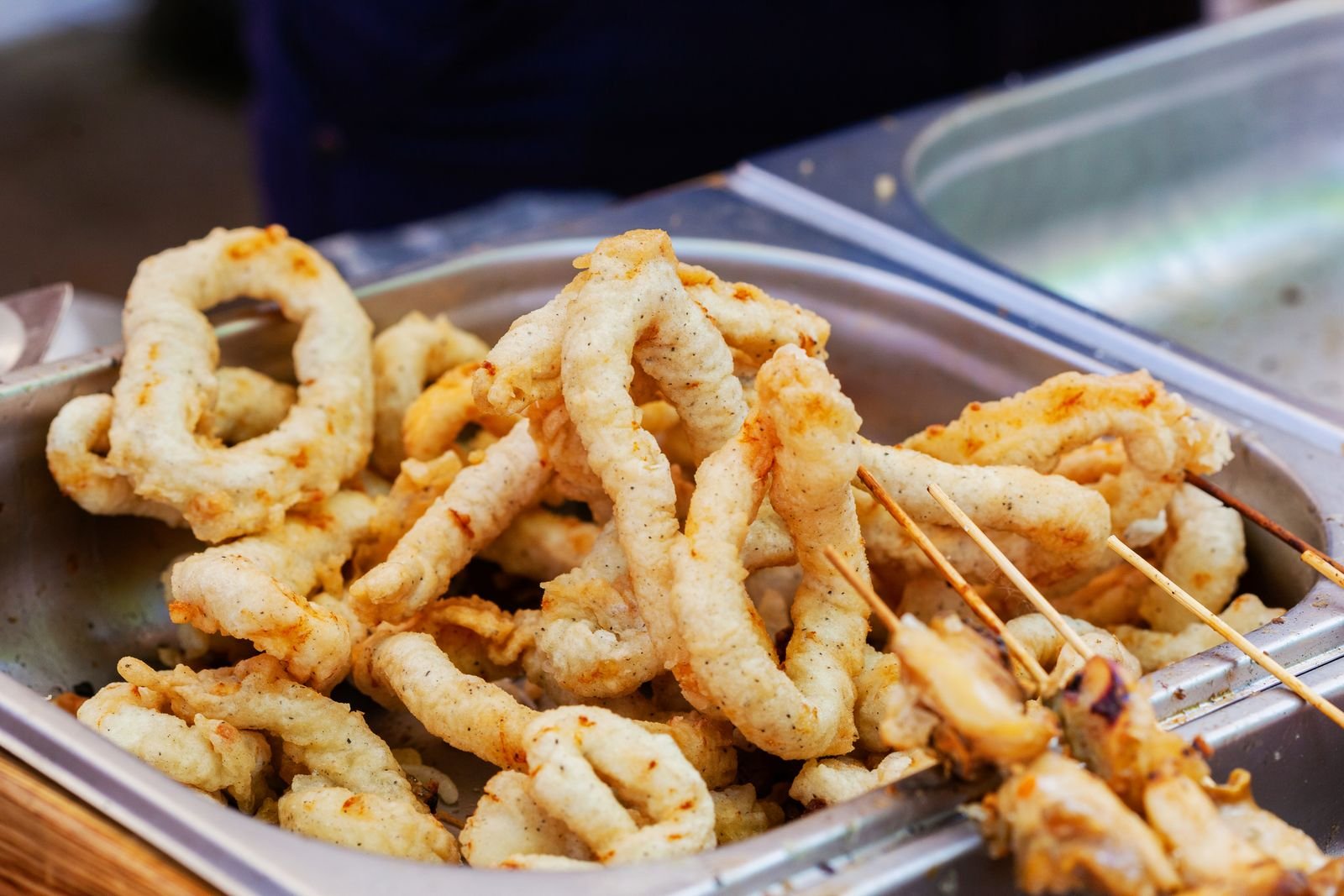
Golden rings of squid in a shattering panko crust — ika furai is the snack Japan orders with a cold beer and eats straight off the plate. The squid fries in just ninety seconds, so it stays tender instead of turning rubbery, and the coating crackles with every bite. Serve it hot with lemon, tartar sauce and shredded cabbage, and watch it disappear before the rice is even on the table.
The story behind Ika Furai
Ika furai belongs to the furai family, the breaded and fried dishes that came to Japan with Western cooking in the nineteenth century and were quickly made Japanese with panko. Squid was a natural choice for the treatment. It is cheap, it is caught all around the Japanese coast, and its mild, sweet flesh takes well to a crisp coating. Cooks found that a quick fry in hot oil kept the squid tender, while the panko gave it the crunch that Japanese diners love. The dish settled into everyday cooking and has stayed there ever since.
You will meet ika furai most often in izakaya pubs, where it arrives as sakana, food to eat alongside a drink. It is the kind of plate that lands in the middle of the table and empties fast, with everyone reaching for the next ring. It turns up in bento boxes too, and at summer festivals where it is sold in paper cones and eaten while walking. It is casual food, but it is taken seriously: a good batch is judged on the crunch of the crust and the tenderness of the squid inside.
What makes ika furai special is the contrast it builds in ninety seconds. The panko fries into a light, shattering shell, while the squid ring inside stays soft and sweet. That short cooking time is the whole trick. Squid is mostly muscle with very little fat, so it goes from tender to tough in a matter of seconds, and the hot oil has to do its work fast. Cut the rings evenly, keep the oil hot, and the result is a bite that is crisp outside and yielding inside.
Cook it when you want something fast and fun, for a Friday night with drinks or a weekend lunch that needs a little excitement. It is a good dish for a crowd because the rings fry in batches of a minute and a half, and people can eat them as they come off the rack. Serve it with rice and cabbage for a proper meal, or on its own with lemon and sauce as a snack that keeps everyone at the table.
- Prep time
- 20 mins
- Cook time
- 10 mins
- Total time
- 30 mins
- Servings
- 4 servings
- Calories
- 480
Ingredients
- 500 g squid tubes, cleaned, about 3 medium squid
- 1 teaspoon fine sea salt
- 1/2 teaspoon black pepper
- 4 tablespoons plain flour
- 1 large egg, beaten
- 1 cup panko breadcrumbs
- 500 ml neutral oil, such as sunflower or rapeseed, for frying
- 1 lemon, cut into wedges
- 2 cups finely shredded green cabbage
- 4 tablespoons tartar sauce, to serve
- 3 tablespoons tonkatsu sauce, to serve
- 1 teaspoon shichimi togarashi, to serve (optional)
Instructions
- Rinse the squid tubes and pat them very dry with kitchen paper. Slice each tube across into rings about 1 cm wide, keeping them even so they all cook in the same time. Cut any tentacles into small clusters. Season everything lightly with salt and pepper.
- Set out three shallow dishes: flour in the first, beaten egg in the second, panko in the third, with a tray lined with baking paper at the end. Keep one hand dry and one hand wet as you work, so your fingers do not end up coated in crumbs.
- Drop a handful of rings into the flour and toss them until each one is dusted all over, then lift them out and shake off the extra. You want a thin, even coat and nothing more. Thick flour turns gummy under the egg and the crust will slide off in the oil.
- Dip the floured rings into the beaten egg, turning them so every side is wet, then lift them out and let the extra egg drip back. Tip them into the panko and toss gently, pressing the crumbs on so they stick to the curves. Set them on the tray and repeat with the rest.
- Rest the coated rings for five minutes while you heat the oil in a deep pan to 180 C. The oil is ready when a pinch of panko sizzles hard and turns golden in about thirty seconds. If the crumbs sink without a sound, the oil is too cool; if they brown in a flash, it is too hot.
- Slide a small batch of rings into the oil, about a handful at a time, and spread them out with tongs so they do not clump. You will hear a fierce sizzle and see the panko puff up and turn pale gold. Fry for ninety seconds, turning once, then lift them out as soon as the crust is light gold.
- Drain the rings on a wire rack so the steam escapes and the underside stays crisp, and sprinkle them with a tiny pinch of salt while they are still hot. Let the oil climb back to 180 C before the next batch goes in. Fry the tentacle clusters last, for the same ninety seconds.
- While the last batch fries, pile shredded cabbage into loose mounds on four plates and set lemon wedges beside them. Put small dishes of tartar sauce and tonkatsu sauce on the table, with shichimi togarashi for anyone who likes heat. The cabbage is the perfect foil for hot, salty squid.
- Serve the ika furai at once, piled high while the crust is still crackling. Squeeze lemon over the top, dip a ring into the tartar sauce, and eat it while it is hot. This is food for sharing and for eating with your fingers, and it is at its best in the first five minutes.
Pro tips
- Cut the rings evenly, about 1 cm wide. Even rings cook in the same ninety seconds, while mixed sizes leave you with some tough and some raw. A ruler helps the first few times, until your eye learns the width.
- Pat the squid very dry before coating. A wet ring sheds its panko in the oil, so press the tubes and rings with kitchen paper until no moisture shows. Press the paper inside the tubes too, since water hides there and loosens the coating.
- Fry in small batches of one handful. Crowding the pan drops the oil temperature, and cold oil makes the crust greasy instead of crisp. Wait for the oil to climb back to 180 C before the next handful goes in.
- Pull the rings out while the panko is pale gold, not deep brown. The squid is already cooked, and every extra second in the oil makes it tougher. The squid keeps cooking for a few seconds after it leaves the oil, so pull it early.
- Serve it the moment it leaves the rack. Ika furai is at its best in the first five minutes, while the crust crackles and the squid is still steaming inside. Set the table and sauces out before you start frying, so nothing waits.
Variations & serving ideas
The rings are the classic shape, but the squid can be cut in other ways. Slice the tubes open and lay them flat, then score the inside in a light crosshatch and cut into squares; they curl into pretty pine-cone shapes in the oil and pick up extra crunch at the edges. Tentacles fry alongside the rings and are worth keeping, since they turn wonderfully crisp. You can also stuff whole tubes with a mix of minced squid, ginger and spring onion, then slice and fry them for a richer plate. The curled squares look impressive on the plate and catch the sauce in their folds.
For a lighter version, skip the panko and dust the rings in seasoned potato starch instead, tempura style. The coating fries thinner and paler, and the squid tastes more delicate. It needs the same hot oil and the same ninety seconds, but the result is closer to ika tempura than ika furai. A squeeze of lemon and a pinch of salt is all the seasoning it needs. A dusting of potato starch is also how many izakaya kitchens make a lighter, late-night version of the dish.
Sauces are where you can make the dish your own. Spicy mayonnaise, made by stirring sriracha into Japanese mayonnaise, is the crowd favourite, and a little yuzu kosho whisked into mayonnaise gives a sharper, citrus heat. Ponzu with grated daikon keeps things light, while a sweet chilli dip suits the squid well. Put two or three sauces on the table and let everyone pick. A small dish of salt mixed with yuzu zest is a simple option that lets the squid speak for itself.
Ika furai also works beyond the plate. Tuck the hot rings into a soft roll with shredded cabbage and tartar sauce for a squid sandwich, or scatter them over a bowl of rice with a drizzle of tonkatsu sauce for a quick donburi. They make a fine topping for a green salad too, where the warm, crisp rings sit against cool leaves. However you serve them, fry the rings fresh and eat them hot. Leftovers, if you have any, are good cold the next day in a rice box.
Getting it right
The first skill is cutting the squid evenly. Rings of about 1 cm give the best balance: thin enough to cook in ninety seconds, thick enough to stay juicy and hold their shape. Uneven rings are the main cause of mixed results, because the thin ones overcook while the thick ones are still raw inside. Take a moment with the knife, and cut the tubes across in steady, even slices. The tentacles go in as small clusters and need no cutting at all.
Heat control is the second skill, and it matters more here than with fish. The oil must sit at 180 C when the rings go in, so the panko seals at once and the squid barely has time to firm up. A thermometer is the surest way to hold that temperature, but the panko test works well: a pinch should sizzle hard and turn golden in thirty seconds. Fry small batches and let the oil recover between them, because every handful of cold squid drags the temperature down.
The common mistakes are easy to spot and easy to fix. Tough, chewy squid means it fried too long, so pull the next batch out at ninety seconds, while the crust is still pale gold. A soft, greasy coating means the oil was too cool or the pan was crowded, so fry fewer rings and wait for the temperature to climb back. Coating that falls off points to wet squid, so pat the rings dry and let the breaded pieces rest for five minutes before they go in the oil.
Storing & reheating
Cooked ika furai is best eaten at once, but leftovers keep in the fridge for up to one day in a container lined with kitchen paper. The crust will soften as it sits, and squid firms up in the fridge, so expect a chewier bite the next day. Keep the sauces and cabbage separate so the coating stays as dry as possible.
To reheat, spread the rings on a wire rack and bake at 190 C for five to six minutes until the crust firms up again. Do not use a microwave: it turns the panko soggy and the squid rubbery in seconds. Uncooked, breaded rings freeze well for up to one month; fry them straight from frozen for about two minutes.
Frequently asked questions
How long should I fry squid so it stays tender?
Ninety seconds is the rule. Squid firms up fast in hot oil, and past two minutes it turns tough and chewy. The rings are thin, so they cook through almost at once. Pull them out when the panko is pale gold rather than deep brown.
Can I cook ika furai in an air fryer?
Yes, and it is a good shortcut. Toss the rings in flour, dip them in beaten egg, then roll them in panko and spray lightly with oil. Cook at 200 C for five minutes, shaking the basket once halfway through. The crust is a little less even than deep-fried, but the squid stays tender and crisp.
Why does the coating fall off my squid rings?
Pat the rings very dry, and shake off the loose flour after dredging. A wet ring sheds its coating the moment it hits the oil. Press the panko on firmly, then rest the coated rings for five minutes so the egg sets. Fry in small batches so the oil stays hot and the crust seals at once.
Can I use frozen squid for ika furai?
Yes, if you buy good squid. Look for tubes that smell of the sea and feel firm, not slimy or sour. Cleaned tubes from the fish counter save time and are fine. Pat them dry, cut the rings evenly, and use them soon. Fresh squid fries up sweet and tender.
What sauce goes best with ika furai?
A squeeze of lemon and tartar sauce are the classics, and tonkatsu sauce works well too. For heat, mix mayonnaise with sriracha or a pinch of shichimi togarashi. Ponzu with grated daikon is a lighter choice. Serve with shredded cabbage, steamed rice and a cold drink.
Can I fry the tentacles too?
Yes, and many people think they are the best part. Cut them into small clusters, coat them the same way, and fry for the same ninety seconds. They curl up and turn extra crisp at the edges. Mix them in with the rings, or serve them on their own with lemon and salt.