Dashimaki Tamago Recipe
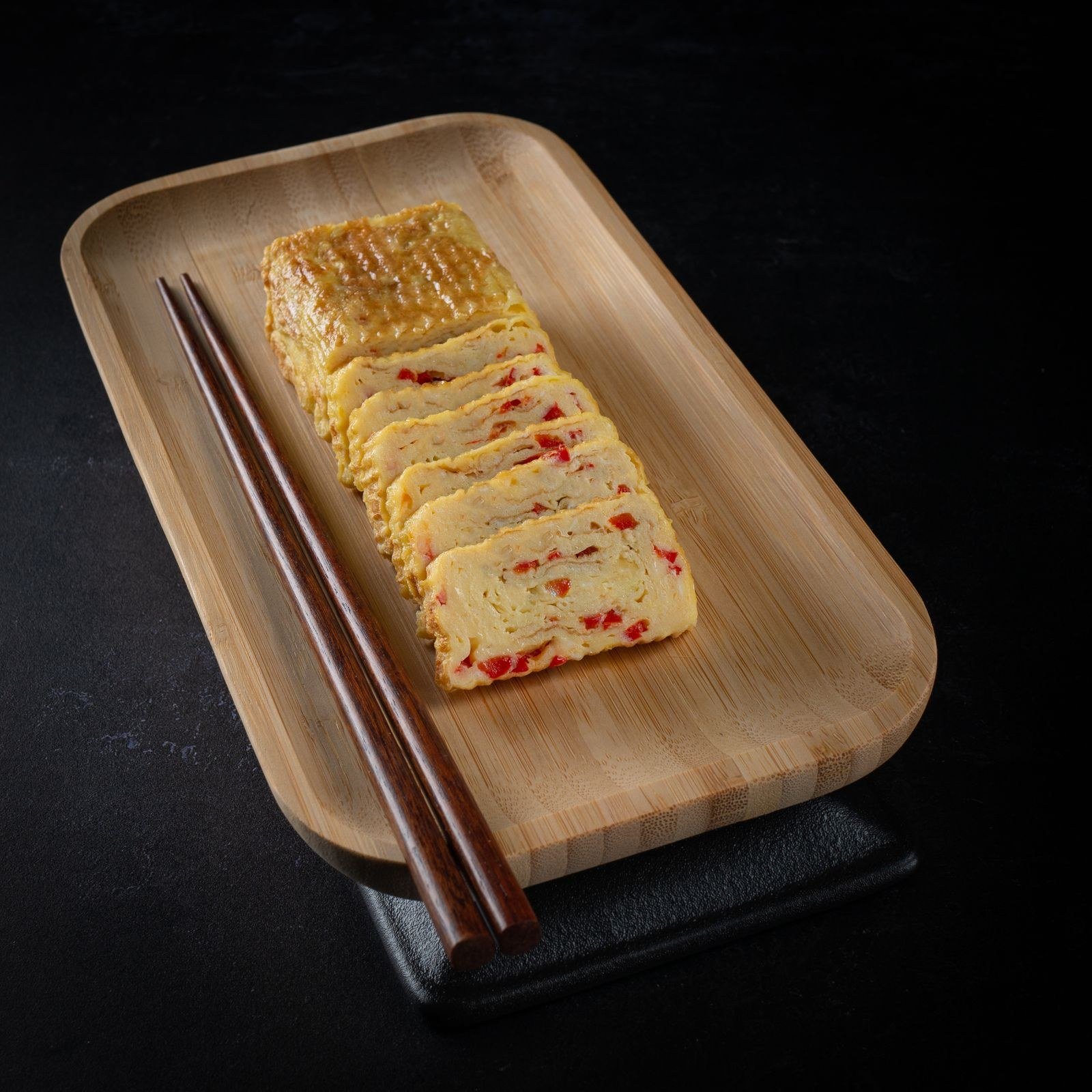
Dashimaki Tamago is Japan's rolled omelette: layers of egg cooked with dashi, mirin and soy, rolled up in a rectangular pan into a soft, golden block. It is tender, slightly sweet and full of savoury depth, and it slices into neat pieces that work for breakfast, bento boxes or sushi. It looks impressive, and it is easier than you think. It looks impressive, yet it is easier than you think.
The story behind Dashimaki Tamago
Tamagoyaki, the rolled omelette, has been part of Japanese cooking since the Edo period, when eggs became more widely available and sugar reached the cities. The dashi version, dashimaki, adds stock to the egg mixture, giving a softer, juicier result that is closer to a savoury custard than an omelette. It became a staple of home cooking and a standard item in sushi restaurants. The dashi version adds stock to the egg mixture, giving a softer, juicier result that is closer to a savoury custard than an omelette. Eggs were once a luxury in Japan, so a rolled omelette was a treat, and the dashi version was prized for stretching a few eggs into a generous dish.
In a sushi shop, the dashimaki is often made by a specialist, and a good one is a mark of the chef's skill. The egg must be rolled in thin, even layers, with no browning and no air pockets, so the finished block is smooth and tender all the way through. At home, the same dish is simpler: it appears in bento boxes, on breakfast tables, and as a side dish at dinner. The egg must be rolled in thin, even layers, with no browning and no air pockets, so the finished block is smooth and tender all the way through.
What makes it special is the texture. The dashi keeps the egg moist and soft, so each layer stays tender rather than drying out. The flavour is gentle: sweet from the mirin, salty from the soy, and savoury from the dashi. It is a quiet dish, but it is the one people reach for first when it appears on the table. The flavour is gentle, with sweetness from the mirin, salt from the soy, and a savoury depth from the dashi, so it is a quiet dish that people reach for first.
Cook it when you want a small, elegant dish that shows care. It suits a Japanese breakfast with rice and miso soup, a bento box, or a dinner party where you want a beautiful side dish. Serve it warm or at room temperature, sliced into neat pieces.
- Prep time
- 10 mins
- Cook time
- 15 mins
- Total time
- 25 mins
- Servings
- 4 servings
- Calories
- 190
Ingredients
- 5 large eggs
- 100 ml dashi stock, cooled
- 1 tablespoon mirin
- 1 teaspoon soy sauce
- 1 teaspoon sugar
- 1 pinch salt
- 1 tablespoon vegetable oil, for the pan
- 1 tablespoon grated daikon radish, to serve
- 1 teaspoon soy sauce, to serve
Instructions
- Crack the eggs into a bowl and beat them lightly with chopsticks or a fork, just until the yolks and whites are combined. Do not whisk hard or make foam, as bubbles in the egg will leave holes in the finished roll.
- Stir in the cooled dashi, mirin, soy sauce, sugar and salt. Mix gently until the sugar dissolves. Strain the mixture through a fine sieve into a jug, which removes any stringy bits of egg white and gives a smooth, even texture.
- Heat a rectangular tamagoyaki pan over medium heat and brush it lightly with oil using a folded piece of kitchen paper held in tongs. The pan should be hot enough that a drop of egg sizzles gently when it lands, but not so hot that it browns at once.
- Pour in a thin layer of egg mixture, just enough to cover the bottom of the pan, and tilt the pan so it spreads evenly. Cook for 30 to 40 seconds, until the top is mostly set but still slightly wet and glossy.
- Starting from the far edge, roll the egg toward you with chopsticks or a spatula, in two or three folds, until you have a neat roll at the near edge of the pan. Push the roll back to the far edge and brush the empty part of the pan with a little more oil.
- Pour in the next thin layer of egg, lifting the roll slightly so the mixture flows underneath it. Cook for 30 to 40 seconds, until the top is just set, then roll the whole thing toward you again, wrapping the new layer around the old one.
- Repeat this process, adding a layer, cooking it briefly, and rolling it up, until all the egg mixture is used. You should get 4 to 5 layers. If the pan gets too hot and the egg browns, take it off the heat for a few seconds to cool down.
- While the egg rests, grate the daikon and set out the serving plate, so the slices can go straight from the board to the table.
- Slide the finished roll onto a bamboo mat or a clean board and shape it gently into a neat rectangle, pressing the sides with the mat or a spatula. Let it rest for 5 minutes, then slice it into pieces about 2 cm thick and serve with grated daikon and a little soy sauce.
Pro tips
- Do not overbeat the eggs. A light, gentle beat is enough, and foam or bubbles will leave holes in the finished roll. Strain the mixture to catch any stringy white that would spoil the smooth texture.
- Keep the heat at medium, not high. The egg should cook gently and stay pale gold, never brown. If the pan is too hot, the layers will dry out and the roll will crack when you slice it.
- Pour thin layers, not thick ones. A thin layer sets in 30 seconds and rolls neatly, while a thick layer stays raw in the middle and tears when you roll it. Less egg per layer is better.
- Oil the pan between layers. A dry pan will stick, and the roll will tear. A folded piece of kitchen paper held in tongs is the easiest way to brush on a thin, even coat of oil.
- Let the roll rest for 5 minutes before you slice it. The heat finishes the centre gently, and a rested roll holds its shape when cut. A hot roll will squash under the knife. The heat finishes the centre gently, and a rested roll holds its shape when cut, while a hot roll will squash under the knife.
Variations & serving ideas
For a sweeter version, add an extra teaspoon of sugar to the egg mixture. This is the style served in Tokyo, where the omelette is noticeably sweet. In the Kansai region, the dashi version is more savoury, so reduce the sugar and add a little more dashi instead. This is the style served in Tokyo, where the omelette is noticeably sweet, while in the Kansai region the dashi version is more savoury. A pinch of finely chopped spring onion folded into the egg mixture adds a fresh, green bite to every slice.
Add finely chopped spring onion or a pinch of dried seaweed to the egg mixture for extra flavour. The onion adds a fresh bite, while the seaweed brings a salty, toasty note. Fold them in after straining, so they distribute evenly through the layers. The onion adds a fresh bite, while the seaweed brings a salty, toasty note, so fold them in after straining to spread them evenly through the layers. If you do not have dashi, use water with a pinch of salt, though the result will be plainer and less savoury.
If you do not have a rectangular tamagoyaki pan, use a small round frying pan instead. The roll will be shorter and rounder, but the taste is the same. Pour the egg in thin layers and roll it from one side, just as you would in the rectangular pan. It also works as a sushi topping or a side dish at dinner, so pair it with green tea and keep the rest of the meal simple. Serve it sliced into neat pieces on a small plate, with grated daikon and a little soy sauce set alongside for dipping.
Serve it as part of a Japanese breakfast with rice, miso soup and grilled fish, or pack it into a bento box where it keeps well at room temperature. It also works as a sushi topping or a side dish at dinner. Pair it with green tea and keep the rest of the meal simple. A bowl of steamed rice and a cup of green tea make the classic partners, keeping the meal light and balanced.
Getting it right
The key technique is the rolling. Each layer should be thin, just set, and still slightly wet on top when you roll it, so the new layer sticks to the old one. Roll in smooth, steady folds with chopsticks or a spatula, and do not rush. A gentle hand gives a neat roll; a hurried hand gives a torn one. Roll in smooth, steady folds with chopsticks or a spatula, and do not rush, since a gentle hand gives a neat roll and a hurried hand gives a torn one.
Heat and timing control the colour and texture. The pan should be at medium heat, hot enough to set the egg in 30 to 40 seconds but cool enough to keep it pale gold. If the egg browns, the pan is too hot: take it off the heat for a few seconds. If the egg takes more than a minute to set, the pan is too cool and the layers will be thick and heavy. If the egg browns, the pan is too hot, so take it off the heat for a few seconds, and if the egg takes more than a minute to set, the pan is too cool.
The common mistake is pouring too much egg at once. Thick layers do not set evenly, they tear when rolled, and the finished block has a raw centre. Use a small ladle or the jug to pour a thin layer each time, and wait until it is just set before you roll. Patience is the whole skill here. Use a small ladle or the jug to pour a thin layer each time, and wait until it is just set before you roll, since patience is the whole skill here.
Storing & reheating
Dashimaki tamago is best eaten on the day you make it, but it keeps in a sealed container in the fridge for up to 2 days. Let it come to room temperature before serving, as cold egg tastes dull and firm. Do not reheat it in the microwave, which dries it out. Let it come to room temperature before serving, as cold egg tastes dull and firm.
It also works well in a bento box, where it holds up at room temperature for a few hours. If you want to make it ahead, cook it the night before and slice it in the morning. The finished roll does not freeze well, as the egg turns rubbery when thawed. If you want to make it ahead, cook it the night before and slice it in the morning, since the finished roll does not freeze well.
Frequently asked questions
What is the difference between dashimaki and tamagoyaki?
Dashimaki is a rolled omelette made with dashi stock, which makes it softer, juicier and more savoury. Tamagoyaki is the general term for a rolled omelette, and the sweet version made without dashi is common in Tokyo. Dashimaki is made with dashi stock, which makes it softer and more savoury.
Do I need a special pan?
A rectangular tamagoyaki pan makes the classic shape, but a small round frying pan works too. The roll will be shorter and rounder, but the flavour and texture are the same. Use the smallest pan you have. A rectangular pan makes the classic shape, but a small round pan works too.
Why did my omelette turn brown?
The pan was too hot. Dashimaki should stay pale gold, so keep the heat at medium and take the pan off the heat for a few seconds if the egg starts to colour. A cooler pan gives a softer, prettier result. Keep the heat at medium, and lift the pan off the heat if the egg colours.
Can I make it without dashi?
You can use water with a pinch of salt instead, but the result will be plainer. Dashi gives the omelette its savoury depth. Instant dashi powder dissolved in hot water is a quick substitute if you have no fresh stock. Roll each layer while the top is still slightly wet, so it sticks.
How do I stop the layers from falling apart?
Roll each layer while the top is still slightly wet, so it sticks to the next layer. If the layers are fully set before you roll, they will not bond. Work quickly and keep the layers thin. Let it come out of the fridge for 20 minutes before serving.
Can I serve it cold?
Yes. Dashimaki is often served at room temperature, especially in bento boxes. Let it come out of the fridge for 20 minutes before serving, and add the grated daikon and soy sauce at the table. A little grated daikon and soy sauce at the table makes the slices taste fresh and bright.