Caponata Recipe
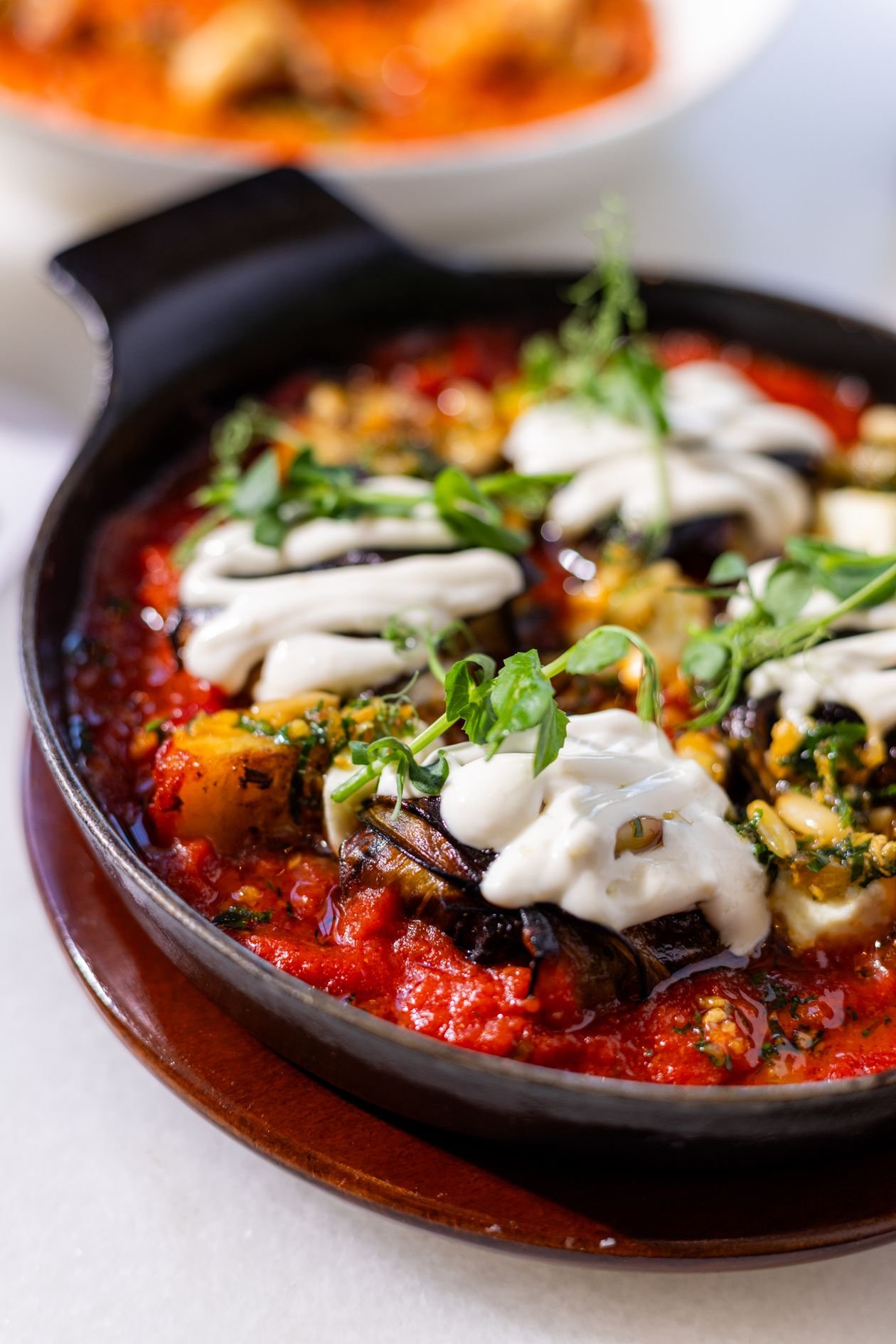
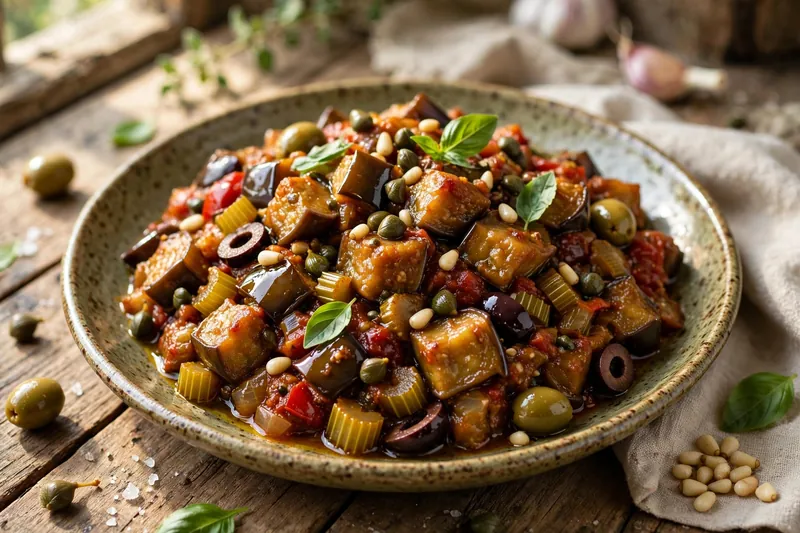
Caponata is Sicily's famous sweet and sour eggplant dish, rich with tomatoes, olives, capers and celery in a glossy agrodolce sauce. It works as a warm side, a bruschetta topping or a cold antipasto, and it genuinely improves after a night in the fridge. One pan, one pot of patience, and you have a dish that tastes like a Sicilian summer garden.
The story behind Caponata
Caponata comes from Sicily, where Arab, Spanish and Italian cooks all left their mark on the island's table. The name probably traces back to the Spanish word capon, a kind of fish dish served with a sweet and sour sauce, though the eggplant version we know today became the island's own. Arab traders had already brought sugar cane and a taste for sweet and sour cooking to Sicily centuries earlier, and Spanish rulers later added their own sauces and techniques, so the dish carries the whole history of the island in a single pan. Over centuries, Sicilian cooks turned a humble harvest of eggplants, tomatoes and celery into a dish that could sit on a poor farmer's table and a noble family's banquet alike.
In Sicily, caponata is part of everyday life rather than a special occasion dish. Families make a big batch when eggplants are cheap and plentiful in late summer, then keep it in the fridge for days, spooning it onto bread or serving it next to grilled fish and roast meats. It shows up at village festivals, in beach picnics and on antipasto platters, always at room temperature, always with good bread nearby to catch the sauce. Because it keeps so well, it was also a practical dish for fishermen and farm workers who needed food that would travel and still taste good hours later, eaten cold under the sun with a hunk of bread.
What makes caponata special is the balance of agrodolce, the sweet and sour harmony that defines so much Sicilian cooking. The eggplant turns soft and almost creamy, the tomatoes give body, the celery stays a little firm for contrast, and the olives and capers bring salt and bite. A spoonful of sugar and a splash of vinegar pull the whole thing together, so no single flavour shouts over the rest. You taste sweet, sour, salty and rich in the same bite.
Cook caponata when eggplants are in season and you want something you can make ahead without stress. It is ideal for a summer dinner party, because you cook it the day before and serve it at room temperature while you focus on the main course. It also suits a quiet weeknight when you want a vegetable dish with real depth, something that rewards a little patience with a flavour that keeps getting better.
- Prep time
- 30 mins
- Cook time
- 35 mins
- Total time
- 1 hr 5 mins
- Servings
- 6 servings
- Calories
- 210
Ingredients
- 2 large eggplants (about 900 g), cut into 2 cm cubes
- 100 ml extra virgin olive oil, divided
- 1 onion, finely chopped
- 3 celery stalks, cut into small pieces
- 400 g ripe tomatoes, chopped, or 1 tin (400 g) chopped tomatoes
- 80 g green olives, pitted and halved
- 2 tablespoons capers, rinsed
- 3 tablespoons red wine vinegar
- 2 tablespoons sugar
- 1 tablespoon tomato paste
- Salt and black pepper to taste
- A handful of fresh basil leaves, torn
Instructions
- Salt the eggplant cubes in a colander and leave them for 20 minutes, then pat them dry with a clean cloth. You will see beads of moisture come out, and that step keeps the eggplant from soaking up too much oil and turning soggy in the pan. If you are short on time, ten minutes of salting still helps, though the full twenty gives the best texture and the least oil absorption.
- Heat half the olive oil in a large wide pan over medium-high heat until it shimmers. Fry the eggplant in two batches, turning the cubes until they are golden on most sides, about 5 minutes a batch. Lift them out with a slotted spoon and set them aside on a plate. The cubes should hiss gently as they hit the oil and turn a deep golden brown at the corners, which tells you the outside has sealed and the inside is turning soft and creamy.
- Lower the heat to medium, add the rest of the oil, and cook the onion and celery for 6 to 8 minutes until soft and sweet-smelling. The celery should bend easily but still hold its shape, and the onion should look translucent rather than brown.
- Stir in the tomato paste and cook for 1 minute, then add the chopped tomatoes and a good pinch of salt. Let the sauce bubble gently for 10 minutes until it thickens and the raw tomato smell gives way to a round, cooked sweetness. Stir now and then and watch the sauce change from bright red to a deeper, brick-red colour as it cooks down and the oil starts to separate at the edges.
- Return the eggplant to the pan with the olives and capers, and fold everything together so the sauce coats each cube. Simmer for 5 minutes more, just long enough for the flavours to meet without the eggplant falling apart.
- Pour in the vinegar and sprinkle over the sugar, then stir and taste. The sauce should land sweet and sour in the same spoonful, so add a little more vinegar or sugar until it tastes balanced to you.
- Take the pan off the heat and let the caponata cool in the pan for at least 30 minutes. Warm caponata is fine, but the flavours settle and deepen as it cools, so patience here is part of the recipe.
- Spoon the caponata into a serving dish, scatter the torn basil over the top, and serve at room temperature with crusty bread. A drizzle of your best olive oil over the top finishes it.
Pro tips
- Fry the eggplant in batches and never crowd the pan, or it will steam and turn grey instead of going golden at the edges. A single crowded layer lets the oil stay hot and the cubes brown properly, while a heaped pan drops the temperature and the eggplant turns pale and greasy.
- Salt the eggplant first. It draws out bitter moisture and helps the cubes hold their shape during frying. It also firms the flesh slightly, so the cubes keep their shape in the sauce instead of collapsing into the pan.
- Taste the agrodolce before you serve it. Tomatoes vary in sweetness, so the right vinegar and sugar balance changes a little every time you make it. A little lemon juice can sharpen the finish if the vinegar alone feels flat, and a pinch of salt at the end wakes up the tomato sweetness.
- Make it a day ahead when you can. Caponata kept overnight in the fridge tastes rounder and more settled than the same-day version. The vinegar mellows overnight, the tomatoes round out, and the whole dish eats more like a finished sauce than a collection of vegetables.
- Keep the celery pieces small and cook them gently. They should add a fresh crunch, not a raw bite, so give them a full 6 to 8 minutes with the onion. If the celery is cut too large it stays raw in the middle, so keep the pieces small, about the size of your thumbnail, and give them time to soften.
Variations & serving ideas
You can change caponata quite freely once you understand the sweet-sour base. Some Sicilian families add pine nuts and raisins for a richer, slightly sweet finish, and that version works beautifully next to roast pork or grilled chicken. Others stir in a spoonful of cocoa powder, a very old Palermo touch, which deepens the sauce without making it taste of chocolate. If you want heat, a pinch of chilli flakes in the oil at the start gives a slow warmth that suits the vinegar well. In Catania, on the east coast of the island, some cooks add a little tomato paste and a splash of white wine for a darker, more savoury sauce, while Palermo versions lean sweeter with more raisins and pine nuts.
Substitutions are easy if you shop with care. Courgettes can replace half the eggplant when eggplants are scarce, though you should fry them briefly so they stay firm. Green olives can swap for black ones, and white wine vinegar works in place of red wine vinegar, giving a slightly sharper finish. If you have no fresh tomatoes, a good tin of chopped tomatoes is honestly better than pale out-of-season fruit.
Serve caponata warm as a side dish, at room temperature as part of an antipasto spread, or cold from the fridge piled on toasted bread. It pairs well with grilled sardines, roast chicken, a simple omelette, or a plate of cured meats and cheese. The sauce also makes a good topping for a grain bowl, spooned over farro or couscous with a little extra basil.
For a full meal, set caponata out with a big green salad, crusty bread and a glass of light red wine or a cold lager. In summer it sits happily next to grilled fish, and in cooler weather it works as a warm side for roast meats. However you serve it, give it good bread, because the sauce left in the dish is too good to leave behind.
Getting it right
The key technique in caponata is frying the eggplant properly, because everything else in the dish depends on it. Eggplant is like a sponge when raw, so hot oil and space in the pan are what give you golden, creamy cubes instead of oily mush. Let the oil get hot enough that a cube sizzles the moment it lands, and keep the pieces in a single layer with room between them. Work in batches, and do not stir too often, or the cubes break up before they colour.
Heat and timing control matter at two points in this recipe. First, the frying oil should stay at medium-high heat, hot enough to brown the outside quickly while the inside turns soft. If the oil cools because the pan is crowded, the eggplant drinks oil instead of browning, and the dish turns heavy. Second, the tomato sauce needs a gentle simmer rather than a hard boil, so it thickens slowly and the flavours round out instead of tasting sharp and raw.
The common mistakes are all easy to fix. If your caponata tastes flat, it usually needs more vinegar or a pinch more salt, so adjust in small steps and taste after each one. If the eggplant fell apart, it was probably stirred too much or simmered too long after the sauce was added, so next time fold it in gently and keep the final simmer short. If the dish tastes too sweet, add a spoonful of vinegar and a few more capers to bring the balance back. A little patience at the cooling stage fixes more than any extra ingredient will.
Storing & reheating
Caponata keeps well in the fridge for up to 5 days in a sealed container, and most cooks agree it tastes better on day two or three. Let it cool completely before you close the lid, so condensation does not water down the sauce. Bring it back to room temperature for about 30 minutes before serving, because cold from the fridge mutes the sweet-sour balance.
For longer keeping, freeze caponata in portions for up to 3 months, leaving the basil out until serving. Thaw it overnight in the fridge, then warm it gently in a pan over low heat with a splash of water if the sauce has thickened. Never reheat it hard or microwave it on full power, or the eggplant turns to mush and the celery loses its bite.
Frequently asked questions
Can I make caponata ahead of time?
Yes, and you should. Caponata tastes better after a night in the fridge because the sweet, sour and salty flavours settle together. Make it up to two days ahead, keep it sealed in the fridge, and bring it to room temperature before serving.
Do I have to salt the eggplant first?
Salting for 20 minutes draws out bitter moisture and helps the cubes fry golden instead of soaking up oil. Modern eggplants are less bitter than old varieties, so you can skip it in a rush, but the texture is noticeably better when you salt them. The cubes also brown faster and stay firmer, so the finished dish has distinct pieces of eggplant instead of a soft mash.
Can I use tinned tomatoes instead of fresh?
Yes, a good tin of chopped tomatoes works well, especially outside summer. Fresh ripe tomatoes give a brighter flavour when they are in season, but pale winter tomatoes are worse than tinned, so choose the tin when fresh ones are not at their best.
Is caponata served hot or cold?
Traditionally it is served at room temperature, which lets the sweet-sour balance come through clearly. It also works warm as a side dish or cold from the fridge on toast. Avoid serving it piping hot, because the vinegar tastes sharper when the dish is very hot. Room temperature is the sweet spot, where the oil stays fluid, the vinegar is gentle and every flavour in the pan comes through clearly.
What can I serve with caponata?
Crusty bread is the classic partner, along with grilled fish, roast chicken or a plate of cured meats and cheese. It also works spooned over grains like farro or couscous, or as a topping for bruschetta with a little extra basil on top.
Can I freeze caponata?
Yes, freeze it in portions for up to 3 months without the basil. Thaw overnight in the fridge and warm it gently in a pan over low heat. Add fresh basil after reheating, and avoid microwaving it hard, which softens the eggplant too much.