Cassata Siciliana Recipe
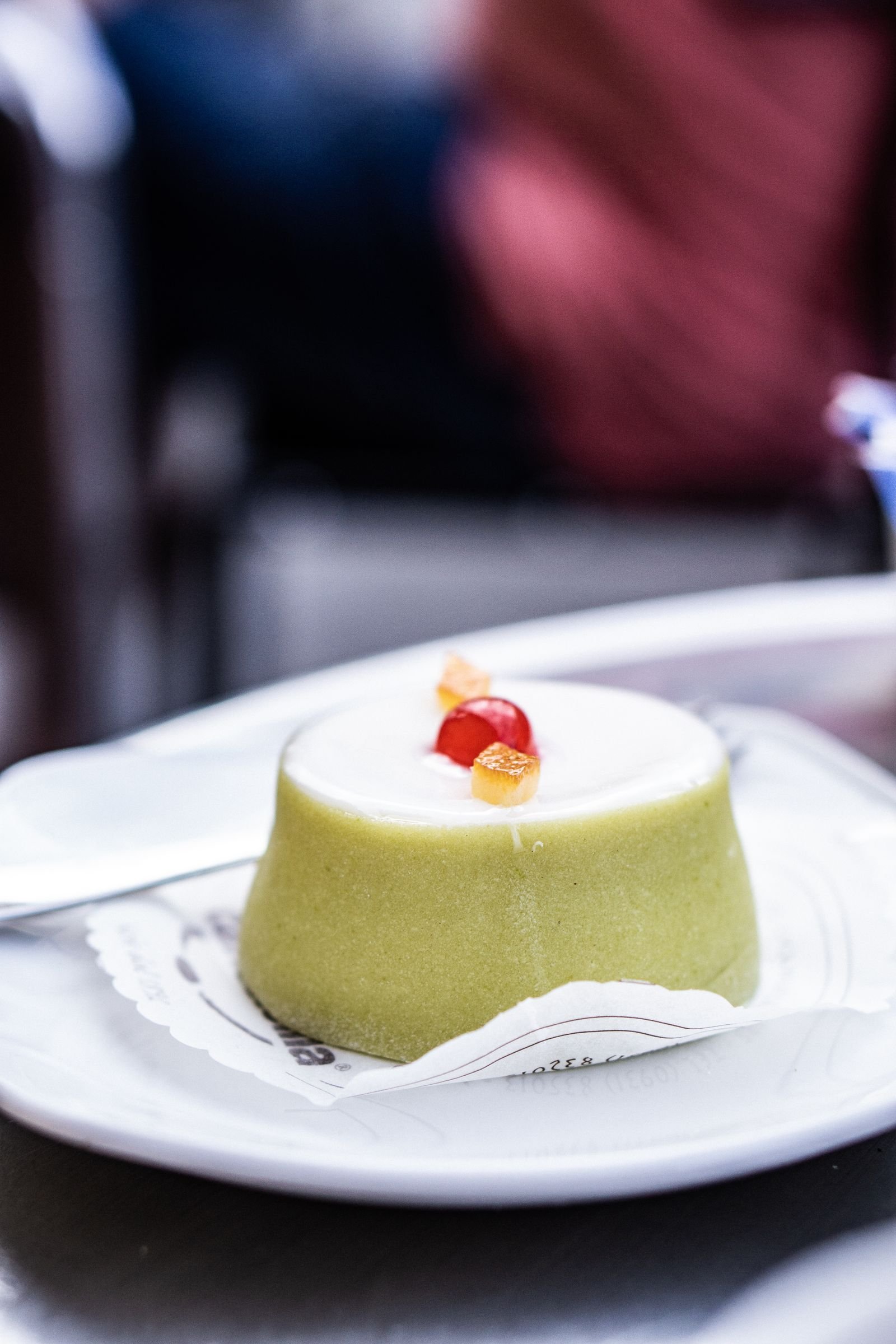
Cassata siciliana is Sicily's great celebration cake: soft sponge brushed with liqueur, sweet ricotta studded with chocolate and candied peel, all wrapped in green marzipan and crowned with glossy candied fruit. It is rich, cold, and unmistakably festive. One slice is never quite enough.
The story behind Cassata Siciliana
Cassata siciliana comes from Palermo, and it is the cake Sicilians make when something is worth celebrating. Sponge cake, sweet ricotta, marzipan and candied fruit are layered into a round, jewel-topped cake that looks like it belongs on a feast table. It is the centrepiece of Easter in Sicily, and it appears at weddings, christenings and saints' days all through the year.
The cake has deep roots. Arab rulers brought sugar cane, almonds and citrus to Sicily more than a thousand years ago, and those ingredients still define the island's sweets today. The name may come from the Arabic word for a round bowl, and the ricotta filling speaks to the island's long sheep-farming tradition. Nuns in Palermo's convents refined the recipe over centuries, adding the marzipan shell and the bright candied fruit that makes a cassata so easy to recognise.
What makes this cake special is the way so many textures sit together in one slice. The sponge is soft and lightly scented with wine or orange. The ricotta filling is cool, creamy and sweet, with small pieces of dark chocolate and candied peel that catch you by surprise. The marzipan gives a gentle almond flavour and a smooth bite, and the candied fruit on top adds colour and a firm, sugary crunch. No single layer would be enough on its own.
Cook it when you have a celebration coming and a little time to spare. It is not a quick cake: the ricotta drains overnight and the assembled cake chills for hours, but the work itself is simple. Make it the day before your gathering, keep it cold, and bring it out to a table full of people. Slice it thin, because it is rich, and watch it disappear.
- Prep time
- 45 mins
- Cook time
- 30 mins
- Total time
- 1 hr 15 mins
- Servings
- 4 servings
- Calories
- 580
Ingredients
- 4 large eggs, at room temperature
- 120 g caster sugar, for the sponge
- 120 g plain flour, sifted
- 1 pinch of fine sea salt
- 500 g fresh ricotta, drained overnight
- 150 g icing sugar, sifted
- 80 g dark chocolate, finely chopped
- 60 g mixed candied peel, finely diced
- 1 teaspoon vanilla extract
- 120 ml Marsala wine or orange juice, for brushing
- 300 g green marzipan (pasta reale)
- 200 g icing sugar, for the glaze
- 2 tablespoons lemon juice, for the glaze
- Mixed candied fruit, to decorate
Instructions
- Start the night before by draining the ricotta. Tip it into a fine sieve lined with muslin or a clean tea towel, set the sieve over a bowl, and leave it in the fridge overnight. The next day you will find a surprising amount of liquid in the bowl, and the ricotta left behind will be thick and spreadable, which is exactly what the filling needs.
- Make the sponge the next morning. Heat the oven to 180 C (160 C fan) and line a 20 cm round tin with baking paper. Whisk the eggs and sugar together in a large bowl for about eight minutes, until the mixture is pale, thick and tripled in volume. When you lift the whisk, the ribbon should sit on the surface for a few seconds before sinking back in.
- Sift the flour and salt over the egg mixture in two lots, folding each lot in gently with a large metal spoon. Cut through the middle, sweep around the side and lift up, turning the bowl as you go. Stop as soon as you can no longer see flour. Over-mixing knocks the air out and leaves you with a flat, tough sponge.
- Pour the batter into the tin and bake for 25 to 30 minutes, until the top is golden and springs back when you press it lightly. A skewer pushed into the middle should come out clean. Turn the sponge out onto a wire rack and leave it to cool completely, then slice it horizontally into two even layers with a long serrated knife.
- Make the filling while the sponge cools. Beat the drained ricotta with the icing sugar and vanilla until smooth, then fold in the chopped chocolate and diced candied peel. Taste it. It should be sweet but still taste of ricotta, with small bursts of chocolate and citrus. If it seems soft, chill it for twenty minutes before assembling.
- Line the same tin with cling film, leaving plenty of overhang. Lay the first sponge layer in the bottom and brush it lightly with half the Marsala or orange juice. Spoon in all the ricotta filling and spread it level, pressing it gently into the edges so there are no gaps. Lay the second sponge layer on top and brush it with the rest of the liquid.
- Fold the cling film over the top, press the cake down gently with a plate, and put a light weight on it, like a tin of beans. Chill the cake in the fridge for at least 6 hours, overnight if you can. This pressing and chilling is what makes the cake hold together in clean, neat slices.
- Roll the marzipan out on a surface dusted with icing sugar until it is about 3 mm thick and wide enough to drape over the cake. Turn the chilled cake out onto a serving plate and peel off the cling film. Lay the marzipan over the top and smooth it down the sides with your hands, trimming the excess at the base with a sharp knife.
- Mix the icing sugar with the lemon juice a little at a time until you have a thick, smooth glaze that falls slowly from a spoon. Pour it over the centre of the cake and let it run to the edges, nudging it with a palette knife. Let the glaze set for thirty minutes, then arrange the candied fruit on top in a neat pattern and serve the cake cold, in thin slices.
Pro tips
- Drain the ricotta overnight in a sieve lined with muslin. This single step makes the difference between a firm filling and one that weeps into the sponge.
- Use a long serrated knife to split the sponge, and turn the cake as you cut so the layers stay even all the way round.
- Chill the ricotta filling for twenty minutes before assembling if it feels soft. A firm filling spreads neatly and holds the layers in place.
- Roll the marzipan on icing sugar, not flour, so it stays sweet and does not pick up a dusty taste.
- Slice the finished cake with a hot, dry knife, wiping the blade between cuts, so each piece shows clean layers.
Variations & serving ideas
The classic Palermo cassata uses green marzipan and candied fruit, but there are many versions across Sicily. Cassata al forno, the baked version, is a shortcrust tart filled with sweet ricotta and baked until golden, with no marzipan at all. It is simpler to make and tastes more like a cheesecake, and it suits a weeknight dessert better than the full celebration cake. Some families add a layer of pistachio cream or a little cinnamon to the filling.
If you cannot find green marzipan, use plain marzipan and tint it yourself with a few drops of green food colouring, kneaded in well. You can also leave the marzipan off entirely and finish the cake with a thick layer of whipped cream, which makes a softer, lighter cake that some people prefer. For a chocolate version, add cocoa to the sponge and fold extra chopped chocolate into the filling.
Serve the cassata cold, in thin slices, with a small glass of Marsala or a cup of strong coffee. It is rich, so a little goes a long way, and it pairs well with fresh fruit on the side, especially blood oranges in winter. If you are serving it at Easter, it sits happily alongside other Sicilian sweets like cannoli and almond biscuits on a shared table.
For individual portions, make the cake in small ring moulds or even in a muffin tin, cutting the sponge into rounds to fit. The same layers work at any size, and small cassatas make a lovely gift. Just keep the chilling time the same, because a small cake still needs to set properly before it will hold its shape.
Getting it right
The sponge is the foundation of the whole cake, and its success depends on air. Whisk the eggs and sugar for the full eight minutes, until the mixture is pale, thick and three times its starting volume. When you fold the flour in, use a large metal spoon and a slow, gentle motion, turning the bowl as you go. If you stir quickly or use a wooden spoon, the batter deflates and the sponge comes out flat and dense.
Heat control is simple but important. A moderate oven, 180 C, lets the sponge rise evenly without browning too fast on top. If your oven runs hot, the top will set before the middle has risen, and the cake will dip as it cools. Check with a skewer at 25 minutes, and give it a few more minutes if the centre still looks damp. Let the sponge cool fully before you slice it, or it will tear.
The most common mistake is a wet filling. Ricotta straight from the tub holds a lot of liquid, and that liquid will seep into the sponge and make the cake collapse when sliced. Drain it overnight, and do not skip this step. The other mistake is over-wetting the sponge with Marsala. Brush it on lightly; the sponge should taste moist, not soaked. A chilled, pressed cake slices cleanly, so give it the full night in the fridge.
Storing & reheating
Keep the finished cassata covered in the fridge and eat it within four days. The marzipan shell protects the sponge from drying out, so the cake stays moist far longer than most sponge cakes. Bring it out of the fridge about twenty minutes before serving, so the ricotta softens and the flavours open up instead of tasting cold and muted.
You can freeze the assembled cake, before glazing, for up to a month, wrapped tightly in two layers of cling film. Thaw it overnight in the fridge, then glaze and decorate it on the day you serve it. Do not freeze the finished glaze, because it turns sticky as it thaws and the candied fruit loses its shine.
Frequently asked questions
Can I make cassata siciliana a day ahead?
Yes, and most cooks do. Bake the sponge and drain the ricotta the day before, then assemble the cake and let it chill overnight. The flavours settle and the cake slices cleanly. Add the marzipan and the candied fruit on the day you serve it so the colours stay bright.
Does the ricotta really need draining overnight?
It matters a lot. Ricotta that is still wet makes a filling that weeps and softens the sponge. Drain it in a fine sieve lined with muslin over a bowl in the fridge for at least 8 hours, overnight if you can. Give it a stir halfway through and discard the liquid that collects.
Can I leave out the liqueur?
Yes, orange juice or a light sugar syrup works, and children can eat the cake too. Brush the sponge lightly rather than soaking it, or the cake will fall apart when you slice it. A little orange blossom water in the syrup is a lovely touch.
Why did my cassata fall apart when I sliced it?
The most likely cause is sponge that was too wet, or ricotta that was not drained enough. Brush the syrup on sparingly and press the filling in firmly so there are no gaps. A cold cake also holds its shape far better than a warm one, so give it a full night in the fridge.
How long does cassata keep in the fridge?
Keep the finished cake covered in the fridge and eat it within four days. The marzipan keeps the sponge from drying out, which is one reason the cake was invented this way. Bring it out of the fridge twenty minutes before serving so the ricotta softens and the flavours open up.
Do I need a special mould to make cassata?
A springform tin with a removable base is ideal, because you can lift the finished cake out cleanly. If you only have a regular round tin, line it fully with cling film with plenty of overhang, and use the overhang to lift the cake out once it is chilled and firm.