Veg Kurma Recipe
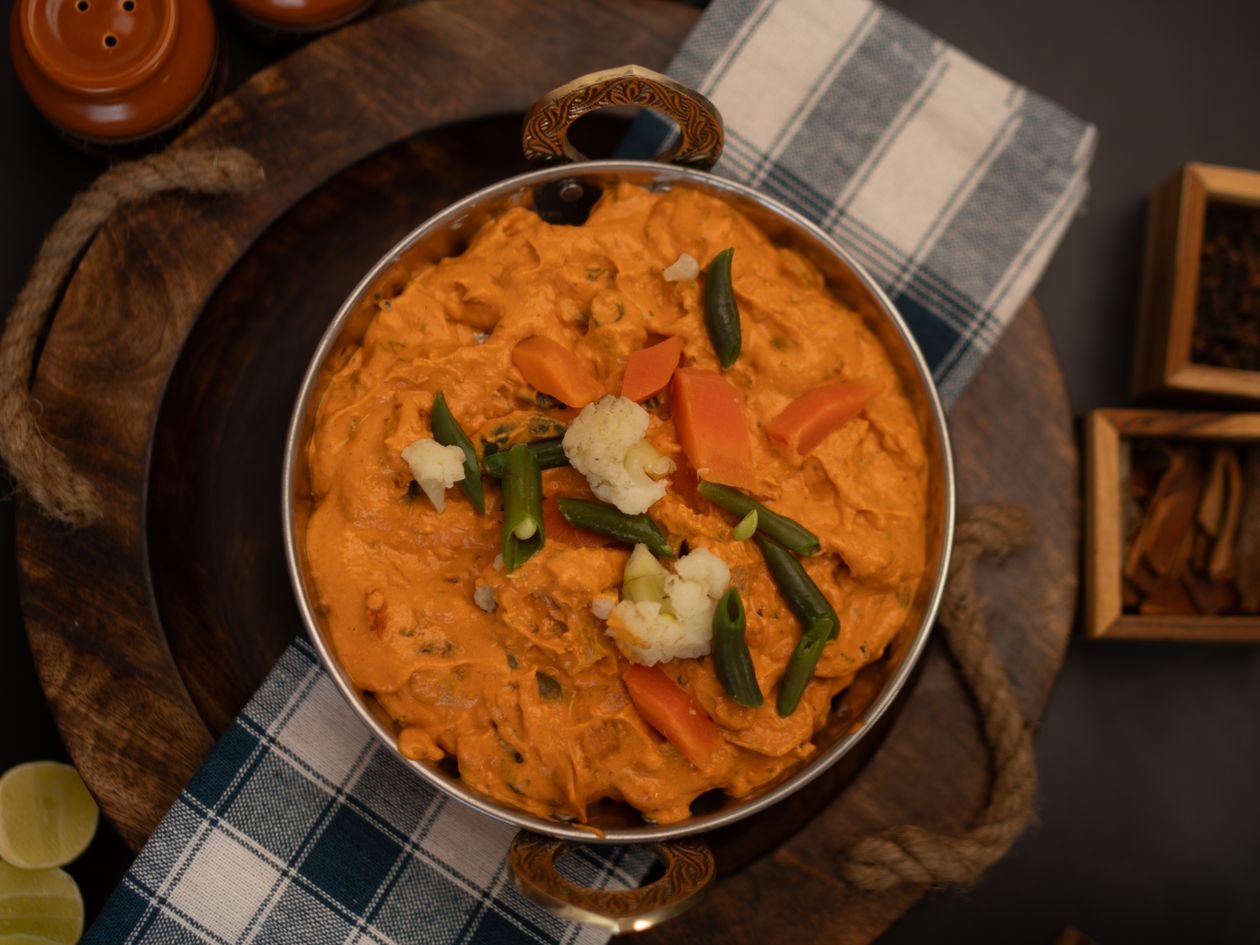
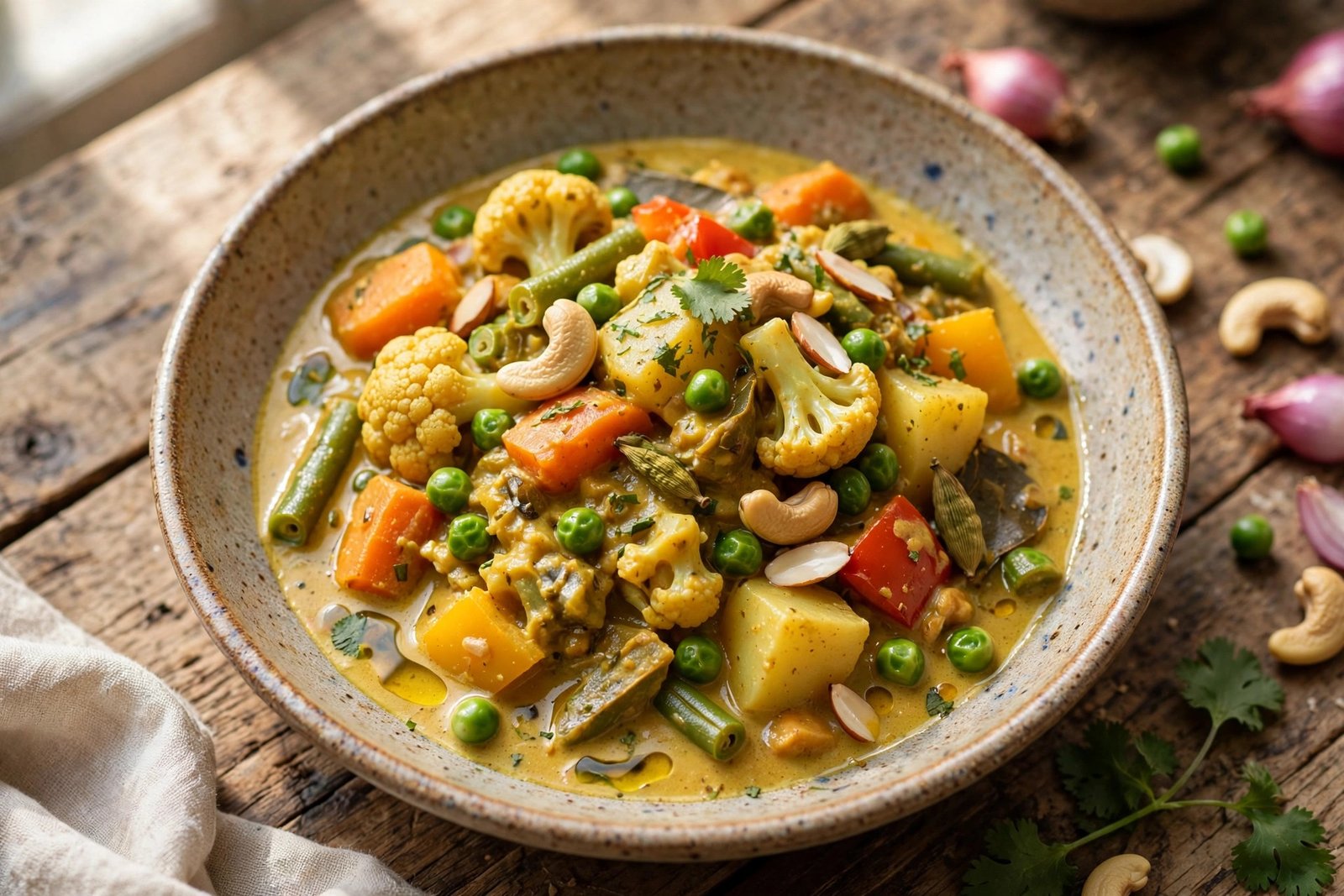
Soft vegetables simmered in a creamy coconut and cashew sauce, gently spiced with cardamom, cinnamon, and green chilli, veg kurma is South India's answer to a comfort curry. It is rich without being heavy, and mild enough for the whole family while still tasting properly spiced. Serve it with appam, parotta, or plain rice, and mop up every last spoonful of the sauce.
The story behind Veg Kurma
Kurma is one of South India's oldest curries, and its roots run back to the royal kitchens of the Mughal era, where cooks ground nuts and seeds into rich, creamy sauces for meat and vegetables. The word kurma comes from the same tradition as the North Indian korma, a slow-cooked dish of meat in a nut-thickened sauce. As the recipe travelled south, it changed: coconut replaced cream, curry leaves and mustard seeds joined the tempering, and the dish became the mild, fragrant vegetable curry that South Indian families cook today.
In Tamil Nadu and Kerala, veg kurma is an everyday celebration food. It appears at weddings and festivals, served with appam or parotta, and it is the curry a host makes when guests are coming and the meal needs to feel generous. The vegetables change with the season and the market: potatoes, carrots, beans, cauliflower, and peas in the cooler months, drumstick and raw banana when they are in season. The sauce stays the same, creamy and gentle, and it is the sauce that people remember.
What makes veg kurma special is its balance. It is rich without being heavy, spiced without being hot, and creamy without a drop of cream. The cashews give the sauce its body, the coconut milk gives it sweetness and a soft, silky texture, and the whole spices, cardamom, cinnamon, and cloves, perfume it from the inside. The green chillies add a gentle warmth, and the curd brings a light tang that keeps the richness from feeling cloying. Every spoonful tastes layered, not loud.
Cook this when you want a curry the whole family can eat, or when friends are coming and you need something that feels generous without a long list of steps. The hands-on time is short, and the curry simmers happily while you make the appam or rice. It is also a good dish for using up vegetables: almost any combination works, as long as the pieces are cut to a similar size so they cook evenly. Serve it hot, with plenty of bread or rice, and watch the sauce disappear first.
- Prep time
- 20 mins
- Cook time
- 35 mins
- Total time
- 55 mins
- Servings
- 4 servings
- Calories
- 380
Ingredients
- 2 potatoes, 2 carrots, 100 g green beans, 100 g cauliflower and 100 g green peas, cut into even 1.5 cm pieces
- 1 onion, finely chopped
- 2 tomatoes, finely chopped
- 3 garlic cloves, crushed, and 1 tablespoon fresh ginger, grated
- 2 green chillies, slit lengthwise
- 100 ml coconut milk
- 3 tablespoons curd (yoghurt), whisked smooth
- 60 g cashews, soaked in hot water for 15 minutes
- 1 tablespoon coconut oil or ghee
- Whole spices: 1 teaspoon mustard seeds, 1 teaspoon cumin seeds, 2 green cardamom pods, 1 cinnamon stick, 4 cloves
- 1 teaspoon coriander powder and 1/2 teaspoon turmeric powder
- Fresh coriander leaves, to garnish
Instructions
- Soak the cashews in hot water for 15 minutes, then drain them and grind them with 3 tablespoons of water until the paste is completely smooth, with no grit at all. This takes a full minute in a blender, and it is worth the patience; a smooth cashew paste is what makes the sauce creamy rather than grainy. Set the paste aside.
- Heat the coconut oil or ghee in a deep pan over medium heat. Add the mustard seeds and wait for them to pop and crackle, which takes about 30 seconds. Then add the cumin seeds, cardamom pods, cinnamon stick, and cloves, and fry for another 30 seconds until the spices smell warm and fragrant. The kitchen should smell of cardamom and cinnamon by now.
- Add the chopped onion and cook for 4 to 5 minutes, stirring often, until it turns soft and pale gold at the edges. Stir in the ginger, garlic, and slit green chillies and fry for 1 minute more, until the raw smell of the garlic fades and the mixture smells sweet and savoury. Do not let the garlic brown, or it will taste bitter.
- Add the tomatoes, turmeric, and coriander powder and cook for 4 to 5 minutes, stirring and pressing the tomatoes with the back of the spoon. The tomatoes should break down into a thick, soft masala, and you should see a little oil separating at the edges of the pan. This slow cooking is what gives the curry its depth.
- Tip in the potatoes, carrots, beans, and cauliflower, and stir to coat them in the masala. Pour in 250 ml of water, bring it to a gentle boil, then turn the heat down and cover the pan. Simmer for 15 minutes, until the vegetables are just tender when pierced with a knife. Check halfway and add a splash of water if the pan looks dry.
- Stir in the cashew paste and the peas, and cook for 3 minutes. The sauce will thicken and turn a pale, creamy gold. Keep the heat gentle here; a hard boil will make the cashew paste grainy and the sauce may split. Stir often and watch the sauce coat the back of the spoon.
- Turn the heat down to the lowest setting and stir in the coconut milk and the whisked curd, a little at a time. Warm the curry through for 2 minutes, but do not let it boil. The sauce should be creamy and smooth, clinging to the vegetables, with a gentle sweetness from the coconut and a mild warmth from the spices.
- Taste and adjust the salt. Add a little more if the flavours taste flat, or a squeeze of lemon if the sauce tastes too rich. The finished kurma should taste balanced: creamy and mild, with the cardamom and cinnamon in the background and a gentle heat from the green chillies.
- Sprinkle the chopped coriander over the top and serve hot, with appam, parotta, chapati, or plain steamed rice. Spoon the sauce generously over the bread or rice, because the sauce is half the pleasure of the dish. Eat it fresh, while the vegetables are still tender and the sauce is warm and creamy.
Pro tips
- Soak the cashews in hot water for 15 minutes before grinding. Soft cashews blend into a much smoother paste, and a smooth paste makes a silky sauce.
- Grind the cashew paste until it is completely smooth, with no grit at all. Run your finger through it; if you feel any grain, blend for another 30 seconds.
- Cook the tomatoes until they break down and the oil separates at the edges. This slow cooking is what gives the curry its depth and removes the raw tomato taste.
- Add the coconut milk and curd last, on the lowest heat, and never let the curry boil after they go in. A hard boil splits the sauce and you cannot undo it.
- Cut all the vegetables to a similar size, about 1.5 cm. Even pieces cook at the same speed, so nothing turns mushy while the rest is still hard.
Variations & serving ideas
Swap the vegetables for whatever is in season. Drumstick, raw banana, chayote, and pumpkin all work beautifully in kurma, and each one changes the texture a little. Add hard vegetables like potato and carrot first, and delicate ones like peas and cauliflower near the end, so everything finishes cooking at the same time. The sauce and the method stay the same, so the dish is endlessly flexible.
For a richer version, use more cashews and a little extra coconut milk, and finish the curry with a spoonful of ghee drizzled over the top. For a lighter version, skip the cashews and use only coconut milk, or replace half the coconut milk with water and add a spoonful of rice flour mixed with water to thicken the sauce. The lighter version is less creamy but still fragrant, and it works well for an everyday meal.
Serve the kurma with appam, parotta, chapati, or plain steamed rice, and it is a complete meal. For a bigger spread, add a thoran, a rasam, and a bowl of curd rice, and you have a proper South Indian lunch. The leftovers make a good lunchbox the next day, packed with chapati, and the flavours deepen overnight in the fridge.
Pair the kurma with foods that balance its creamy richness. A sharp pickle, a fresh cucumber raita, or a simple salad of onion and tomato with lemon all cut through the sauce nicely. A glass of buttermilk or a pot of filter coffee sits well alongside it. Keep the rest of the table simple; the kurma is the centrepiece, and heavy side dishes only compete with it.
Getting it right
The key technique is building the sauce in stages. First the whole spices go into hot oil, where they release their fragrance. Then the onion, ginger, and garlic cook down into a soft, sweet base. Then the tomatoes and ground spices simmer until the oil separates at the edges. Each stage adds a layer of flavour, and rushing any of them leaves the curry tasting flat. The cashew paste goes in after the vegetables are cooked, so it thickens the sauce without overcooking and turning grainy.
Heat control matters most once the coconut milk and curd go in. Both will split if they boil hard, turning a smooth sauce into a grainy, oily one. Keep the curry at the lowest heat, stir in the coconut milk and curd a little at a time, and warm it through for just 2 minutes. If the sauce does split, take the pan off the heat and whisk in a spoonful of cold curd; it will often come back together, though it will never be quite as smooth.
The common mistakes are easy to name. Adding the coconut milk too early and boiling it hard splits the sauce, so always add it last and keep the heat low. Undercooking the tomatoes leaves a raw, sharp taste, so give them a full 4 to 5 minutes until they break down. And cutting the vegetables in different sizes means some are mushy while others are still hard; keep the pieces even, about 1.5 cm, so they finish cooking together.
Storing & reheating
Leftover kurma keeps in the fridge for up to 3 days in a sealed container. The sauce thickens as it sits, and the spices mellow, so it often tastes even better the next day. Reheat it gently over low heat with a splash of water or coconut milk, stirring often. Do not boil it hard, or the coconut milk may split and the sauce will turn grainy.
This curry freezes well for up to 2 months. Cool it completely, then freeze in portions in sealed containers, leaving a little space at the top for the sauce to expand. Thaw overnight in the fridge and reheat gently with a splash of coconut milk. The vegetables soften a little on freezing, but the flavour holds up nicely, so it is a good make-ahead dish.
Frequently asked questions
Can I make veg kurma vegan?
Yes. Use a dairy-free yoghurt or a little extra coconut milk instead of the curd, and skip the ghee in favour of coconut oil. The sauce stays creamy and the flavour stays close to the original.
Why did my kurma sauce split?
It is usually because the coconut milk was boiled too hard, or the cashew paste was added too late. Keep the curry at a gentle simmer once the coconut milk goes in, and grind the cashews to a completely smooth paste before adding it.
How do I get the cashew paste smooth?
Grind the cashews with a little water until the paste is completely smooth, with no grit at all. Soak them in hot water for 15 minutes first, which softens them and makes a silkier paste. A high-speed blender helps, but a regular one works if you blend for a full minute.
Can I use different vegetables?
Yes, and it is a good way to use up whatever is in the fridge. Cauliflower, beans, peas, carrots, potatoes, and drumstick all work. Keep the pieces roughly the same size so they cook evenly, and add delicate vegetables like peas near the end.
What do I serve with veg kurma, appam or rice?
Both are good. Appam, with its soft centre and crisp edges, is the classic pairing in Kerala, and it soaks up the sauce beautifully. Plain steamed rice, parotta, or chapati all work well too; choose whichever you have to hand.
How long does leftover kurma keep?
It keeps in the fridge for up to 3 days in a sealed container. Reheat it gently over low heat with a splash of water or coconut milk, stirring often. Do not boil it hard, or the coconut milk may split.