Poori Sabzi Recipe
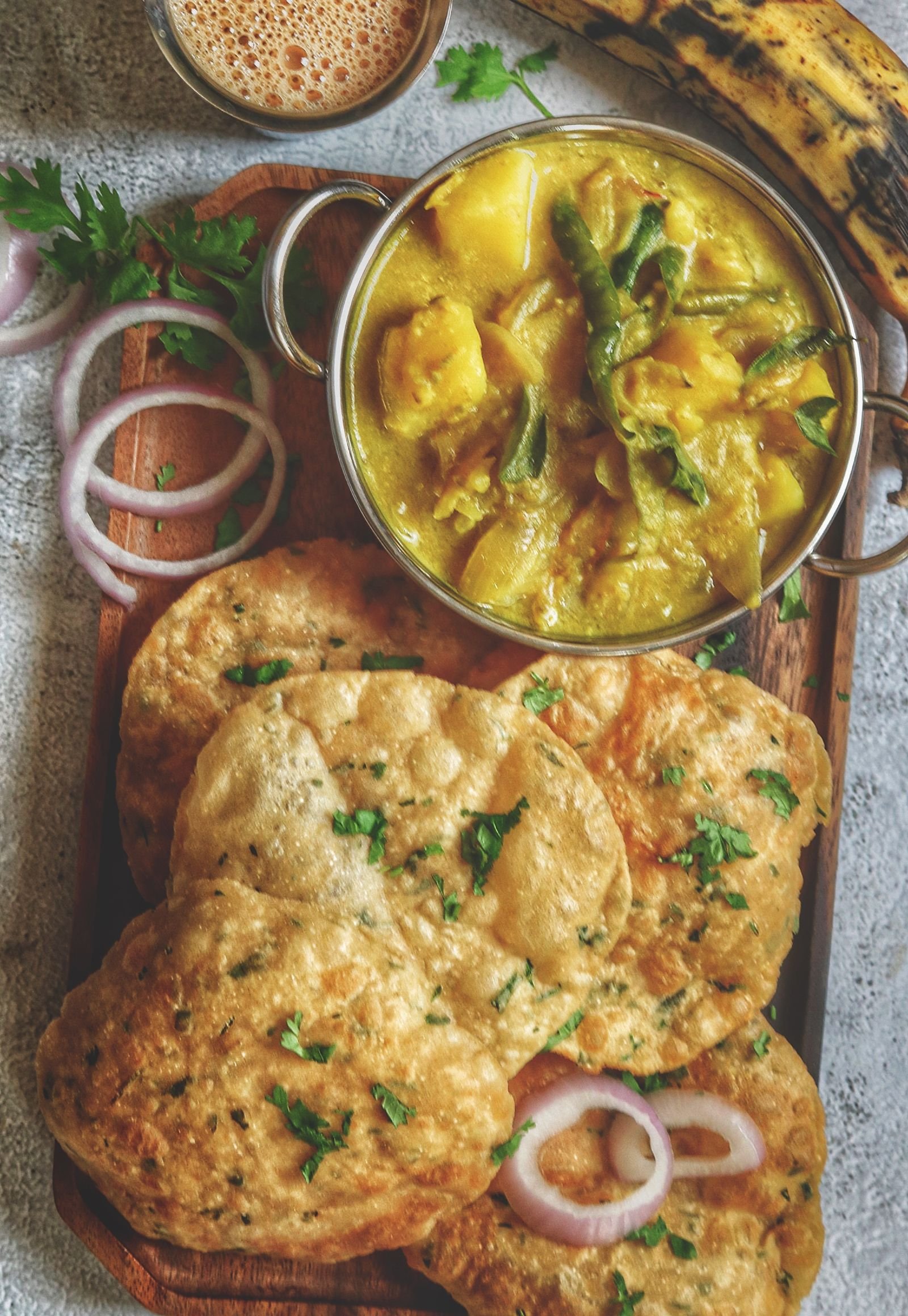
Golden poori puffed up in hot oil, served with a warm potato sabzi, tangy pickle and cool yoghurt. Poori sabzi is a classic Indian breakfast that turns a plain morning into a small celebration. The bread puffs, the potatoes soak up the spices, and every bite is soft, crisp and full of flavour.
The story behind Poori Sabzi
Poori sabzi is one of the oldest breakfasts in India, and it belongs to the whole country rather than one region. Poori, the puffed fried bread, appears in texts and temple kitchens going back centuries, and the potato sabzi beside it is the everyday vegetable curry of North Indian homes. Together they form a meal that is cheap, filling and quick to put on the table, which is why it shows up at roadside dhabas, on trains, at weddings and on Sunday breakfast tables alike.
In many homes poori sabzi is the food of mornings that matter. It is cooked for guests, for festivals and for the first meal after a journey, because frying pooris takes a little effort and the puff of each one feels like a small celebration. Street vendors sell it from early morning, the pooris stacked in a basket under a cloth, the sabzi kept hot in a steel pot. Eat it standing up with your hands, and you understand why it has never gone out of fashion.
What makes the dish work is the pairing of textures. The poori is crisp for a few seconds, then soft and chewy as it cools, while the sabzi is soft, warm and lightly spiced. The potato soaks up the masala and turns almost creamy where it is mashed into the gravy, and a spoon of yoghurt or a bite of pickle cuts through the richness of the fried bread. No part of the meal is complicated, and that is the point.
Cook poori sabzi when you have a slow morning and people to feed. It suits a Sunday lunch in the UK, when the table is full and nobody is in a rush. Make the sabzi the night before and fry the pooris fresh in the morning, and the whole meal comes together in under half an hour. It is also a good dish for feeding a crowd, since the dough and potatoes stretch easily to double the batch.
- Prep time
- 25 mins
- Cook time
- 30 mins
- Total time
- 55 mins
- Servings
- 4 servings
- Calories
- 480
Ingredients
- 2 cups plain flour (maida), plus extra for dusting
- 1/2 teaspoon salt
- 1 tablespoon oil, plus more for frying
- 3/4 cup warm water, as needed
- 4 medium potatoes, boiled and peeled
- 2 tablespoons oil or ghee
- 1 teaspoon cumin seeds and 1/2 teaspoon mustard seeds
- 1 onion, finely chopped
- 2 tomatoes, finely chopped
- 1 teaspoon ginger, grated, and 2 green chillies, slit
- 1 teaspoon turmeric powder, 1 teaspoon coriander powder and 1/2 teaspoon red chilli powder
- 1 teaspoon garam masala
- Fresh coriander leaves, chopped, plus yoghurt and pickle to serve
Instructions
- Put the flour and salt in a bowl and rub in the tablespoon of oil until the mixture looks like fine breadcrumbs. Add warm water a little at a time and knead into a firm but smooth dough, about 4 to 5 minutes. Cover with a damp cloth and rest for 20 minutes. A rested dough rolls out without springing back, which keeps the pooris round and even.
- While the dough rests, make the sabzi. Heat the oil or ghee in a pan over medium heat. Add the cumin seeds and mustard seeds and wait until they pop and crackle, which takes about 30 seconds. The sound tells you the oil is hot enough for the spices to bloom instead of sitting raw.
- Add the onion and cook for 4 to 5 minutes, stirring now and then, until it turns soft and golden at the edges. Stir in the ginger and green chillies and cook for one more minute until the raw smell of ginger fades. The base should smell sweet and warm by now.
- Add the tomatoes, turmeric, coriander powder and red chilli powder. Cook on medium heat for 5 to 6 minutes, stirring often, until the tomatoes break down into a thick paste and you see oil glistening at the edges of the pan. This slow fry is what gives the sabzi its depth, so do not rush it.
- Break the boiled potatoes into rough chunks with your hands and add them to the pan. Pour in half a cup of water and stir so the potatoes are coated in the masala. Simmer for 6 to 8 minutes, mashing a few potato pieces against the side of the pan to thicken the gravy. Season with salt and garam masala, then scatter over the fresh coriander.
- Now roll the pooris. Divide the dough into 12 small balls. Roll each one on a lightly oiled surface into a circle about 10 cm across, keeping the thickness even. Do not use flour for dusting if you can avoid it, because loose flour burns in the oil and darkens the next batch. Keep the rolled pooris covered with a cloth so they do not dry out.
- Heat oil in a deep pan or kadai until it is hot enough that a small piece of dough rises straight to the surface and sizzles hard, about 180°C. Slide one poori in gently, away from you, and press it down lightly with the back of a slotted spoon. It should puff up like a balloon within seconds. That puff is the moment to watch for.
- Flip the poori once the underside is pale gold, and cook the second side for 20 to 30 seconds until it is golden all over. Lift it out with the spoon, let the oil drip back into the pan, and drain on kitchen paper. Fry the rest the same way, one or two at a time, and never crowd the pan or the oil cools down.
- Serve four pooris per person with a generous ladle of potato sabzi, a spoon of yoghurt and a little pickle. Eat them while the pooris are still puffed and crisp at the edges, tearing pieces off and scooping up the sabzi. The contrast between hot bread and warm, soft potato is the whole point of the dish.
Pro tips
- Boil the potatoes the night before if you can. Cold, firm potatoes break into clean chunks and hold their shape in the sabzi, while hot, fresh-boiled ones turn to mush as soon as you stir them.
- Roll the pooris on an oiled surface, not a floured one. Loose flour falls into the oil, burns, and leaves dark specks on every poori after the first batch. A thin smear of oil keeps the dough from sticking without that problem.
- Fry one poori at a time while you are learning. It is easier to watch the puff, control the flip and keep the oil hot. Once you are confident, fry two at a time, but never crowd the pan.
- Keep finished pooris in a basket lined with kitchen paper and covered with a cloth. The paper soaks up extra oil and the cloth keeps them warm, but do not seal the basket or the steam will make them soft.
- Taste the sabzi before you add the garam masala at the end. Potatoes need a fair amount of salt, and the masala should lift the flavour, not drown it. Add salt in two rounds so you do not overshoot.
Variations & serving ideas
The potato sabzi is the classic partner, but it is far from the only one. Swap the potato for chole, a chickpea curry, and you have chole poori, a richer meal that works well for lunch. A simple mixed vegetable sabzi with peas, carrots and cauliflower is lighter and uses up whatever is in the fridge. In many homes the poori is served with a dry potato bhaji instead of a gravy, which travels better in a lunchbox.
If you want a lighter bread, make the dough with half whole wheat flour and half plain flour. The pooris will be a little denser and less puffy, but they carry a nuttier taste. For a gluten-free version, use a gluten-free plain flour blend and roll the pooris between two sheets of baking paper, since the dough will be softer and more fragile.
Serve poori sabzi as a full breakfast with yoghurt, pickle and a pot of chai. A small bowl of sliced onion and lemon on the side adds crunch. For a festival meal, add a sweet such as halwa or kheer to the plate and you have a complete thali. The dish also works as a packed lunch if you let the pooris cool and wrap them separately from the sabzi.
This breakfast pairs well with other North Indian dishes. Serve it beside a bowl of dal for a bigger lunch, or follow it with a fruit salad and lassi on a warm day. The potato sabzi on its own is a useful side too: it goes well with rice, with plain chapati, or spooned over toast as a quick snack.
Getting it right
The skill in poori sabzi sits in two places: the dough and the oil. The dough should be firmer than chapati dough but still soft enough to roll thin without cracking. If it is too soft, the pooris soak up oil and turn greasy. If it is too stiff, they will not puff. Knead until the surface is smooth, then rest the dough under a damp cloth so it relaxes and rolls out evenly.
Oil temperature decides whether a poori puffs or flops. The oil must be hot, around 180°C, so steam builds inside the bread faster than it can escape. Test it with a scrap of dough: it should rise at once and sizzle hard. If it sinks and sits, wait longer. If the oil smokes, it is too hot and the poori will brown before it puffs. Press the poori down gently with the back of a spoon as soon as it hits the oil, which helps the steam push the top layer up.
The most common mistake is rolling the pooris unevenly, thick in the middle and thin at the edges. The thin parts cook first and the thick centre never puffs. Roll with light, even pressure and turn the circle as you go. Another common fault is a sabzi that tastes raw, which happens when the tomatoes are not cooked long enough. Keep frying the masala until the oil separates at the edges and the raw smell is gone. If the sabzi is too thick, add water a spoon at a time. If it is too thin, mash more potato into it.
Storing & reheating
The potato sabzi keeps in the fridge for up to 3 days in a sealed container, and it often tastes better the next day once the spices have settled. Cooked pooris are best eaten at once, but if you have leftovers, keep them in a paper bag at room temperature for a few hours. Never store pooris in a sealed plastic bag while warm, because the trapped steam turns them soft and chewy.
Reheat the sabzi in a pan over medium heat with a splash of water, stirring until it bubbles. Warm leftover pooris on a dry tawa for 20 seconds a side, which brings back a little of their crispness, though they will never puff again. Freeze uncooked pooris rolled out and stacked with baking paper between them for up to a month, then fry straight from frozen.
Frequently asked questions
Why do my pooris not puff up?
The oil is not hot enough, or the dough is too thick in the middle. Heat the oil until a small piece of dough rises to the surface at once and sizzles hard. Roll each poori thin and even, then slide it in and press gently with the back of a spoon so steam builds inside.
Can I make poori sabzi ahead of time?
Yes, the potato sabzi keeps well in the fridge for 3 days and tastes better the next day as the spices settle. Reheat it with a splash of water. Fry the pooris fresh, because reheated pooris turn chewy and flat.
Is poori sabzi healthy?
Yes, in a limited way. Keep the dough soft, roll the pooris thin and do not fry them too dark. Use less oil in the sabzi and serve with yoghurt. A fried bread will never be light food, so treat it as a weekend breakfast rather than a daily one.
How do I serve poori sabzi for guests?
Make the sabzi a day ahead, keep the dough ready in the fridge, and fry the pooris just before everyone sits down. A good poori waits for no one, so have the plates, yoghurt and pickle on the table before the first poori hits the oil.
Can I use whole wheat flour instead of plain flour?
No. Plain flour makes a softer, less chewy poori, which is how most homes make it. Whole wheat flour works too and gives a slightly nutty taste, but the pooris stay flatter and feel heavier. If you use whole wheat, keep the dough very soft.
Can I freeze uncooked pooris?
Yes, for up to a month. Roll the pooris out, stack them with baking paper between each one, and freeze them in a bag. Fry them straight from frozen in hot oil, adding about 30 seconds to the cooking time.