Kadai Paneer Recipe
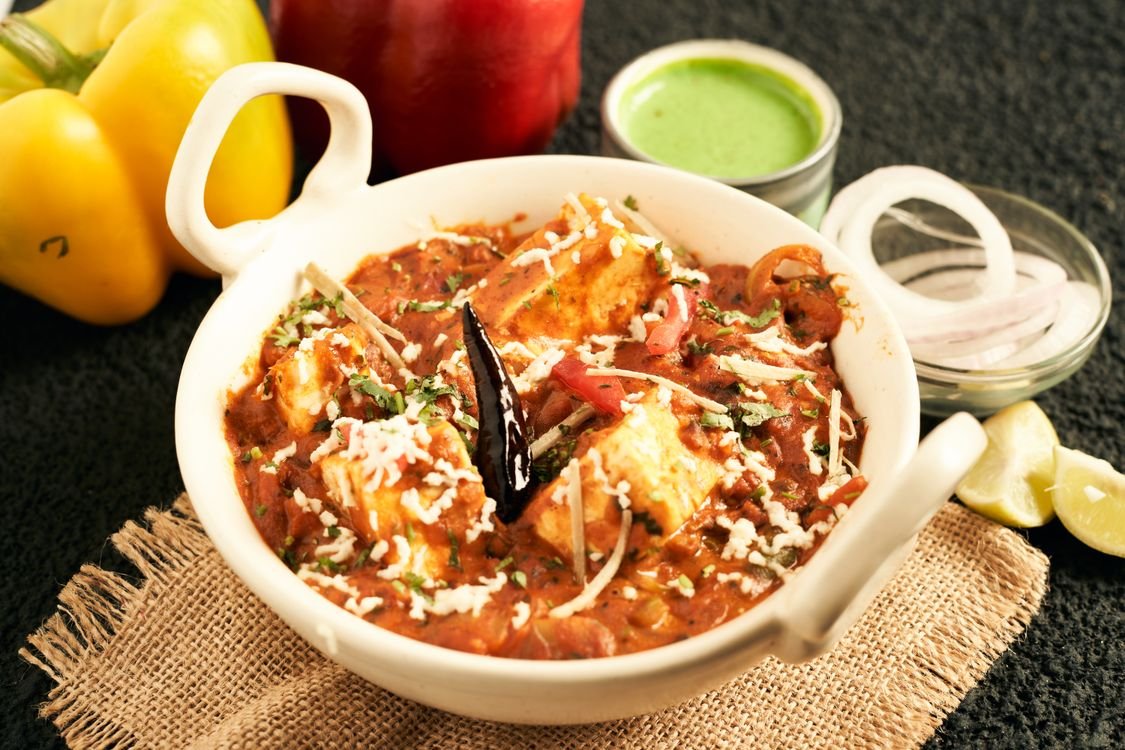
Kadai paneer is a North Indian favourite of soft paneer cubes and charred peppers cooked in a bold, freshly ground spice mix. The kadai masala, pounded from coriander, cumin and dried red chilies, gives the dish its smoky heat, while tomatoes and cream round it out. It is rich, fragrant and full of colour. Serve it hot with naan, roti or jeera rice.
The story behind Kadai Paneer
Kadai paneer takes its name from the kadai, the deep, round iron pan that has sat at the centre of North Indian cooking for generations. The dish was born in the dhabas and roadside eateries of Punjab and Delhi, where cooks worked fast over high flames and needed food that could be made to order in minutes. Paneer, peppers and a handful of whole spices went into the hot kadai, and out came a dish bold enough to stand next to butter chicken and dal makhani on the same menu.
In Indian homes and restaurants, kadai paneer is celebration food that never waits for a special occasion. It shows up at family dinners, on festival tables, and in lunchboxes packed for guests, because it looks generous and tastes like a treat without needing hours of work. The peppers give it colour, the paneer gives it substance, and the freshly ground spice mix gives it a character no jar of ready-made masala can match. It is one of the first paneer dishes many cooks learn, and one of the few they never get tired of making.
What makes this dish special is the kadai masala itself. Coriander seeds, cumin, dried red chilies and black peppercorns are dry-roasted until they smell warm and nutty, then ground coarse, so the sauce carries little flecks of spice that pop gently as you eat. The peppers are charred quickly over high heat, which gives them a smoky edge and keeps them crisp against the soft paneer. Tomatoes and cream pull everything together into a thick sauce that clings to the cubes and begs to be scooped up with bread.
Cook kadai paneer whenever you want a vegetarian main dish that feels like an event. It suits a weekend dinner, a meal for guests who eat no meat, or a Friday night when takeaway feels tempting but home cooking would taste better. Pair it with warm naan and a spoon of yoghurt, and you have a restaurant-style plate from your own stove. It is also a good dish to cook for a crowd, since it scales up easily and the sauce can be made ahead while the paneer goes in at the end.
- Prep time
- 20 mins
- Cook time
- 25 mins
- Total time
- 45 mins
- Servings
- 4 servings
- Calories
- 380
Ingredients
- 250 g paneer, cut into 1-inch cubes
- 2 tablespoons coriander seeds, 1 teaspoon cumin seeds, 2 dried red chilies and 1/2 teaspoon black peppercorns (for kadai masala)
- 2 tablespoons oil or ghee
- 1 large onion, finely chopped
- 1 tablespoon ginger, finely grated, and 3 garlic cloves, finely chopped
- 3 medium tomatoes, pureed
- 1 green bell pepper and 1 red bell pepper, diced
- 1 green chili, slit lengthways
- 1/2 teaspoon turmeric powder
- 1 teaspoon red chili powder
- 1 teaspoon salt, plus more to taste
- 1/2 teaspoon garam masala
- 3 tablespoons fresh cream
- 2 tablespoons fresh coriander leaves, chopped
Instructions
- Dry-roast the kadai masala spices in a heavy pan over medium heat. Stir constantly for about 2 minutes until the seeds smell warm and nutty and the chilies darken slightly. Tip them into a grinder and pulse to a coarse powder, then set it aside.
- Heat the oil in a kadai or a deep, heavy pan over medium-high heat until it shimmers. Add the diced green and red peppers and cook for 2 to 3 minutes, stirring often, until the edges pick up a few brown spots and the peppers smell lightly charred. They should stay crisp, not soft. Lift them out with a slotted spoon and set them aside.
- Add a little more oil to the same pan if needed, then add the chopped onion and cook for 5 to 6 minutes until it turns soft and golden at the edges. Stir often so it colours evenly. The onion should smell sweet and look translucent before you move on to the next step.
- Stir in the ginger and garlic and cook for 1 minute until the raw smell disappears and the mixture smells warm and fragrant. Add the pureed tomatoes, turmeric powder and red chili powder, then cook for 6 to 7 minutes, stirring often, until the oil starts to separate at the edges and the sauce looks thick and glossy.
- Stir in 2 tablespoons of the ground kadai masala and cook for 1 minute until it smells toasted and smoky. The spice will darken the sauce and fill the kitchen with a warm, peppery smell. If the sauce starts to stick, add a splash of water and keep stirring.
- Pour in 1/2 cup of hot water and let the sauce simmer for 3 to 4 minutes until it thickens to a rich, spoon-coating consistency. Taste and add the salt, adjusting until the sauce tastes bold and well rounded. The sauce should cling to a spoon rather than run off it.
- Return the charred peppers to the pan with the green chili and the paneer cubes. Stir gently so the cubes are coated in sauce without breaking apart. Cover the pan and simmer on low heat for 2 to 3 minutes only, just long enough for the paneer to warm through and take on the flavour of the sauce.
- Stir in the fresh cream and the garam masala, then turn off the heat at once. The cream softens the spice and gives the sauce a silky finish, while the garam masala adds a final warm note. Taste once more and adjust the salt if the cream has mellowed the seasoning.
- Sprinkle the remaining kadai masala over the top with the chopped coriander, then cover the pan and let it rest for 3 minutes. This short rest lets the flavours settle together. Serve hot straight from the kadai with naan or roti.
Pro tips
- Roast the whole spices until they smell warm and nutty, then grind them coarse, since a fresh, coarse masala is what gives this dish its flavour.
- Char the peppers fast over high heat and lift them out early, so they stay crisp against the soft paneer.
- Cook the tomato sauce until the oil separates at the edges, which is the sign that its raw, sharp taste has cooked away.
- Add the paneer near the end and simmer it for only 2 to 3 minutes, so it stays soft instead of turning rubbery.
- Stir the cream in off the heat, so it blends smoothly into the sauce instead of splitting in the hot pan.
Variations & serving ideas
The easiest variation is the peppers. Use all green peppers for a sharper, more classic dhaba taste, or add a yellow pepper for extra sweetness and colour. Some cooks add a handful of mushrooms or green peas with the peppers, and both soak up the kadai masala nicely. If you like more heat, add an extra dried red chili to the masala or a second green chili to the sauce, and taste as you go so the spice stays bold rather than fierce.
You can also change the richness of the sauce. Leave out the cream for a lighter, drier version that suits roti and rice, or stir in a spoon of cashew paste for a silkier, restaurant-style gravy. A spoon of kasuri methi, crushed between your palms and stirred in at the end, adds a gentle, slightly bitter note that works well with the sweet peppers. Some cooks finish with a knob of butter instead of cream, which gives the sauce a glossy shine and a softer finish.
For substitutions, firm tofu works well in place of paneer if you press it, cube it and pan-fry the cubes until golden before adding them to the sauce. Halloumi is another option, though it is saltier, so hold back on the salt until you have tasted the finished dish. If you cannot find dried red chilies, use an extra half teaspoon of red chili powder in the masala, and if you have no whole coriander seeds, use ground coriander, though the flavour will be milder and less smoky.
Serve kadai paneer the way most North Indian families do, with warm naan or laccha paratha for scooping up the thick sauce. It pairs well with jeera rice, a spoon of plain yoghurt, and a small salad of onion and cucumber that cools the heat of the spices. For a fuller meal, add dal tadka and a dry vegetable dish on the side, and finish with a wedge of lemon. Leftover kadai paneer also makes a good filling for wraps or stuffed parathas the next day.
Getting it right
The key technique in this recipe is the kadai masala. Dry-roasting the whole spices wakes up their oils, and the smell tells you when they are ready: warm, nutty and a little smoky, usually after about two minutes of steady stirring. Grind them coarse, not fine, because a fine powder disappears into the sauce while a coarse grind gives the dish its rustic texture and little bursts of flavour. Make the masala fresh each time; a batch ground weeks ago has lost half its punch.
Heat control matters in two places: the peppers and the sauce. The peppers need a hot pan and only two to three minutes, just long enough to pick up brown spots and a light char while staying crisp. If they cook too long they turn soft and lose the contrast that makes the dish work, so lift them out early. The tomato sauce needs the opposite treatment, a patient medium heat for six to seven minutes until the oil separates and the sauce turns thick and glossy, which is the sign that its raw taste has cooked away.
The most common mistake is overcooking the paneer. Paneer only needs two to three minutes in the hot sauce to warm through and take on flavour; any longer and it firms up and turns rubbery. Soaking the cubes in warm water for ten minutes before cooking also keeps them soft, and a quick pan-fry in a little oil helps if your paneer is very firm. If the sauce turns out too thick, thin it with hot water a ladle at a time, and if it tastes flat, add a pinch more salt and a little extra kadai masala rather than more chili.
Storing & reheating
Let the kadai paneer cool completely before you store it, since a hot pan warms everything around it in the fridge. Spoon the sauce and paneer into a sealed container and keep it in the fridge for up to 3 days; the flavour often deepens overnight as the ground spices settle into the sauce. If you can, store the paneer cubes separately from the sauce, since they stay softer that way and do not go rubbery in the fridge.
Reheat gently in a pan over low heat, stirring often and adding a splash of water or cream if the sauce has thickened. Do not reheat it on high heat, which toughens the paneer before the sauce is warm. Add the fresh coriander only after reheating, and taste for salt, since the cream can mellow the seasoning. This dish does not freeze well, because the paneer turns crumbly and the cream sauce can split.
Frequently asked questions
What is kadai paneer, and what makes it different?
Kadai paneer is paneer and peppers cooked in a kadai, the deep, round Indian wok, with a freshly ground spice mix called kadai masala. The name comes from the pan itself. The dish is known for its bold, smoky flavour, which comes from dry-roasting and grinding the whole spices just before cooking.
Can I make kadai masala at home?
Yes. Dry-roast the coriander seeds, cumin seeds, dried red chilies and black peppercorns in a pan for 2 minutes, then grind them coarse in a spice grinder or a mortar. A coarse grind is better than a fine powder, since the little bits of spice give the dish its rustic texture and flavour.
Can I make kadai paneer with tofu instead?
Yes, use firm tofu instead of paneer. Press it well, cut it into cubes, and pan-fry the cubes until golden before adding them to the sauce. The tofu will soak up the kadai masala nicely. Add a spoon of cream or cashew paste at the end to keep the sauce rich.
Why does my paneer turn rubbery?
Paneer turns rubbery when it is overcooked or added too early, so add the cubes near the end and simmer them for only 2 to 3 minutes. Soaking the paneer in warm water for 10 minutes before cooking also keeps it soft. If your paneer is very firm, a quick pan-fry in a little oil helps the texture.
Can I make kadai paneer ahead of time?
Yes, the sauce keeps well for up to 3 days in the fridge in a sealed container. Store the paneer separately if you can, and add it when you reheat, so it stays soft. Reheat gently over low heat with a splash of water or cream, and add the fresh coriander only after reheating.
What should I serve with kadai paneer?
Naan is the classic partner, warm and soft for scooping up the thick, spicy sauce. It also goes well with roti, laccha paratha, or jeera rice. A spoon of plain yoghurt and a small salad of onion and cucumber on the side balance the heat nicely.