Trahana Recipe
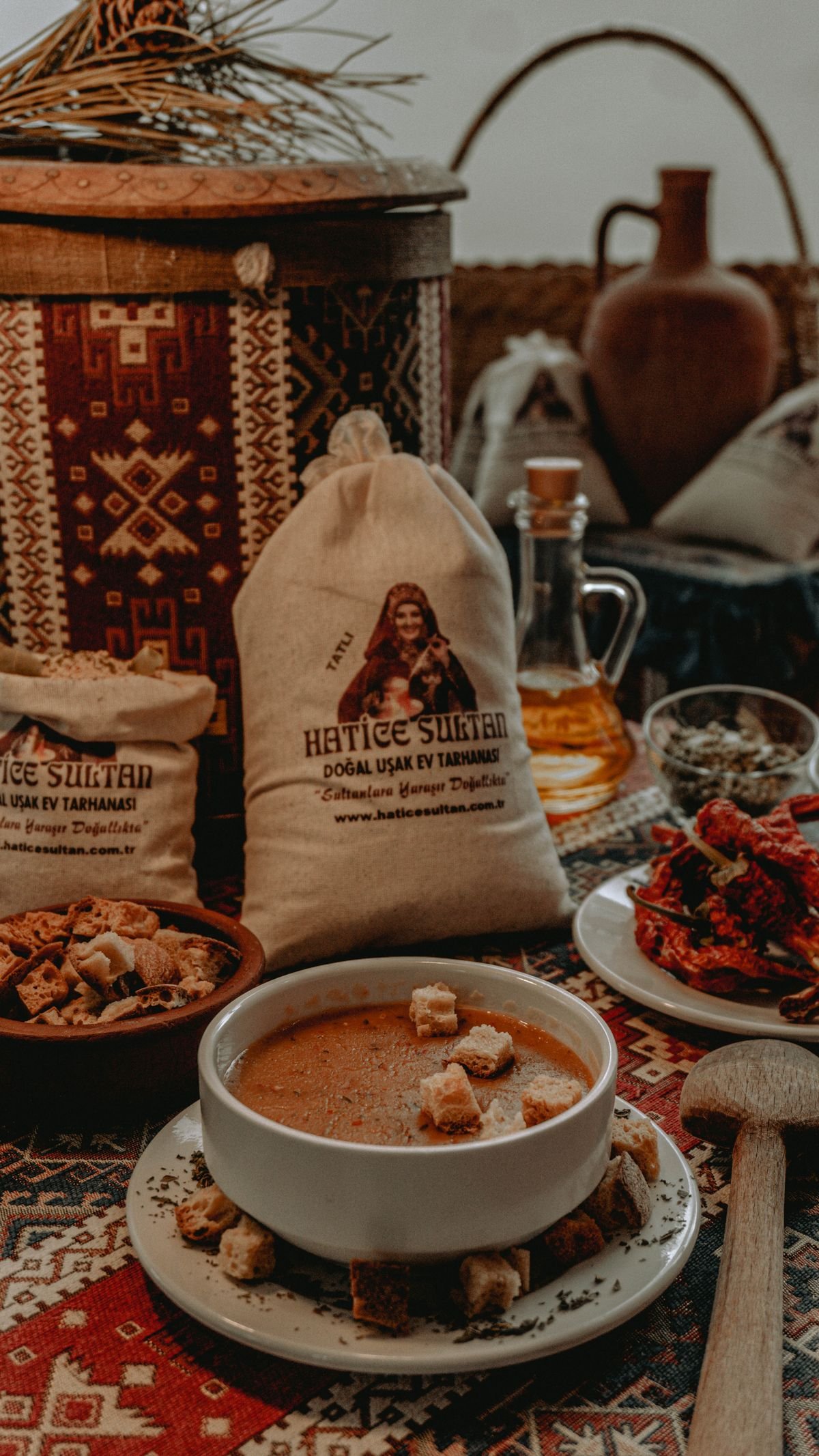
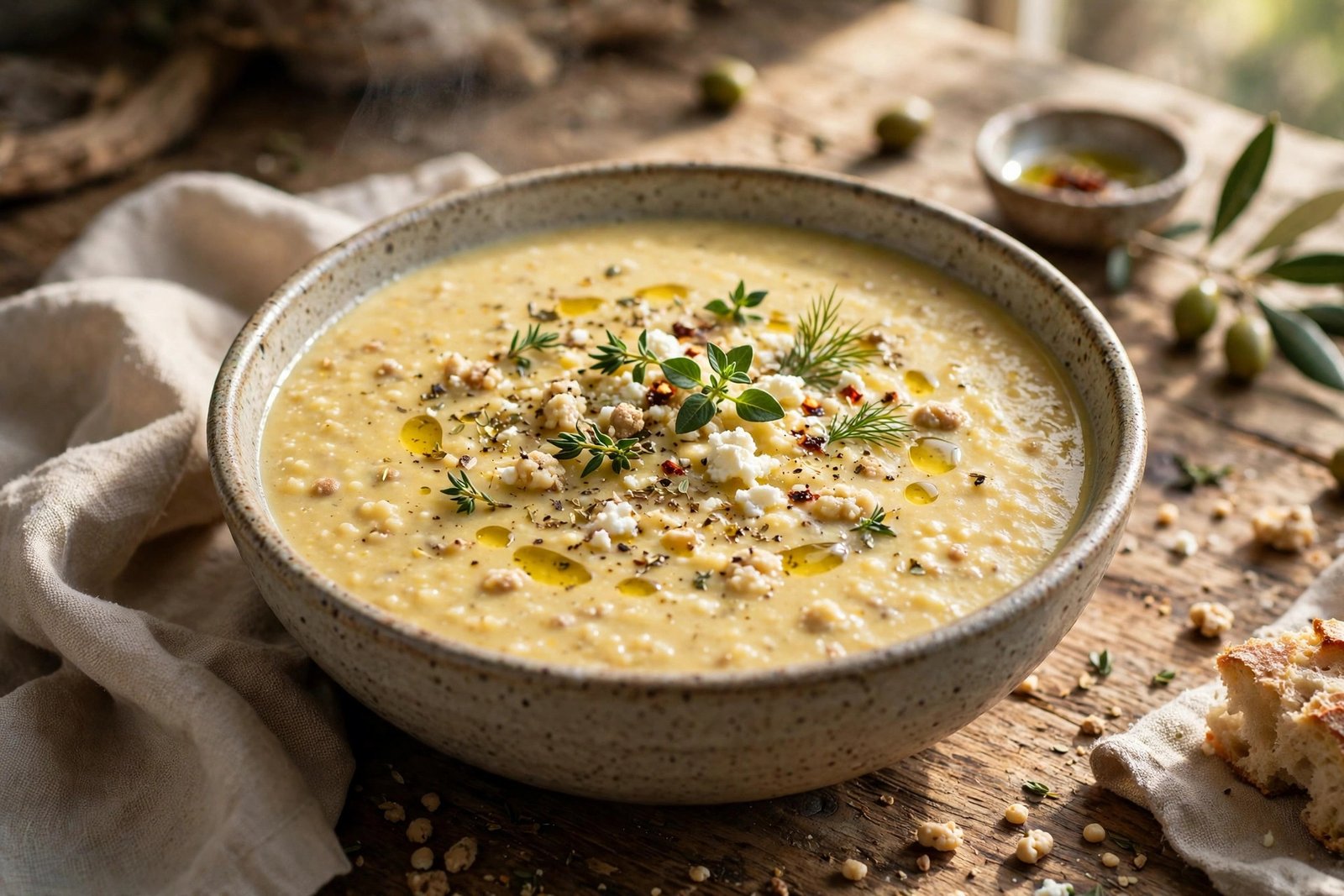
Trahana is one of Greece's oldest foods, a soup made from tiny grains of fermented wheat and milk, simmered until thick and creamy. It tastes tangy, earthy and deeply comforting, like a cross between porridge and pasta soup, and it has fed Greek families for centuries. A bowl of trahana, finished with feta and olive oil, is a meal in itself.
The story behind Trahana
Trahana goes back to ancient times, when Greek families needed a way to keep milk and grain through the winter. They mixed cracked wheat or semolina with soured milk or yoghurt, left it to ferment in the sun, then dried it into hard little grains that would keep for months. When winter came, the grains went into a pot with water or milk and turned into a thick, nourishing soup. They mixed cracked wheat or semolina with soured milk or yoghurt, left it to ferment in the sun, then dried it into hard little grains that would keep for months.
Every region of Greece has its own trahana. In the north, it is often made with goat's milk and has a sharp, tangy flavour. In the south and on the islands, it is milder and sweeter. Some versions are sour, some are sweet, and the grains can be fine like sand or coarse like small pebbles. The recipe travelled with Greek families wherever they settled, and it is still made by hand in village kitchens today. In the north, it is often made with goat's milk and has a sharp, tangy flavour, while in the south and on the islands, it is milder and sweeter.
What makes it special is the fermentation. The soured milk gives trahana a gentle tang that no fresh pasta has, and the grains swell as they cook, turning the soup thick and creamy without any cream. The flavour is mild and earthy, with a slight sourness that wakes up the palate, and the texture is soft and soothing. The soured milk gives trahana a gentle tang that no fresh pasta has, and the grains swell as they cook, turning the soup thick and creamy without any cream.
Cook it when you want comfort food that asks little of you. It suits a cold evening, a light lunch, or a meal for someone who needs something gentle and nourishing. Serve it with feta, olive oil and crusty bread, and eat it slowly. Serve it with feta, olive oil and crusty bread, and eat it slowly, because a bowl of trahana is comfort food that asks nothing of you but time.
- Prep time
- 10 mins
- Cook time
- 30 mins
- Total time
- 40 mins
- Servings
- 4 servings
- Calories
- 420
Ingredients
- 200 g trahana (sour or sweet, your choice)
- 1 litre whole milk
- 500 ml water or light chicken stock
- 1 small onion, finely chopped
- 2 tablespoons olive oil
- 1 tablespoon butter
- 1 bay leaf
- 100 g feta cheese, crumbled
- 1 teaspoon dried oregano
- Salt and black pepper, to taste
- 1 tablespoon chopped fresh parsley, to serve
- Extra virgin olive oil, to serve
- 1 small carrot, finely diced
- 2 tablespoons chopped fresh dill, to serve
Instructions
- Warm the olive oil and butter in a large pot over medium heat and cook the chopped onion for 5 minutes, stirring often, until it turns soft and pale gold and smells sweet. Do not let it brown, as the soup should stay pale and creamy.
- Pour in the milk and the water or stock, add the bay leaf, and bring the liquid to a gentle simmer. Keep the heat at medium and watch the pot, as milk can boil over quickly. The surface should shiver with small bubbles, not roll.
- Sprinkle in the trahana a little at a time, stirring constantly with a wooden spoon so the grains do not clump together. Keep stirring for 1 minute after the last addition, until the grains are evenly spread through the liquid.
- Turn the heat to low and cook for 20 to 25 minutes, stirring often, until the trahana has swollen and the soup is thick and creamy. The grains should be soft all the way through, with no hard centre, and the soup should coat the back of a spoon.
- Stir in the oregano and season with salt and black pepper. Taste the soup: sour trahana gives a pleasant tang, while sweet trahana is milder. Add a splash of hot water if the soup is thicker than you like, as it will keep thickening as it cools.
- Check a grain by tasting it, because it should be soft all the way through with no chalky centre, and if it still feels firm, cook for five more minutes on low heat. Stir well while you wait, scraping the bottom of the pot so nothing catches, and keep the heat low so the milk never boils.
- Stir in a knob of butter at the end for extra silkiness, letting it melt into the hot soup before you ladle it into bowls. The butter also gives the soup a gentle shine and a rounder flavour.
- Taste once more and adjust the salt and pepper, remembering that the feta on top will add more salt, so season lightly at this stage. A squeeze of lemon at the table brightens sweet trahana nicely. Keep the heat low while you taste, so the milk stays smooth.
- Remove the bay leaf and ladle the soup into warm bowls. Top each bowl with crumbled feta, a drizzle of extra virgin olive oil and a scattering of parsley. Serve at once with crusty bread on the side.
Pro tips
- Stir the trahana in slowly, a little at a time. Dumping it in all at once makes clumps that never break apart, while a slow sprinkle and constant stirring keeps the grains separate and the soup smooth. or they clump together.
- Keep the heat low once the milk is in. Milk scorches easily on the bottom of the pot, so stir often and keep the simmer gentle. A heavy pot helps, as it spreads the heat more evenly. for an even heat.
- Watch the pot while the milk heats. Milk can boil over in seconds, so stay nearby and turn the heat down the moment the surface starts to rise. A wooden spoon across the top of the pot can help. or it boils over.
- Taste the trahana before you season. Sour trahana is already tangy, so it needs less salt and no lemon. Sweet trahana is milder, and a squeeze of lemon at the table brightens it nicely. and no extra lemon.
- Serve it at once. Trahana soup thickens fast as it cools, so ladle it into bowls the moment it is ready. If it thickens too much, stir in a splash of hot milk or water. or it gets too thick.
Variations & serving ideas
For a richer version, cook the trahana in all milk instead of milk and water. The soup turns thicker and creamier, with a fuller flavour. You can also stir in a spoonful of butter at the end for extra silkiness. Cook the trahana in all milk instead of milk and water, because the soup turns thicker and creamier, with a fuller flavour, and a spoonful of butter at the end adds extra silkiness.
Add a handful of grated tomato or a spoonful of tomato paste with the onion for a pink, slightly tangy version. This is common in some regions of Greece, and it gives the soup a fresh, bright note. A pinch of smoked paprika also works well. Add a handful of grated tomato or a spoonful of tomato paste with the onion for a pink, slightly tangy version, which is common in some regions of Greece and gives the soup a fresh, bright note.
Swap the feta for grated kefalotyri or Parmesan if you like a sharper, saltier finish. Both melt into the hot soup and give a different kind of richness. For a vegan version, cook the trahana in water with a splash of olive oil and skip the milk, butter and feta. Swap the feta for grated kefalotyri or Parmesan if you like a sharper, saltier finish, because both melt into the hot soup and give a different kind of richness.
Serve it with crusty bread, olives and a simple salad. A glass of white wine suits it, though the soup is gentle enough for a light lunch on its own. Leftovers reheat well with a splash of milk. Serve it with crusty bread, olives and a simple salad, and a glass of white wine suits it, though the soup is gentle enough for a light lunch on its own. Leftovers reheat well with a splash of milk, so make a full pot. The soup also travels well in a flask, so it makes a fine packed lunch on a cold day, and a little extra feta packed in a small box keeps the topping fresh until you eat.
Getting it right
The key technique is adding the trahana slowly and stirring constantly. The grains absorb liquid fast, and if they hit the pot in one clump they will stick together and cook unevenly. A slow sprinkle, with the spoon moving all the time, gives a smooth, even soup with no lumps. A slow sprinkle, with the spoon moving all the time, gives a smooth, even soup with no lumps, and the grains cook evenly from the first minute.
Heat and timing matter because milk is unforgiving. The pot should simmer gently, never boil hard, for the full 20 to 25 minutes. Stir every few minutes, scraping the bottom of the pot so nothing catches and scorches. If the milk does catch, do not scrape the browned layer into the soup; pour the soup into a clean pot and carry on. If the milk does catch, do not scrape the browned layer into the soup; pour the soup into a clean pot and carry on, because the burnt flavour will spoil the whole batch.
The common mistake is cooking trahana too fast. High heat makes the outside of the grains swell while the centres stay hard, and the milk scorches. Low, patient heat gives soft, fully cooked grains and a creamy texture. Taste a grain before you serve: it should be soft all the way through, with no chalky bite. Low, patient heat gives soft, fully cooked grains and a creamy texture, while high heat makes the outside swell and the centres stay hard.
Storing & reheating
Trahana soup keeps in a sealed container in the fridge for up to 3 days. It will thicken a lot as it cools, so reheat it gently on the stove with a splash of milk or water, stirring until it loosens to the texture you like. Add fresh feta and olive oil when serving. Reheat it on the stove with a splash of milk or water, stirring until it loosens to the texture you like, and add feta and olive oil when serving.
Do not freeze the finished soup, as the milk can split and the grains turn mushy when thawed. Dry trahana itself keeps for months in a sealed jar in a cool, dry cupboard, so you can always make a fresh pot when you want one. Dry trahana itself keeps for months in a cool cupboard, so you can always make a fresh pot when you want one.
Frequently asked questions
What is trahana?
Trahana is an ancient Greek food made from cracked wheat or semolina mixed with soured milk or yoghurt, fermented and dried into small grains. It cooks into a thick, creamy, slightly tangy soup. It cooks into a thick, creamy, slightly tangy soup.
What is the difference between sour and sweet trahana?
Sour trahana is made with fermented milk and has a pleasant tangy flavour. Sweet trahana is made with fresh milk and is milder. Both cook the same way, so use whichever you can find. Both cook the same way, so use either type.
Where can I buy trahana?
Look in Greek or Mediterranean grocery shops, or in the international aisle of larger supermarkets. It is also sold online. Sour trahana is the most common type and the best choice for this soup. Sour trahana is the most common type to buy.
Can I make trahana soup with water only?
Yes. Cook it in water with a good pour of olive oil for a lighter, dairy-free soup. The flavour will be less rich than the milk version, but the tangy trahana still shines through. The tangy trahana still shines through the water.
How thick should trahana soup be?
It should be thick enough to coat a spoon, like a creamy porridge, but still pourable. It thickens as it cools, so serve it at once and add a splash of hot milk or water if it gets too thick. Add hot milk or water if it gets too thick.
Is trahana gluten-free?
No, trahana is made from wheat, so it contains gluten. There is no good gluten-free substitute, as the wheat is what gives trahana its texture and flavour. People with coeliac disease should avoid it. People with coeliac disease should avoid it.