Manestra Recipe
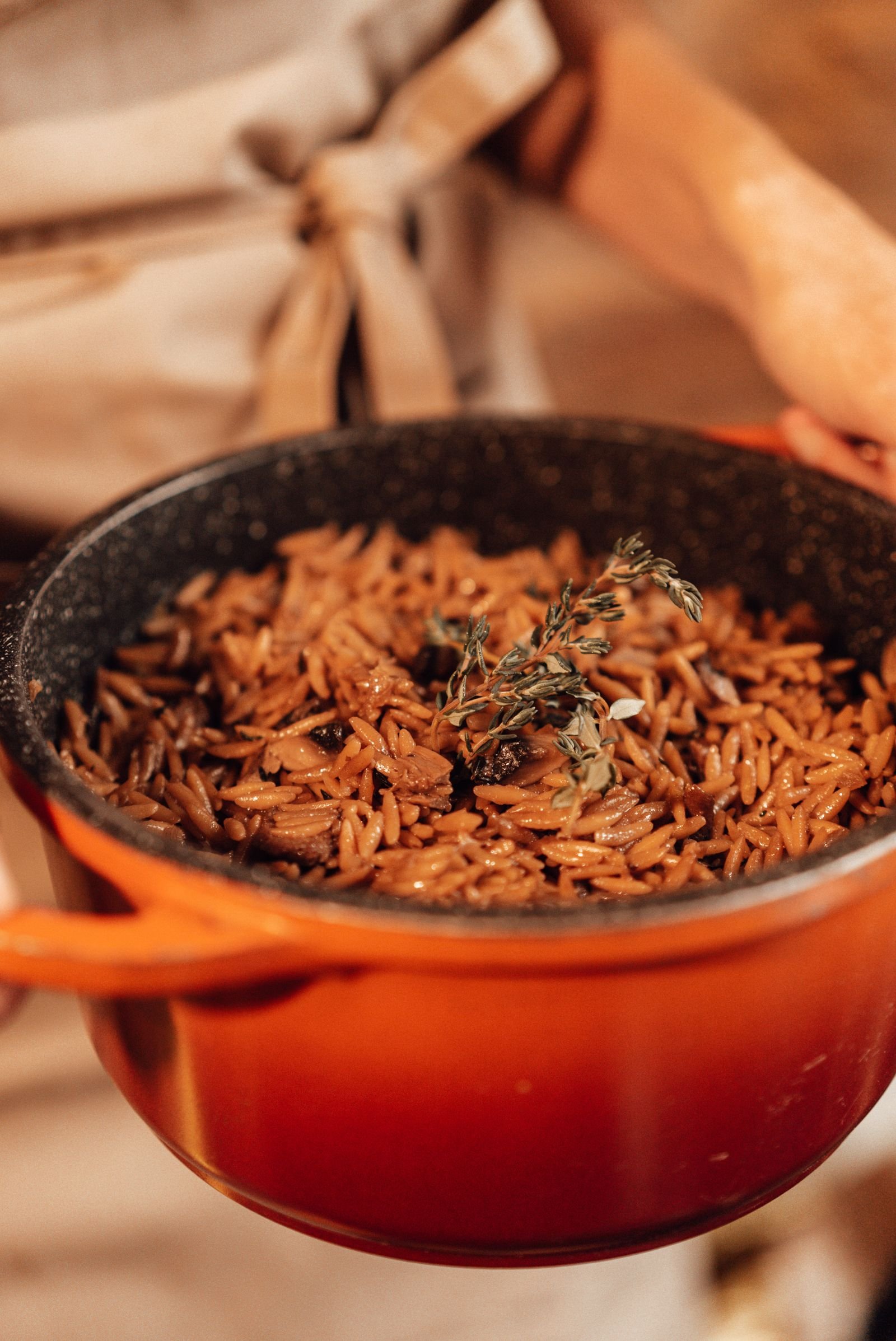
Manestra is Greek comfort food at its simplest and best: tiny orzo pasta simmered in a rich tomato sauce until every grain drinks up the flavour. This one-pot version adds tender chicken, sweet onion and a pinch of cinnamon for warmth, then finishes with crumbled feta and fresh herbs. It lands on the table in under an hour, and the pot rarely survives the evening.
The story behind Manestra
Manestra takes its name from the pasta at its heart. In Greek, manestra is another word for orzo, the tiny rice-shaped pasta that shows up in soups, baked dishes and one-pot meals all over the country. The dish itself is humble: pasta cooked slowly in tomato sauce until it turns soft and rich, with whatever the kitchen has to hand stirred through it. It belongs to the kind of cooking that grew out of village kitchens, where one pot fed the whole family and nothing went to waste.
You will find manestra on tables across Greece, but it holds a special place in the cooking of the islands and the Peloponnese, where tomatoes grow sweet under the summer sun. Families make it when the tomato harvest is at its peak, and again through the winter using tinned tomatoes and dried herbs. It is the dish a mother makes when the children come home hungry, and the one a taverna serves when you ask for something simple and honest. Ask for it by name and the cook will know you have eaten in Greece before.
What makes manestra special is how much flavour such a short list of ingredients can produce. The orzo cooks in the sauce instead of in plain water, so every grain soaks up tomato, onion and herbs as it swells. A pinch of cinnamon, that quiet Greek signature, adds warmth without sweetness. The feta on top melts just enough to turn creamy, and the whole pan eats like a meal that took far longer than it did, which is exactly why cooks keep coming back to it.
Cook it on a weeknight when you want dinner on the table without a sink full of pots, or on a cold evening when the family needs something warm and filling. It suits a casual lunch with friends just as well, since the pan goes straight to the middle of the table and everyone helps themselves. Keep the bread close, because the sauce at the bottom of the pan is the best part, and no one will want to leave a drop behind.
- Prep time
- 15 mins
- Cook time
- 35 mins
- Total time
- 50 mins
- Servings
- 4 servings
- Calories
- 520
Ingredients
- 500 g boneless, skinless chicken thighs, cut into bite-size pieces
- 300 g orzo pasta
- 3 tablespoons olive oil
- 1 large onion, finely chopped
- 3 garlic cloves, finely chopped
- 400 g tin chopped tomatoes
- 2 tablespoons tomato paste
- 750 ml hot chicken stock
- 1 teaspoon dried oregano
- 1/4 teaspoon ground cinnamon
- 1 teaspoon sugar
- 100 g feta cheese, crumbled
- 2 tablespoons chopped fresh parsley
- 1 teaspoon fine sea salt and 1/2 teaspoon freshly ground black pepper
Instructions
- Warm the olive oil in a large, deep pan over medium-high heat until it shimmers. Add the chicken pieces and let them sit without moving for 3 to 4 minutes, so they pick up a golden crust. Turn them over and cook for another 3 minutes, then lift them out onto a plate. They do not need to be cooked through, since they will finish in the sauce.
- Lower the heat to medium and add the onion to the same pan, scraping up the browned bits from the bottom as you stir. Cook for 5 minutes until the onion turns soft and sweet-smelling, then add the garlic and cook for one more minute. You want the garlic fragrant, not brown, so keep the pan moving and watch it closely.
- Stir in the tomato paste and cook it for 2 minutes, pressing it against the pan with your spoon. The paste will darken slightly and smell richer, which takes the raw edge off the tomatoes. This small step makes a real difference to the depth of the finished sauce.
- Pour in the chopped tomatoes and the hot stock, then add the oregano, cinnamon, sugar, salt and pepper. Stir well and bring the sauce to a lively simmer, with bubbles breaking across the whole surface. Taste it now: it should be bright and well seasoned, since the orzo will soak up a good deal of the salt as it cooks.
- Return the chicken to the pan and tip in the orzo, stirring to spread the pasta evenly. Lower the heat until the sauce bubbles gently, then put the lid on with a small gap for steam to escape. Set a timer for 12 minutes, and stir every 3 to 4 minutes, scraping the bottom so nothing catches.
- After 12 minutes, lift the lid and check the orzo. The grains should be tender with a slight bite, and the sauce should be thick enough to coat a spoon. If the pan looks dry, add a splash of hot water, 60 ml at a time. If it looks too loose, cook uncovered for 2 to 3 minutes more.
- Take the pan off the heat and let it rest, covered, for 5 minutes. The orzo will drink up the last of the sauce and the flavours will settle together. Give the pasta one last stir so every grain is coated in tomato.
- Taste and adjust the salt, pepper and sugar. A pinch more salt often wakes the whole dish up, and a tiny bit of sugar rounds out the sharpness of the tomatoes. Scatter the crumbled feta and chopped parsley over the top, and let the heat of the pasta soften the cheese slightly.
- Serve straight from the pan while it is hot, with a drizzle of olive oil over each portion. Put extra feta and a pepper mill on the table so everyone can finish their own bowl, and have warm bread ready for the sauce at the bottom.
Pro tips
- Brown the chicken properly before the sauce goes in, since that golden crust is where much of the flavour comes from. Do not crowd the pan, or the pieces will steam instead of browning, and work in two batches if your pan is small.
- Use hot stock rather than cold, so the sauce comes back to a simmer quickly and the orzo cooks evenly from the start. Cold liquid drops the temperature and throws the timing off.
- Stir the orzo every few minutes and scrape the bottom of the pan. Orzo sinks and sticks fast, and a burnt layer will flavour the whole dish.
- Take the pan off the heat while the orzo still has a slight bite. It keeps cooking in the hot sauce during the rest, and this is the difference between tender and mushy. Set a timer and trust it, even if the pasta looks a touch underdone when you lift the lid.
- Hold the feta back until serving time. Crumbled over the hot pasta at the table, it softens into creamy pockets instead of melting away into the sauce.
Variations & serving ideas
The classic version is vegetarian, with no chicken at all, and it is just as satisfying. Leave the meat out, use vegetable stock, and add a tin of chickpeas or a handful of sliced mushrooms for body. Some Greek cooks stir in spinach at the end, letting the leaves wilt into the sauce, and a squeeze of lemon over the top lifts the whole pan. If you want it richer, add a knob of butter with the feta, and a handful of toasted pine nuts gives a gentle crunch. A few olives stirred through at the end add a salty bite that suits the tomato sauce well.
You can change the protein to suit your fridge. Pork, lamb or beef all work, browned the same way as the chicken, and a few sliced sausages stirred through make a quick, hearty version. Seafood is another route: prawns added in the last 5 minutes turn the dish into a seaside taverna meal, and a handful of mussels steamed in the sauce adds a lovely briny depth. Even a tin of tuna, stirred in at the very end, makes a passable pantry supper.
Serve manestra as a main course with a Greek salad, warm bread and a bowl of olives, and let the pan sit in the middle of the table. As a side dish, it pairs well with grilled fish, roast lamb or a simple plate of fried eggs. A glass of red wine such as Agiorgitiko suits the tomato sauce, and a cold beer works just as well on a warm evening. Whatever you pour, serve it cold and keep the glasses full.
Leftovers invite a second life. The next day, press the manestra into a buttered dish, top it with grated cheese and breadcrumbs, and bake it at 180 C for 20 minutes until the top turns golden and crisp. What was a soft one-pot pasta becomes a baked dish with a crunchy lid, and nobody at the table will guess it started as leftovers. Serve it with a sharp green salad to cut through the richness, and a little extra feta on top.
Getting it right
The key to manestra is treating the orzo like risotto. It cooks in the sauce, not in a separate pot of water, so it needs regular stirring and a watchful eye. Stir every 3 to 4 minutes, scraping the bottom of the pan so the pasta does not stick and clump. Orzo releases starch as it cooks, and that starch is what turns the tomato sauce thick and glossy, so a little sticking is normal, but a burnt layer on the bottom is not.
Heat control decides whether the dish turns out silky or stodgy. The sauce should bubble gently, with small bubbles breaking the surface, never a rolling boil. Too hot and the liquid vanishes before the pasta is tender, leaving you with dry, undercooked grains. Too cool and the orzo sits in lukewarm sauce and goes gummy. Keep the lid on with a gap for steam, and add hot water a splash at a time if the pan dries out early.
The most common mistake is cooking the orzo until it looks done in the pan, then finding it has turned to mush by the time it reaches the table. Orzo keeps cooking in the hot sauce after you take the pan off the heat, so pull it off while the grains still have a slight bite. Five minutes of resting, covered, finishes the job. If you overshoot, a handful of fresh herbs and extra feta will not fix the texture, so set a timer and trust it.
Storing & reheating
Manestra keeps in the fridge for up to 3 days in a sealed container, and the flavour actually improves overnight as the tomato sauce settles into the pasta. When you reheat it, add a splash of water or stock and warm it gently in a pan, stirring often so the orzo loosens and turns creamy again. A fresh scattering of parsley on top makes it look newly made.
The freezer is less kind to this dish, since cooked orzo turns soft and floury after thawing. If you must freeze it, do so before the orzo goes in, freezing the chicken and tomato sauce on its own. Thaw it overnight in the fridge, reheat it, and cook a fresh batch of orzo straight in the sauce when you are ready to eat.
Frequently asked questions
Can I make manestra with rice instead of orzo?
Yes, and it is one of the easiest swaps in Greek cooking. Use the same weight of orzo, about 300 g, and follow the same steps. Rice needs a little more liquid and about 10 extra minutes, so add 120 ml of water and taste the grains before you call it done.
Why did my manestra turn out gluey?
You almost certainly stirred it too little or cooked it too long. Orzo releases starch quickly, so it needs a stir every couple of minutes and a watchful eye near the end. Take the pot off the heat while the pasta still has a slight bite, since it keeps cooking in the hot sauce.
Does manestra reheat well the next day?
Yes, it reheats well and the flavours deepen overnight. Store it in a sealed container for up to 3 days. Reheat it gently in a pan with a splash of water or stock, stirring until it loosens, and add the feta fresh at serving time.
Is the cinnamon really necessary?
A pinch of cinnamon is the classic Greek touch, and it adds warmth without making the dish taste sweet. If you are unsure, start with just a small pinch and taste the sauce before the orzo goes in. You can leave it out entirely, but the dish loses a little of its character.
Is manestra gluten-free?
Manestra is a pasta dish, so it contains gluten. A gluten-free orzo made from rice or corn works as a substitute, though it cooks faster and can go soft quickly. Check the packet and take it off the heat a minute or two earlier than the recipe says.
What should I serve with manestra?
It works well as a main course on its own, since the chicken and pasta make it filling. If you want to stretch it, serve it with a Greek salad, warm bread and a plate of olives. A spoonful of thick yoghurt on the side cools the tomato sauce nicely.