Kolokythokeftedes Recipe
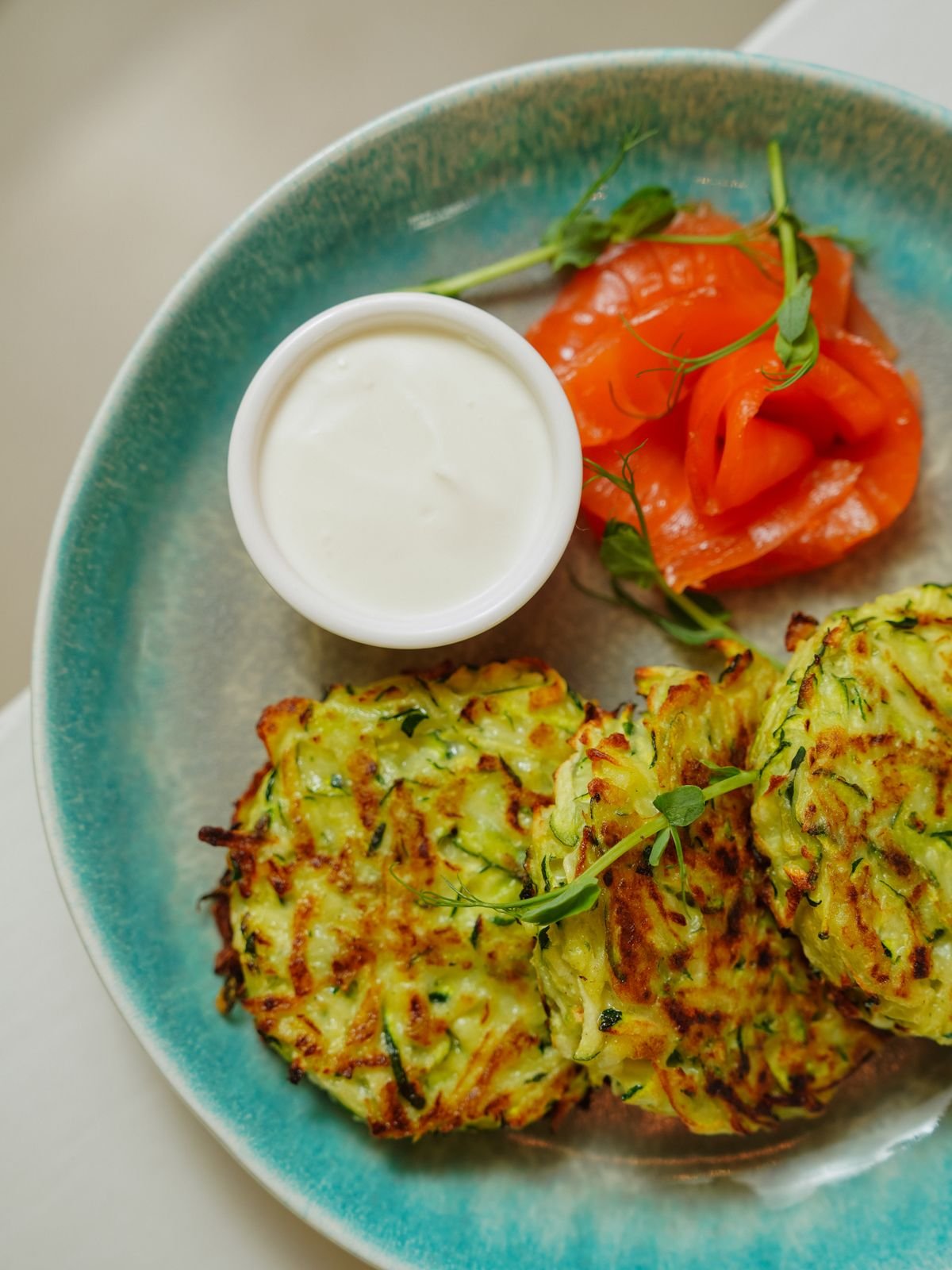
Kolokythokeftedes are crisp little courgette fritters from Greece, golden outside and soft inside, packed with feta, mint and dill. They are the kind of meze that disappears fast: one plate on the table, a bowl of tzatziki beside it, and everyone reaching for just one more. They take little time and even less skill, but they taste like a holiday.
The story behind Kolokythokeftedes
Fritters have been part of Greek cooking for centuries, a way to turn a glut of summer vegetables into something worth serving. Courgettes grow fast in the Greek sun, and by midsummer every garden has more than a family can eat. Grating them, squeezing out the water, and frying them with herbs and cheese became the obvious answer, and the fritter has been on Greek tables ever since. Courgettes grow fast in the Greek sun, and by midsummer every garden has more than a family can eat, so grating them and frying them with herbs and cheese became the obvious answer.
In Greece, these fritters belong to the meze table, the spread of small dishes that comes before the main meal, or sometimes is the meal itself. They are served in tavernas by the sea, on whitewashed terraces, with a glass of ouzo or a cold beer and a bowl of tzatziki. The mint and dill in the mix are the flavours of a Greek summer garden, and the feta brings the salty tang that ties it all together. They are served in tavernas by the sea, on whitewashed terraces, with a glass of ouzo or a cold beer and a bowl of tzatziki, and the mint and dill are the flavours of a Greek summer garden.
What makes them special is the contrast. The outside fries crisp and golden, while the inside stays soft and moist, with the sweetness of courgette, the salt of feta and the freshness of herbs in every bite. They are light enough to eat several, yet satisfying enough to stand on their own. No single flavour takes over; the balance is the point. They are light enough to eat several, yet satisfying enough to stand on their own, and no single flavour takes over, because the balance is the whole point.
Cook them when courgettes are cheap and plentiful, or when you need a starter that pleases everyone. They suit a summer lunch, a dinner party meze spread, or a light supper with a big salad. Serve them hot, straight from the pan, with tzatziki and lemon wedges. Serve them hot, straight from the pan, with tzatziki and lemon wedges, and eat them while the outside is still crisp and the inside is soft.
- Prep time
- 25 mins
- Cook time
- 20 mins
- Total time
- 45 mins
- Servings
- 4 servings
- Calories
- 380
Ingredients
- 500 g courgettes, coarsely grated
- 150 g feta cheese, crumbled
- 2 large eggs, lightly beaten
- 60 g plain flour
- 30 g fine breadcrumbs
- 4 spring onions, finely chopped
- 2 tablespoons chopped fresh mint
- 2 tablespoons chopped fresh dill
- 1 garlic clove, finely grated
- 1 teaspoon lemon zest
- Salt and black pepper, to taste
- Vegetable oil, for frying
- Lemon wedges and tzatziki, to serve
Instructions
- Grate the courgettes into a large bowl and sprinkle with 1 teaspoon of salt. Leave for 15 minutes, then tip into a clean tea towel and squeeze hard, twisting the cloth until no more water comes out. You should be left with a dry, compact ball of courgette, about half the original volume.
- Tip the squeezed courgette into a clean bowl and add the crumbled feta, beaten eggs, flour, breadcrumbs, spring onions, mint, dill, garlic and lemon zest. Season with black pepper and a little salt, remembering the feta is already salty. Mix gently with a fork until just combined.
- Heat 1 cm of vegetable oil in a wide frying pan over medium-high heat. The oil is ready when a small piece of the mixture sizzles and turns golden within a few seconds. Keep the heat steady so the fritters cook through without burning.
- Scoop a heaped tablespoon of the mixture and shape it into a small patty with wet hands. Carefully lower it into the oil, then repeat until the pan holds 5 or 6 fritters, leaving space between them so they fry evenly.
- Fry for 3 to 4 minutes on the first side, until the underside is deep golden and crisp. Flip carefully with a spatula and fry for 2 to 3 minutes more, until the second side matches. The fritters should feel firm and sound hollow when tapped.
- Lift the fritters out with a slotted spoon and drain on a wire rack or a plate lined with kitchen paper. The rack keeps the undersides crisp, while paper underneath soaks up the extra oil. Repeat with the remaining mixture.
- Fry the remaining mixture in batches, keeping the finished fritters on a wire rack in a warm oven so they stay crisp while you work through the bowl. Do not cover the finished fritters with a lid or foil, as trapped steam will soften the crisp coating you worked to build.
- Check the oil between batches by dropping in a tiny piece of mixture, which should sizzle at once and turn golden in seconds, and turn the heat down a little if it browns too fast. A thermometer should read about one hundred and eighty degrees if you prefer to measure it.
- Serve the fritters hot, piled on a plate with lemon wedges and a bowl of tzatziki on the side. Squeeze lemon over the top just before eating, and eat them while the outside is still crisp.
Pro tips
- Squeeze the courgettes properly. This is the step that makes or breaks the fritters: wet courgette makes a soggy mixture that falls apart in the pan, while dry courgette gives a firm, crisp fritter. or they fall apart.
- Do not overmix the batter. Stir just until the ingredients come together. Overmixing develops the flour and makes the fritters dense and heavy instead of light and soft inside. and turn heavy.
- Keep the oil at a steady medium-high heat. If it is too cool, the fritters soak up oil and turn greasy. If it is too hot, they burn outside and stay raw in the middle. or they turn greasy.
- Shape the fritters with wet hands. The mixture is sticky, and wet hands stop it clinging to your fingers. Make them small, about the size of a golf ball flattened, so they cook through evenly. so they cook evenly.
- Serve them immediately. Fritters lose their crispness as they sit, so fry the last batch just before you sit down, and keep the finished ones on a wire rack in a warm oven, not under a lid. not under a lid.
Variations & serving ideas
For a lighter version, bake the fritters instead of frying. Shape them on a lined baking tray, brush with a little olive oil, and bake at 200°C for 20 to 25 minutes, turning once halfway, until golden on both sides. They will be less crisp but still tasty. Shape them on a lined baking tray, brush with a little olive oil, and bake at two hundred degrees for twenty to twenty-five minutes, turning once halfway, until golden on both sides.
Add a handful of grated carrot or sweetcorn to the mix for extra colour and sweetness. The carrot adds a soft, sweet note that suits the mint, while the corn gives little pops of texture. Keep the total vegetable weight the same so the mixture stays firm. Add a handful of grated carrot or sweetcorn to the mix for extra colour and sweetness, because the carrot adds a soft, sweet note that suits the mint, while the corn gives little pops of texture.
Swap the feta for grated halloumi if you want a chewier, saltier fritter. Halloumi holds its shape when fried and gives a lovely squeaky bite. You can also add a pinch of chilli flakes for a gentle warmth, though the classic version is mild. Swap the feta for grated halloumi if you want a chewier, saltier fritter, because halloumi holds its shape when fried and gives a lovely squeaky bite in every mouthful.
Serve them as part of a meze spread with olives, hummus, flatbread and grilled halloumi, or as a light lunch with a big Greek salad. A glass of cold white wine or a lager suits them, and the tzatziki on the side is essential, not optional. Serve them as part of a meze spread with olives, hummus, flatbread and grilled halloumi, or as a light lunch with a big Greek salad, and a glass of cold white wine suits them well. Keep the tzatziki close, because everyone will want more of it. A cold drink and good bread on the table make the meze feel like a small feast, even on an ordinary weeknight evening.
Getting it right
The key technique is getting the water out of the courgettes. Salt draws the moisture out, and a tea towel wrings it away. This takes a few minutes of firm squeezing, but it is the difference between a fritter that holds together and one that collapses into mush. Test the mixture: it should hold its shape when you squeeze a spoonful in your hand. Test the mixture by squeezing a spoonful in your hand, because it should hold its shape, and if it falls apart, squeeze the courgette harder and add a spoonful more flour.
Heat and timing control the frying. The oil should be hot enough to sizzle on contact, and each fritter needs 3 to 4 minutes on the first side and 2 to 3 on the second. Do not crowd the pan, as too many fritters at once drops the oil temperature and makes them greasy. Fry in batches and let the oil come back up to heat between them. Fry in batches and let the oil come back up to heat between them, because too many fritters at once drops the temperature and makes them greasy instead of crisp.
The common mistake is making the fritters too big. A thick fritter burns outside before the middle cooks through. Keep them small and flat, about 1 cm thick, so the heat reaches the centre. If a fritter falls apart in the pan, the mixture is too wet: squeeze the next batch of courgette harder and add a spoonful more flour. Keep them small and flat, about one centimetre thick, so the heat reaches the centre, and a thick fritter burns outside before the middle cooks through.
Storing & reheating
These fritters are best eaten fresh, but leftovers keep in a sealed container in the fridge for up to 2 days. Reheat them in a hot oven at 200°C for 8 to 10 minutes, or in an air fryer for 5 minutes, until crisp again. The microwave will make them soft, so avoid it if you can. Reheat them in an oven at two hundred degrees for ten minutes, or in an air fryer for five minutes, until crisp.
Do not freeze cooked fritters, as they turn soggy when thawed. You can, however, freeze the uncooked mixture in portions for up to a month. Thaw it in the fridge, squeeze out any extra water, and fry as usual. The tzatziki should be made fresh each time. Thaw the mixture in the fridge, squeeze out any extra water, and fry as usual, because the courgettes release more liquid as they sit.
Frequently asked questions
Why do my courgette fritters fall apart?
The mixture is too wet. Courgettes hold a lot of water, so salt them, leave for 15 minutes, then squeeze hard in a tea towel. If the mixture still feels loose, add a spoonful more flour or breadcrumbs. Add a spoonful more flour or breadcrumbs if needed.
Can I bake kolokythokeftedes instead of frying?
Yes. Shape them on a lined tray, brush with olive oil, and bake at 200°C for 20 to 25 minutes, turning once. They will be less crisp than fried ones but still golden and tasty. They will be less crisp than fried ones.
What herbs go in kolokythokeftedes?
Fresh mint and dill are the classic herbs, and both matter. Mint gives a cool freshness and dill adds a grassy, slightly sweet note. Use fresh herbs if you can, as dried ones do not taste the same here. Use fresh herbs if you can for the best flavour.
Can I make the mixture ahead of time?
Yes, up to a few hours ahead. Keep it covered in the fridge, but squeeze out any water that collects before frying. The courgettes release more liquid as they sit, so check the mixture before shaping. Check the mixture before shaping, as liquid collects.
What do I serve with courgette fritters?
Tzatziki is the classic partner, along with lemon wedges. They also work in a meze spread with olives, hummus and flatbread, or as a light lunch with a Greek salad and crusty bread. The tzatziki on the side is essential, not optional.
Are kolokythokeftedes gluten-free?
Not as written, because of the flour and breadcrumbs. Swap both for chickpea flour and gluten-free breadcrumbs, and the fritters will hold together well. Check that your feta is gluten-free too. Check the breadcrumbs label as well before you buy, and keep the feta separate.