Quiche aux Épinards Recipe
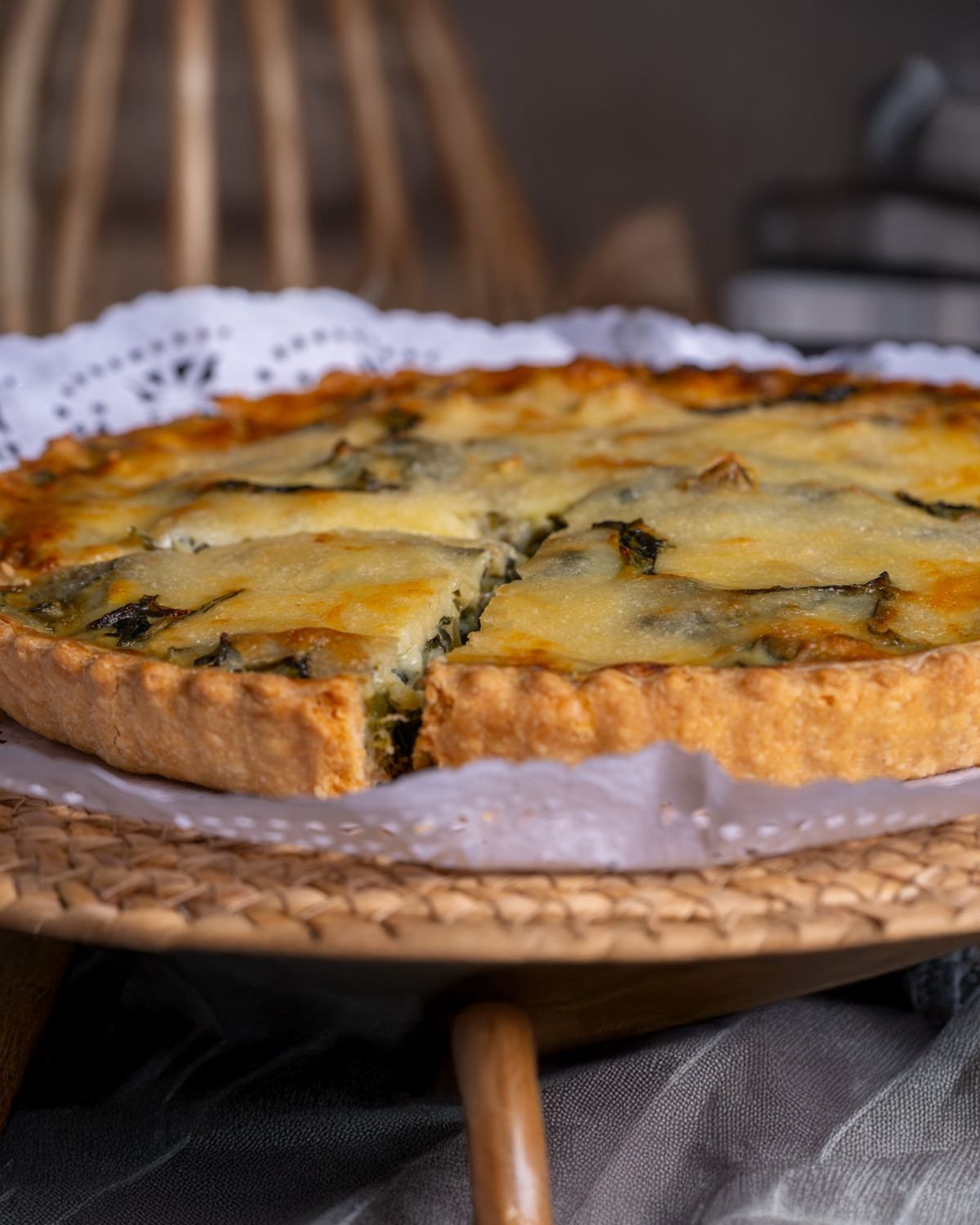
Quiche aux Épinards is the French answer to a good lunch: buttery pastry, a silky egg custard, wilted spinach and melted Gruyere, baked until the top is golden and just set. It slices cleanly, travels well, and tastes as good cold as it does warm from the oven. Make it once and it will join your regular rotation. It is the kind of recipe that rewards a little care and pays it back for days.
The story behind Quiche aux Épinards
Quiche comes from Lorraine, the region in north-eastern France that borders Germany, and its name comes from the German word Kuchen, meaning cake. The original quiche Lorraine was a simple thing: an open tart filled with eggs, cream and smoked bacon, baked in a bread-dough crust. It was the food of bakers and farmers, made from what the kitchen had on hand. The word itself comes from the German Kuchen, a reminder that Lorraine sat on the border between France and Germany and borrowed from both kitchens. Bakers made the first quiches with bread dough left over from the morning bake, rolled thin and filled with eggs and cream, then baked in the cooling oven.
The quiche travelled south and changed as it went. In Paris it picked up a shortcrust pastry base and a lighter custard, and cooks began filling it with whatever was in season. Spinach was a natural choice. France grows plenty of it, and its soft, earthy flavour suits the rich custard. Gruyere, the nutty mountain cheese from the Swiss border, melts into the filling and gives it a savoury depth that plain cheese cannot match. The pastry changed too. The bread dough gave way to shortcrust, which bakes crisper and holds the custard better. Cream replaced some of the milk in richer versions, and the fillings grew more varied as the dish moved from farmhouse kitchens into Paris restaurants.
What makes this quiche special is the balance of textures. The pastry is crisp and buttery, the custard is soft and just set, with a gentle wobble at the centre, and the spinach brings a green, slightly sweet note that keeps the richness in check. A little nutmeg in the custard is the quiet classic touch that ties the whole thing together.
Cook it when you need a lunch that works hard. It suits a weekend brunch, a picnic, a light supper with a salad, or a weekday lunchbox. It is at its best warm from the oven, but it holds well and slices neatly once cool, so make it ahead if the day is busy. Serve it with a sharp green salad and a glass of dry white wine. Make it on a Sunday and eat it through the week. A wedge with a salad is a proper lunch, and a cold slice eaten standing at the kitchen counter is just as good.
- Prep time
- 25 mins
- Cook time
- 45 mins
- Total time
- 1 hour 10 mins
- Servings
- 4 servings
- Calories
- 480
Ingredients
- 250 g plain flour, plus extra for dusting
- 125 g cold unsalted butter, cubed
- 1 large egg yolk
- 3 tablespoons cold water
- 300 g fresh spinach leaves
- 1 tablespoon olive oil
- 1 small onion, finely chopped
- 4 large eggs
- 200 ml double cream
- 100 ml whole milk
- 120 g Gruyere cheese, grated
- 1 pinch of ground nutmeg
- Salt and black pepper, to taste
Instructions
- Rub the flour and cold butter together in a large bowl with your fingertips until the mixture looks like fine breadcrumbs. Add the egg yolk and cold water and bring it together into a dough, then flatten it into a disc, wrap it in cling film and chill for 30 minutes. Cold pastry bakes crisp, so do not skip the rest.
- Heat the oven to 190 C (170 C fan). Roll the pastry out on a floured surface into a circle about 30 cm wide and 3 mm thick. Lift it into a 23 cm tart tin, press it gently into the edges, and trim the top level with the rim. Prick the base with a fork.
- Line the pastry with baking paper and fill it with baking beans or dried rice. Blind bake for 15 minutes, until the edges turn pale gold, then lift out the paper and beans and bake for 5 minutes more until the base looks dry and lightly coloured. This stops the filling making the base soggy.
- While the pastry bakes, wilt the spinach. Heat the olive oil in a wide pan over medium heat, add the onion and cook for 4 minutes until soft, then add the spinach in handfuls, stirring as each batch wilts down. Cook for 3 minutes until all the water has steamed off, then tip the spinach into a sieve and press out as much liquid as you can.
- Whisk the eggs, cream, milk, nutmeg and a good pinch of salt and pepper in a jug until smooth. The custard should be well mixed but not frothy. Stir in two thirds of the grated Gruyere.
- Spread the wilted spinach and onion evenly over the warm pastry base, breaking up any clumps with a fork. Pour the custard over the top, letting it settle into the gaps, and scatter the remaining Gruyere over the surface.
- Bake the quiche for 30 to 35 minutes, until the top is golden and the centre has a gentle wobble when you shake the tin. The edges should be set while the middle still moves slightly. It will firm up as it cools.
- Leave the quiche in the tin for 10 minutes, then lift it out onto a wire rack or serving plate. Serve warm or at room temperature, cut into generous wedges, with a green salad dressed with lemon and olive oil.
- Check the seasoning in the last wedge you taste. If the spinach was very mild, a little extra salt or a squeeze of lemon on the salad will lift the whole plate. Store leftovers covered in the fridge.
- Run a knife around the edge of the tin while the quiche is still warm, to loosen the pastry from the sides. This stops the crust sticking as it cools and gives a clean edge when you lift the quiche out.
Pro tips
- Squeeze the spinach really dry. Wet spinach is the main cause of a soggy quiche base, so press it hard in a sieve and even give it a squeeze with your hands once it has cooled a little.
- Always blind bake the pastry. Fifteen minutes with beans and five without gives a crisp base that stands up to the custard. A raw base will stay pale and damp underneath the filling.
- Do not overbake the custard. Pull the quiche out when the centre still wobbles gently, as it keeps cooking in the tin. An overbaked quiche turns rubbery and the custard can crack.
- Grate the Gruyere finely so it melts evenly into the custard. Big chunks sink to the bottom and leave greasy patches, while fine shreds spread through the filling.
- Rest the quiche for 10 minutes before cutting. The custard needs that time to set, and cutting it too soon will send the filling sliding out of the pastry.
Variations & serving ideas
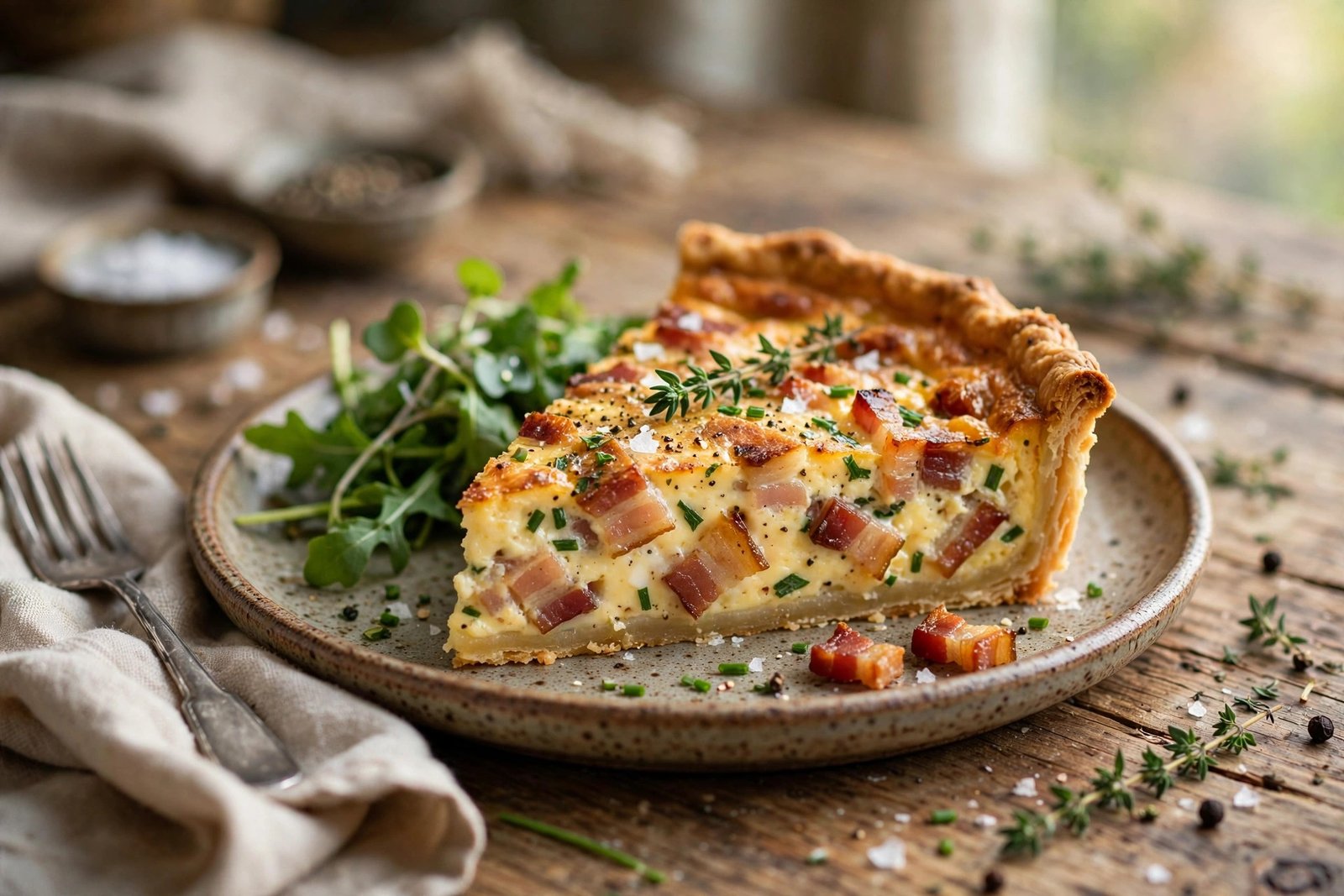
For a quiche Lorraine, leave out the spinach and add 150 g of smoked bacon lardons, fried until crisp and golden. The bacon brings a salty, smoky note that suits the same custard and pastry. Sprinkle the lardons over the base before you pour in the custard, and keep everything else the same. Fry the lardons until the fat renders and the edges crisp, then drain them well on kitchen paper. The bacon should be scattered over the base before the custard goes in, so it stays in the filling rather than sinking to the bottom.
Add sliced mushrooms for a deeper, earthier version. Fry 150 g of sliced chestnut mushrooms in butter until their edges turn golden and their water has cooked off, then mix them with the spinach. The mushrooms add a meaty texture that makes the quiche more filling.
Swap the Gruyere for a sharp Cheddar or a mild goat cheese if you like. Cheddar gives a stronger, tangier flavour, while goat cheese turns creamy and soft in the custard. A spoonful of crumbled feta scattered on top before baking gives a salty finish. If you use goat cheese, crumble it over the spinach before the custard goes in, so it softens in the heat without disappearing. Feta works the same way, and a little lemon zest in the custard brightens the whole dish.
Serve it as a picnic centrepiece with a tomato salad and crusty bread, or as a light supper with a bowl of soup. It pairs well with a dry white wine or a glass of sparkling water with lemon. Cold slices are excellent the next day, wrapped for a lunchbox.
Getting it right
The key technique is the custard. Eggs, cream and milk whisked together gently, with salt, pepper and nutmeg, poured over a filling that is already in the case. The ratio matters: too much egg and the quiche turns rubbery, too much cream and it will not set. Four eggs to 300 ml of liquid is the balance that gives a soft, silky slice. The nutmeg matters more than it seems. A pinch is enough to give the custard a warm background note, but too much will dominate the spinach. Grate it fresh if you can, as pre-ground nutmeg loses its scent quickly.
Heat and timing control the set. The oven at 190 C bakes the pastry crisp and the custard through in 30 to 35 minutes, but the centre must still wobble when you take it out. That wobble is the sign of a good quiche. The residual heat finishes the job as it rests, and the custard turns from liquid to silk without overcooking.
The common mistake is wet filling. Spinach holds a lot of water, and if you do not press it dry, that water leaks into the pastry and the custard. Wilt it, drain it, press it, and then press it again. If the base still turns soft, blind bake it a few minutes longer next time. Another common error is cutting the quiche while it is still hot from the oven. The custard needs ten minutes to firm up, and a wedge cut too soon will slump on the plate. Patience at this stage is part of the recipe.
Storing & reheating
Keep the quiche covered in the fridge for up to 3 days. It tastes good cold, but to serve it warm, reheat slices in a moderate oven at 160 C for 10 minutes, which crisps the pastry again. Avoid the microwave, as it softens the pastry and toughens the custard.
The baked quiche freezes well for up to a month. Cool it fully, wrap it tightly in cling film and foil, and thaw it overnight in the fridge. Reheat in the oven until hot through. You can also freeze the unbaked pastry case, wrapped, for up to a month.
Frequently asked questions
Can I use frozen spinach?
Yes. Thaw it fully, then squeeze out as much water as you can with your hands. Frozen spinach is wetter than fresh, so press it in a sieve and pat it dry with a clean tea towel before it goes into the case.
Why is my quiche base soggy?
The pastry was not blind baked long enough, or the spinach was too wet. Blind bake until the base looks dry and pale gold, and squeeze the spinach until no more water comes out. A clean tea towel helps here: lay the spinach in it, gather the corners and twist until the last drops come out.
Can I make quiche without cream?
You can use all milk, but the custard will be lighter and less rich. Use 300 ml of whole milk and add an extra egg yolk to help it set. The result is still good, just less silky. The lighter custard still sets well, though it tastes less rich and a little more delicate.
What cheese works best in quiche?
Gruyere is the classic choice for its nutty flavour and smooth melt. Emmental is a close cousin, and sharp Cheddar works too. Avoid soft cheeses that release a lot of water. A mix of Gruyere and a little Parmesan adds extra savoury depth, and both melt smoothly into the custard.
Can I make the pastry ahead?
Yes. The dough keeps in the fridge for 2 days, wrapped, or in the freezer for a month. You can also blind bake the case a day ahead and fill it when you are ready. Label the wrapped dough with the date, and thaw frozen pastry overnight in the fridge before rolling it out.
How do I know when the quiche is done?
The edges should be set and golden, and the centre should wobble gently when you shake the tin. It firms up as it cools. If the centre is still liquid, give it 5 more minutes. A knife inserted near the centre should come out mostly clean, with just a little soft custard clinging to it.