Ratatouille Niçoise Recipe
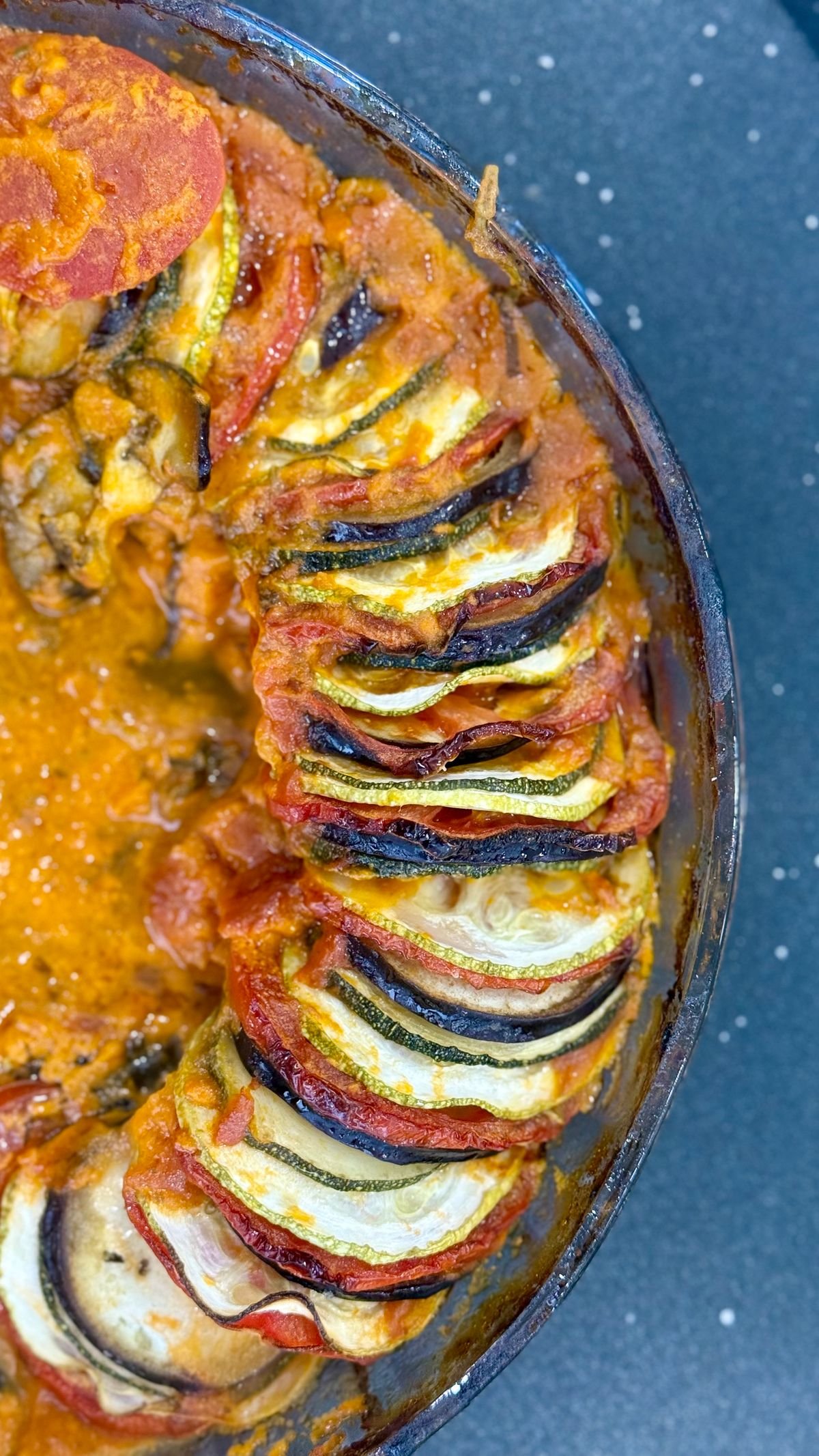
Ratatouille Niçoise is summer in a pot: aubergine, courgette, peppers and tomatoes cooked slowly in olive oil with garlic, thyme and basil until they turn soft, sweet and deeply flavoured. It is simple food at its best, made from the vegetables of the garden and eaten warm, cold or anywhere in between. It asks for good vegetables, good oil and a little patience, and gives back far more than it takes.
The story behind Ratatouille Niçoise
Ratatouille comes from Nice, on the French Riviera, where the name comes from the old Provençal word ratatouille, meaning to stir up or toss together. It began as a peasant dish, a way to use the vegetables that arrived all at once in high summer. Aubergines, courgettes, peppers and tomatoes ripen together in the heat, and the dish was a practical answer to a garden full of produce. Nothing was wasted. Vegetables that were too soft for the market went into the pot, and a dish that started as a way to use a glut became a classic in its own right.
The name Niçoise ties it to Nice, and the city's cooks have argued for generations about the right way to make it. Some cook each vegetable separately and layer them together at the end, so every piece keeps its own flavour. Others cook them in one pot, letting the flavours blend. The version here follows the layered method, which takes a little longer but gives a cleaner, brighter result. Both versions are defended fiercely in Nice, and both are good. The layered method is the one to learn first, as it teaches you how each vegetable behaves on its own.
What makes ratatouille special is the way ordinary vegetables turn into something more than the sum of their parts. The aubergine turns creamy, the courgette stays tender, the peppers soften and sweeten, and the tomatoes melt into a sauce that holds it all together. Garlic, thyme and basil give it the scent of the south, and good olive oil carries the flavours. There is no meat, no cream and no stock in the pot. The flavour comes from the vegetables themselves, from the oil and from time, which is why the quality of the produce matters so much.
Cook it in high summer, when the vegetables are at their best and tomatoes taste of the sun. It suits a long lunch, a barbecue side dish, or a light supper with bread and cheese. It is also one of those rare dishes that tastes better the next day, so make a big pot and enjoy it twice. It also travels well. Pack it cold for a picnic, or reheat it gently for supper, and it will taste just as good as it did on the first day.
- Prep time
- 25 mins
- Cook time
- 45 mins
- Total time
- 1 hour 10 mins
- Servings
- 4 servings
- Calories
- 180
Ingredients
- 1 large aubergine (about 400 g), cut into 2 cm cubes
- 2 medium courgettes, cut into 2 cm cubes
- 1 red pepper, deseeded and cut into strips
- 1 yellow pepper, deseeded and cut into strips
- 1 large onion, finely sliced
- 3 garlic cloves, thinly sliced
- 800 g ripe tomatoes, chopped, or 2 tins chopped tomatoes
- 100 ml extra virgin olive oil
- 1 teaspoon fresh thyme leaves
- 1 bay leaf
- 1 small bunch of basil, leaves torn
- Salt and black pepper, to taste
Instructions
- Salt the aubergine cubes in a colander and leave them for 20 minutes, then rinse and pat them dry with a clean tea towel. The salt draws out bitter water and helps the aubergine brown instead of soaking up oil like a sponge.
- Heat 3 tablespoons of the olive oil in a large, heavy pot over medium-high heat. Fry the aubergine in batches for 5 to 6 minutes, turning the cubes until they are golden on most sides and soft in the middle. Lift them out with a slotted spoon and set aside.
- Add another spoonful of oil to the same pot and fry the courgettes for 4 minutes, until they are lightly golden at the edges but still firm. They will finish cooking later, so do not let them go soft. Lift them out and set them aside with the aubergine.
- Lower the heat to medium, add the remaining oil, and cook the onion and peppers for 8 minutes, stirring often, until the onion is soft and pale gold and the peppers have started to soften. The pan should smell sweet and savoury by now.
- Add the garlic and thyme and cook for 1 minute, until the garlic smells fragrant and turns pale gold at the edges. Stir in the tomatoes and the bay leaf, season with salt and pepper, and bring the pot to a gentle simmer.
- Return the aubergine and courgettes to the pot and stir gently so the vegetables mix with the tomato sauce. Cover the pot and cook over low heat for 25 minutes, stirring once or twice, until everything is tender and the sauce has thickened.
- Lift the lid for the last 10 minutes of cooking so some of the liquid evaporates and the sauce turns rich and glossy. The vegetables should be soft but still hold their shape, not collapsed into a mush.
- Take the pot off the heat, remove the bay leaf, and stir in the torn basil leaves. Taste and adjust the salt and pepper, adding a drizzle of olive oil if the sauce needs loosening. The basil will wilt in the heat and release its scent.
- Serve the ratatouille warm, with crusty bread, or let it cool to room temperature and serve it as a salad. It is also excellent spooned over rice, pasta or a slice of toasted bread rubbed with garlic.
- If the ratatouille tastes flat, stir in a teaspoon of red wine vinegar and a pinch of sugar. The vinegar lifts the tomatoes, and the sugar rounds off the acid, bringing the whole pot into balance.
Pro tips
- Salt the aubergine before you cook it. Twenty minutes in a colander draws out the bitter juices and stops the cubes from drinking all the oil in the pan. Rinse and dry them well before frying.
- Cook the vegetables in batches, not all at once. A crowded pan steams instead of browning, and the vegetables turn soft and grey. Give each batch space and a hot pan, and the flavours will be far better.
- Use ripe, sweet tomatoes. If yours are pale and hard, a tin of good chopped tomatoes will give a better result. The tomato sauce is the backbone of the dish, so it needs to taste good on its own.
- Do not rush the simmer. The low, slow 25 minutes is what lets the flavours blend and the sauce thicken. If the pot boils hard, the vegetables break down and the sauce turns watery.
- Add the basil at the very end, off the heat. Fresh basil loses its scent if it cooks for long, so stir it in last and let the heat of the pot wilt it gently.
Variations & serving ideas
For a heartier version, stir in a tin of drained chickpeas with the tomatoes. They add a soft, nutty bite and turn the ratatouille into a filling main course, especially good spooned over rice or couscous. A handful of olives adds a salty note that suits the chickpeas. Rinse the chickpeas well and add them with the tomatoes, so they soak up the sauce as it simmers.
Top the finished ratatouille with a fried or poached egg for a simple supper. The runny yolk mixes with the tomato sauce and turns it rich and silky. This is a classic way to eat it in Provence, with bread to mop up the plate. Crack the eggs straight into the warm ratatouille and cover the pot for a few minutes, so the whites set while the yolks stay runny.
Swap the aubergine for butternut squash in autumn, when aubergines are out of season. The squash holds its shape well and turns sweet as it cooks, giving the dish a different but equally good character. Keep the peppers and tomatoes the same. Butternut squash needs a little longer in the pan than aubergine, so fry it until the edges are golden and the centres are just tender.
Serve it warm as a side with grilled fish, roast chicken or lamb chops, where its soft, sweet vegetables balance the richness of the meat. Or serve it cold as part of a summer buffet, with cured meats, cheese and bread. Pair it with a dry rosé from Provence, which is the natural partner. A chilled rosé suits the warm vegetables and the olive oil, and it is the wine most often poured with this dish in the south of France.
Getting it right
The key technique is cooking each vegetable separately before they meet in the pot. Aubergine, courgette, peppers and onion all cook at different speeds, and if they go in together the fast ones turn to mush while the slow ones stay raw. Frying them in batches gives each one a golden edge and keeps its own flavour. This is the part that takes time, and it is the part that makes the dish. A ratatouille where everything went in at once tastes muddy, while one built in stages tastes clear and bright.
Heat and timing matter through the simmer. The pot should sit at a gentle bubble, not a hard boil, for about 25 minutes with the lid on, then 10 minutes uncovered to thicken the sauce. Too much heat breaks the vegetables down; too little leaves the sauce thin and the flavours separate. Stir gently and only once or twice. Too much stirring breaks the vegetables down, and the dish loses the texture that the separate cooking worked to build.
The common mistake is overcrowding the pan when frying. If the cubes sit on top of each other, they steam and turn grey instead of browning. Cook in batches, even if it takes an extra ten minutes, and the finished dish will look and taste far better. If you are short on time, cook the aubergine and courgette together in a very hot pan with plenty of space, but never add the peppers and onion to the same batch.
Storing & reheating
Ratatouille keeps in a sealed container in the fridge for up to 5 days, and it genuinely improves after a night as the flavours settle. Reheat it gently in a pan over low heat, stirring now and then, and add a splash of water if the sauce has thickened too much.
It freezes well for up to 3 months. Cool it fully, pack it into containers, and thaw overnight in the fridge. The vegetables soften a little on freezing, so it is best used as a sauce for pasta or rice rather than served on its own.
Frequently asked questions
Can I cook all the vegetables together?
You can, but the result is less good. Each vegetable cooks at a different speed, so the courgette turns to mush while the aubergine is still firm. Cooking them separately takes longer but gives a much better texture. The extra ten minutes of frying in batches is worth it for the flavour and texture.
Should I peel the aubergine?
No, leave the skin on. It helps the cubes hold their shape and adds colour to the dish. Salting the aubergine first draws out the bitter juices, so peeling is not needed. The skin softens nicely during the long simmer, and it keeps the cubes from falling apart.
Can I use tinned tomatoes?
Yes, two tins of good chopped tomatoes work well, especially outside summer. Choose a brand with a sweet, rich flavour. Fresh tomatoes are best when they are ripe and full of flavour. In winter, when fresh tomatoes are pale and hard, tinned tomatoes will always give a better sauce.
Is ratatouille served hot or cold?
Both. It is good warm from the pot, and it is also excellent at room temperature the next day, when the flavours have settled. Serve it cold as part of a buffet or a picnic. Try it at room temperature with crusty bread, as the flavours come through more clearly when it is not piping hot.
What is the difference between ratatouille and a vegetable stew?
Ratatouille is a specific Provençal dish built around aubergine, courgette, peppers and tomato, cooked in olive oil with garlic and herbs. A vegetable stew is a broader idea with no fixed ingredients. Ratatouille also relies on olive oil and a slow simmer, while a stew may use stock, meat or cream.
Can I add other vegetables?
Yes, but keep the core four. Mushrooms, green beans or sweetcorn all work in small amounts. Avoid watery vegetables like cucumber, which turn soft and dilute the sauce. Add them in small amounts so the four core vegetables still lead, and fry firmer ones first so they cook through.