Choucroute Garnie Recipe
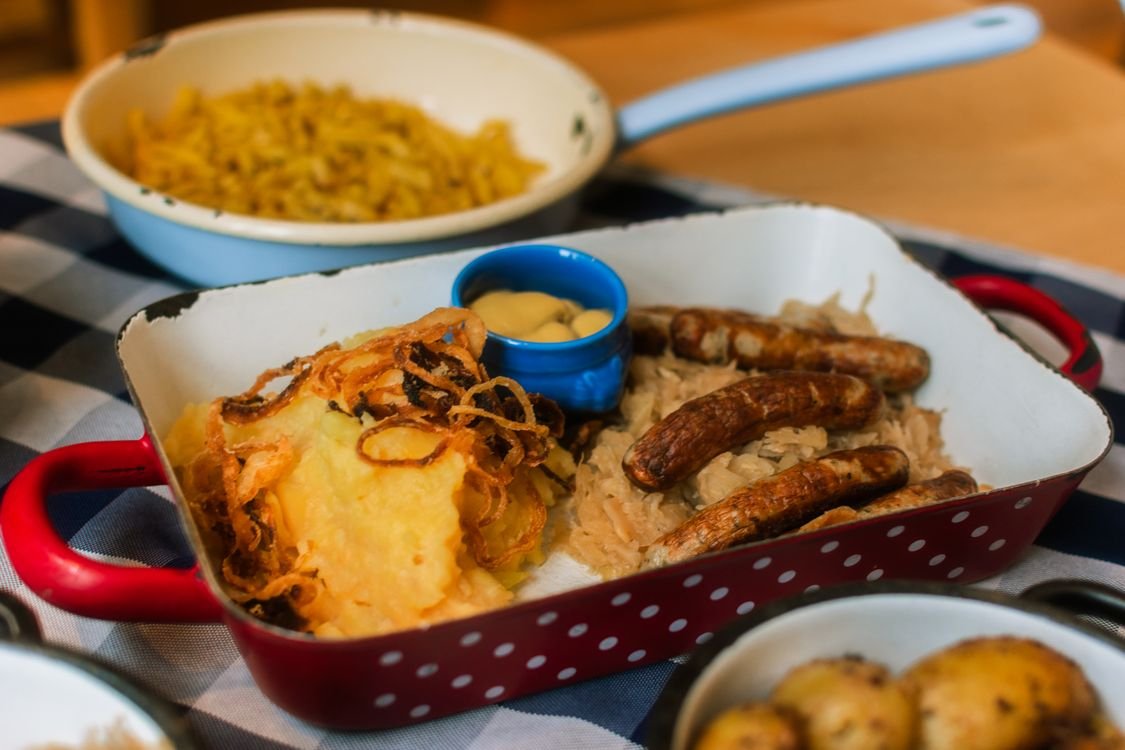
Choucroute garnie is the great feast dish of Alsace: tangy sauerkraut slow-cooked in white wine with juniper and bay, then piled high with sausages, smoked pork and boiled potatoes. The kraut turns silky and mellow in the oven while the meats baste it with their juices. It is loud, generous, cold-weather food, made for a crowded table and a second helping.
The story behind Choucroute Garnie
Choucroute garnie is the feast dish of Alsace, the region of north-eastern France that has passed between French and German hands for centuries. Its name is simple: choucroute is the French spelling of the Alsatian word for sauerkraut, and garnie means garnished, or dressed. The garnish is the point. A bed of wine-braised cabbage arrives at the table loaded with sausages, smoked pork and potatoes, and the whole platter is meant to feed a crowd and keep them talking.
Sauerkraut has been a staple in Alsace for hundreds of years because cabbage ferments well and keeps through long winters. Cooks learned that the kraut's sharp tang softens beautifully when it is cooked slowly in white wine with juniper, bay and onion. The wine tames the sourness, the juniper adds a piney note, and the pork fat that melts out of the meats gives the cabbage a silky richness. What starts as a preserved vegetable turns into something mellow and deeply savoury.
What makes choucroute garnie special is its generosity. It is not a delicate plate or a single portion; it is a mound of food that fills the table. The variety of meats matters as much as the kraut: snappy sausages, smoky pork, salty bacon, each one adding a different flavour to the cabbage as they cook together. When the platter lands in the middle of the table, everyone reaches in and builds their own plate, and the meal becomes a shared event rather than a served course.
Cook it when the weather turns cold and you have people to feed. It suits winter weekends, Oktoberfest-style gatherings and any evening when you want something hearty without standing over the stove. Most of the work happens in the oven while you boil potatoes and set the table. Serve it with mustard, cornichons and a glass of dry Riesling, and keep the portions generous.
- Prep time
- 25 mins
- Cook time
- 2 hrs
- Total time
- 2 hrs 25 mins
- Servings
- 4 servings
- Calories
- 720
Ingredients
- 1 kg sauerkraut, drained
- 750 ml dry white wine, such as Riesling
- 1 large onion, finely chopped
- 2 garlic cloves, sliced
- 8 juniper berries, lightly crushed
- 2 bay leaves and 4 whole cloves
- 100 g goose fat or unsalted butter
- 4 pork sausages, such as Montbéliard or bratwurst
- 4 frankfurters or Strasbourg sausages
- 300 g smoked pork belly or smoked pork chops
- 150 g slab bacon, cut into thick lardons
- 800 g waxy potatoes, peeled
Instructions
- Heat the oven to 160°C. Melt the goose fat in a large flameproof casserole over medium heat. Add the onion and cook for 5 minutes until soft and translucent, stirring often. Stir in the garlic and cook for 1 minute more, just until you can smell it, taking care not to let it brown.
- Add the drained sauerkraut, juniper berries, bay leaves and cloves. Pour in the white wine and stir everything together, lifting the kraut from the bottom so the wine reaches all of it. Season lightly with salt, remembering the meats will add saltiness of their own later.
- Tuck the slab bacon and the smoked pork belly or chops down into the kraut so they are mostly covered. Put the lid on the casserole and slide it into the oven. Bake for 1 hour and 30 minutes, until the kraut is soft, glossy and fragrant, and the pork is starting to turn tender.
- Meanwhile, put the potatoes in a large pan of cold salted water and bring to the boil. Simmer for about 20 minutes until a knife slides in easily, then drain and keep them warm under a lid. Boil them separately, since cooking them in the kraut makes them too salty and soft.
- Take the casserole out of the oven and lift the lid. You should smell wine, juniper and smoke. Nestle the pork sausages into the kraut and lay the frankfurters on top. Replace the lid and return the pot to the oven for 20 minutes, until the sausages are hot all the way through.
- Check that the sausages are cooked: a frankfurter should be plump and hot to the touch, and a pork sausage should feel firm with clear juices. If the kraut looks dry, stir in a splash of hot water or wine. Taste and add salt or pepper only if it needs it, since the meats season as they cook.
- Lift the meats out and pile the sauerkraut onto a big warm platter, mounding it high in the centre. Arrange the sausages, smoked pork and bacon over and around the kraut so the platter looks abundant. Tuck the boiled potatoes around the edges, splitting the larger ones open so they catch the juices.
- Serve the platter at the table with mustard, cornichons and rye bread. Let everyone help themselves to kraut and a mix of meats, and pass the potatoes around. The kraut should be tangy but mellow, the sausages snappy and the potatoes soft and buttery.
- If you have leftover kraut, pack it with some of the cooking liquid in a covered container. It keeps for 3 days in the fridge and the flavour deepens. Reheat it gently in a covered pot with a splash of wine, and add fresh sausages rather than reheating the old ones twice.
Pro tips
- Taste the sauerkraut before you cook it. If it is very sharp, give it a quick rinse under cold water; if it is mild and balanced, use it straight from the jar for a livelier dish.
- Use goose fat if you can find it. It gives the kraut a round, savoury richness that butter cannot quite match, and it is the traditional fat for this dish in Alsace.
- Boil the potatoes separately in salted water. Cooking them in the kraut makes them soggy and over-salted, while separately boiled potatoes stay firm and soak up the juices on the plate.
- Warm your serving platter before you pile the kraut on it. A cold platter chills the food fast, and this is a dish that should arrive at the table steaming and generous.
- Do not crowd the sausages. Give them room in the pot so the heat reaches them evenly; packed tight, the ones in the middle stay pale and undercooked while the outer ones dry out.
Variations & serving ideas
The meats are the easiest part to change. A traditional platter mixes fresh pork sausage, frankfurters, smoked belly and bacon, but you can build it from whatever good sausages your butcher has. Smoked ham hock adds a deep, meaty flavour and plenty of gelatin to the kraut, while a pork chop browned first and tucked into the pot gives each person a proper piece of meat. For a lighter version, use chicken sausages and a lean ham steak, and go easy on the bacon.
The kraut itself takes well to small changes too. A handful of shredded apple stirred in with the onion adds a gentle sweetness that suits the wine, and a splash of beer in place of some of the wine gives a maltier, darker result. Some cooks in Alsace add a few whole potatoes to the pot for the last hour so they cook in the kraut juices, though most keep the potatoes separate for a cleaner flavour and firmer texture.
Serve the platter family style, piled high in the centre of the table. Mustard is essential, and a sharp Dijon or a grainy Alsatian mustard both work. Cornichons and pickled onions cut through the fat, and dark rye bread is the right bread for mopping up. A simple green salad with a sharp vinaigrette is not traditional but gives the meal a fresh counterpoint if you want one.
For pairing, pour a dry Alsatian white. Riesling is the classic choice: its acidity matches the kraut and its fruit stands up to the smoke. Sylvaner and Pinot Blanc work well too, and a cold lager is a fine alternative for beer drinkers. Finish with something light and fresh, such as a fruit salad or a lemon sorbet, since the main course is rich and filling.
Getting it right
The key technique is cooking the kraut low and slow in wine so the sourness mellows instead of sharpening. Sauerkraut straight from the jar is assertive, almost harsh, and a hard boil would only concentrate that bite. A gentle oven at 160°C lets the wine steam through the cabbage for ninety minutes, softening the shreds and rounding the edges. The juniper and bay perfume the pot as they cook, and the pork fat slowly works its way in.
Timing the meats is the second skill. The smoked pork and bacon go in at the start because they need the long cook and they season the kraut as they go. The fresh sausages go in for the last twenty minutes only, which is enough to cook them through without splitting their skins or turning them dry. Frankfurters need even less time, so lay them on top where the steam heats them gently. If a sausage bursts, the heat was too high or it went in too early.
The most common mistake is over-salting. Sauerkraut, smoked pork, bacon and sausages are all salty on their own, so season the kraut very lightly at the start and taste again only after the meats have cooked in it. Another slip is skipping the fat: the kraut needs goose fat or butter to turn glossy and rich, and cooking it in water alone leaves it lean and sour. A splash of wine at the end brightens everything if the pot tastes flat.
Storing & reheating
Leftover sauerkraut keeps in the fridge for up to 4 days in a covered container, and its flavour actually improves as it sits. Reheat it gently in a covered pot over low heat with a splash of white wine or water, stirring once or twice, until it is steaming. The meats are best reheated separately so they do not dry out, and frankfurters should be eaten fresh rather than reheated twice.
The kraut also freezes well for up to 3 months, which makes it handy for a quick supper. Freeze it with some of its cooking liquid in portion-sized containers and defrost overnight in the fridge. Cooked potatoes do not freeze well, so boil fresh ones when you serve it. Any leftover sausages can be sliced into the kraut before freezing for a ready-made lunch.
Frequently asked questions
What is choucroute garnie?
Choucroute garnie is an Alsatian platter of sauerkraut cooked in white wine with juniper, bay and onion, then served with an assortment of pork sausages, smoked pork, bacon and boiled potatoes. It is a celebratory dish from north-eastern France, where the German and French food traditions meet.
Should I rinse the sauerkraut before cooking?
Rinsing is a matter of taste. A quick rinse in cold water tames the sourness and gives a milder kraut, while using it straight from the jar keeps it sharp and punchy. Taste your kraut first: mild kraut needs no rinse, but very sour kraut benefits from one.
What wine goes into choucroute garnie?
Use a dry white wine, ideally an Alsatian Riesling or Sylvaner, since its acidity matches the kraut. If you would rather not use alcohol, replace the wine with chicken stock plus a tablespoon of white wine vinegar. Avoid sweet wines, which make the dish taste flat.
Which sausages should I use?
Knackwurst, frankfurters, smoked pork belly, pork chops and slab bacon are the classics. In France, look for saucisse de Montbéliard or saucisse de Strasbourg; elsewhere, any good smoked sausage and a pork sausage you like will work. The variety is the point.
Can I make choucroute garnie in a slow cooker?
Yes, and it is a good way to make it. Cook the sauerkraut with the wine, onion and seasonings on low for 6 to 7 hours, then add the meats for the last hour. The kraut turns very soft and mellow, though you lose the slight bite of the oven-baked version.
What do you serve with choucroute garnie?
Boiled potatoes are traditional and non-negotiable for most Alsatians, since they soak up the kraut juices. Add a pot of strong mustard, cornichons and crusty rye bread, and pour a dry Riesling. A green salad is not traditional but helps if you want something fresh on the side.