Namkeen Gosht Recipe
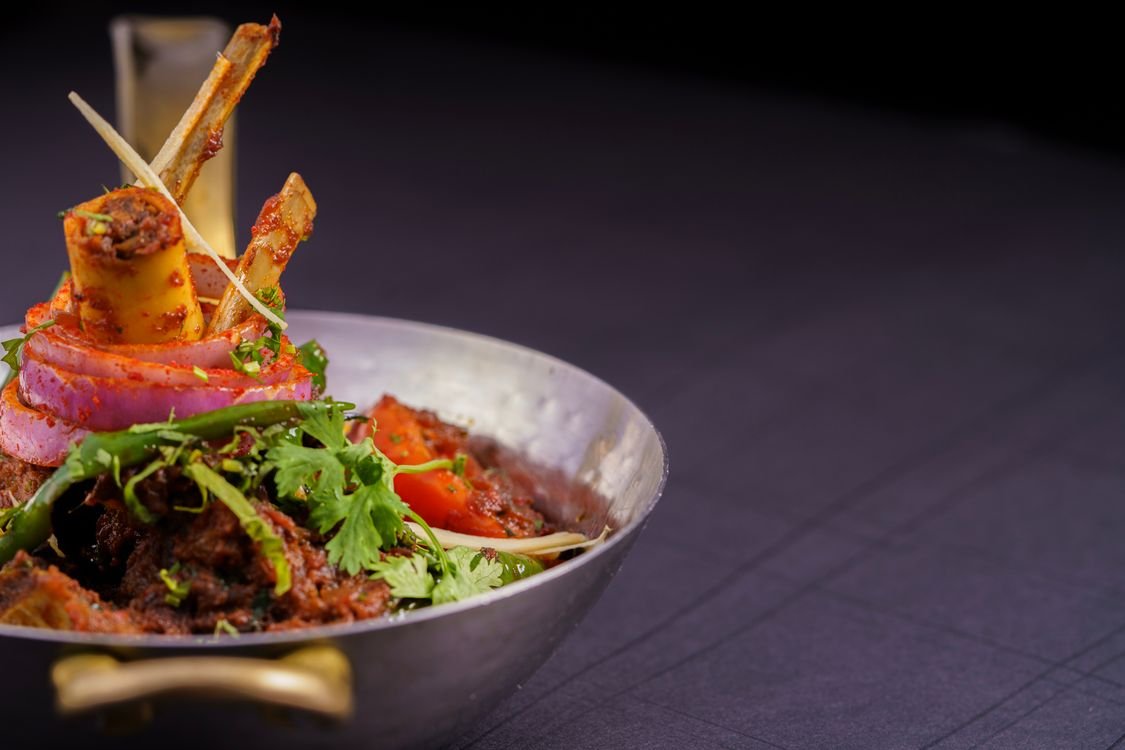
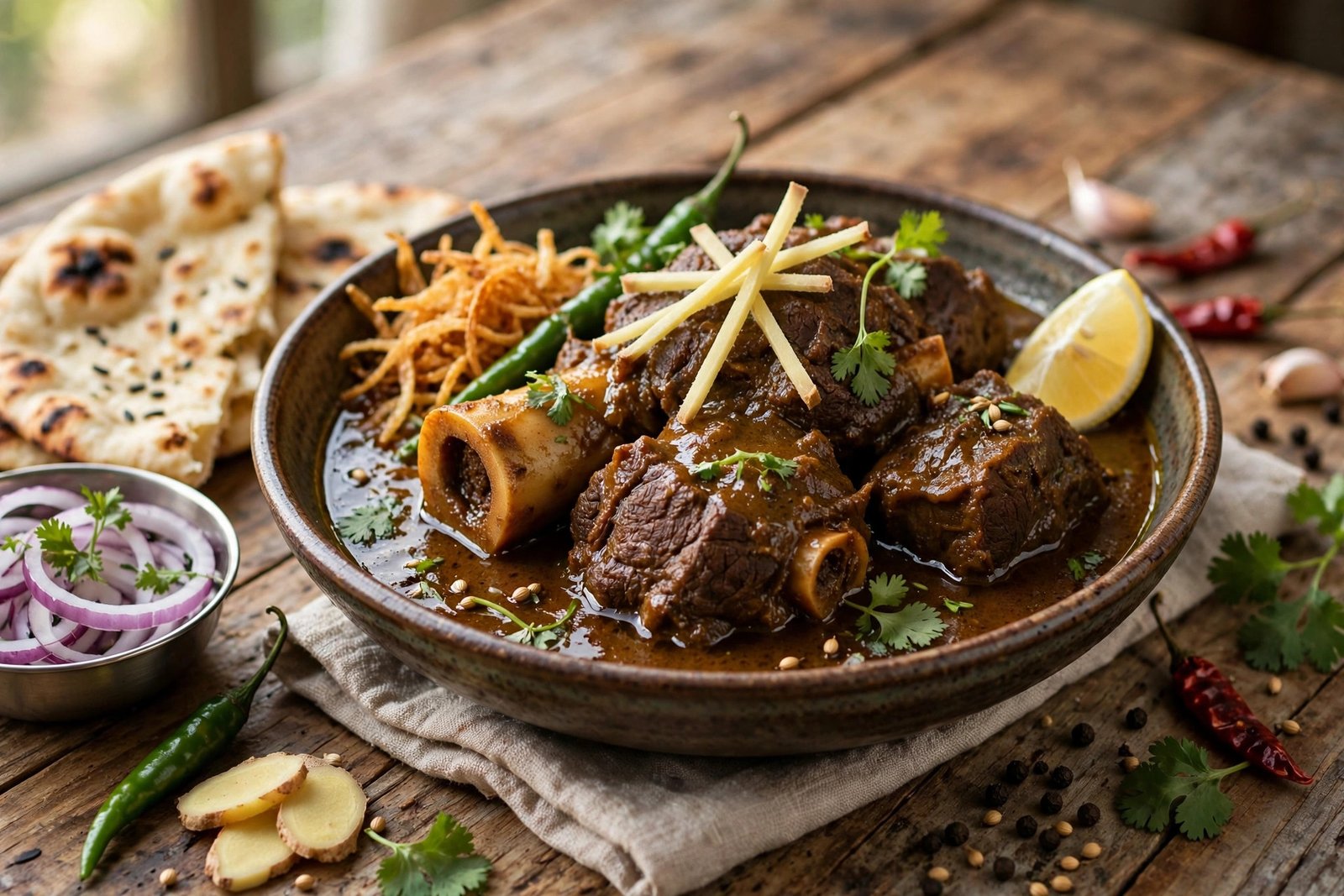
Tender lamb simmers slowly with just salt, black pepper, green chillies and ginger until the meat turns soft and the cooking liquid reduces to a rich, clear gravy. This Peshawar-style Namkeen Gosht is simple on purpose, letting the flavour of good meat shine through. Serve it with hot naan, lemon and sliced onion for a meal that needs nothing fancy.
The story behind Namkeen Gosht
Namkeen Gosht comes from Peshawar, the old trading city in Khyber Pakhtunkhwa, where the cooking has always been direct and proud of it. Namkeen means salty, and the name is a promise: this is meat seasoned with salt and black pepper, with green chillies and ginger for warmth, and very little else. There is no chilli powder, no long list of ground spices, no tomatoes thickening the sauce. The dish trusts the meat to carry itself, and it trusts the cook to buy good meat in the first place.
The food of Peshawar grew up around the market, the tandoor and the roadside eating house, where travellers and traders needed a filling meal cooked fast and eaten with bread. Lamb and goat were the meats of the region, and cooks learned to treat them with a light hand. Namkeen Gosht belongs to that tradition. It is cooked in one pot, served in the pot or a simple bowl, and eaten with naan torn by hand. It is food for a table full of people, not for a plate dressed up for a photograph.
What makes this dish special is its restraint. Most curries build flavour by adding more: more spices, more tomatoes, more richness. Namkeen Gosht goes the other way and builds flavour by taking things away. With only salt, pepper, ginger and green chillies in the pot, every choice shows. The quality of the lamb, the heat of the simmer, the patience of the cook, all of it is right there in the finished dish. The gravy is thin and clear, and it tastes like the meat itself, which is exactly the point.
Cook Namkeen Gosht when you have good lamb and you want to taste it properly. It suits cold evenings, family dinners and days when the table is full and the cooking needs to be simple and generous. The work is short, the simmer is long and gentle, and the result is a quiet dish that wins people over without shouting. Serve it with hot bread and let the meat do the talking, because that is what this recipe was made for.
- Prep time
- 20 mins
- Cook time
- 1 hr 20 mins
- Total time
- 1 hr 40 mins
- Servings
- 4 servings
- Calories
- 490
Ingredients
- 900 g bone-in lamb or mutton, cut into chunks
- 3 tablespoons ghee or animal fat
- 1 large onion, finely sliced
- 8 garlic cloves, roughly chopped
- 1 tablespoon fresh ginger, cut into strips
- 4 green chillies, slit lengthways
- 1 teaspoon whole black peppercorns, lightly crushed
- 1 teaspoon cumin seeds
- 2 bay leaves
- 1/2 teaspoon ground black pepper
- Salt to taste, about 1 1/2 teaspoons to start
- Fresh coriander, lemon wedges and sliced onion to serve
Instructions
- Heat the ghee in a heavy pot over medium-high heat until it melts and shimmers. Add the cumin seeds and bay leaves and let them crackle for about thirty seconds until they smell warm and fragrant. Stir in the sliced onion and cook for seven to eight minutes, stirring often, until it turns soft and pale gold at the edges.
- Add the garlic and half of the ginger strips and cook for one minute until the raw smell fades and the mixture smells sweet and warm. Keep the garlic pale, because browned garlic turns bitter fast. Turn the heat down for a moment if the pot is running too hot.
- Add the lamb pieces and a good pinch of salt, then turn the heat up and brown the meat for eight to ten minutes. Stir so every piece touches the hot surface and picks up a little colour. You should hear a steady sizzle and see the meat go from pink to pale brown, with juices collecting at the bottom of the pot.
- Add the crushed peppercorns, green chillies and ground black pepper, then pour in about 300 ml of hot water. Scrape the bottom of the pot with your spoon to lift the browned bits into the liquid. Bring it to a boil, then turn the heat down low and put the lid on.
- Let the meat simmer gently for one hour and ten minutes, checking every twenty minutes and giving it a stir. You want a slow, lazy bubble, not a rolling boil, so the lamb turns tender without tightening up. Add a splash of hot water if the pot starts to look dry before the meat is soft.
- Test a piece by pressing it with a spoon. It should give easily and start to pull apart at the edges. If it still feels firm, add a little more hot water, put the lid back on and cook for fifteen minutes longer. Patience matters more than heat here.
- Take the lid off and turn the heat up to medium. Cook for ten minutes, stirring now and then, until the gravy reduces to a thin, clear broth that coats the meat lightly. Taste and add more salt if it needs it, remembering that the flavours will taste stronger once the gravy has reduced.
- Stir in the rest of the ginger strips and cook for two more minutes so they soften slightly but keep their fresh bite. Squeeze in lemon juice if you like a little brightness, then turn off the heat. The finished dish should smell of lamb, pepper and ginger, with nothing overpowering any of them.
- Let the pot rest, covered, for ten minutes so the meat relaxes and the gravy settles. Spoon the Namkeen Gosht into a warm bowl and scatter fresh coriander over the top. Serve it hot with naan, lemon wedges and sliced onion, and let everyone tear off bread and scoop up the meat and its thin, rich gravy.
Pro tips
- Buy the best lamb you can afford, because this dish has nowhere to hide poor meat. Bone-in shoulder or mutton gives the richest gravy, and the meat around the bone stays juicy through the long simmer.
- Season in stages rather than all at once. Add a good pinch of salt with the meat, then taste and adjust again after the gravy reduces, because the flavour concentrates as the liquid cooks down, and stir it in well before you taste again.
- Keep the simmer gentle from start to finish. A lazy bubble is the right pace, and a hard rolling boil will toughen the lamb and turn the clear gravy cloudy and dull.
- Add the green chillies whole or slit, not chopped fine. They give a gentle warmth to the gravy without making the dish fiery, and anyone who wants more heat can eat a chilli from the pot. They soften in the gravy and turn mild and sweet.
- Let the finished pot rest for ten minutes before serving. The meat relaxes, the gravy settles, and the flavours come together instead of tasting sharp and separate on the plate.
Variations & serving ideas
Goat meat is the most natural swap for lamb, and it brings a slightly stronger, gamier flavour that suits the simple seasoning well. It needs about the same cooking time, though older goat can take fifteen minutes longer, so test it with a fork before you finish the gravy. Beef shin is another option, and it gives a deeper, beefier broth, but it needs a longer simmer and a little more water along the way. Chicken is the fast version, ready in about thirty minutes, though it makes a lighter dish.
Some cooks add a whole dried red chilli or a pinch of chilli flakes for a touch more warmth, and a few add a small chopped tomato for a little body in the gravy. A spoonful of yoghurt stirred in near the end gives a softer, creamier finish, though it moves the dish away from the clear Peshawar style. Dried fenugreek leaves add a bitter note that some families love, but use only a small pinch or it will take over the pot. A little extra black pepper at the end lifts the whole dish without changing its character.
Serve Namkeen Gosht with hot naan, tandoori roti or chapati, which are the right tools for scooping up the meat and its thin gravy. A side of sliced onion, tomato and green chilli with lemon juice adds crunch and freshness, and a bowl of plain yoghurt cools the palate between bites. A few sprigs of fresh coriander on top add colour. Keep the sides simple, because the meat is the centre of this meal and anything fussy on the plate takes attention away from it.
For drinks, a glass of lassi or a cup of green tea both sit well beside this dish, and plain water with lemon is enough on a warm day. Leftovers make a good filling for a rolled paratha the next morning, with a little onion and fresh coriander inside. However you serve it, bring the pot to the table while it is hot and let people help themselves, because Namkeen Gosht is at its best when it is shared straight from the pot.
Getting it right
The key technique in Namkeen Gosht is restraint, and it starts with the shopping. Buy good bone-in lamb or mutton, because there are no strong spices to cover poor meat. Bone-in cuts give the clear gravy its body, and the bones release flavour slowly as the meat simmers. If you use lean boneless meat, the dish will taste thinner and the meat will dry out faster, so the cut matters more here than in a heavily spiced curry.
Heat control is the second skill. Brown the meat over a strong heat so it picks up colour and flavour, then drop to the lowest steady simmer you can hold. You want a bubble breaking the surface every few seconds and no more. A hard boil tightens the meat and clouds the gravy, while too little heat leaves the lamb pale and bland. Keep the lid on, check every twenty minutes, and add hot water in small amounts rather than cold, which shocks the meat.
The common mistake is reaching for extra spices when the dish tastes plain. If it tastes flat, it almost always needs salt, not spice, so season, wait a minute, and taste again. Taste, adjust, and wait before you add anything else. Another mistake is cooking it too fast, which leaves the meat tough while the gravy reduces too far. If the meat is firm, give it fifteen more minutes on low heat with a splash of water. The fix for nearly every problem in this dish is time, salt or patience, in that order.
Storing & reheating
Let the Namkeen Gosht cool to room temperature, then move it into a clean container with a tight lid. It keeps in the fridge for three days and the flavour deepens overnight, so it is worth cooking a day ahead when you can. For longer storage, freeze it in portions for up to three months, leaving a little room at the top of each container because the gravy expands as it freezes.
Reheat it on the stove over low heat with a splash of water, stirring now and then until it bubbles all the way through to the centre. Avoid reheating it hard or boiling it fast, because the lamb can toughen and the clear gravy can turn cloudy. Taste after reheating and add a pinch of salt or a squeeze of lemon to bring the flavours back.
Frequently asked questions
Can I make Namkeen Gosht ahead of time?
Yes, and it keeps very well. Cool it fast, cover it tightly, and keep it in the fridge for up to three days. The flavours settle overnight, so it often tastes better on the second day. Reheat it gently on the stove with a splash of water until it bubbles right through.
Which meat works best for Namkeen Gosht?
Lamb is the classic choice, and goat meat is the closest alternative, with a slightly stronger flavour that suits the simple seasoning. Beef shin works too, though it needs a longer simmer. Chicken cooks much faster, in about thirty minutes, but it gives a lighter dish that some cooks find less satisfying.
What does namkeen mean, and is the dish spicy?
Namkeen means salty, and this dish is seasoned mainly with salt and black pepper, with no chilli powder or long spice list. The heat comes only from green chillies and ginger. That restraint is the whole point: the meat itself is the flavour, and nothing is there to cover it up.
How thick should the gravy be?
The gravy should be thin and clear, more like a rich broth than a thick curry sauce. It coats the meat lightly and pools a little on the plate. If yours looks too thin, cook it uncovered for ten minutes to reduce. If it is too salty, add a splash of water and a squeeze of lemon.
Can I make Namkeen Gosht in a pressure cooker?
Yes. Use a pressure cooker for about twenty-five minutes on high pressure, then open it and finish the gravy uncovered until it reaches the right thickness. A slow cooker on low for six hours also works well, and it suits this gentle dish because the meat never gets rushed or toughened.
What should I serve with Namkeen Gosht?
Hot naan or tandoori roti is the classic partner, with sliced onion, lemon wedges and green chillies on the side. A simple tomato and onion salad adds freshness, and a bowl of plain yoghurt cools the palate. Keep the sides plain so the meat stays the centre of the meal.