Besan Halwa Recipe
Advertisement
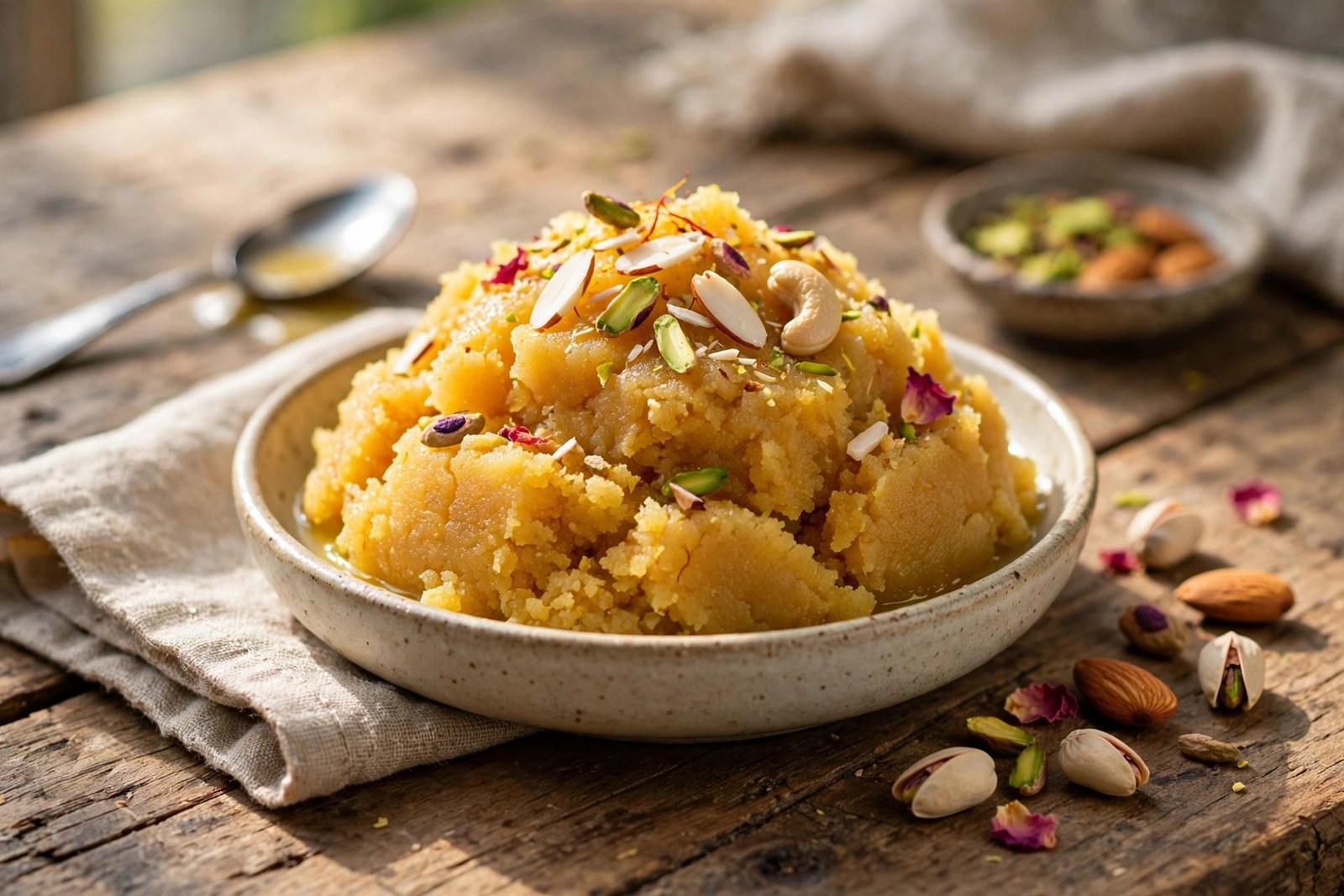
Besan halwa is a beloved desi sweet: gram flour roasted slowly in ghee until nutty and golden, then simmered with sugar syrup and cardamom. It is warming, fragrant and deeply comforting. A small bowl is all you need.
Advertisement
Advertisement
- Prep time
- 10 mins
- Cook time
- 30 mins
- Total time
- 40 mins
- Servings
- 4 servings
- Calories
- 450
Ingredients
- 1 cup besan (gram flour)
- 1/2 cup ghee
- 3/4 cup sugar
- 1.5 cups water
- 4 green cardamom pods, crushed
- 2 tablespoons chopped almonds
- 2 tablespoons chopped pistachios
- 1 tablespoon desiccated coconut (optional)
- 1 pinch of saffron (optional)
- 1/2 teaspoon cardamom powder
Instructions
- Boil the water with the sugar, crushed cardamom and saffron until the sugar dissolves, then keep warm.
- Melt the ghee in a heavy pan and add the besan, stirring constantly over medium-low heat.
- Roast for 12 to 15 minutes, stirring without stopping, until the flour turns deep golden and smells nutty.
- Carefully pour in the warm sugar syrup; it will bubble fiercely, so stand back and stir quickly.
- Cook for 5 to 7 minutes, stirring, until the halwa thickens and leaves the sides of the pan.
- Stir in the cardamom powder and half the nuts.
- Serve warm in small bowls, topped with the remaining almonds and pistachios.
Advertisement
Pro tips
- Keep stirring while roasting; besan burns quickly if left alone.
- The colour of the roast decides the flavour, so take it to a deep golden brown.
- Add the syrup slowly and carefully; the mixture splutters when it hits the hot pan.
- Besan halwa thickens as it cools, so serve it while it is still soft.
Frequently asked questions
What is besan halwa?
It is a traditional South Asian dessert made from gram flour roasted in ghee and cooked with sugar syrup and cardamom.
How long does besan halwa keep?
Up to 4 days in the fridge. Reheat gently with a splash of milk or water to soften it.
Can I use less ghee?
You can reduce it slightly, but ghee is what gives halwa its rich flavour and smooth texture.
When is besan halwa served?
It is a winter favourite in Pakistan and India, and is often made for celebrations and family gatherings.