Beef Karahi Recipe
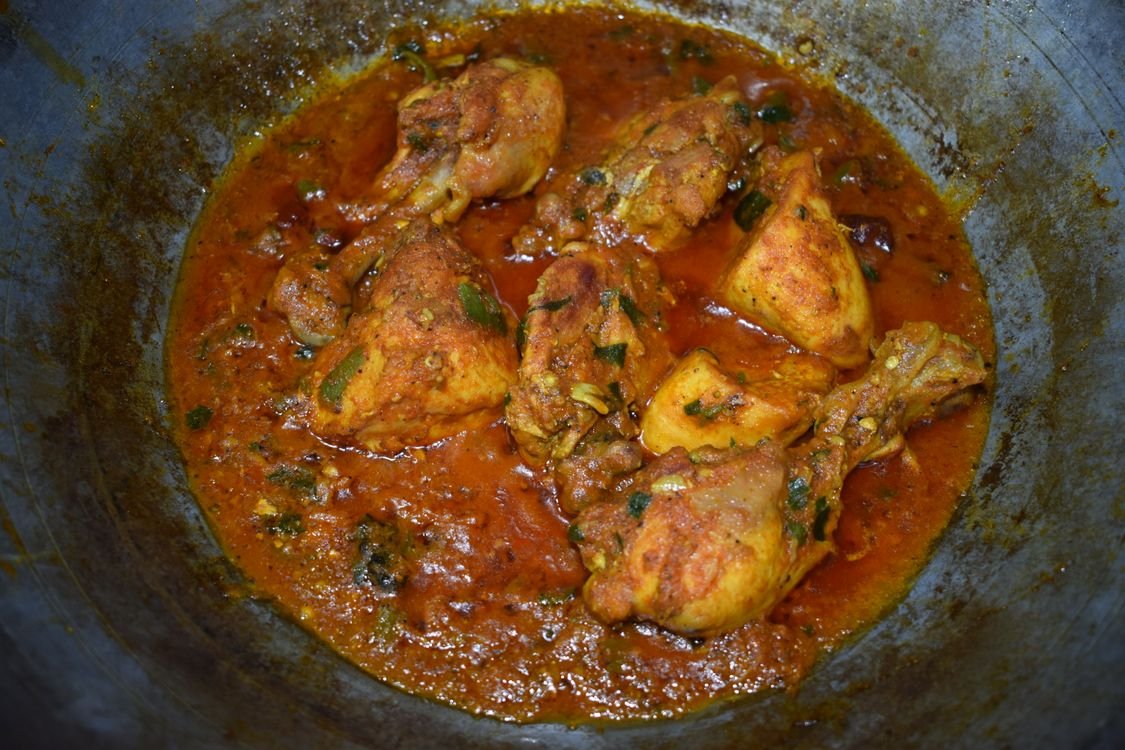
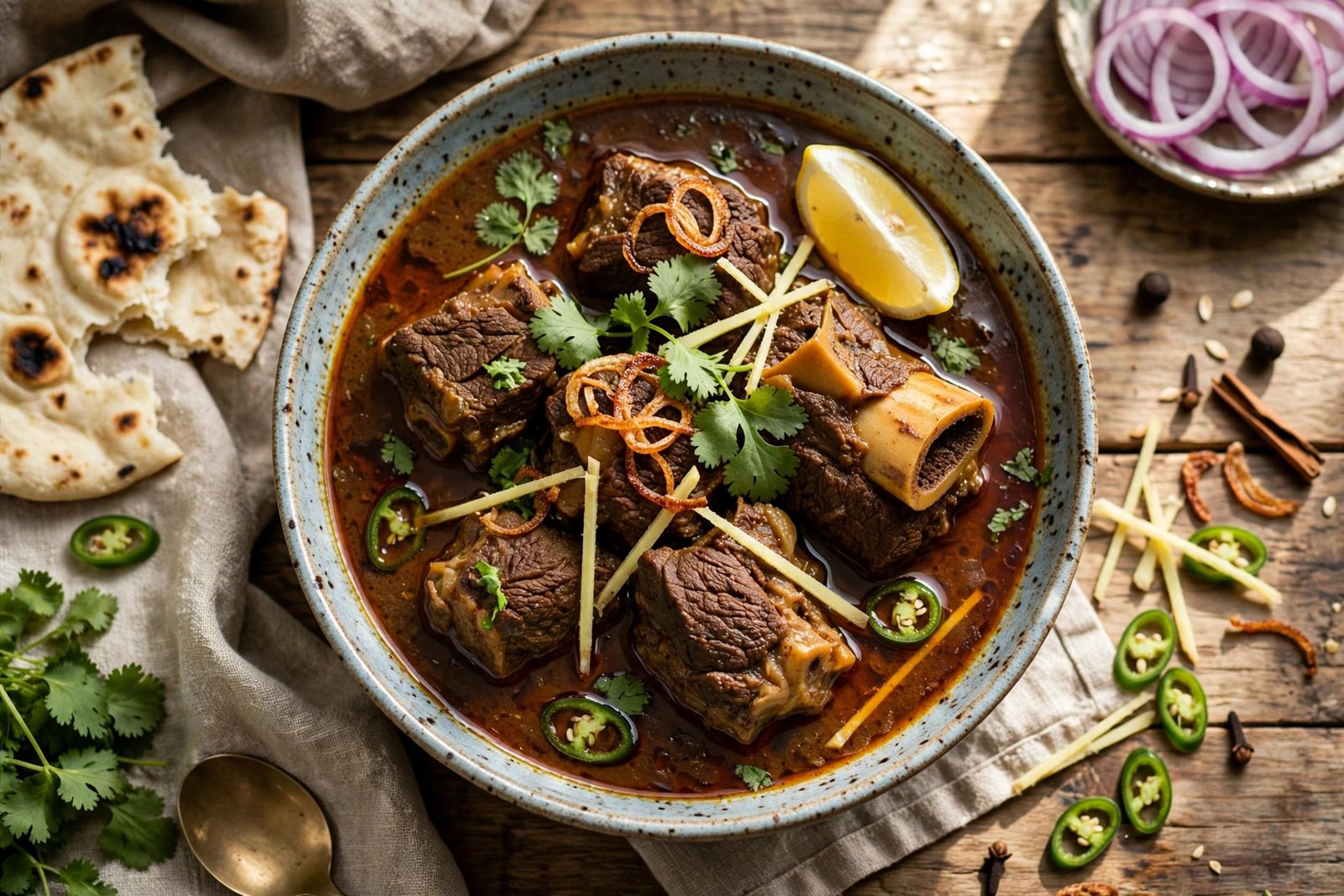
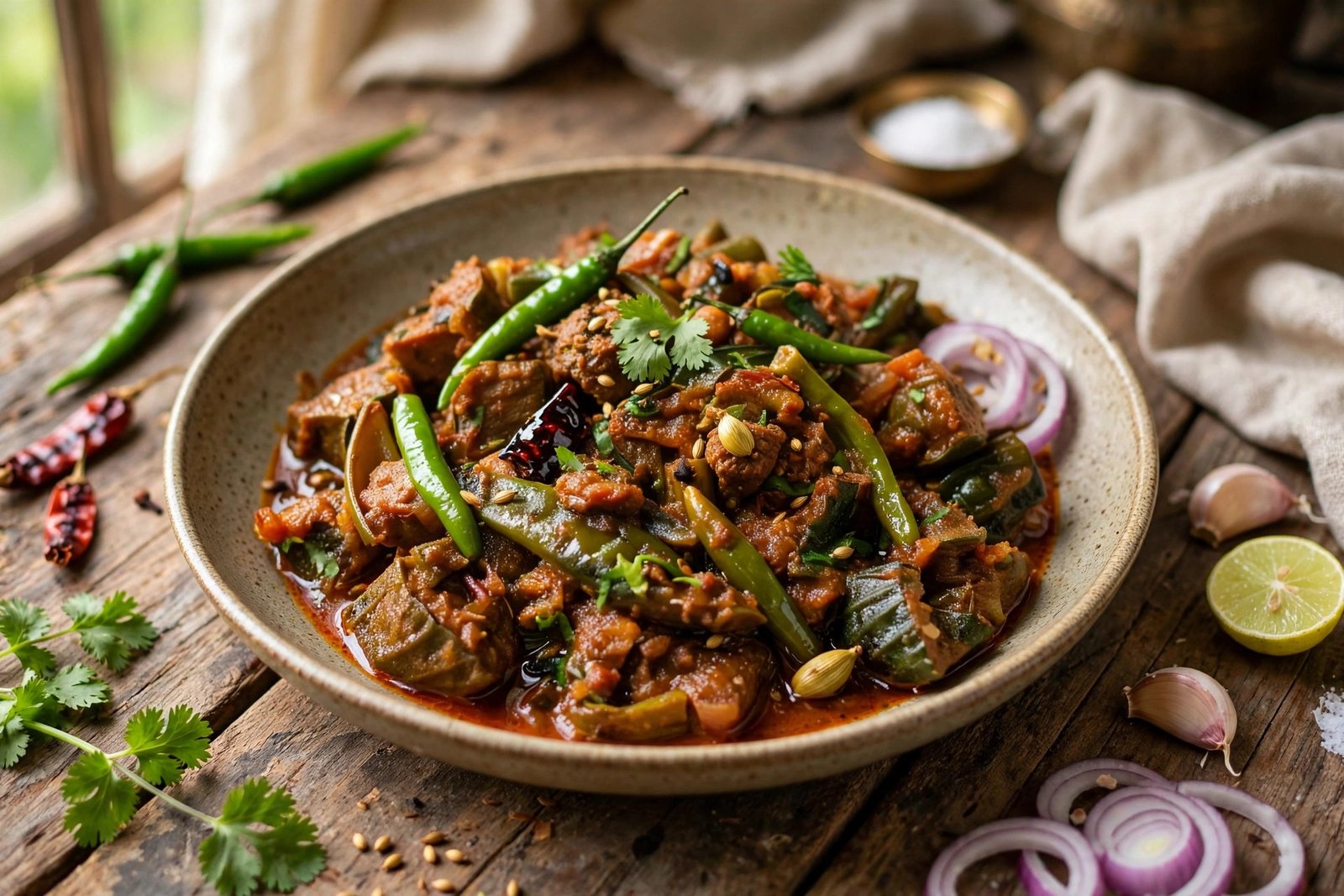
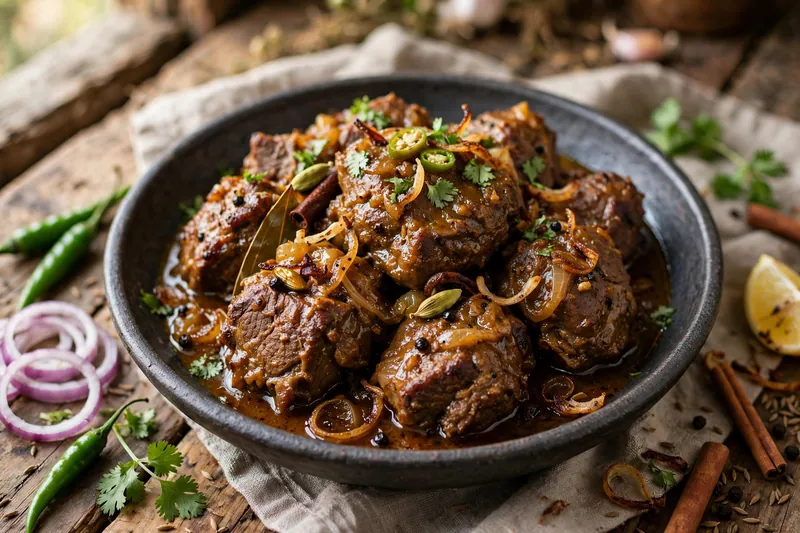
Chunks of beef cook down in a thick tomato gravy with ginger, green chillies and cracked black pepper until the oil rises and the meat turns meltingly tender. This Pakistani Beef Karahi is bold, fresh and fast to love, with a bright finish of lemon and coriander. Serve it straight from the karahi with hot naan and let everyone tear off pieces and dig in.
The story behind Beef Karahi
Karahi takes its name from the pan it is cooked in, a deep round wok that sits over fierce heat and turns simple ingredients into something bold. The dish comes from Punjab, and Lahore is the city most people link it with, where roadside dhabas cook it to order in front of waiting customers. Beef, tomatoes, ginger and green chillies go into the hot pan with little else, and the cook works fast, stirring and scraping while the tomatoes collapse and the meat browns. There is no long list of spices and no cream to soften it. The flavour comes from heat, tomatoes and good beef.
In Pakistan, karahi is the dish you order when friends drop by without warning. It is cooked fresh, eaten fresh, and served in the pan it was made in, with stacks of hot naan arriving alongside. The table gets crowded, the bread gets torn by hand, and nobody waits for formal plating. Street stalls and home kitchens cook it the same way, which is part of its charm. It is a working dish, not a showpiece, and the people who cook it best are usually the ones who have made it a thousand times.
What makes Beef Karahi special is its directness. The tomatoes give the gravy body and a sharp, fresh tang, while the ginger and green chillies sit on top of the flavour rather than hiding inside it. Cracked black pepper adds a slow warmth that builds as you eat, and the final stage, cooking the sauce down until the oil separates, gives the dish a shine and a depth that a watery curry never reaches. Every bite should taste of beef first, then tomato, then heat, in that order.
Cook Beef Karahi when you want a proper meal without a long day in the kitchen. It suits Friday lunches, weekend dinners and any evening when friends are coming and you want the house to smell like food is being cooked properly. The prep is short, the simmer does most of the work, and the last ten minutes of high-heat cooking are where the dish earns its name. Serve it straight from the pan and let the table do the rest.
- Prep time
- 20 mins
- Cook time
- 1 hr 10 mins
- Total time
- 1 hr 30 mins
- Servings
- 4 servings
- Calories
- 520
Ingredients
- 900 g beef shin or chuck, cut into chunks
- 500 g ripe tomatoes, finely chopped
- 3 tablespoons ghee or vegetable oil
- 1 large onion, finely sliced
- 1 tablespoon fresh ginger, cut into thin strips
- 6 garlic cloves, finely chopped
- 4 green chillies, slit lengthways
- 1 teaspoon cumin seeds
- 1 teaspoon cracked black pepper
- 1 teaspoon red chilli flakes
- 1/2 teaspoon ground turmeric
- 1 teaspoon garam masala
- Salt to taste, plus fresh coriander and lemon to serve
Instructions
- Heat the ghee in a karahi or heavy wok over high heat until it shimmers and a drop of water sizzles hard on contact. Add the cumin seeds and let them crackle for about thirty seconds until they smell warm and nutty. Stir in the sliced onion and cook for six to seven minutes, stirring often, until the edges turn golden and the onion smells sweet.
- Add the garlic and half of the ginger strips and cook for one minute until the raw smell fades. The pan should smell warm and sharp, and the garlic should stay pale rather than brown. If the garlic starts to colour too fast, turn the heat down for a moment and keep stirring.
- Add the beef chunks and a good pinch of salt, then spread the meat out so as much as possible touches the hot surface. Sear it for eight to ten minutes, turning the pieces now and then, until the outside turns brown and the juices run into the pan.
- Tip in the chopped tomatoes, green chillies, black pepper, chilli flakes and turmeric. Cook on medium-high heat for ten minutes, pressing the tomatoes with the back of your spoon until they collapse into a thick, rough sauce. The colour will deepen to a rich red-orange.
- Pour in about 200 ml of hot water and scrape the bottom of the pan to lift the browned bits into the sauce. Bring it to a boil, then turn the heat down low, put the lid on, and let the beef simmer for fifty minutes. Stir every fifteen minutes so the thick sauce does not catch on the bottom.
- Check the beef by pressing a piece with a spoon. It should give easily and start to shred at the edges. If it still feels firm, add another splash of hot water, put the lid back on and cook for fifteen more minutes. Tough beef here means it needs more time, not more heat.
- Take the lid off and turn the heat up to medium-high. Cook for eight to ten minutes, stirring often, until the gravy thickens and the oil begins to separate around the edges. This is the moment karahi cooks watch for: the sauce stops looking wet and starts to shine, and the pan smells rich and peppery.
- Stir in the garam masala and the rest of the ginger strips, and cook for two minutes more so the spice warms through. Taste and adjust the salt, then squeeze in lemon juice if the tomatoes need brightening. The finished gravy should coat the meat thickly and hold its shape when you drag a spoon through it.
- Turn off the heat and scatter fresh coriander over the top. Let the karahi rest for five minutes so the meat relaxes and the sauce settles. Serve it straight from the pan with hot naan, lemon wedges and sliced onion.
Pro tips
- Use ripe, soft tomatoes, because they break down fast and give the gravy its body. Hard, pale tomatoes stay sour and watery even after a long cook, so pick ones that yield a little when pressed.
- Cut the beef into even chunks so every piece cooks at the same pace. Uneven pieces leave you with some that are tender and some that are still chewy, and no amount of stirring fixes that.
- Keep the heat high when the meat first goes in. A hot pan browns the beef and builds flavour fast, while a lukewarm pan just steams it grey and leaves the dish tasting dull.
- Do not rush the final reduction. The oil separating at the edges is the sign the karahi is done, and skipping this stage is the most common reason a homemade karahi tastes thin next to a dhaba one.
- Add the garam masala and fresh ginger right at the end. Both lose their brightness over a long simmer, and a late addition keeps the top notes fresh, warm and clear when the dish reaches the table.
Variations & serving ideas
Chicken karahi is the most popular swap, and it cooks in about twenty-five minutes from start to finish, so it suits a weeknight when beef feels too slow. Use bone-in chicken pieces for the best flavour and keep the tomatoes, ginger and chillies exactly the same. Goat meat is the closest match to beef in richness, and it needs roughly the same simmering time, while lamb gives a slightly sweeter, softer result that works well with extra black pepper. Mutton karahi sits between the two, with a deeper flavour than chicken and a shorter cook than beef.
Some cooks add a spoonful of yoghurt near the end for a creamier gravy, stirred in off the heat so it does not split. Others finish with a knob of butter instead of ghee for a rounder flavour. Some cooks also stir in a spoonful of tomato paste when fresh tomatoes are out of season, which deepens the colour and keeps the gravy thick. A few sliced green chillies and extra ginger on top are a classic garnish, and a dusting of dried fenugreek leaves adds a bitter, savoury note that suits the tomato base. Keep any additions small, because karahi is meant to taste direct and clean.
Serve Beef Karahi with fresh naan, roti or chapati, which are the right tools for scooping up the thick gravy. Plain basmati rice works as a second choice, though bread suits the dish better. A side of sliced onion, cucumber and lemon, plus a bowl of plain yoghurt or raita, gives the plate crunch and coolness against the heat of the chillies.
For drinks, a salty lassi or a cold glass of water with lemon both work well, and a cup of hot chai after the meal is a familiar way to finish. Leftovers make a strong filling for a rolled paratha the next day, with a little onion and coriander tucked inside. A pot of karahi rarely survives the night, but if it does, it makes a fine lunch the next day. However you serve it, bring the pan to the table while it is still hot, because karahi loses its charm as it cools and the gravy stiffens.
Getting it right
The key technique in a karahi is managing two kinds of heat in one dish. Start hot, so the beef sears and the onions and spices toast, then drop to a low simmer while the meat turns tender. If you keep the heat high through the whole cook, the sauce burns and the beef stays tough. If you never turn it up at the start, the meat steams in its own juice and the dish tastes flat. That swing from fierce to gentle and back again is what gives karahi its character.
The second technique is reducing the tomato gravy until the oil separates, a stage cooks call bhunai. Take the lid off, turn the heat up, and stir often as the sauce thickens. You will see the colour deepen, the bubbling slow down, and thin streaks of oil appear around the edges of the pan. That is the moment to stop. Go further and the sauce scorches and turns bitter. Stop early and the gravy stays thin and tastes raw.
The common mistake is adding too much water at the start, which turns the dish into a soupy stew that never reduces properly. Another is using underripe tomatoes, which stay sour no matter how long they cook. If your gravy tastes sharp, a pinch of sugar or a longer reduction will round it out. If the beef is tough, it needs more time on low heat with the lid on, not a harder boil, which only tightens the meat further.
Storing & reheating
Let the karahi cool to room temperature, then spoon it into a clean container with a tight-fitting lid. It keeps in the fridge for three days and the flavour improves overnight, as the spices settle into the beef and the gravy thickens. For longer storage, freeze it in portions for up to three months, and label each container with the date so the oldest gets eaten first.
Reheat it gently on the stove over low heat with a splash of water, stirring now and then until it bubbles all the way through. A quick microwave reheat works for a single portion, but stop and stir halfway so the edges do not dry out. Taste after reheating and add a squeeze of lemon or a pinch of salt to lift the flavours again.
Frequently asked questions
Can I make Beef Karahi ahead of time?
Yes, and many cooks think it tastes better the next day once the spices have settled into the meat. Cool it quickly, cover it well, and keep it in the fridge for up to three days. Reheat it slowly on the stove with a splash of water so the gravy loosens without scorching.
Do I need a karahi wok to make this dish?
A karahi is a deep, round-bottomed wok that holds high heat and lets you toss the meat easily. A heavy wok works well as a swap, and a deep cast iron pan is a good second choice. Avoid a thin non-stick pan, which cannot hold the fierce heat that gives karahi its character.
How thick should the karahi gravy be?
The gravy should be thick enough to cling to the meat and the bread, not pool like a soup. If yours is thin, cook it uncovered on medium-high heat until the tomatoes reduce and the oil separates. If it gets too thick, stir in a little hot water and let it come back to a simmer.
Can I use goat meat or chicken instead of beef?
Yes, though the flavour changes a little. Goat meat is the closest swap and cooks in about the same time. Chicken karahi is faster, needing only twenty-five minutes, while lamb gives a richer, slightly sweeter result. Keep the tomatoes, ginger and green chillies the same in every version.
How long does beef take to become tender in a karahi?
It depends on the cut. Beef shin and chuck need about an hour of gentle simmering to turn tender, while stewing beef can take a little longer. The meat is ready when a piece pulls apart easily with a fork and offers no resistance. If it still feels firm, add water and give it more time.
What should I serve with Beef Karahi?
Fresh naan, roti or chapati are the classic partners, and they are made for scooping up the thick gravy. Plain basmati rice works too, though bread is the better match. Add sliced onion, lemon wedges and a simple green salad on the side to cut the richness.