Sesame Balls Recipe
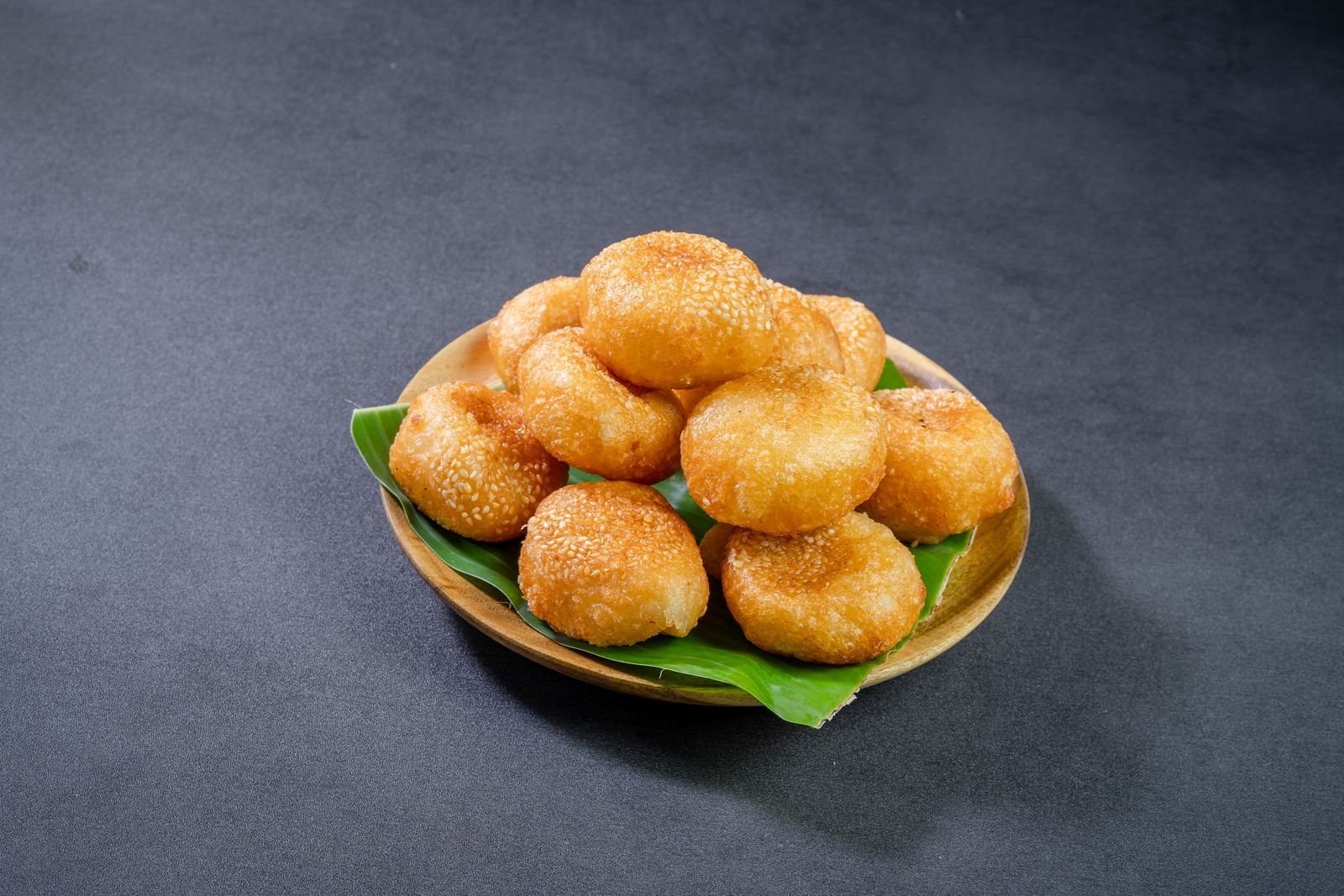
Crisp golden balls of glutinous rice dough coated in sesame seeds, fried until they puff up and turn deep gold. Sesame balls are crunchy outside, soft and chewy inside, with a sweet red bean or lotus filling at the centre. Serve them warm with tea for a classic Chinese dessert.
The story behind Sesame Balls
Sesame balls, known in Chinese as jian dui, come from the south of China, where they have been made for centuries as a festive sweet. They are closely tied to Lunar New Year, when their round shape and golden colour are said to stand for family unity and good fortune. Street vendors sell them from carts, the balls piled high in a basket, and they are a common sight at dim sum restaurants, where they arrive at the table still warm from the fryer.
In Cantonese cooking, sesame balls are a dim sum classic, served at the end of a meal with tea. The filling is usually sweet red bean paste or lotus seed paste, both of which are smooth and gently sweet. The dough is made from glutinous rice flour, which gives the balls their chewy texture, and the sesame coating turns crisp and nutty in the hot oil. The contrast between the crunchy outside and the soft, chewy inside is what makes them so satisfying.
What makes sesame balls special is the way they change as they fry. The dough puffs up slowly in the oil, growing larger as the steam inside pushes outward, and the sesame seeds toast to a deep gold. A good sesame ball is hollow inside, with a thin, crisp shell and a small pocket of sweet filling at the centre. Break one open and you will see the layers: seeds, crisp shell, chewy dough and sweet paste.
Cook sesame balls when you want a fun, hands-on dessert for a weekend. They suit a Sunday lunch in the UK, served warm with a pot of tea after a Chinese meal. Children love helping to roll the balls and coat them in sesame seeds, and the frying is quick enough to do while everyone is still at the table. Make a double batch, because they disappear fast.
- Prep time
- 25 mins
- Cook time
- 30 mins
- Total time
- 55 mins
- Servings
- 4 servings
- Calories
- 340
Ingredients
- 2 cups glutinous rice flour
- 1/4 cup plain flour
- 1/4 cup sugar
- 3/4 cup hot water
- 1 cup sweet red bean paste
- 1/2 cup white sesame seeds
- Oil, for deep frying
- 1/2 teaspoon baking powder
- 1 tablespoon vegetable oil
Instructions
- Put the glutinous rice flour, plain flour, sugar and baking powder in a large bowl and stir them together. Pour in the hot water a little at a time, stirring with a spoon until a soft dough comes together. Knead in the tablespoon of oil for 3 to 4 minutes until the dough is smooth and springy. Cover and rest for 30 minutes so the flour hydrates fully.
- While the dough rests, divide the red bean paste into 12 equal balls, about a tablespoon each. Roll them smooth between your palms and set them on a plate. If the paste is sticky, dust your hands lightly with a little glutinous rice flour. Keep the filling balls covered so they do not dry out.
- Divide the rested dough into 12 equal pieces and roll each one into a smooth ball. Flatten a ball in your palm into a disc about 7 cm across, keeping the edges a little thinner than the centre. Place a ball of filling in the middle and pull the dough up and around it, pinching the seam shut. Roll the sealed ball gently between your palms until smooth.
- Pour the sesame seeds into a shallow bowl. Roll each filled ball in a little water first, then roll it in the seeds, pressing gently so the seeds stick all over. The water helps the seeds cling, and a good coating means the balls fry up evenly golden. Set the coated balls on a tray and cover them while the oil heats.
- Heat oil in a deep pan or wok until it reaches about 160°C, which is medium heat. A small piece of dough dropped in should rise slowly and bubble gently, not shoot to the surface and brown at once. If you do not have a thermometer, the oil should feel hot when you hold your hand above it, but not smoking.
- Lower 4 or 5 balls into the oil at a time, gently, so the oil does not splash. Fry for 5 to 6 minutes, turning them now and then with a slotted spoon. Press each ball gently with the back of the spoon as it fries, which helps it puff up and expand. The balls should grow to about one and a half times their size and turn a deep golden brown.
- Lift the balls out with a slotted spoon when they are golden all over and feel crisp to the touch. Drain them on kitchen paper or a wire rack for a minute. Do not pile them on top of each other while they are hot, or the steam will soften the crisp coating. Fry the rest the same way, letting the oil come back up to temperature between batches.
- Let the sesame balls cool for 3 to 4 minutes before eating, because the filling inside is very hot. Break one open to check: the outside should be crisp and golden, the dough should be soft and chewy, and the filling should be warm and sweet. Serve them warm, on a plate, with a pot of tea.
- Eat sesame balls while they are still warm and crisp. Bite through the crunchy sesame coating first, then the soft, chewy dough, and finally the sweet filling at the centre. Two or three per person is a good dessert portion, with tea to balance the sweetness.
Pro tips
- Rest the dough for a full 30 minutes. Glutinous rice flour needs time to hydrate, and rested dough stretches without cracking. Skipping the rest is the most common reason the balls split in the oil.
- Keep the oil at medium heat, about 160°C. Hot oil burns the sesame seeds and cracks the balls, while cool oil makes them greasy. A thermometer takes the guesswork out, but the dough-scrap test works well too.
- Wet the balls before rolling them in sesame seeds. A quick dip in water makes the seeds stick all over, so the coating is even and golden. Dry dough sheds seeds in the oil, leaving bare patches.
- Press each ball gently with a slotted spoon as it fries. The pressure pushes the steam around inside and helps the ball puff up evenly. Without this step, the balls stay small and dense instead of light and hollow.
- Fry in small batches. Four or five balls at a time keeps the oil hot and lets you turn each one properly. Crowding the pan drops the temperature, and the balls soak up oil instead of crisping.
Variations & serving ideas
The classic filling is sweet red bean paste, but lotus seed paste is the other traditional choice and tastes a little lighter and more floral. Black sesame paste gives a nutty, less sweet filling, and a spoon of peanut butter mixed with a little sugar works well for a quick version. For a savoury twist, fill the balls with minced pork and mushroom, which is a version some dim sum restaurants serve.
If you cannot find glutinous rice flour, do not swap in regular rice flour, because the texture will not work. The dough needs the chew that only glutinous rice flour gives. For a smaller, bite-sized version, make 20 balls instead of 12, using half a tablespoon of filling each. They fry faster, so watch them closely and take them out after 4 minutes.
Serve sesame balls warm with a pot of Chinese tea, which balances the sweetness and cleanses the palate. They also work with a scoop of vanilla ice cream, or with fresh fruit such as orange segments on the side. For a party, pile them on a plate with other dim sum sweets and let guests help themselves.
This dessert pairs well with other Chinese dishes. Serve it after a meal of stir-fry and rice, or as part of a dim sum spread with har gow and siu mai. Leftover sesame balls are good the next day warmed in the oven, and the uncooked balls freeze well, so you can fry a fresh batch whenever you want a quick sweet treat.
Getting it right
The skill in sesame balls is controlling the oil temperature. The oil must be hot enough to fry, about 160°C, but not so hot that the outside browns before the inside can puff. If the oil is too hot, the balls crack and the seeds burn. If it is too cool, the balls soak up oil and turn greasy. Test with a scrap of dough: it should rise slowly and bubble gently, not shoot up and brown at once.
Sealing the dough matters as much as the frying. Pinch the seam firmly shut and roll the ball smooth between your palms, so no filling can escape. Any gap will leak into the oil, which burns and spoils the batch. Roll the sealed balls in water before the sesame seeds, which helps the seeds stick evenly. Press the seeds on gently, but do not crush them into the dough.
The most common mistake is frying too many balls at once, which drops the oil temperature and makes them greasy. Fry 4 or 5 at a time and let the oil recover between batches. Another common fault is skipping the rest for the dough, which leaves it dry and prone to cracking. If a ball cracks in the oil, the dough was too dry, so add a little more hot water next time. Press each ball gently with a spoon as it fries to help it puff up evenly.
Storing & reheating
Sesame balls are best eaten warm, within a few hours of frying, because the crisp coating softens as they sit. If you have leftovers, keep them in a paper bag or a loosely covered container at room temperature for up to a day. Never seal them in a plastic bag while warm, because the trapped steam turns the sesame coating soggy.
Reheat them in a hot oven at 180°C for 5 to 6 minutes, which brings back some of the crispness. A microwave will warm them but makes the coating soft, so use it only in a hurry. Uncooked sesame balls freeze well for up to a month: freeze them in a single layer on a tray, then bag them and fry straight from frozen, adding a few minutes to the cooking time.
Frequently asked questions
Why do my sesame balls crack while frying?
The most common cause is oil that is too hot, which sets the outside before the inside can expand. Keep the oil at medium heat, about 160°C, and press each ball gently with a slotted spoon so it puffs evenly. If the dough is too dry, the balls will also crack.
Can I use a different filling?
Yes, and red bean paste is the classic choice. Lotus seed paste is the other traditional filling, and black sesame paste works well too. Use about a tablespoon of filling per ball, and seal the dough tightly so none leaks into the oil.
Are sesame balls healthy?
They are a sweet treat, so they are not an everyday health food. The filling is sweetened bean paste and the balls are deep fried, but they are small and made from simple ingredients. Enjoy two or three as a dessert rather than a snack all day.
Can I freeze uncooked sesame balls?
Yes, for up to a month. Shape the filled balls, roll them in sesame seeds, and freeze them in a single layer on a tray before bagging them. Fry them straight from frozen, adding a few extra minutes and keeping the oil at medium heat.
Can I skip resting the dough?
No, the dough needs time to rest and hydrate so it stretches without cracking. A 30-minute rest is the minimum. If you are short on time, rest the dough while you make the filling, and do not skip the rest entirely.
Can I bake sesame balls instead of frying?
Yes, if you keep the oil at the right temperature. The sesame seeds should turn golden, not dark brown, and the balls should float and puff up slowly. If the oil is too hot, the seeds burn before the inside cooks through.