Shanghai Noodles Recipe
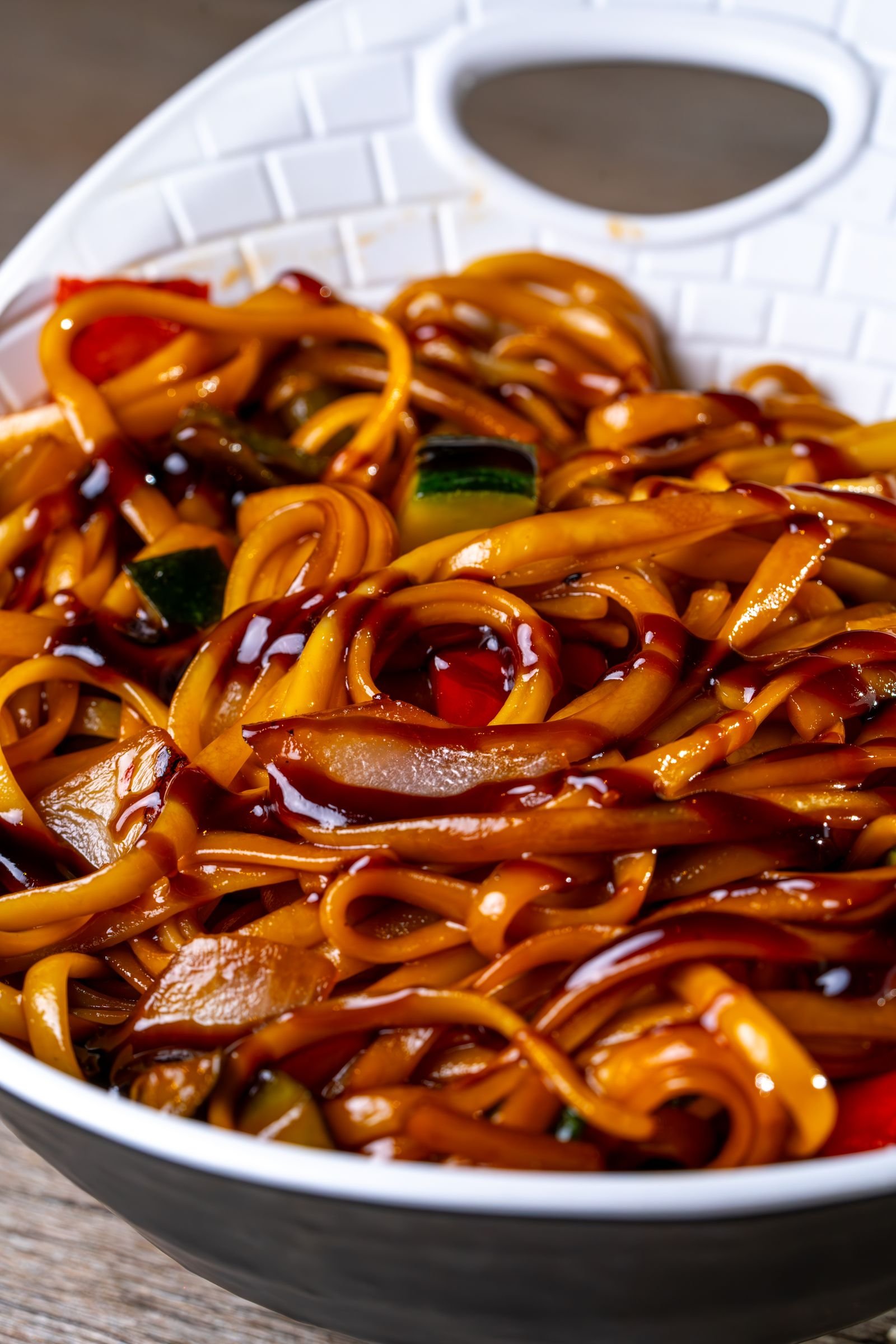
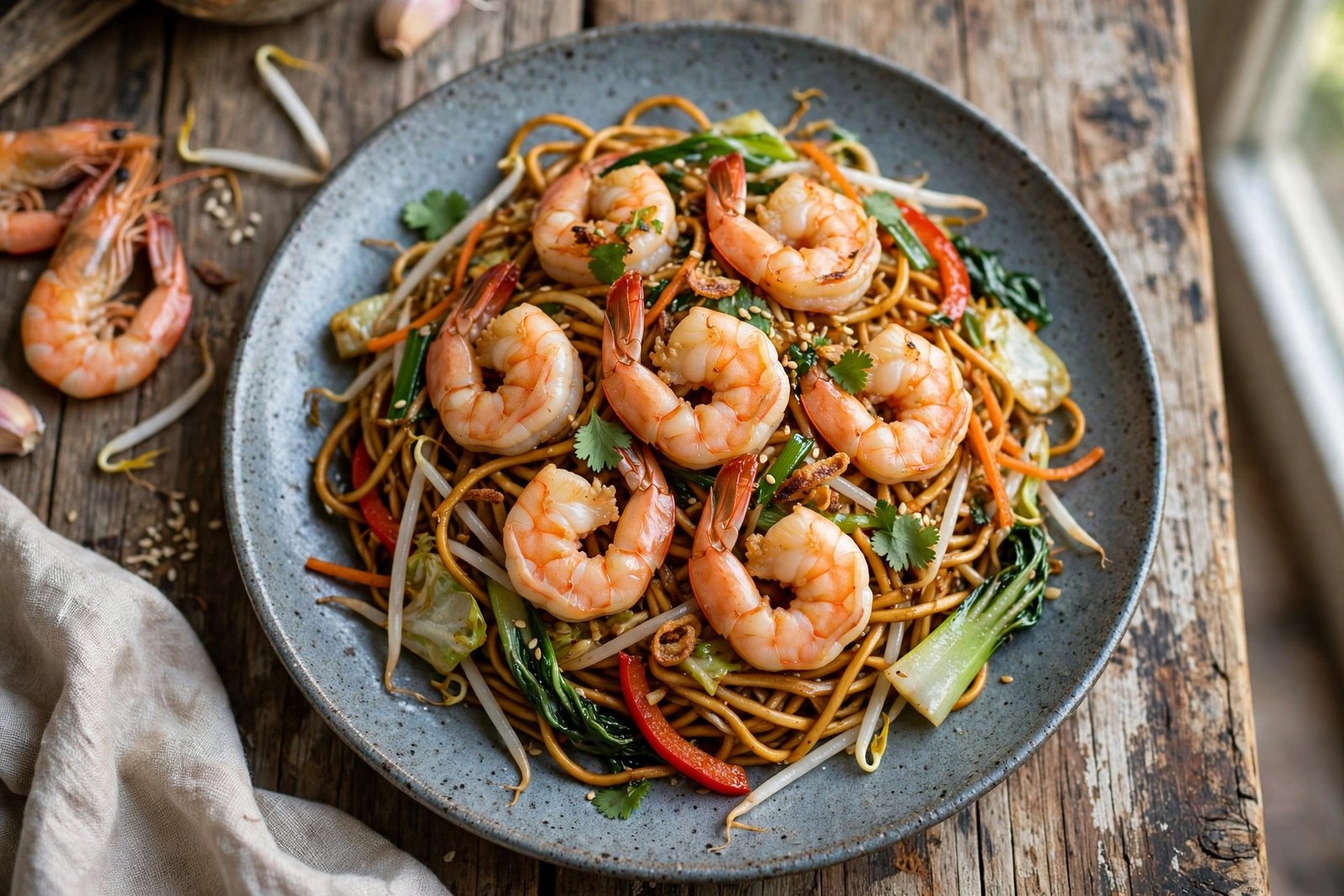
Shanghai Noodles are the city's beloved stir-fry: thick, chewy wheat noodles tossed in a hot wok with pork, bok choy and a dark, glossy soy glaze. They are savoury, a little sweet and deeply satisfying, with the smoky breath of the wok in every bite. This is the dinner to make when you want real Chinese takeaway flavour in fifteen minutes.
The story behind Shanghai Noodles
Shanghai noodles, known as cu mian, come from the port city of Shanghai, where wheat noodles have been a staple for centuries. The dish is a classic of Shanghainese home cooking: thick, round wheat noodles, stir-fried fast in a wok with a little pork, leafy greens and a simple soy-based sauce. It is the kind of food that shows up on family tables and in tiny noodle shops alike, served in a bowl with chopsticks and eaten hot and fast.
In Shanghai, noodles are everyday food. Office workers grab a bowl for lunch, families cook them for a quick dinner, and street vendors toss them in woks that roar with flame. The dish is prized for its speed and its comfort; it takes minutes to cook, costs very little, and fills you up properly. The thick noodles are the star, with a chewy bite that stands up to the wok and soaks up the sauce without going soft. They are made from wheat flour and water, rolled thick and cut round, and their springy texture is what sets them apart from thinner egg noodles.
What makes this dish special is the balance of the sauce. Dark soy sauce gives colour and a deep, savoury note, light soy adds salt, sugar rounds the edges, and a little sesame oil at the end brings a warm, nutty aroma. The pork adds richness, the bok choy adds freshness and a green crunch, and the noodles tie it all together. It is simple food, but every part has a job, and when the wok is hot enough the whole dish tastes smoky and alive. That smokiness, called wok hei, is the flavour of a properly heated wok, and it is what makes a home stir-fry taste like a restaurant one.
Cook these noodles on a weeknight when you want dinner in one pan and no fuss. The prep takes fifteen minutes of slicing, the cooking takes ten, and the result tastes like a proper noodle shop. Make them for a quick family dinner, a late-night snack or a lunch that needs to be ready fast. Keep the wok hot, have everything ready before you start, and do not be shy with the soy. The sauce should coat every strand and turn the noodles a rich, even brown, with a glossy sheen that catches the light.
- Prep time
- 15 mins
- Cook time
- 15 mins
- Total time
- 30 mins
- Servings
- 4 servings
- Calories
- 540
Ingredients
- 400 g fresh Shanghai noodles (thick wheat noodles)
- 250 g pork loin or shoulder, thinly sliced
- 1 tbsp light soy sauce, 1 tbsp Shaoxing wine and 1 tsp cornflour, for the pork
- 2 tbsp vegetable oil
- 3 garlic cloves, sliced, and 1 tbsp grated fresh ginger
- 2 bok choy, leaves separated and stems sliced
- 2 spring onions, cut into short lengths
- 2 tbsp dark soy sauce
- 1 tbsp light soy sauce, for the sauce
- 1 tsp sugar
- 1 tsp toasted sesame oil
- 1 tsp chilli oil (optional)
- Salt, to taste
Instructions
- Slice the pork thinly across the grain and put it in a bowl. Add 1 tablespoon of light soy sauce, the Shaoxing wine and the cornflour, and mix well with your hands. The cornflour coats the meat and keeps it tender in the wok. Set it aside for 10 minutes while you prepare the rest.
- Bring a large pot of water to a rolling boil and cook the noodles according to the packet, usually 3 to 4 minutes for fresh noodles. Drain them well, rinse briefly under cold water to stop the cooking, and toss with a teaspoon of oil so they do not stick together.
- Mix the sauce in a small bowl: the dark soy sauce, the remaining light soy sauce and the sugar. Stir until the sugar dissolves. The sauce should look dark and glossy and taste salty with a gentle sweetness. Set it by the stove, ready to go.
- Heat the vegetable oil in a wok or large frying pan over high heat until it shimmers and just begins to smoke. The wok must be very hot; this is what gives the dish its smoky flavour. Add the pork in a single layer and let it sear for 1 minute without moving it.
- Stir-fry the pork for 2 minutes more, until it is browned on the outside and just cooked through. The pieces should smell rich and savoury, with dark, crisp edges. Push the pork to one side of the wok.
- Add the garlic and ginger to the empty side of the wok and cook for 30 seconds until fragrant. The garlic should turn pale gold and smell sweet, not brown. Stir everything together so the aromatics coat the pork.
- Add the bok choy stems first and stir-fry for 1 minute, then add the leaves and spring onions. Cook for 1 minute more, until the leaves wilt and turn bright green. The stems should still have a little crunch.
- Add the drained noodles to the wok and pour the sauce over the top. Toss everything together with tongs or two spatulas, lifting and turning the noodles for 2 minutes so the sauce coats every strand. The noodles should turn a rich, even brown and smell smoky and savoury.
- Take the wok off the heat and drizzle over the sesame oil and chilli oil if you are using it. Toss once more and taste; add a pinch of salt only if it needs it, since the soy is already salty. Serve straight away in warm bowls, while the noodles are hot and glossy.
Pro tips
- Use fresh Shanghai noodles if you can find them; their thick, chewy bite is the heart of the dish. Dried wheat noodles work too, but cook them a minute less than the packet says so they stay firm in the wok.
- Get the wok as hot as you can before the pork goes in. A hot wok sears the meat instead of steaming it, and that sear is what gives the dish its smoky, restaurant flavour. If your wok is not very hot, cook the pork in two batches.
- Have everything ready before you start cooking. Stir-frying moves fast, and there is no time to slice garlic once the wok is hot. Line up the sauce, the vegetables and the noodles by the stove.
- Do not overcook the bok choy. The leaves need only a minute to wilt, and the stems should keep a little crunch. Overcooked greens turn limp and watery and drag the whole dish down.
- Toss the noodles well. Use tongs or two spatulas and lift the noodles from the bottom of the wok, turning them over so the sauce reaches every strand. A well-tossed batch looks evenly brown, not streaky.
Variations & serving ideas
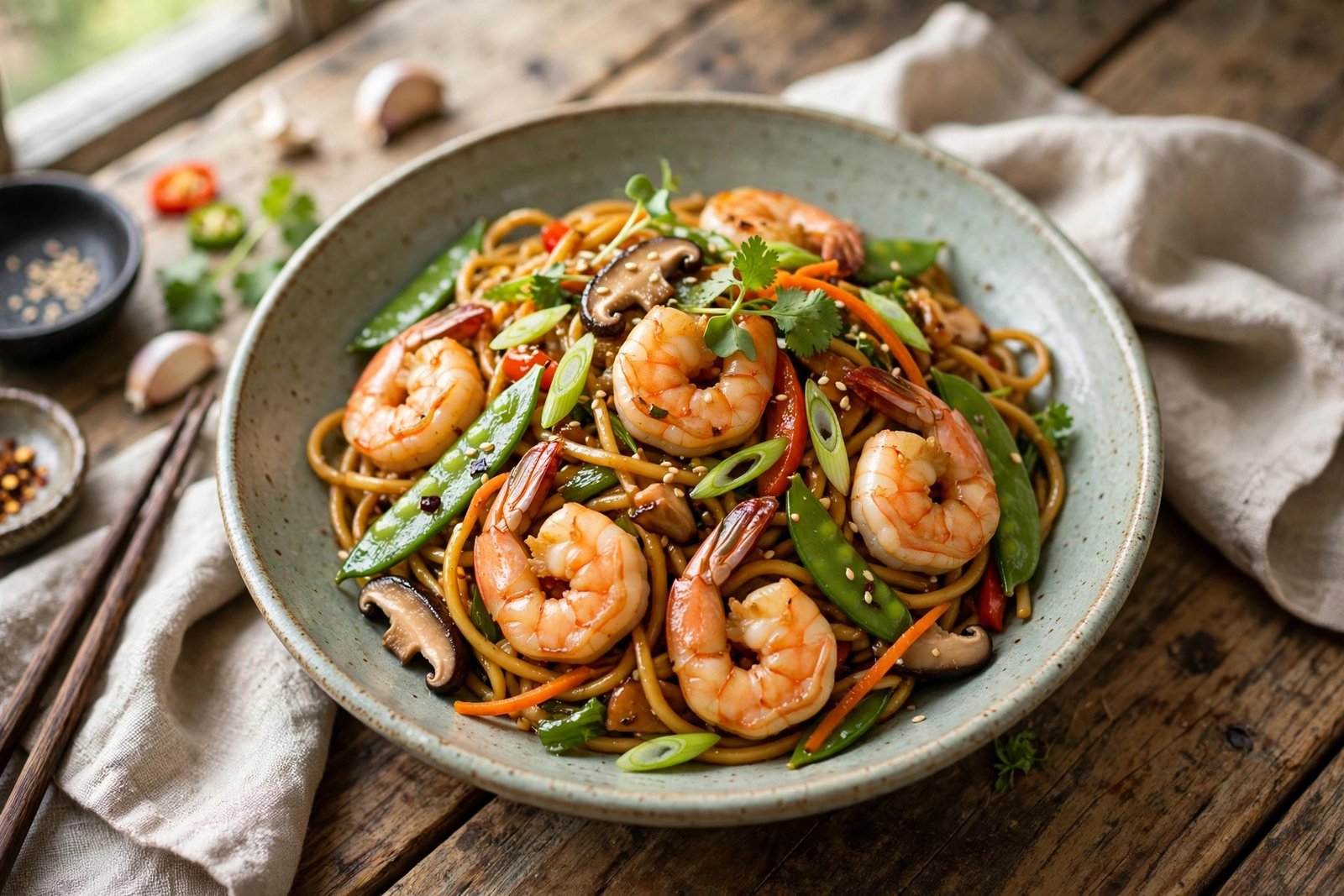
Swap the pork for chicken, beef or prawns; all three work well in the wok and cook in the same time. For a vegetarian version, use firm tofu or extra mushrooms, and add a handful of bean sprouts for crunch. The sauce stays the same whatever protein you choose, so the dish keeps its character.
You can change the vegetables with the seasons. Cabbage, shredded carrot, mushrooms and mange tout all stir-fry well with these noodles, and a handful of spinach wilts in beautifully at the end. Keep the vegetables to two or three kinds so the noodles stay the star, and cut everything to a similar size so it cooks evenly.
Serve Shanghai noodles as a main course on their own, with nothing more than a small bowl of chilli oil and extra soy on the table. A simple cucumber salad or a bowl of hot and sour soup makes a good starter, and the whole meal suits a weeknight when you want something fast and filling. A cold beer or iced tea is the natural drink, and the whole spread comes together in half an hour. A cold beer or iced tea is the natural drink.
Pair the noodles with a light lager, whose cold fizz cuts through the rich soy glaze and refreshes the palate. A dry white wine also works, especially one with a little acidity. If you prefer not to drink alcohol, a cold jasmine tea or a sparkling water with lime suits the salty, savoury flavours very well. A handful of bean sprouts tossed in at the end adds a fresh crunch, and a few mushrooms bring an earthy depth that suits the soy glaze. A little chilli oil at the table lets each person add heat to taste, and a sprinkle of toasted sesame seeds on top adds a nutty finish. A small bowl of egg drop soup on the side makes the meal feel complete, and a plate of sliced oranges afterwards cleans the palate. A glass of cold jasmine tea is refreshing with the salty noodles, and a light beer works just as well on a warm evening.
Getting it right
The key technique is wok heat. The wok should be hot enough that the oil shimmers and the pork sizzles loudly the moment it lands. That fierce heat sears the meat, wilts the greens fast and gives the noodles their smoky edge, called wok hei. If the wok is too cool, the food steams instead of frying, and the dish turns soft and pale. Preheat the wok for a full minute before you add the oil.
Control the timing in stages. The pork goes in first and needs high heat to brown. The aromatics need only thirty seconds, or they burn. The vegetables need a minute or two, and the noodles need two minutes of tossing to pick up the sauce. Each stage is short, so keep your ingredients lined up in order and move fast. The whole stir-fry takes about eight minutes from the first sizzle to the serving bowl.
The most common mistake is overcrowding the wok. Too much food at once drops the temperature, and everything steams instead of frying. Cook in batches if your wok is small, and keep each batch to a single layer. Another common slip is adding the sauce too early, which makes the noodles soggy. The sauce goes in with the noodles, at the end, so it coats rather than soaks. If the noodles look pale after tossing, add a little more dark soy and toss again. The sauce goes in with the noodles, at the end, so it coats rather than soaks.
Storing & reheating
Shanghai noodles are best eaten fresh, straight from the wok, but leftovers keep in the fridge for up to 2 days in a sealed container. The noodles will firm up as they cool, which is normal. A fresh drizzle of sesame oil at the end wakes the flavours back up. Reheat them in a hot wok or frying pan with a splash of water and a little oil, tossing until hot through and glossy again.
Do not freeze the finished noodles, since the texture turns soft and mushy on thawing. If you want to cook ahead, prepare the pork and sauce separately and keep them in the fridge for a day, then cook the noodles and stir-fry everything fresh. The whole dish takes only ten minutes of cooking, so there is little to gain from freezing it.
Frequently asked questions
What are Shanghai noodles?
Shanghai noodles are thick, round wheat noodles from Shanghai, stir-fried in a wok with pork, bok choy and a soy-based sauce. They are chewy and satisfying, with a dark, glossy glaze and a smoky flavour from the hot wok. The pork adds richness and the bok choy adds crunch.
Can I use spaghetti instead of Shanghai noodles?
You can in a pinch, though the texture will be different. Spaghetti is thinner and less chewy than Shanghai noodles, so cook it a minute less than usual and toss it well in the sauce. Fresh wheat noodles from an Asian grocery are a much better match.
Is Shaoxing wine necessary?
It adds a warm, savoury depth that is hard to replace, but you can use dry sherry instead. Leave it out if you prefer, and add a little extra soy sauce. Avoid cooking wine with added salt, which can make the dish too salty.
Can I make Shanghai noodles vegetarian?
Yes. Swap the pork for firm tofu, mushrooms or extra vegetables, and use a vegetarian oyster-style sauce if you like. The soy glaze and the wok technique stay the same, and the dish is just as satisfying without meat. The soy glaze and the wok technique stay the same without meat.
Why did my noodles turn out soggy?
They were probably overcooked before they hit the wok, or the wok was not hot enough. Cook the noodles a minute less than the packet says, drain them well, and make sure the wok is smoking hot so the noodles fry rather than steam.
What is wok hei?
Wok hei means the breath of the wok, the smoky, slightly charred flavour that comes from cooking over very high heat. It is what makes restaurant stir-fries taste different from home ones, and a very hot wok is the key to getting it right.