Red Bean Soup Recipe
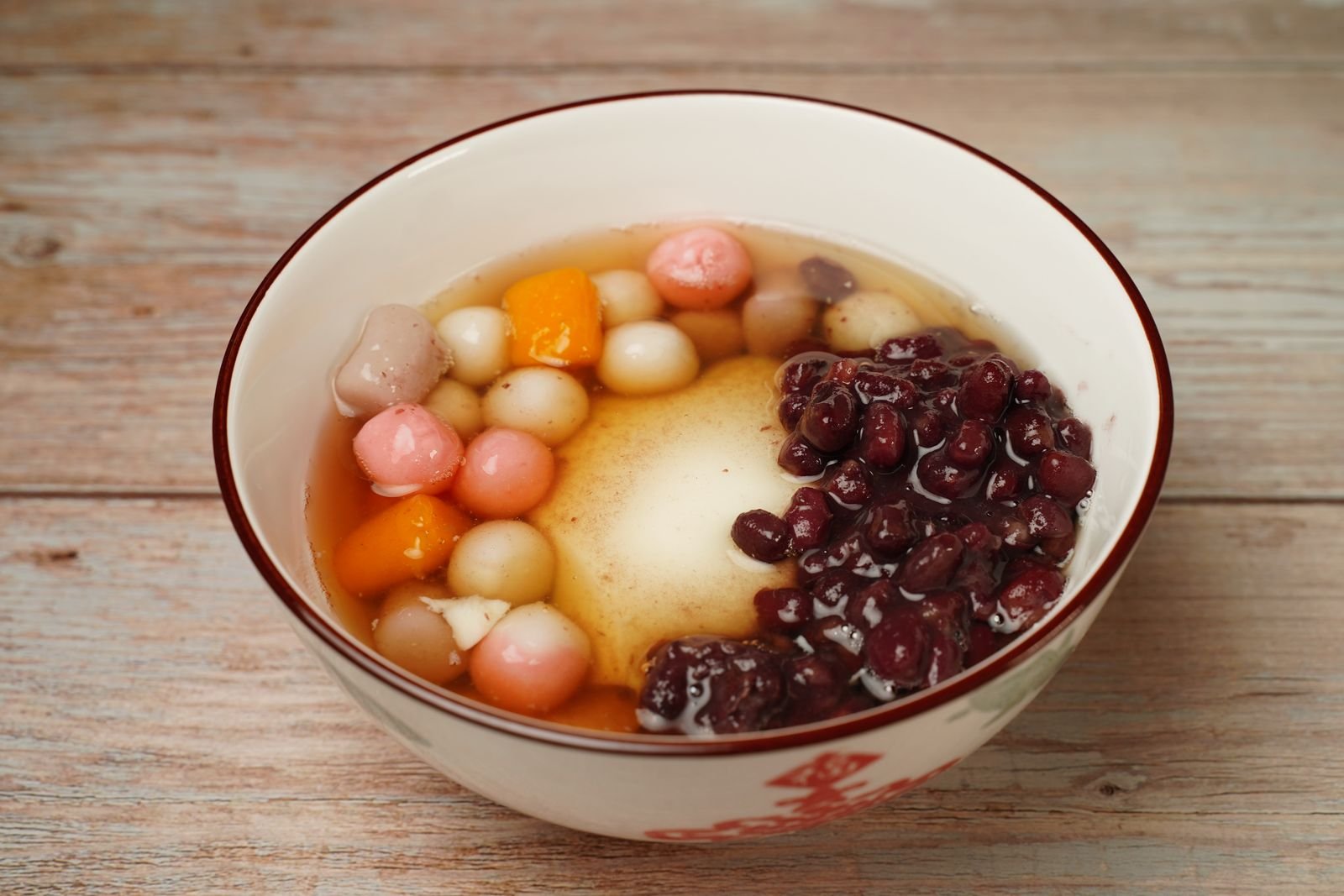
Sweet adzuki beans simmered with rock sugar and dried tangerine peel until soft and creamy, served warm with chewy glutinous rice balls. Red bean soup is a gentle Chinese dessert: warm, lightly sweet and comforting. Serve it in small bowls with tea for a classic end to a family meal.
The story behind Red Bean Soup
Red bean soup, known in Chinese as hong dou tang, is one of the oldest desserts in China, made from adzuki beans simmered with sugar until soft and sweet. It is a Cantonese classic, served at the end of meals, at family gatherings and during festivals. The soup is also tied to Lunar New Year, when red is the colour of luck and happiness, and a bowl of red bean soup is a wish for a sweet year ahead.
In Cantonese homes red bean soup is everyday comfort food as much as it is a festival dish. Mothers cook a pot on cold evenings, and the soup is served warm in small bowls with a spoon. The dried tangerine peel that goes into the pot is a traditional ingredient, kept in jars in many kitchens and believed to aid digestion. The glutinous rice balls, or tang yuan, are added for celebrations, because their round shape stands for family unity.
What makes red bean soup special is its gentleness. The beans cook down into a soft, creamy soup that is sweet without being rich, and the tangerine peel adds a warm, citrusy note that keeps it from tasting flat. The rice balls add a chewy contrast, and a spoon of coconut milk on top turns the soup silky. It is a dessert that comforts rather than excites, and that is exactly its charm.
Cook red bean soup when you want a quiet, warming dessert after a meal. It suits a Sunday lunch in the UK, served warm with tea after a Chinese dinner. Make a big pot, eat it fresh, and keep the rest for the next few days, when it tastes even better. It is also a good dessert for a crowd, since the recipe doubles easily and the soup stays warm in the pot.
- Prep time
- 25 mins
- Cook time
- 30 mins
- Total time
- 55 mins
- Servings
- 4 servings
- Calories
- 260
Ingredients
- 1 cup dried adzuki beans, soaked overnight
- 6 cups water
- 1/2 cup rock sugar, or to taste
- 1 piece dried tangerine peel (chen pi)
- 1 cup glutinous rice flour
- 1/2 cup warm water, for the dough
- 1 tablespoon sugar, for the rice balls
- 1/2 teaspoon vanilla extract (optional)
- A pinch of salt
- Coconut milk, to serve (optional)
Instructions
- Rinse the soaked adzuki beans and put them in a large pot with 6 cups of fresh water. Add the piece of dried tangerine peel and bring to a boil over high heat. Skim off any foam that rises to the surface, then turn the heat down to low. The peel adds a warm, citrusy note that lifts the whole soup.
- Cover the pot and simmer the beans for 30 to 40 minutes, stirring now and then, until they are soft enough to squash easily between your fingers. The beans should split open and some should break down into the liquid, which thickens the soup. If the water level drops too low, add a cup of hot water so the beans stay covered.
- While the beans simmer, make the glutinous rice balls. Put the glutinous rice flour and the tablespoon of sugar in a bowl, and add warm water a little at a time, stirring until a soft dough comes together. Knead for 2 to 3 minutes until smooth, then roll the dough into small balls about 2 cm across. Keep them covered with a damp cloth so they do not dry out.
- When the beans are soft, stir in the rock sugar and the pinch of salt. Keep simmering for 10 more minutes, stirring gently, until the sugar has dissolved and the soup tastes gently sweet. Do not add the sugar before the beans are soft, because sugar slows down the softening and the beans can stay hard in the middle.
- Taste the soup and adjust the sweetness. It should be lightly sweet, not syrupy, with a warm citrus note from the peel. If the soup is too thin, mash a few beans against the side of the pot to thicken it. If it is too thick, add hot water a splash at a time until it flows like a thin porridge.
- Bring a separate pot of water to a boil and drop in the rice balls. Cook for 2 to 3 minutes until they float to the surface and look slightly translucent. Scoop them out with a slotted spoon and add them straight to the bean soup. The balls should be soft and chewy, with a gentle bite.
- Stir in the vanilla extract if you are using it, and fish out the piece of tangerine peel. Let the soup rest for 5 minutes off the heat so the flavours settle and the rice balls soak up a little of the sweetness. The soup should be warm, fragrant and lightly thick.
- Ladle the soup into small bowls, making sure each bowl gets plenty of beans and a few rice balls. Serve warm, with a spoon of coconut milk swirled over the top if you like. Eat it slowly with a spoon, enjoying the soft beans, the chewy rice balls and the warm, sweet broth.
Pro tips
- Soak the beans overnight, no shortcuts. A good soak means the beans cook evenly and break down into a creamy soup, while unsoaked beans stay hard in the middle no matter how long you simmer them.
- Do not add sugar until the beans are soft. Sugar slows down the softening of beans, so sweetening too early is the most common reason the soup ends up with hard beans in a sweet broth.
- Use dried tangerine peel if you can find it. It adds a warm, citrusy depth that plain orange peel does not match. Rinse it first, and fish it out before serving so nobody bites into it.
- Cook the rice balls in a separate pot of water. Cooking them in the soup clouds the broth with starch and makes it look murky. A quick boil in plain water keeps the soup clear and the balls chewy.
- Taste before you serve and adjust the sweetness. Rock sugar tastes milder than white sugar, so the soup should be gently sweet, not syrupy. A pinch of salt helps too, because it sharpens the sweetness without adding more sugar.
Variations & serving ideas
The classic version uses adzuki beans and rock sugar, but you can change it in several ways. Add a spoon of coconut milk to each bowl for a richer, silkier soup. Stir in a few slices of fresh ginger while the beans simmer for a warm, spicy note. A handful of lotus seeds or dried longan added with the beans gives the soup more texture and a traditional flavour.
If you cannot find rock sugar, use white sugar, brown sugar or honey instead. Start with a little less than the recipe calls for and taste as you go. For a lighter version, halve the sugar and serve the soup with fresh fruit on the side. The rice balls can be filled with black sesame paste or peanut paste for a richer dessert.
Serve red bean soup warm in small bowls, with a pot of Chinese tea on the side. It also works chilled in summer: cool it fully, chill it in the fridge, and serve it cold with a spoon of coconut milk. For a party, set up a toppings bar with rice balls, coconut milk and toasted sesame seeds so guests can build their own bowls.
This soup pairs well with other Chinese desserts. Serve it after a meal of dumplings and stir-fry, or as part of a dessert spread with sesame balls and mango pudding. Leftover soup is good for breakfast, warmed up with a little extra water, and it freezes well, so a double batch is never wasted.
Getting it right
The skill in red bean soup is cooking the beans until they are truly soft. Soak them overnight so they cook evenly, and simmer them gently on low heat rather than boiling them hard. The beans are ready when they split easily between your fingers and some have broken down into the liquid. If you add the sugar too early, the beans stay firm in the middle, so wait until they are soft before sweetening.
Heat control matters with the rice balls too. The dough should be soft and smooth, not sticky, and the balls should be rolled evenly so they cook at the same rate. Drop them into boiling water and cook them until they float, which takes about 2 to 3 minutes. If you cook them in the soup itself, the starch clouds the broth, so always cook them separately and add them at the end.
The most common mistake is undercooking the beans, which leaves them hard and chalky. Give them the full simmering time and test a few before you add the sugar. Another common fault is a soup that is too sweet, which happens when rock sugar is added by eye. Start with less sugar than you think you need, taste, and add more a little at a time. If the soup is too thin, mash some beans against the side of the pot to thicken it.
Storing & reheating
Red bean soup keeps well in the fridge for up to 4 days in a sealed container, and it freezes well for up to 2 months. It thickens as it cools, which is normal, so add a splash of water when you reheat it. Store the glutinous rice balls separately if you can, because they go soft and mushy if they sit in the soup for days.
Reheat gently in a pan over low heat, stirring often so the beans do not catch on the bottom and the soup stays smooth. Do not boil it hard, because fast boiling breaks the beans apart and makes the soup cloudy. Warm the rice balls separately in hot water for a minute, then add them to the reheated soup just before serving so they stay chewy.
Frequently asked questions
Can I make red bean soup quickly?
Yes, if you soak them overnight and use a pressure cooker. Cook the soaked beans on high pressure for 15 minutes, then finish them in the pot with the sugar. Without soaking, the beans need at least an hour of simmering, so plan ahead.
Can I serve red bean soup cold?
The soup is traditionally served warm, but it is also good chilled in summer. Cool it fully, chill it in the fridge, and serve it cold with a spoon of coconut milk. The beans thicken as they cool, so add a little water when you serve it.
Is red bean soup healthy?
Yes. Adzuki beans are naturally gluten-free, high in fibre and a good source of protein and iron. Keep the sugar modest and add the glutinous rice balls sparingly if you want a lighter bowl. The dried tangerine peel adds flavour without calories.
Why are my beans still hard?
The beans were undercooked, or they were cooked in hard water. Soak the beans overnight, change the soaking water, and cook them until they split easily. A pressure cooker is the most reliable way to get them soft. Do not add sugar until the beans are tender, because sugar slows the softening.
Can I make red bean soup ahead of time?
Yes, it keeps for 4 days in the fridge and freezes for up to 2 months. Store the rice balls separately if you can, because they go soft in the soup. Reheat gently on the stove with a splash of water, and add the rice balls fresh.
Can I use a different sweetener?
Yes, use brown sugar, honey or maple syrup instead of rock sugar. Start with a little less than the recipe calls for and taste as you go, because each sweetener tastes different. The soup should be gently sweet, not syrupy.