Char Siu Fried Rice Recipe
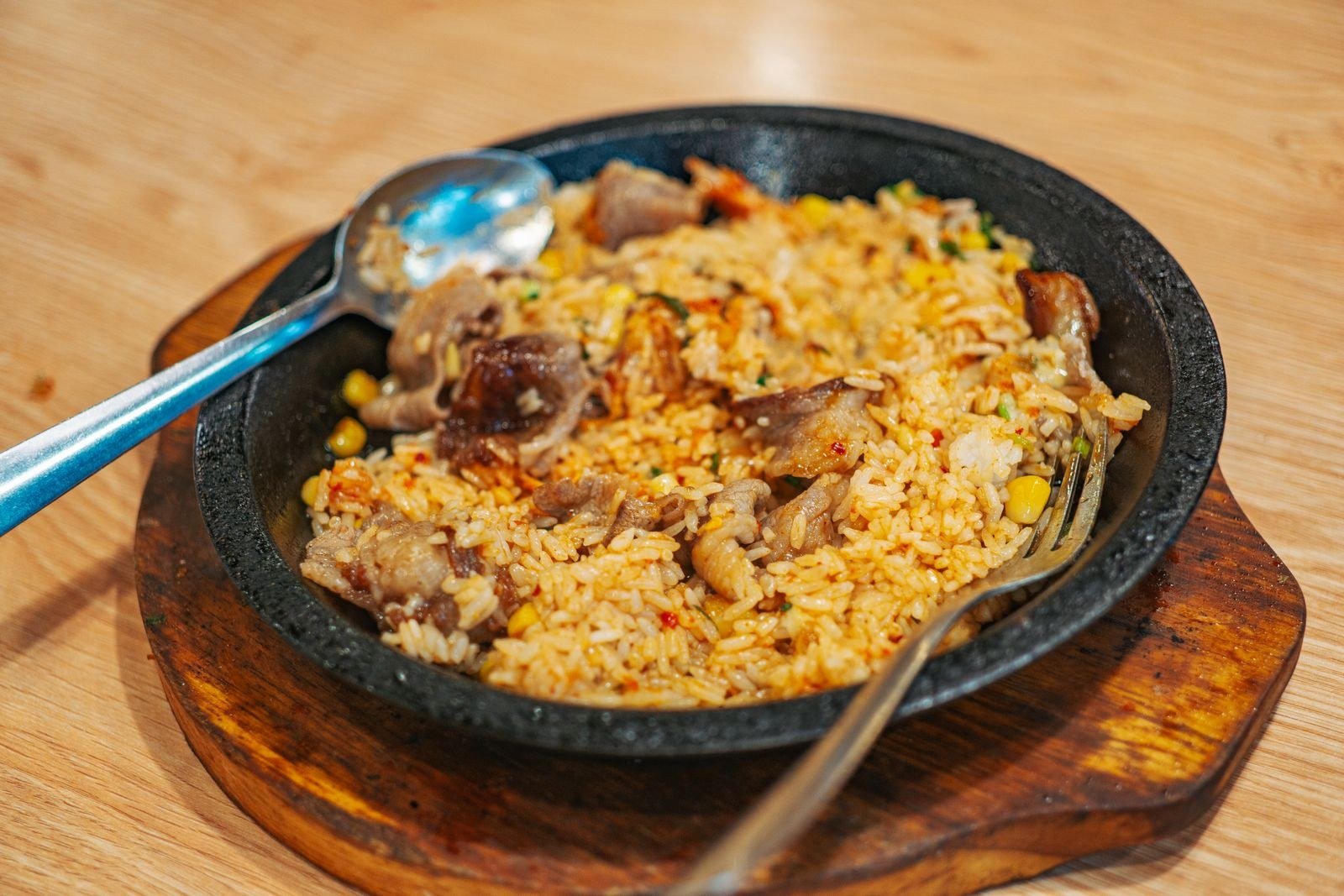
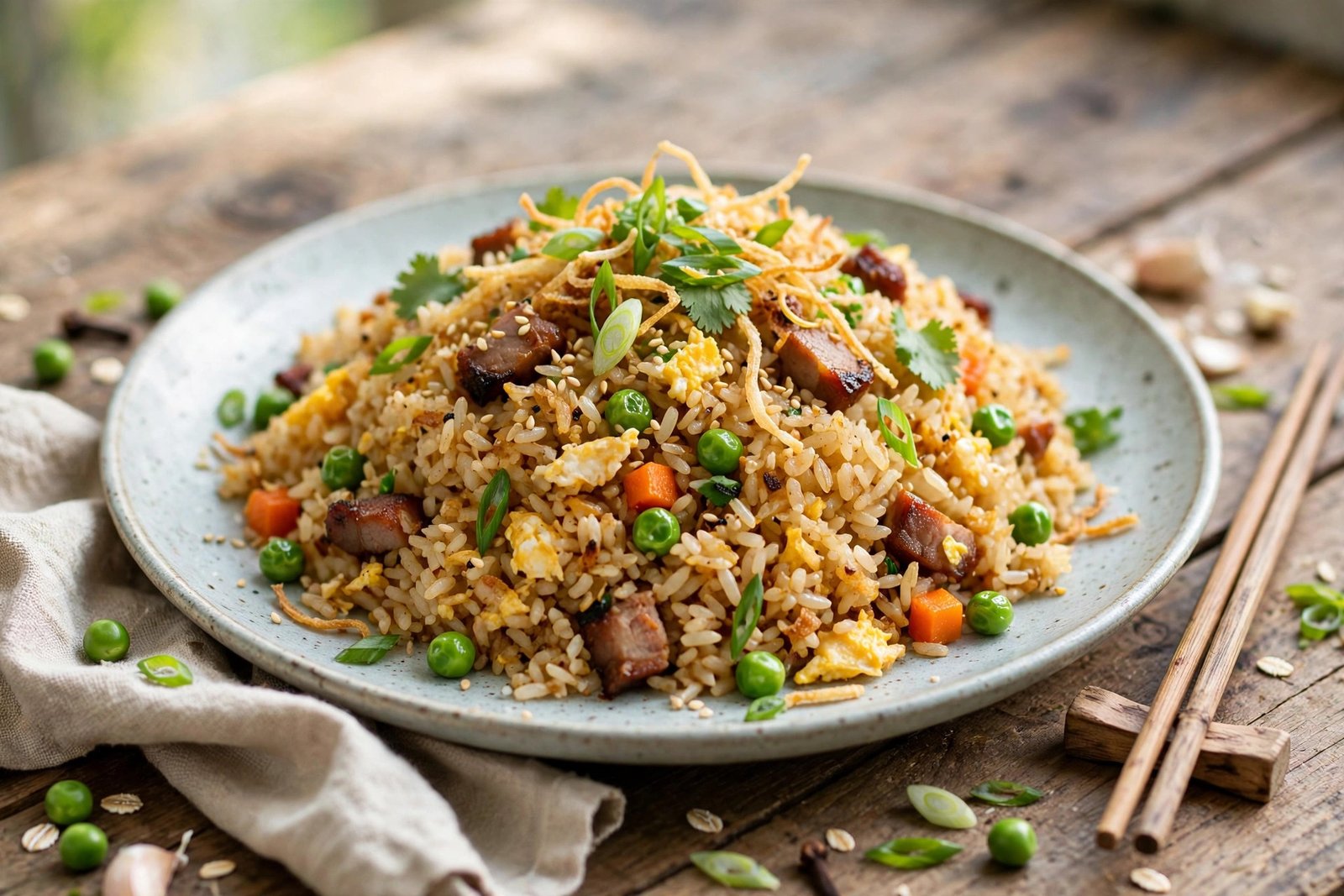
Char Siu Fried Rice turns leftover rice, smoky-sweet roast pork and crisp vegetables into a fast, satisfying one-pan meal. The egg coats the grains and turns them golden, the pork edges crisp in the hot wok, and the spring onions stay bright on top. It tastes like your favourite takeaway, made at home in fifteen minutes flat. The whole pan comes together in ten minutes of cooking, and the leftovers pack well for lunch the next day.
The story behind Char Siu Fried Rice
Char siu, the glossy red roast pork of Cantonese kitchens, has been a fixture of southern Chinese cooking for generations. Street vendors and restaurant kitchens roast pork shoulder over charcoal with a marinade of soy sauce, five-spice, honey and fermented bean curd, turning it slowly until the edges char and the outside shines. Fried rice grew up beside it as the practical answer to leftover rice and leftover roast meat.
In Cantonese homes and dai pai dong street stalls, fried rice is the dish that turns yesterday's food into today's dinner. Day-old rice fries far better than fresh rice, because the grains have dried out and stay separate in the pan instead of clumping into a soft mass. A cook with a fierce flame, a well-seasoned wok and a bowl of cold rice can put a full meal on the table in ten minutes, which is why fried rice is a weeknight staple across China and far beyond it.
What makes this version special is the char siu itself. Its sweet, smoky edges and sticky glaze season the whole pan, so the rice picks up a caramel depth that plain pork never gives. The egg coats the grains and turns them golden, the spring onions and peas add colour and freshness, and the soy sauce ties it all together. Every spoonful has a little of everything: soft rice, chewy pork, crisp vegetables and egg.
Cook it when the fridge holds leftover rice and a bit of roast pork, or when you need dinner in fifteen minutes flat. It works as a quick lunch, a late-night supper after a long day, or the main dish of a casual family meal with a soup on the side. Once the ingredients are chopped, the cooking is fast, loud and satisfying, with the wok doing most of the work. If you buy char siu from a Chinese barbecue shop, ask for the end pieces, since their extra char gives the rice the deepest flavour. Keep a bag of frozen peas in the freezer at all times, and this dish is never more than fifteen minutes away.
- Prep time
- 15 mins
- Cook time
- 10 mins
- Total time
- 25 mins
- Servings
- 4 servings
- Calories
- 540
Ingredients
- 400 g cooked jasmine rice, day-old and chilled
- 250 g char siu pork, diced into 1 cm cubes
- 3 tablespoons vegetable oil
- 3 eggs, beaten with a pinch of salt
- 3 garlic cloves, finely chopped
- 1 small onion, finely diced
- 150 g frozen peas, thawed
- 2 carrots, peeled and finely diced
- 3 tablespoons soy sauce
- 1 teaspoon sesame oil
- 1 teaspoon sugar
- 4 spring onions, thinly sliced
- 1/2 teaspoon white pepper
- 1 tablespoon Shaoxing wine
Instructions
- Break up the cold rice with your hands or a fork so no clumps remain, and set it beside the stove with every other ingredient measured and chopped. Fried rice moves too fast to chop midway, so this preparation is half the recipe. Keep the soy sauce, sesame oil and sugar mixed in one small bowl.
- Heat 1 tablespoon of oil in a wok or large frying pan over high heat until it shimmers. Pour in the beaten eggs and let them set for about 20 seconds, then scramble them gently into soft, large curds. Lift the eggs out while they are still slightly glossy, since they will finish cooking later in the pan.
- Add the remaining oil to the wok and toss in the diced onion and carrot. Stir-fry for 2 minutes until the onion turns translucent and the carrot softens at the edges but still has a little bite. The pan should smell sweet and oniony, with a gentle sizzle from the vegetables.
- Add the garlic and cook for 20 seconds, stirring constantly, until it smells fragrant and the edges just begin to turn golden. Garlic burns quickly at high heat, so keep it moving and do not walk away from the stove at this point.
- Tip in the diced char siu and stir-fry for 1 minute until the edges crisp and darken slightly. You should hear a lively crackle and see the pork's glaze catch the heat. This step wakes up the smoky sweetness of the roast pork and spreads it through the oil.
- Add the rice and the Shaoxing wine, then press the rice against the hot wok with the back of a spatula and toss it hard. Keep breaking up clumps and flipping the rice for 2 to 3 minutes, until every grain is hot and lightly toasted. The rice should jump and rattle in the pan, not sit steaming in a pile.
- Pour the soy sauce mixture around the edges of the wok and toss until the rice is evenly coloured. Fold in the peas and the scrambled egg, then cook for 1 more minute until the peas are hot and the egg is broken into small golden pieces throughout the rice.
- Turn off the heat and stir in the spring onions, sesame oil and white pepper. Taste and add a little more soy sauce if needed, then serve straight from the wok into warm bowls. The rice should smell toasty and savoury, with the spring onions still bright green on top. Serve the rice in warm bowls, since a cold bowl steals heat fast and the fried rice cools quicker than you expect.
Pro tips
- Cold day-old rice is non-negotiable, because fresh rice is too damp and turns to mush in the wok; spread fresh rice on a tray and chill it for an hour if you have no leftovers. A fan blowing over the tray speeds the drying, if you are in a hurry.
- Heat the wok until it is almost smoking before the oil goes in, since a screaming-hot pan gives fried rice its toasty flavour instead of a steamed, flat taste. Flick a few drops of water in first: if they sizzle and vanish at once, the pan is ready.
- Dice the char siu small and evenly so every spoonful gets pork, and keep the pieces no bigger than a pea for the best mix.
- Scramble the egg separately and take it out early, because egg cooked with the rice turns rubbery and disappears instead of staying in visible golden ribbons.
- Season at the end, not the start, so you can judge the saltiness once the soy sauce, pork and egg are all in the pan. Keep the soy sauce bottle on the table too, so everyone can season their own bowl to taste.
Variations & serving ideas
If you have no char siu, roast pork belly, ham or even leftover roast chicken all work, though you will lose some of the sweet glaze that makes this version special. A spoonful of hoisin sauce stirred in with the soy sauce brings back some of that sweetness. For a vegetarian version, use firm tofu cubes fried until crisp and a few sliced mushrooms for their savoury depth, plus an extra egg.
Swap the peas and carrots for whatever vegetables you have: sweetcorn, diced green beans, shredded cabbage or small broccoli florets all fry well. Frozen mixed vegetables are a fair shortcut on a busy night, though fresh vegetables keep more crunch. Brown rice can replace jasmine rice, but it needs to be well chilled and takes a minute longer to heat through.
Serve the fried rice in warm bowls with a fried egg on top if you want a heartier meal, and offer chilli oil and extra soy sauce at the table. A bowl of hot and sour soup or a simple egg drop soup turns it into a full Chinese restaurant-style dinner. Leftover fried rice also packs well for lunch the next day.
It pairs nicely with a cold lager, a glass of iced green tea, or a light, dry white wine if you are serving it at dinner. The clean, toasty flavour of the rice stands up well to something cold and crisp on the side, and the gentle sweetness of the char siu suits drinks that are not too sweet themselves. A fried egg on top turns the rice into a full brunch dish, and a spoonful of chilli crisp stirred through at the table adds heat for those who want it. Leftover roast duck works in place of the pork, though its richer flavour suits a little less soy sauce. A little shredded cabbage stirred in with the vegetables adds crunch and stretches the dish further, which is handy when you are feeding extra people. For a breakfast version, top the rice with a fried egg and a drizzle of chilli oil, and serve it with hot tea.
Getting it right
The key technique is wok hei, the breath of the wok: the smoky, toasted flavour that comes from cooking fast over very high heat. A home stove will never match a restaurant burner, but you can get close by using a thin carbon steel wok, heating it until it shimmers, and cooking in a single layer so the food touches hot metal instead of steaming in a crowd. Small batches fry better than one huge pile, so split the rice in two if your pan is small.
Heat control follows a simple rhythm: high heat for the eggs and the rice, a brief drop when the garlic goes in, and high heat again for the final toss. The garlic step is the danger point, because it burns in seconds at full flame. Keep your hand on the spatula and your ingredients in order, and you will catch it at the fragrant stage rather than the bitter one.
The most common mistake is using warm, freshly cooked rice, which clumps and steams instead of frying. Another is overloading the wok, which drops the temperature and leaves the rice soft and pale. If your rice is sticking, the pan was not hot enough when it went in, so next time let the oil shimmer first and leave the rice alone for a few seconds before tossing. Patience at the start gives you crisp grains later. A thin carbon steel wok heats and cools faster than a heavy pan, which helps you control the garlic step, so borrow one if you can.
Storing & reheating
Store leftover fried rice in a sealed container in the fridge for up to 3 days. Cool it quickly by spreading it on a tray before boxing it up, and never leave it sitting at room temperature for more than 2 hours. Rice is one of the foods that needs fast cooling, so do not leave the pan on the stove overnight.
Freeze portions in flat freezer bags for up to 3 months, pressing out the air before sealing. Thaw overnight in the fridge. Reheat in a hot oiled pan, breaking the rice apart and stirring until it is steaming all the way through, about 4 minutes. A splash of water helps loosen it. Avoid reheating rice more than once, and make sure it is piping hot before serving.
Frequently asked questions
Why does my fried rice turn out mushy?
The usual cause is fresh, warm rice, which holds too much moisture and steams in the pan. Use day-old rice chilled in the fridge, heat the wok until the oil shimmers, and fry in a single layer so the grains toast instead of clumping.
Can I make Char Siu Fried Rice without a wok?
Yes. Use the largest, thinnest frying pan you own and cook in two batches if needed. A heavy cast iron pan also works well, since it holds heat, though it is slower to respond when you need to drop the temperature for the garlic.
What is char siu and where can I buy it?
Char siu is Cantonese roast pork marinated in soy sauce, five-spice, honey and fermented bean curd, then roasted until the edges char. Find it at Chinese barbecue shops, Asian supermarkets, or make it at home from pork shoulder. Ask for the end pieces, since their extra char gives fried rice the deepest flavour.
Can I use freshly cooked rice for fried rice?
You can if you chill it first. Spread hot rice on a tray in a thin layer, cool it for 20 minutes, then refrigerate for at least an hour. The grains firm up and dry out, which is what stops them sticking together in the pan.
Is Char Siu Fried Rice gluten-free?
Not as written, because soy sauce and char siu marinade usually contain wheat. Use tamari in place of soy sauce and check that your char siu is made without wheat, or use plain roast pork with a gluten-free marinade instead.
How do I stop the egg from disappearing into the rice?
Scramble the egg on its own first, remove it while it is still soft, and fold it back in at the very end. Cooking it separately keeps the curds large and golden instead of coating the grains in a thin, invisible layer.