Grilled Cheese Recipe
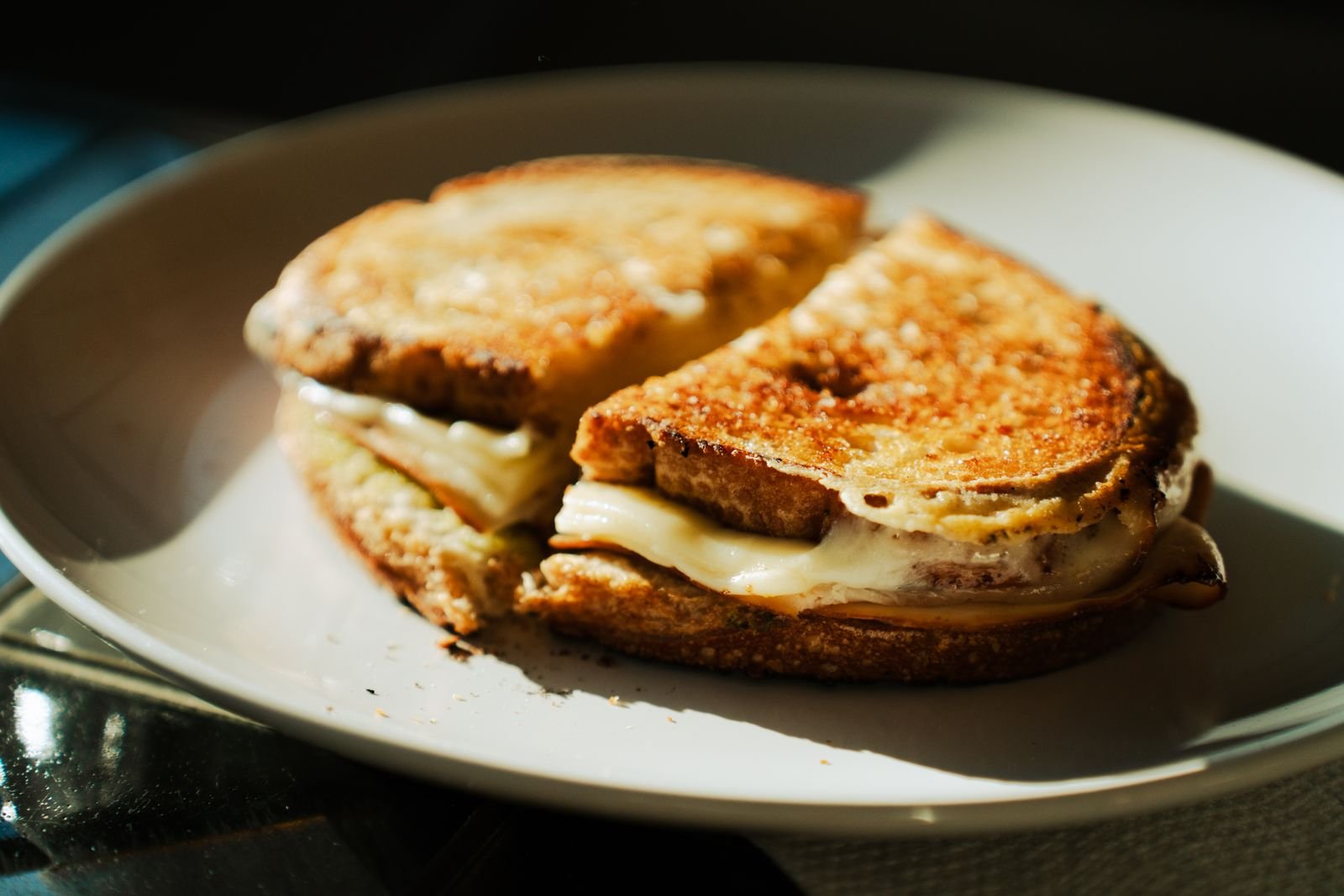
Buttery bread toasted to a deep golden crunch, with a molten middle that stretches when you pull it apart — a grilled cheese is simple food done properly. It takes 15 minutes, needs no special equipment, and it is the sandwich every American kid grows up loving. It takes 15 minutes, needs no special equipment, and it is the sandwich every American kid grows up loving.
The story behind Grilled Cheese
The grilled cheese sandwich became an American staple during the 1920s, when sliced bread and processed cheese both became widely available and cheap. The first versions were simple open sandwiches, toasted under a grill, but by the 1940s the closed sandwich cooked in a pan had become the standard, and it has stayed that way ever since. It is one of the most cooked dishes in American homes. The first versions were simple open sandwiches, toasted under a grill, but by the 1940s the closed sandwich cooked in a pan had become the standard.
In America, the grilled cheese is comfort food in its purest form. It is the lunch that parents make for children on a rainy day, the late-night snack after a long shift, and the sandwich that diners serve beside a bowl of tomato soup. It needs no occasion and no excuse, and it tastes just as good at a kitchen counter as it does in a restaurant. It is the lunch that parents make for children on a rainy day, the late-night snack after a long shift, and the sandwich diners serve beside tomato soup.
What makes it special is the contrast between the outside and the inside. The bread should be crisp and golden, with a buttery crunch that shatters when you bite, while the cheese inside should be fully melted and stretchy. The trick is patience: a gentle heat and a covered pan let the cheese melt all the way through before the bread burns. The trick is patience: a gentle heat and a covered pan let the cheese melt all the way through before the bread burns.
Cook it when you want something fast, warm and deeply satisfying. It suits a quick lunch, a light supper with soup, or a snack that feels like a treat. The whole sandwich takes 15 minutes from start to finish, and the only real skill is knowing when to flip it and when to take it off the heat. The whole sandwich takes 15 minutes from start to finish, and the only real skill is knowing when to flip it.
- Prep time
- 5 mins
- Cook time
- 10 mins
- Total time
- 15 mins
- Servings
- 4 servings
- Calories
- 620
Ingredients
- 8 slices good white bread or sourdough, about 1 cm thick
- 200 g mature Cheddar cheese, grated or thinly sliced
- 100 g Gruyère or Monterey Jack cheese, grated, for a creamy melt
- 2 tablespoons softened butter, plus extra if needed
- 1 teaspoon Dijon mustard, optional
- 1/2 teaspoon garlic powder, optional
- 4 slices tomato, thinly sliced, optional
- Salt and a pinch of black pepper, to taste
- Tomato soup, to serve
- Pickles, to serve
Instructions
- Grate or slice the cheeses and mix them together in a bowl, since a blend melts more smoothly. Cheddar brings sharpness, while Gruyère or Jack brings a creamy, stretchy melt, and together they give you the best of both worlds.
- Butter one side of every slice of bread, spreading the butter right to the edges so the whole surface toasts evenly. Softened butter spreads easily and gives a more even golden crust than melted butter, which soaks into the bread and can make it greasy.
- Lay 4 slices butter-side down on a board and spread a thin layer of mustard on the unbuttered side, if using. The mustard adds a gentle warmth that cuts through the richness of the cheese, but leave it out if you prefer a plain, classic sandwich.
- Pile the mixed cheese onto the 4 slices, spreading it right to the edges so every bite has cheese in it, and add a slice of tomato on top if you like. Season lightly with salt and pepper, then place the remaining bread on top, butter-side up, and press down gently.
- Heat a large frying pan over medium-low heat for 1 minute, then lay the sandwiches in the pan and cover with a lid. The lid traps heat and helps the cheese melt all the way through, which is the secret to a sandwich that is molten inside without burning outside.
- Cook for 3 to 4 minutes until the underside is a deep golden brown and crisp, lifting a corner. If the bread is browning too fast, lower the heat; if it is still pale after 4 minutes, raise it slightly, since every pan and stove behaves differently.
- Flip each sandwich carefully with a wide spatula, pressing down gently so the bread makes full contact with the pan. Cover the pan again and cook for 3 to 4 minutes more, until the second side is equally golden and the cheese is fully melted and oozing at the edges.
- Lift the sandwiches out onto a board and let them rest for 1 minute, so the cheese settles and the bread stays crisp. Cutting too soon lets the cheese run out onto the board, while a short rest keeps the sandwich together and lets the heat even out.
- Cut each sandwich in half diagonally, since the triangle shape shows off the melted cheese and is easier to pick up. Serve at once with tomato soup for dipping, pickles on the side, and plenty of napkins, because a good grilled cheese is gloriously messy.
Pro tips
- Use medium-low heat, since a hot pan burns the bread before the cheese has time to melt. A hot pan burns the bread before the cheese has time to melt, so keep the heat gentle.
- Butter the bread right to the edges, because unbuttered corners stay pale and soft while the middle browns. Unbuttered corners stay pale and soft while the middle browns, so spread right to the edge. The whole surface should toast evenly.
- Mix two cheeses together, since one brings sharp flavour and the other brings a creamy, stretchy melt. One cheese brings sharp flavour, and the other brings a creamy, stretchy melt.
- Cover the pan with a lid, because the trapped heat melts the cheese all the way through without burning the bread. The trapped heat melts the cheese all the way through without burning the bread. The cheese melts all the way through.
- Let the sandwich rest for a minute before cutting, so the cheese settles and does not run out onto the board. A short rest keeps the sandwich together and lets the heat even out inside.
Variations & serving ideas
For a richer version, add a slice of tomato and a few leaves of basil, which turn the sandwich into a lighter, fresher meal. Some cooks add a spoonful of caramelised onion or a slice of ham, which add sweetness and saltiness that suit the cheese well. A smear of pesto or a thin layer of fig jam gives the sandwich a more grown-up character, though the classic version needs nothing at all. A smear of pesto or a thin layer of fig jam gives the sandwich a more grown-up character, though the classic needs nothing at all.
If Cheddar is not available, any good melting cheese works, such as Gouda, Fontina or Emmental. Sourdough gives a tangier, chewier crust than white bread, while a thick-cut farmhouse loaf gives a heartier sandwich. Wholemeal bread works too, though it toasts darker, so watch the heat and check the colour early. Sourdough gives a tangier, chewier crust than white bread, while a thick-cut farmhouse loaf gives a heartier sandwich. Wholemeal bread toasts darker, so watch the heat.
Serve grilled cheese with a bowl of tomato soup, which is the classic partner, and a few pickles on the side for crunch and sharpness. It also works with a simple green salad, a cup of tea, or a cold glass of milk, and it makes a good late-night snack with nothing more than a napkin and a plate. It also works with a simple green salad, a cup of tea, or a cold glass of milk, and it makes a good late-night snack.
To turn it into a fuller meal, serve two halves per person with soup and a salad, or add a fried egg and a side of crisps for a diner-style lunch. The sandwich also works cut into strips as a snack for children, or as a quick supper when the fridge is nearly empty and the cupboard holds little more than bread and cheese. The sandwich also works cut into strips as a snack for children, or as a quick supper when the fridge is nearly empty. A fried egg makes it a diner lunch.
Getting it right
The key technique is low heat and patience. A pan on medium-low, with a lid on top, lets the bread toast slowly to a deep gold while the cheese melts all the way through. A hot pan is the enemy here: it burns the outside in two minutes and leaves the cheese cold and solid in the middle, which is the most common way a grilled cheese goes wrong. A hot pan is the enemy here: it burns the outside in two minutes and leaves the cheese cold and solid in the middle.
Timing matters most at the flip. The first side needs 3 to 4 minutes, and you should lift a corner to check the colour rather than guessing. The bread should be a rich, even gold, not pale and not dark brown, and the cheese should be starting to soften at the edges. If the colour is right but the cheese is still firm, keep the lid on and give it another minute. The bread should be a rich, even gold, not pale and not dark brown, and the cheese should be starting to soften at the edges.
The most common mistake is using cold, hard butter, which tears the bread and spreads unevenly. Another common slip is piling on too much cheese, which leaks out of the sides and burns in the pan instead of melting inside the sandwich. If cheese does escape, scrape it up with the spatula and let it crisp into a lacy edge, which tastes wonderful. If cheese does escape, scrape it up with the spatula and let it crisp into a lacy edge, which tastes wonderful.
Storing & reheating
Grilled cheese is at its best eaten fresh from the pan, and it does not keep well once made. If you have a leftover sandwich, wrap it in foil and store it in the fridge for up to 1 day, though the bread will soften and the cheese will firm up. Reheat it in a pan over low heat, not the microwave, so the bread crisps again.
To reheat, lay the sandwich in a dry pan over medium-low heat for 2 to 3 minutes per side, until hot and crisp. The microwave makes the bread soggy and the cheese rubbery, so avoid it if you can. Do not freeze a made sandwich; instead, keep bread and cheese on hand, since a fresh grilled cheese takes only 15 minutes to make. Keep bread and cheese on hand, since a fresh grilled cheese takes only 15 minutes to make.
Frequently asked questions
What cheese melts best for grilled cheese?
A mix of mature Cheddar and Gruyère or Monterey Jack works best, since Cheddar brings sharp flavour and the other brings a creamy, stretchy melt. Avoid pre-grated cheese, since it is coated to stop it clumping and melts less smoothly. Avoid pre-grated cheese if you can, since it is coated to stop it clumping and melts less smoothly.
Should I use butter or mayonnaise on the bread?
Butter is the classic choice and gives a rich, golden crust, while mayonnaise is a popular alternative that browns evenly and spreads easily. Try both and see which you prefer, since they give a slightly different flavour and colour. Try both butter and mayonnaise and see which you prefer, since they give a slightly different flavour.
Why is my cheese not melting?
The heat is probably too high, so the bread browns before the cheese melts, or the cheese is sliced too thick. Use medium-low heat, cover the pan with a lid, and slice or grate the cheese thinly so it melts quickly. Use medium-low heat, cover the pan with a lid, and slice or grate the cheese thinly.
What bread is best for grilled cheese?
Good white bread or sourdough, about 1 cm thick, works best, since it toasts evenly and holds the cheese well. Avoid very thin sandwich bread, which tears and goes soggy, and avoid bread with large holes, which lets the cheese escape. Avoid very thin sandwich bread, which tears and goes soggy, and bread with large holes.
Can I add tomato to a grilled cheese?
Yes, a thin slice of tomato adds freshness and a little acidity, though it can make the sandwich soggy if it is too thick. Pat the tomato dry first and keep the slice thin, so the bread stays crisp. Pat the tomato dry first and keep the slice thin, so the bread stays crisp.
What should I serve with grilled cheese?
Tomato soup is the classic partner, made for dipping, with pickles on the side for crunch. A simple green salad, a cold glass of milk, or a cup of tea all work well too, depending on the time of day. A simple green salad, a cold glass of milk, or a cup of tea all work well too.