Yen Ta Fo Recipe
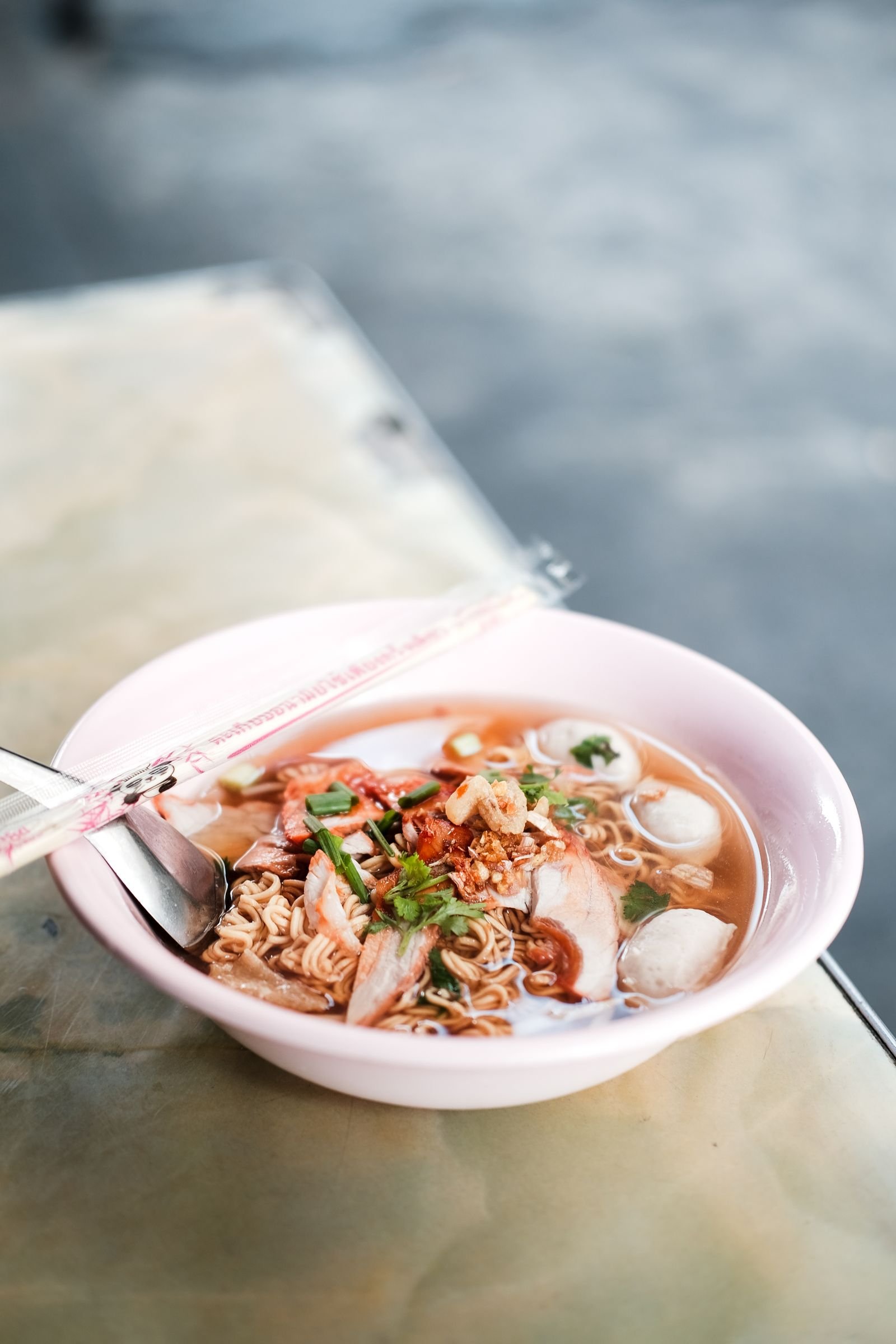
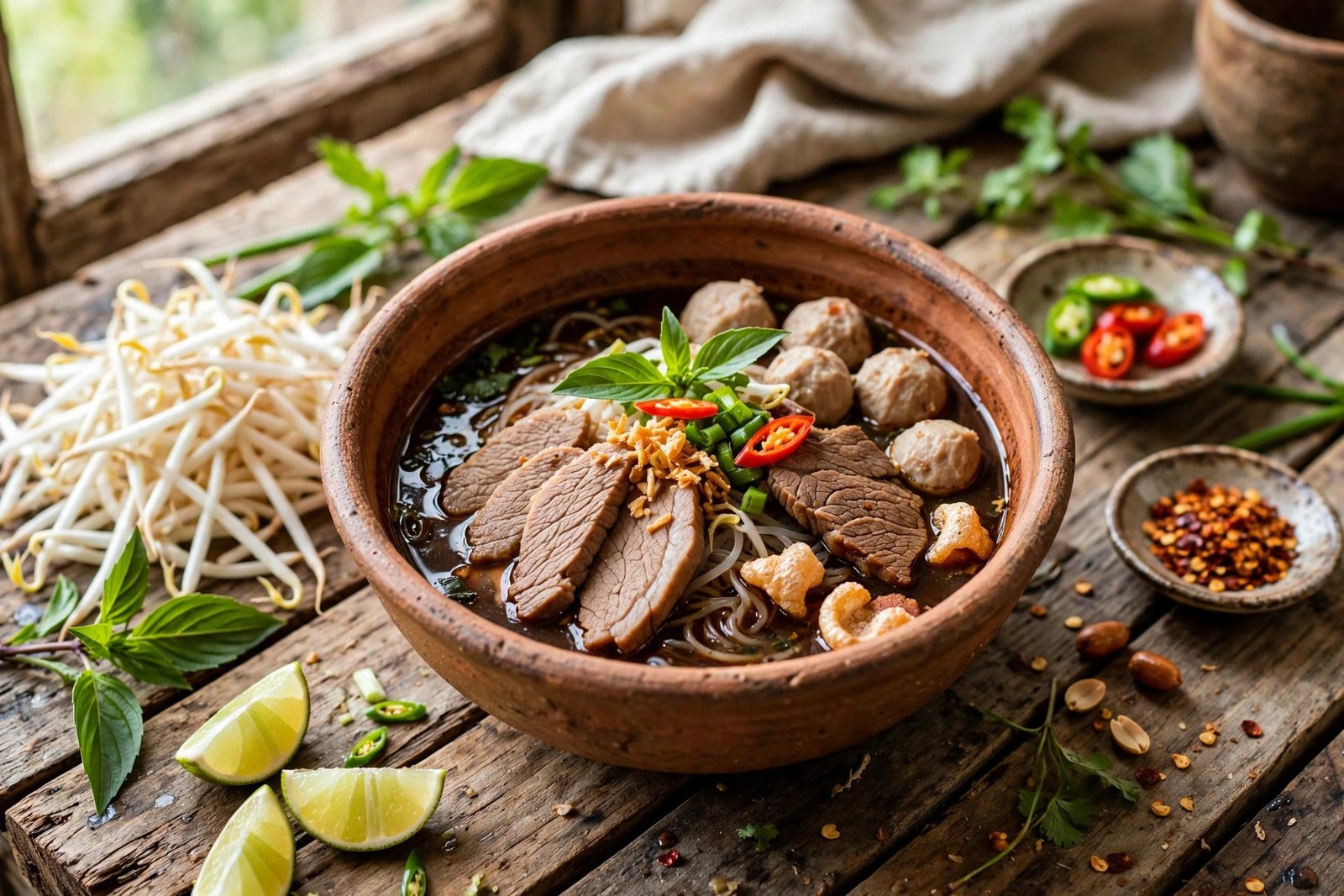
Wide rice noodles swimming in a rosy pink broth, with bouncy fish balls, tender squid, crisp morning glory and a sweet-sour tang that keeps you coming back for more. Yen ta fo is Thailand's most cheerful noodle soup — it looks like a celebration in a bowl and it tastes even better than it looks. One spoonful and you will see why it has such a loyal following.
The story behind Yen Ta Fo
Yen ta fo came to Thailand with Teochew Chinese immigrants, who brought their own noodle soups and adapted them to Thai tastes and ingredients. The name comes from the Teochew words for fermented tofu, and that is the secret of the dish: red fermented tofu, mashed into the broth, gives it the famous pink colour and a deep, salty-sweet tang that no other Thai soup has. Over time the dish became thoroughly Thai, with fish balls, squid, morning glory and the four condiments — sugar, chilli vinegar, fish sauce and ground peanuts — that sit on every noodle-shop table.
In Thailand, yen ta fo is street food and comfort food at once. You will find it at market stalls, in shopping-centre food courts, and in the small shophouse restaurants that have served the same recipe for decades. The pink broth is the giveaway — no other Thai noodle soup looks like it, and the colour draws people in before they have even tasted it. It is a lunch dish, mostly, eaten fast and hot at a plastic table with a spoon in one hand and chopsticks in the other.
What makes yen ta fo special is the balance of the broth. It is sweet, sour, salty and a little bit funky from the fermented tofu, all at the same time, and the toppings each bring something different: the fish balls are bouncy and mild, the squid is tender, the morning glory is crisp and green, and the fried wonton skins add crunch. It is a busy bowl, full of contrast, and every mouthful tastes a little different from the last.
This is a fun bowl to cook at home, and a great one for a family meal. The broth is a one-pot job, the noodles cook in minutes, and the toppings are ready-made from an Asian grocer. Serve it for a weeknight dinner in Australia when you want something different from the usual — it looks spectacular on the table, the kids love the pink colour, and the whole pot comes together in under an hour. Keep a jar of red fermented tofu in the fridge and this soup is always within reach.
- Prep time
- 25 mins
- Cook time
- 30 mins
- Total time
- 55 mins
- Servings
- 4 servings
- Calories
- 440
Ingredients
- 300 g wide flat rice noodles (sen lek or sen yai)
- 1.2 litres chicken or pork stock
- 3 cubes red fermented tofu, mashed, plus 2 tbsp of its brine
- 2 tbsp fish sauce
- 2 tbsp white sugar
- 2 tbsp rice vinegar
- 12 fish balls, halved
- 200 g squid, cleaned and scored, cut into pieces
- 150 g morning glory (water spinach), cut into 5 cm lengths
- 100 g bean sprouts
- 4 spring onions, finely sliced
- 3 tbsp crushed roasted peanuts
- 1 tbsp chilli flakes, to serve
- 2 sheets fried wonton skins, broken into pieces (optional)
Instructions
- Make the broth first. Pour the stock into a large pot over medium-high heat and bring it to a gentle simmer. Mash the red fermented tofu cubes with their brine in a small bowl until smooth, then stir the paste into the stock. The broth will turn a soft rosy pink as the tofu dissolves — that colour is exactly what you are looking for, so do not be shy with it.
- Season the broth. Add the fish sauce, sugar and rice vinegar, then taste. The broth should be sweet, sour and salty in equal measure, with a warm fermented depth underneath. Keep it at a gentle simmer while you cook the noodles.
- Cook the noodles separately. Bring a large pot of water to a rolling boil, add the rice noodles, and cook for 3 to 4 minutes until tender but still a little chewy. Drain well and rinse briefly under warm water so the strands do not stick together. Dividing the noodles between the bowls now, before the toppings go in, keeps the assembly quick and tidy.
- Poach the fish balls and squid in the broth. Drop the fish balls into the simmering broth and cook for 2 to 3 minutes, until they puff up slightly and float. Add the squid and cook for just 1 minute — it should turn opaque and curl at the edges, not go rubbery. Lift the fish balls and squid out with a slotted spoon and set them aside in a bowl.
- Wilt the morning glory and bean sprouts. Drop the morning glory into the hot broth for 30 seconds, just until it turns bright green and wilts, then lift it out. Add the bean sprouts for 15 seconds — they should stay crisp and snappy. These quick blanches keep the vegetables fresh and bright instead of soggy and grey.
- Build the bowls. Divide the noodles between four deep bowls, then ladle the hot pink broth over the top until the noodles are just covered. Arrange the fish balls, squid, morning glory and bean sprouts over the noodles in neat piles, so every colour shows against the pink broth.
- Add the toppings and condiments. Scatter the spring onion and crushed peanuts over each bowl, and put the chilli flakes and fried wonton skins on the table for people to add themselves. The wonton skins go on last, right before eating, so they stay crisp and crackly.
- Serve it hot and let people season their own bowl. Yen ta fo is traditionally adjusted at the table, so set out fish sauce, sugar, chilli vinegar and extra peanuts and let everyone tune their own bowl. Eat while the noodles are hot and the broth is steaming.
Pro tips
- Do not overcook the squid. One minute in the simmering broth is enough — any longer and it turns rubbery and tough, so pull it out the moment it curls and turns opaque. If the squid curls tightly and turns white, it is done — take it out straight away, before it toughens.
- Mash the fermented tofu well. Lumps of tofu in the broth taste harsh and look cloudy, so mash the cubes with their brine until the paste is completely smooth before it goes in.
- Cook the noodles separately. Cooking them in the broth makes the soup starchy and cloudy, and the noodles soak up the pink colour unevenly — a separate pot keeps the broth clear and bright. A clean, bright broth is the mark of a good yen ta fo, and it is worth the extra pot to get it.
- Season boldly, then let the table finish it. The broth should taste a little strong on its own, because the noodles dilute it, and the condiments on the table let each person find their own balance.
- Blanch the greens briefly. Morning glory needs only 30 seconds to turn bright green and tender — any longer and it goes limp, grey and sad.
Variations & serving ideas
Yen ta fo is a flexible soup once you have the pink broth down. The classic toppings are fish balls and squid, but prawns, sliced fish cake, pork mince balls or even a soft-boiled egg all work well. For a vegetarian version, use vegetable stock, skip the fish and squid, and load the bowl with fried tofu puffs, mushrooms and extra morning glory — the fermented tofu broth still gives it the same character and colour.
The noodles are yours to choose. Wide flat noodles, sen yai, are the classic choice and they hold the broth beautifully, but medium sen lek noodles work just as well and are easier to find. In a pinch, any flat rice noodle will do — the broth is the star, and the noodle is really just the vehicle. If you like a thicker soup, add a spoonful of tomato paste with the fermented tofu for a deeper pink and a rounder flavour.
If you cannot find red fermented tofu, look for it in the sauce aisle of an Asian grocer — it usually comes in small glass jars, and one jar lasts for many bowls. The white version is not the same, so hold out for the red one. And if morning glory is hard to find, use spinach or bok choy instead; they wilt the same way and taste just as good in the broth.
Serve yen ta fo as a complete one-bowl meal, with the condiments on the table. A small plate of extra bean sprouts, a few lime wedges, and a cold drink are all you need alongside. Thai iced tea is the natural partner, and a cold beer works well on a warm evening. The soup is hearty enough on its own, so keep the sides light and let the pink bowl do the talking. For a richer bowl, stir a spoonful of chilli paste into the broth with the fermented tofu — it deepens the colour to a warm rose and adds a gentle heat that builds slowly. Keep the condiments on the table and let everyone adjust their own bowl — that is half the fun of this soup.
Getting it right
The key technique is the broth, and the broth is all about the fermented tofu. Red fermented tofu is salty, funky and deeply savoury, and it does two jobs at once: it colours the soup pink and it gives it a tangy depth that fish sauce alone cannot provide. Mash it completely smooth with its brine before it goes into the pot — lumps will not dissolve properly and will taste harsh. Start with three cubes and taste: you can always add more, but you cannot take it out.
Heat control matters for the toppings as much as the broth. The broth should stay at a gentle simmer, never a rolling boil, or the fermented tofu flavour turns harsh and the stock goes cloudy. The squid needs the shortest cooking of all — one minute, no more — and the fish balls only a couple of minutes until they float and puff. Cook the toppings in the broth in order, quickest last, and lift each one out as soon as it is done.
The most common mistake is over-seasoning the broth before the noodles go in. The noodles dilute the soup, so a broth that tastes perfect on its own will taste flat in the bowl. Season it a little boldly, taste it with a noodle in the spoon, and then let the table condiments finish the job. The second mistake is cooking the noodles in the broth — the starch clouds the pink soup and the noodles drink up the seasoning unevenly. A separate pot, always.
Storing & reheating
Leftover yen ta fo keeps best with the parts stored separately. The broth keeps in a sealed container in the fridge for up to three days, and the flavour actually deepens overnight. The noodles keep for a day in a sealed container, tossed with a teaspoon of oil so they do not stick. Store the toppings apart — the squid goes rubbery if it sits in broth, and the morning glory wilts fast.
To reheat, bring the broth back to a gentle simmer and drop the noodles in for 30 seconds, just until hot. Add the toppings fresh if you can, or warm the fish balls briefly in the broth. Do not boil the soup hard, or the fermented tofu flavour turns harsh. The broth freezes well for up to a month; the noodles and toppings do not, so freeze only the broth.
Frequently asked questions
Where can I buy red fermented tofu in Australia?
Asian grocers stock it in small glass jars in the sauce aisle, usually labelled fermented bean curd or nam yu. Look for the red version — the white one is not the same and will not give the pink colour. It is a dish that rewards a little care with the broth.
What does yen ta fo taste like?
Sweet, sour, salty and a little bit funky, all at once. The fermented tofu gives the broth a deep tang, the fish balls are mild and bouncy, and the morning glory adds a fresh green crunch. It is unlike any other Thai soup. It is a dish that rewards a little care with the broth.
Can I make yen ta fo vegetarian?
Yes. Use vegetable stock, skip the fish and squid, and load the bowl with fried tofu puffs, mushrooms and extra morning glory. The fermented tofu broth gives it the same colour and character as the classic version. It is a dish that rewards a little care with the broth.
What are the four condiments for yen ta fo?
Sugar, chilli vinegar, fish sauce and ground peanuts, set out on the table for everyone to season their own bowl. Add a little of each, taste, and adjust until the bowl suits you — that is the Thai way. It is a dish that rewards a little care with the broth.
Can I use different noodles?
Yes. Wide flat rice noodles are the classic choice, but medium rice noodles work just as well. Any flat rice noodle will do — the broth is the star, and the noodle is the vehicle that carries it. It is a dish that rewards a little care with the broth.
How spicy is yen ta fo?
Mildly spicy as served, with the heat coming from the chilli flakes on the table rather than the broth itself. Add as much or as little chilli as you like, and the peanuts and sugar will soften the heat. It is a dish that rewards a little care with the broth.