Roti Gluay Recipe
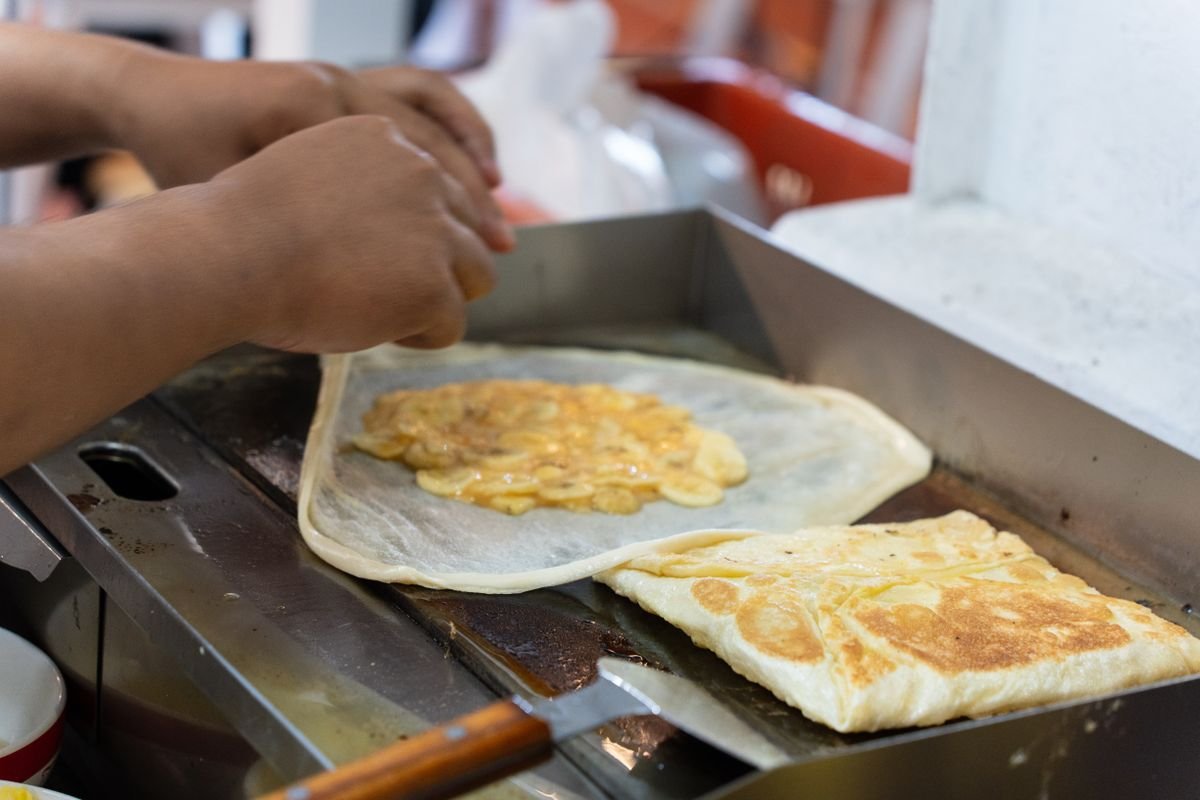
Roti gluay is Thailand's beloved street pancake: a paper-thin dough stretched by hand, wrapped around sweet banana, and fried in butter until crisp and golden. It comes off the griddle folded into a neat square, drizzled with condensed milk and dusted with sugar. Eat it hot, with your fingers, while the banana is still soft and the edges are still crackling.
The story behind Roti Gluay
Roti gluay is the pancake of Bangkok's night markets, where vendors stretch dough by hand under the lights and the smell of butter and banana drifts down the street. The roti itself came to Thailand with Muslim traders from India and the Malay world, where it was known as roti prata or roti canai. Thai cooks made it their own by filling it with banana — the fruit that grows everywhere in the country — and serving it sweet, with condensed milk and sugar, as a snack rather than a bread for curry.
In Thailand, roti gluay is street food and late-night food. The carts appear as the sun goes down, their griddles hissing and their dough flying through the air as the vendor stretches it thin. Students buy it on the way home, couples share one after dinner, and tourists stand and watch the show before ordering a second. There is no table, no plate and no ceremony — the roti is folded, cut into squares and handed over on a piece of paper, to be eaten with your fingers while it is still hot.
What makes a good roti gluay is the dough. It must be stretched so thin you can almost see through it, then fried in butter until it turns crisp and golden while the banana inside melts into softness. The contrast is the whole point: a shattering, buttery crust against warm, sweet banana. Condensed milk drizzled over the top adds a creamy sweetness, and a dusting of sugar gives the last bite a little crunch.
Cook roti gluay when you want a dessert that feels like a small performance, or as a fun weekend treat to make with children. It is a lovely sweet finish for a Thai dinner in Australia, made at the table while everyone watches the dough stretch and the roti crisp on the griddle. The first one is always a little messy, and that is part of the charm — by the third, your hands will know the rhythm, and the roti will be thin, golden and gone in minutes.
- Prep time
- 25 mins
- Cook time
- 15 mins
- Total time
- 40 mins
- Servings
- 4 servings
- Calories
- 450
Ingredients
- 2 cups plain flour, plus extra for dusting
- 1 tablespoon sugar
- 1/2 teaspoon salt
- 1 egg, beaten
- 1/2 cup warm water
- 1 tablespoon vegetable oil, plus extra for stretching
- 2 ripe bananas, sliced into thin rounds
- 2 tablespoons butter, for frying
- 3 tablespoons condensed milk, to serve
- 1 tablespoon sugar, for dusting
- 1/2 teaspoon ground cinnamon (optional)
- Oil, for greasing the work surface
Instructions
- Tip the flour, sugar and salt into a large bowl and make a well in the centre. Pour in the beaten egg, the warm water and the tablespoon of oil, then mix with your fingers until the flour comes together into a shaggy dough. It should feel soft and slightly sticky, not dry or crumbly. If it feels stiff, add water a teaspoon at a time.
- Turn the dough onto a lightly floured surface and knead for 6 to 8 minutes until it feels smooth, soft and elastic. The dough should spring back slowly when you press it with a finger. Divide it into 4 equal balls, coat each one lightly with oil and set them in a bowl. Cover with cling film and rest for 30 minutes so the gluten relaxes and the dough stretches thin without tearing.
- While the dough rests, slice the bananas into thin rounds, about 5 mm thick. Ripe bananas with brown speckles are best — they are sweeter and softer, and they melt into the dough as it fries. Set the slices aside on a plate, and have the butter, condensed milk and sugar ready beside the stove so you can work quickly once the roti is on the griddle.
- Oil your work surface and your hands generously, then take one ball of dough and flatten it into a disc with your palm. Start stretching from the centre outward, lifting and turning the dough as you go, until it is almost see-through and about 30 cm across. Work gently and patiently — if a small hole appears, pinch it closed and carry on. The dough should be thin enough to read a newspaper through.
- Heat a large flat griddle or frying pan over medium heat and melt half a tablespoon of butter in it. Carefully lift the stretched dough and lay it flat on the hot surface, smoothing out any folds with your fingers. The dough will start to sizzle and puff slightly at the edges, and you will smell the butter browning underneath.
- Arrange a quarter of the banana slices in a neat pile in the centre of the dough, leaving a border of about 5 cm all round. Fold the four sides of the dough over the banana, one at a time, pressing each fold down gently to make a square parcel about 12 cm across. The folds trap the banana inside so it steams and softens as the roti fries.
- Fry the parcel for 2 to 3 minutes on the first side, until the underside is golden brown and crisp, then flip it carefully with a spatula and fry for another 2 to 3 minutes. The roti should be golden all over, with darker freckles where the butter has browned, and you should hear a gentle crackle as the edges crisp. Add a little more butter to the pan if it looks dry.
- Lift the roti onto a board and cut it into 9 small squares with a sharp knife or a pizza cutter. The banana inside will be soft and steaming, so let it sit for a minute before you cut, or the filling will spill out. Repeat with the remaining dough balls, wiping the griddle clean between each one if butter starts to burn.
- Serve the roti gluay hot, piled on a plate and drizzled generously with condensed milk. Dust with sugar and a little cinnamon if you like, and eat it at once with your fingers or a fork, while the edges are still crisp and the banana is warm and soft inside.
Pro tips
- Rest the dough for the full 30 minutes, and do not skip this step. Freshly kneaded dough springs back when you stretch it and tears at the edges, while rested dough relaxes and pulls thin without fighting you. If the dough still resists, give it another 10 minutes under the cling film.
- Oil your hands and the work surface generously before stretching. The dough is soft and sticky by nature, and a well-oiled surface lets it slide and stretch thin instead of gripping and tearing. Keep a small bowl of oil beside you and re-oil your hands between each roti.
- Use ripe bananas with brown speckles on the skin. They are sweeter, softer and melt into the dough as it fries, while under-ripe bananas stay firm and taste starchy. Slice them thin, about 5 mm, so they soften evenly inside the parcel without making it soggy.
- Keep the griddle at medium heat, not high. A screaming hot pan burns the butter and browns the outside before the banana softens, while a cool pan leaves the roti pale and greasy. The sweet spot is when the roti colours in 2 to 3 minutes a side and smells of browned butter.
- Eat roti gluay within 15 minutes of cooking, while the edges are still crisp and the banana is warm. The crust softens quickly as it sits, so cook the rotis one at a time and serve each one hot. If you are making a batch, keep them warm in a low oven, uncovered, so the steam does not soften them.
Variations & serving ideas
For a chocolate version, add a spoonful of chocolate spread or a few chocolate chips with the banana before folding. The warm banana and melted chocolate together are a favourite with children, and a drizzle of chocolate sauce over the top instead of condensed milk makes it even richer. You can also add a sliced mango or a few strawberries for a fresh, fruity twist.
Try a savoury roti too, using the same dough. Fill it with a beaten egg and a little chopped spring onion, fold it into a square and fry it the same way, then serve it with a sweet chilli sauce. This egg roti is a classic Thai street snack, and it makes a quick, satisfying lunch when you want something warm and filling.
Serve roti gluay hot, cut into squares and drizzled with condensed milk, as the sweet end to a Thai dinner. In Australia, it is a lovely dessert for a warm evening — make it on the barbecue griddle or in a pan on the stove, and let everyone watch the dough stretch and the roti crisp. A scoop of coconut or vanilla ice cream on the side turns it into a proper dessert.
Pair roti gluay with a cup of Thai iced tea or a cold glass of coconut water, and keep the rest of the meal simple. It follows a spicy curry or a pad thai beautifully, because its sweetness cools the palate. Leftover dough balls can be stretched and fried plain, then rolled in sugar for a quick snack the next day.
Getting it right
The key technique is the stretching. The dough must be rested for the full 30 minutes so the gluten relaxes, or it will spring back and tear when you pull it. Oil your hands and the work surface well, and stretch from the centre outward with gentle, even pressure, lifting and turning the dough as you go. If a hole appears, pinch it closed and carry on — a small patch will not hurt the finished roti.
Heat control is the second skill. The griddle should be at medium heat, hot enough to crisp the dough in 2 to 3 minutes a side but not so hot that the butter burns before the banana softens. If the roti browns in under a minute, turn the heat down. If it sits pale and limp after 3 minutes, turn it up. A little extra butter in the pan keeps the crust golden and stops the dough sticking.
The most common mistakes are under-rested dough, dough stretched too thick and overfilling with banana. Under-rested dough tears, so give it the full rest. Thick dough fries up chewy instead of crisp, so keep stretching until it is almost see-through. And too much banana makes the parcel burst open in the pan, so use a modest pile in the centre and leave a wide border for folding.
Storing & reheating
Roti gluay is best eaten fresh, within 15 minutes of cooking, while the edges are crisp and the banana is warm. If you must keep it, let it cool completely and store it in an airtight container at room temperature for a few hours, though the crust will soften. The raw dough balls keep in the fridge for a day, wrapped in cling film and coated with oil.
To reheat, warm the roti in a dry frying pan over medium heat for a minute on each side, which brings back some of the crispness. You can also warm it in a 180C oven for 5 minutes. Avoid the microwave, which makes the dough soft and chewy. Add the condensed milk and sugar only after reheating, so they stay fresh and glossy.
Frequently asked questions
Why does my roti dough tear when I stretch it?
Tearing usually means the dough was not rested long enough or was rolled too thick in one spot. Rest the dough for the full 30 minutes so it relaxes, oil your hands and the work surface well, and stretch gently from the centre outward instead of pulling hard at the edges.
Can I use very ripe bananas?
Yes, and they are the best choice. Ripe bananas with brown speckles are sweeter and softer, and they melt into the dough as it fries. Green or under-ripe bananas stay firm and taste starchy, so wait until the skins are well speckled before you cook.
Can I add chocolate to roti gluay?
Yes, and it is a popular version. Add a spoonful of chocolate spread or a few chocolate chips with the banana before folding, or drizzle chocolate sauce over the top instead of condensed milk. The warm banana and melted chocolate together are hard to resist.
How do I reheat roti gluay?
Roti gluay is best eaten fresh, within 15 minutes of cooking, while the edges are crisp. To reheat, warm it in a dry frying pan over medium heat for a minute on each side, which brings back some of the crispness. The microwave makes it soft and chewy, so avoid it if you can.
Is roti gluay gluten free?
The dough contains wheat flour, so the classic version is not gluten free. A gluten-free flour blend can work, but the dough tears more easily, so roll it thicker and handle it gently. The banana filling itself is naturally gluten free.
What toppings go best with roti gluay?
A little condensed milk and sugar is traditional, and a dusting of cocoa powder or cinnamon works well too. Fresh mango or a scoop of coconut ice cream on the side turns it into a proper dessert, and a drizzle of honey is a lighter alternative to condensed milk.