Easy Pad Thai Recipe at Home

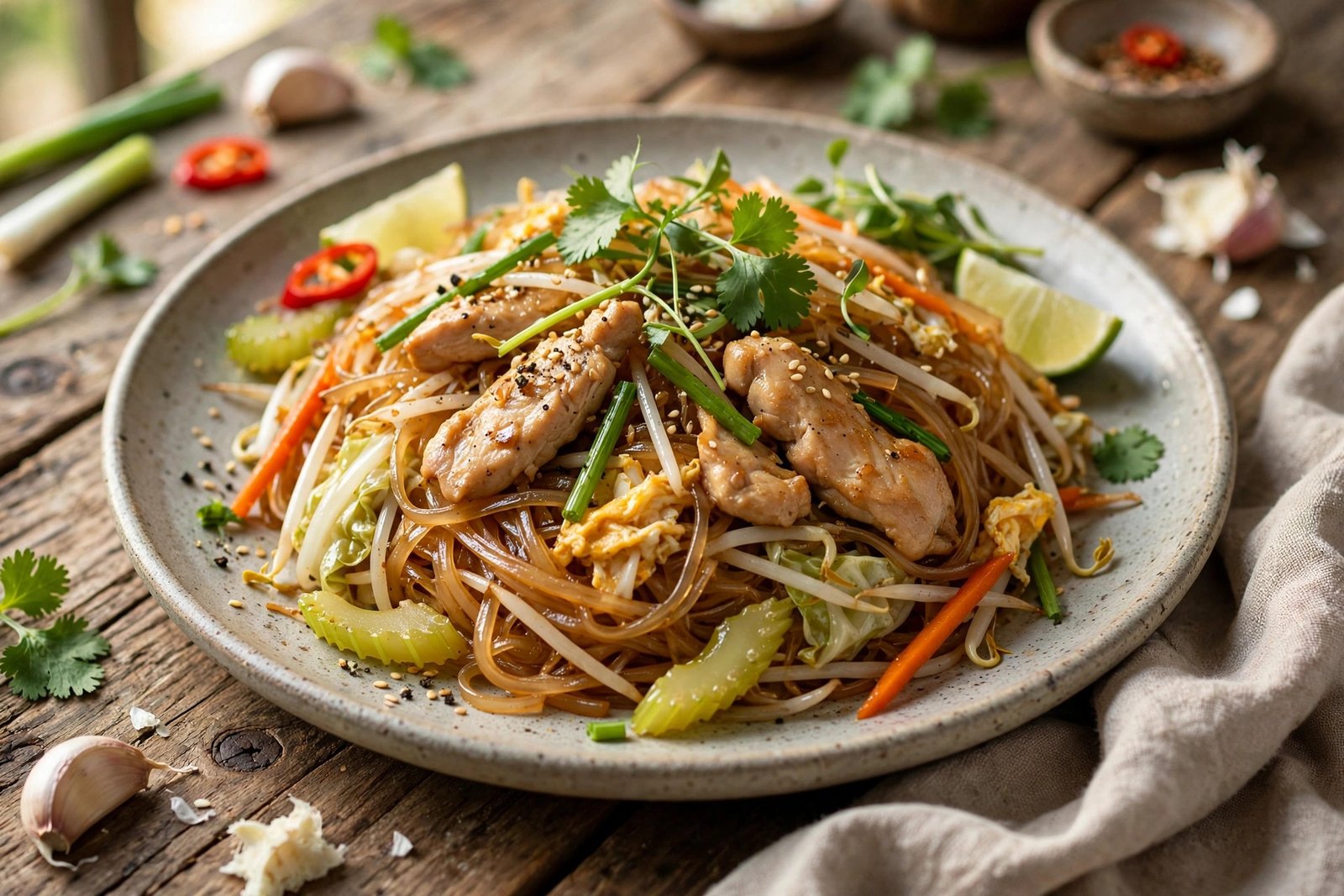
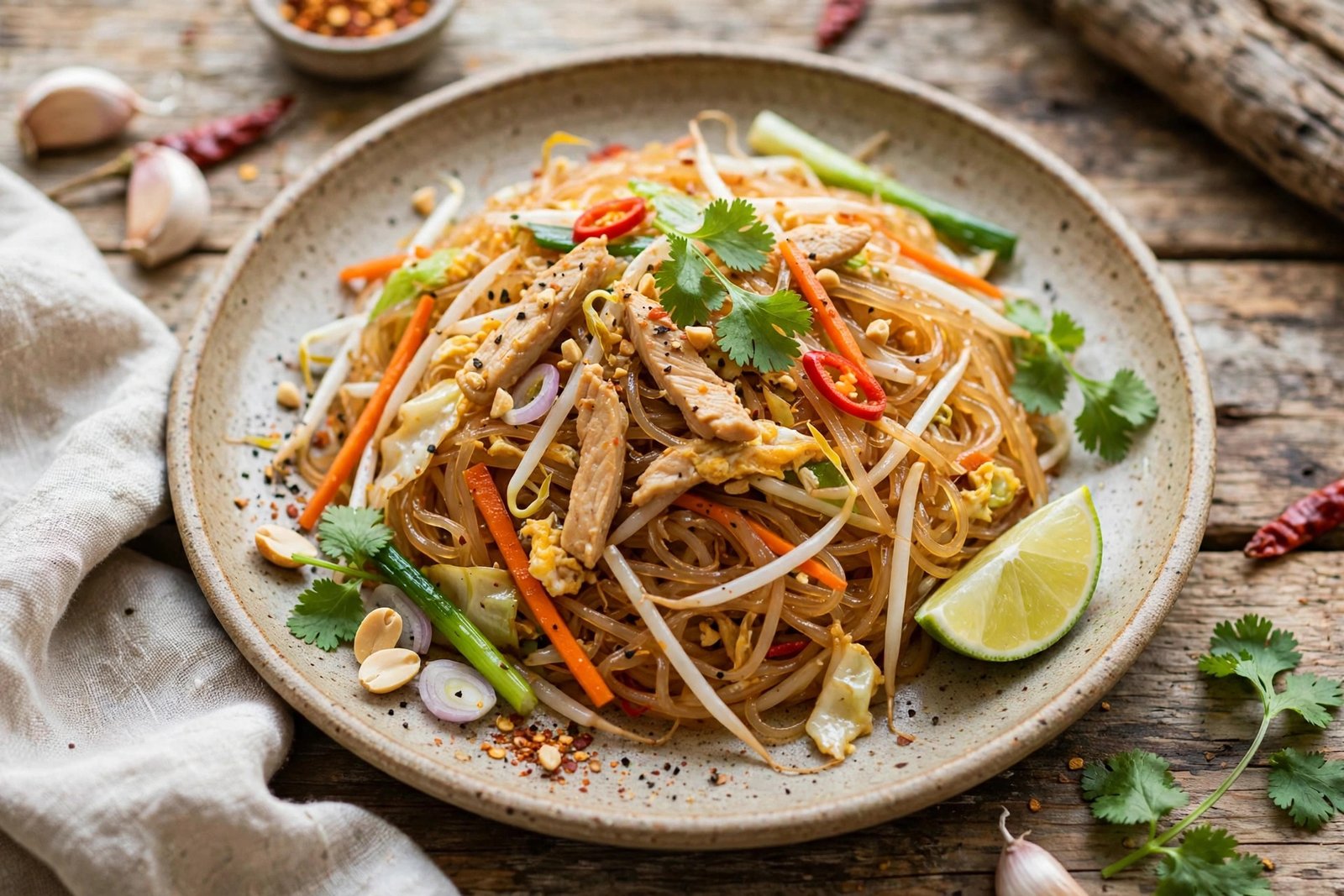
This easy pad thai recipe at home balances sweet, sour, salty and a little heat the way Bangkok street stalls do — tamarind, fish sauce, peanuts and lime over springy rice noodles. It is ready in 30 minutes and beats takeout on flavour and on price.
- Prep time
- 15 mins
- Cook time
- 20 mins
- Total time
- 35 mins
- Servings
- 4 servings
- Calories
- 640
Ingredients
- 8 oz (225 g) flat rice noodles
- 8 oz (225 g) large shrimp, peeled and deveined (or sliced chicken breast)
- 3 tablespoons tamarind paste
- 3 tablespoons fish sauce
- 3 tablespoons palm sugar (or light brown sugar)
- 2 tablespoons neutral oil, such as sunflower or peanut oil
- 3 cloves garlic, finely minced
- 2 large eggs, lightly beaten
- 4 oz (115 g) firm tofu, cut into small cubes (optional)
- 2 cups fresh bean sprouts, plus extra for serving
- 4 garlic chives or scallions, cut into 2-inch pieces
- 1/3 cup roasted peanuts, roughly crushed
- 1 lime, cut into wedges
- 1/2 teaspoon dried chili flakes (optional)
Instructions
- Soak the rice noodles in warm water for 20 to 25 minutes until pliable but still firm, then drain well. While they soak, whisk the tamarind paste, fish sauce and palm sugar in a small bowl until the sugar dissolves — this is your Pad Thai sauce.
- Heat the oil in a large wok or skillet over high heat until shimmering. Add the garlic and shrimp and stir-fry for about 2 minutes until the shrimp turn pink and curl. If using chicken, cook 3 to 4 minutes until no longer pink.
- Push everything to the side of the wok, pour in the beaten eggs and scramble for 30 seconds until just set, then toss together with the shrimp.
- Add the drained noodles and the sauce. Toss constantly for 3 to 4 minutes, adding a splash of water if the noodles look dry, until they turn soft, glossy and well coated.
- Stir in the tofu (if using), bean sprouts and garlic chives. Cook 1 to 2 minutes more until the sprouts are just tender but still crisp.
- Taste and adjust the balance — a little more fish sauce for saltiness, sugar for sweetness or lime juice for extra tang.
- Transfer to a warm platter and sprinkle generously with the crushed peanuts and chili flakes.
- Serve immediately with lime wedges and extra bean sprouts on the side.
Pro tips
- Do not over-soak the noodles — they finish cooking in the wok, so they should still feel slightly firm when drained.
- Get the wok smoking hot before the shrimp go in; high heat gives the dish its signature lightly charred flavor.
- Mix the sauce before you start cooking — once the wok is hot, everything moves fast and there is no time to measure.
- No tamarind paste? Simmer 2 tablespoons of lime juice with 1 extra tablespoon of sugar for a close-enough tangy substitute.
Frequently asked questions
Can I make Pad Thai without shrimp?
Yes — sliced chicken breast, thin strips of pork or extra firm tofu all work beautifully. Keep the sauce and the rest of the method exactly the same.
What noodles are best for Pad Thai?
Flat rice noodles about a quarter inch wide, sold as rice stick or pad thai noodles. Avoid very thin rice vermicelli, which turns mushy in the wok.
Is Pad Thai gluten-free?
It can be. Rice noodles, tamarind, fish sauce and palm sugar are naturally gluten-free, but always check your fish sauce label since some brands add wheat.
How do I stop the noodles from sticking together?
Drain the soaked noodles well, keep the wok very hot and toss constantly. A small splash of water while tossing loosens any clumps without making the dish soggy.