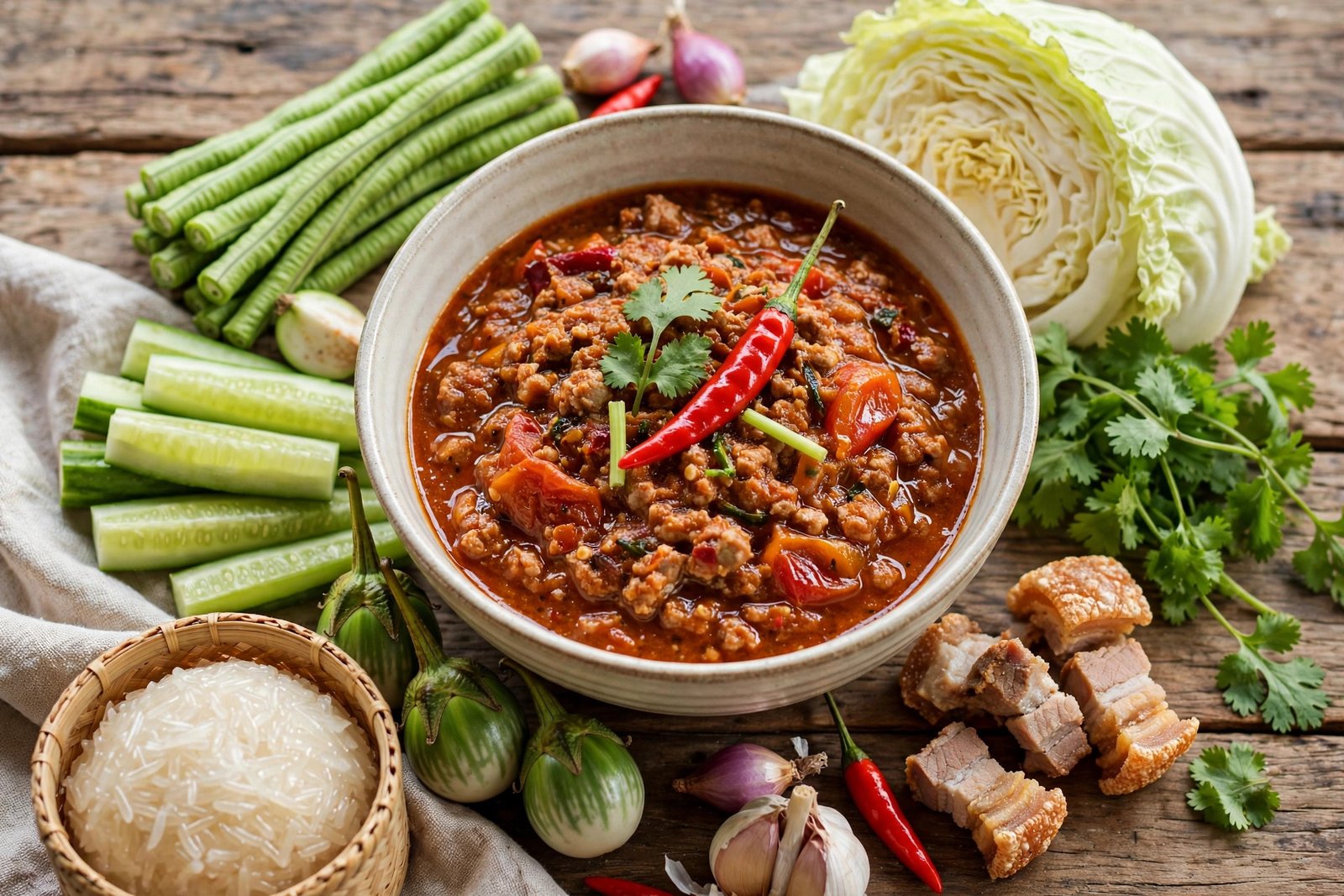
Laab Gai Recipe
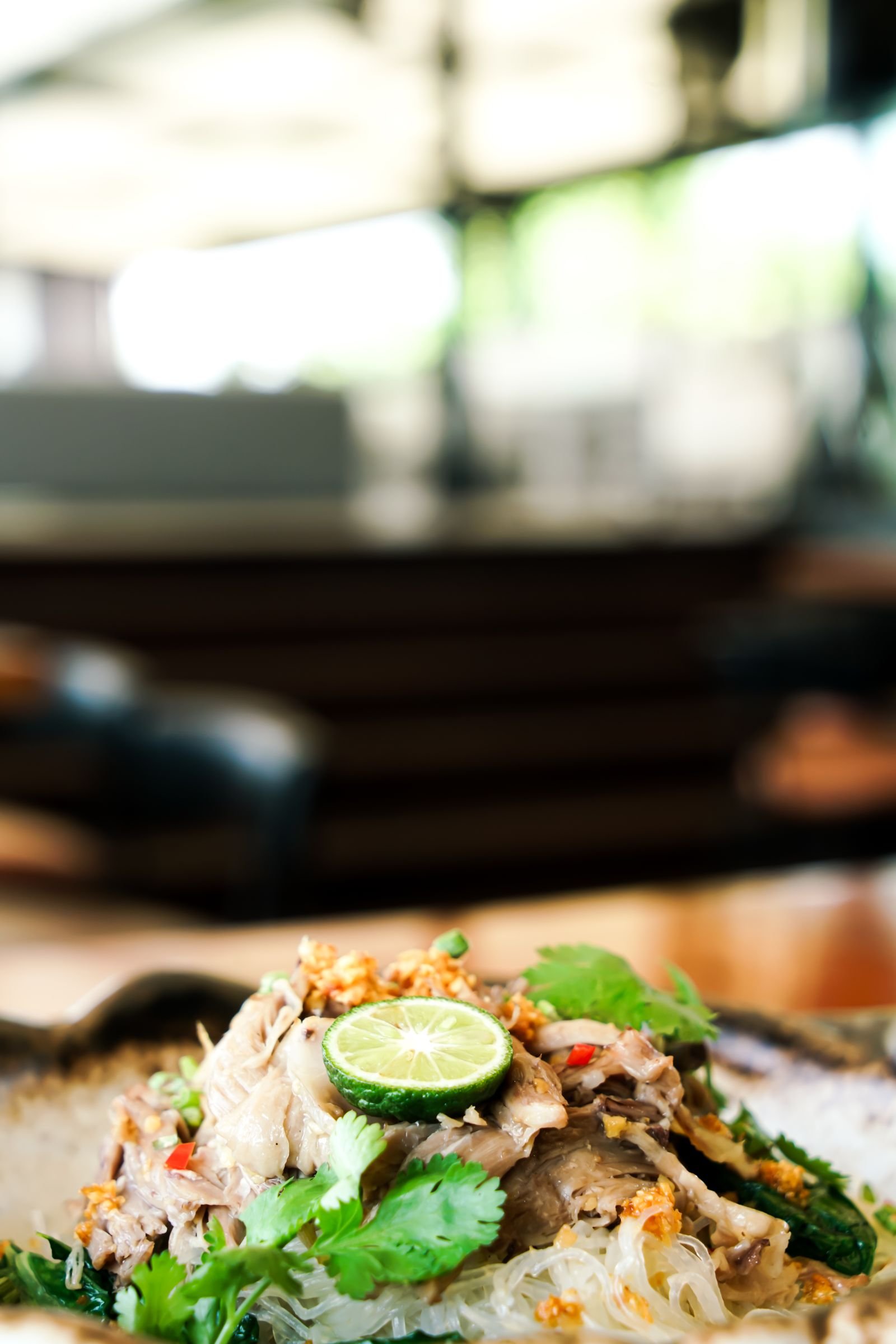
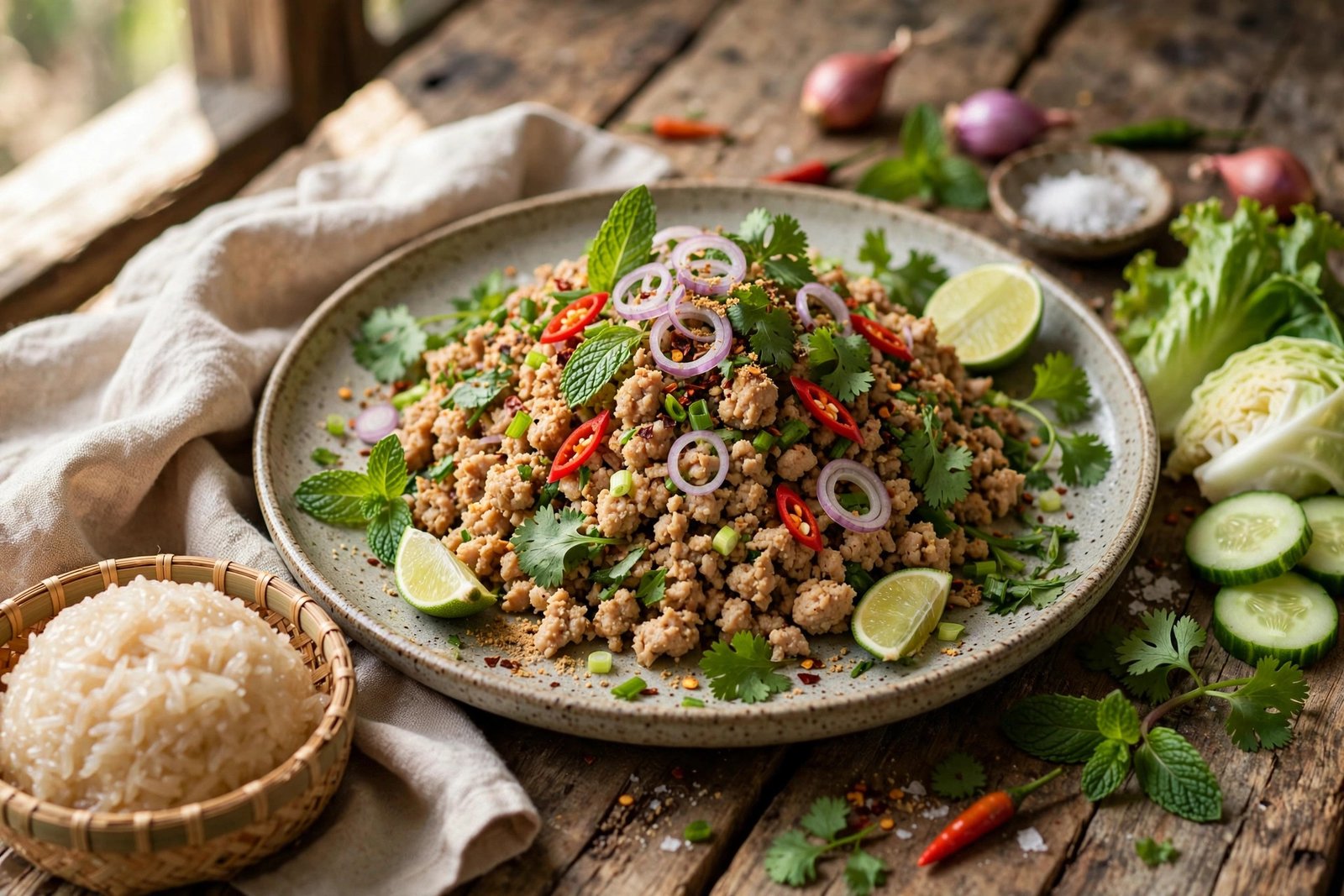
Laab gai is Thailand's fiery minced chicken salad: ground chicken quickly cooked, then tossed while warm with lime juice, fish sauce, chilli, shallots and a shower of fresh herbs. Toasted rice powder gives it a nutty crunch and a warm, roasted flavour. It is fresh, hot, sour and salty all at once — Isan food at its brightest and best. Eat it with sticky rice and raw vegetables, and let the cool crunch balance the warm, spicy chicken.
The story behind Laab Gai
Laab is the signature dish of Isan, the north-eastern region of Thailand, and it is a dish of the Lao people who live there. The name comes from the Lao word for good fortune, and the dish is traditionally served at celebrations and gatherings, where a big plate of laab in the middle of the table means good luck for everyone. It is a salad, but not the kind most people picture — warm minced meat, tossed with lime, chilli and herbs, and eaten with sticky rice and raw vegetables. Isan food is known for its bold, direct flavours, and laab is the dish that shows that character best.
In Isan, laab is everyday food as much as celebration food. It is cooked quickly in a wok, seasoned boldly, and eaten with the hands — a ball of sticky rice scooped through the warm, spicy meat, a cabbage leaf wrapped around a spoonful. It sits at the centre of the Isan table next to som tam, the green papaya salad, and grilled chicken. The flavours are loud and direct: sour, salty, hot and fresh, all at once. Make it when the weather is warm and you want something light, fresh and satisfying without a long cook.
What makes laab gai special is the toasted rice powder. It is a humble ingredient — just rice, toasted and ground — but it gives the dish its nutty flavour, its light crunch, and its power to hold the dressing together. Without it, laab is just seasoned chicken; with it, the dish becomes itself. The herbs matter too: mint, coriander and sawtooth coriander bring a fresh, green brightness that balances the heat.
Cook this dish when you want Thai food that is fast, fresh and fiery. It suits a weeknight dinner when you have 30 minutes, a lunch for friends who like bold flavours, or a summer meal when you want something light but satisfying. It is also a good dish to cook for a crowd — the recipe doubles easily — and it sits happily on a table of Thai dishes, bringing its bright, punchy flavour to the spread.
- Prep time
- 20 mins
- Cook time
- 15 mins
- Total time
- 35 mins
- Servings
- 4 servings
- Calories
- 310
Ingredients
- 500 g ground chicken, preferably thigh
- 2 tablespoons uncooked sticky rice or jasmine rice
- 3 tablespoons fresh lime juice
- 2 tablespoons fish sauce
- 1 tablespoon chilli flakes, or to taste
- 3 shallots, thinly sliced
- 3 spring onions, chopped
- 1/2 cup mint leaves
- 1/2 cup coriander leaves
- 2 tablespoons chopped sawtooth coriander or dill
- 1 tablespoon vegetable oil
- 1/2 teaspoon sugar
- Sticky rice, to serve
- Cucumber and cabbage leaves, to serve
Instructions
- Toast the rice in a dry pan over medium heat for 4 to 5 minutes, shaking the pan often, until the grains turn a deep golden brown and smell nutty and warm. Let it cool for 2 minutes, then grind it in a spice grinder or a mortar until it is coarse and sandy, not fine like flour. This toasted rice powder is the soul of laab.
- Heat the oil in a wok over medium-high heat and add the ground chicken. Break it up with a spatula and cook for 6 to 8 minutes, stirring often, until no pink remains and the chicken looks moist and crumbly.
- Turn off the heat and let the chicken cool for 2 minutes in the pan — it should be warm, not hot, when the dressing goes on. If the chicken is too hot, it wilts the herbs and cooks the shallots; if it is cold, the flavours never quite come together.
- Add the lime juice, fish sauce, sugar and chilli flakes to the warm chicken and toss well. Taste it — you want a bold balance of sour, salty and hot, with a little sweetness underneath. Add more lime if it tastes flat, more fish sauce if it needs salt, or more chilli if you want fire.
- Add the sliced shallots and spring onions and toss again. The shallots should stay crisp and raw, giving the salad a sharp, fresh bite against the warm chicken. Let the mixture sit for 2 minutes so the shallots soften slightly in the dressing.
- Add the toasted rice powder, a spoonful at a time, tossing as you go. The powder soaks up the dressing and coats the chicken, giving the salad its nutty flavour and a light crunch. You want enough to bind the salad together, but not so much that it turns dry.
- Fold in the mint, coriander and sawtooth coriander gently, so the leaves stay whole and fresh. Taste once more and adjust the lime, fish sauce or chilli — laab is a dish you season by tasting, not by measuring.
- Spoon the laab onto a serving plate and scatter a few extra mint leaves over the top. It should look fresh and colourful, with the green herbs, the red chilli flakes and the pale chicken all showing. Serve it warm, not hot, and not cold.
- Serve straight away with sticky rice and fresh cucumber and cabbage leaves. The traditional way to eat it is to scoop the laab with a small ball of sticky rice, or to wrap it in a cabbage leaf. The cool vegetables and the soft rice calm the heat between bites.
- Set out extra lime wedges and chilli flakes on the table so everyone can season their own plate. Laab is a dish you finish at the table, and a last squeeze of lime wakes the whole salad up again.
Pro tips
- Toast the rice until it is properly golden and smells nutty. Pale rice powder tastes of nothing, and burnt rice powder tastes bitter — you want a deep golden colour and a warm, roasted smell. Use a spice grinder or a mortar for the rice powder, and grind it in short bursts so it stays coarse.
- Use ground chicken thigh if you can. Breast meat dries out quickly in a hot wok, while thigh stays moist and crumbly. If you only have breast, cook it for a minute less and do not over-stir it.
- Let the chicken cool for 2 minutes before the dressing goes on. Hot chicken wilts the herbs and cooks the shallots, while warm chicken lets the lime and fish sauce soak in without killing the freshness.
- Season by tasting, not by measuring. Limes vary in sharpness and fish sauces vary in salt, so the amounts in the recipe are a starting point — adjust until the balance tastes right to you.
- Add the herbs last and fold them in gently. Bruised mint turns dark and bitter, while whole leaves stay bright and fresh and give the salad its colour and fragrance.
Variations & serving ideas
Swap the chicken for minced pork and you get laab moo, the most common version in Thailand — pork is richer and a little fattier, and it takes the chilli well. Minced beef works too, though it needs a minute longer in the pan. For a vegetarian version, use crumbled firm tofu or finely chopped mushrooms, cooked the same way. Mushrooms work well too — chop them fine and cook them until they give up their water and turn silky. Minced beef works too, though it needs a minute longer in the pan to cook through properly. Pork is richer and a little fattier than chicken, and it takes the chilli especially well.
Turn the heat up or down to suit your table. A tablespoon of chilli flakes is a good middle ground; use half for a gentle warmth, or add a chopped bird's eye chilli for real fire. A squeeze of extra lime brightens the dish, and a pinch more sugar rounds out the sharpness if the limes are very sour. A squeeze of extra lime at the end brightens everything, and it is the easiest way to fix a flat-tasting laab. A tablespoon of chilli flakes is a good middle ground, while half a tablespoon gives a gentle warmth for cautious eaters. Taste as you go, as limes vary in sharpness and fish sauces vary in salt.
The dish is at its best with sticky rice, which is the traditional partner and the right tool for scooping. Jasmine rice works too, and the salad is good spooned over a bed of lettuce or wrapped in cabbage leaves. Raw vegetables on the side — cucumber, long beans, cabbage — give the plate crunch and coolness. Raw vegetables on the side — cucumber, long beans, cabbage — give the plate crunch and coolness between bites.
For a full Isan meal, pair laab with som tam, grilled chicken and sticky rice. The papaya salad brings sourness and crunch, the grilled chicken brings smoky richness, and the laab brings the heat and the herbs. A cold beer or a glass of iced tea is the traditional company. The papaya salad brings sourness and crunch, the grilled chicken brings smoky richness, and the laab brings the heat.
Getting it right
The key technique in laab is the toasted rice powder, and it is worth making it yourself rather than buying it. Toast the rice in a dry pan, shaking it often, until it turns a deep golden brown and smells nutty — about 4 to 5 minutes. Let it cool, then grind it coarse and sandy, not fine like flour. Coarse powder gives the salad crunch; fine powder turns it pasty. Grind the toasted rice in a spice grinder or a mortar, and stop while it is still coarse and sandy.
Heat control matters in the chicken too. The wok should be hot enough that the chicken sizzles and browns lightly, but not so hot that it dries out. Break the meat up as it cooks so it stays crumbly, and take it off the heat the moment no pink remains. Then let it cool for 2 minutes — warm chicken absorbs the dressing, hot chicken kills the herbs. Warm chicken absorbs the dressing, while hot chicken kills the herbs — the two minutes of cooling matter more than they seem.
The most common mistakes are easy to fix. A dry laab means too much rice powder or too little lime juice — add a spoonful of lime and a splash of water. A bland laab usually needs more fish sauce or more lime, so taste and adjust. And if the herbs wilt, the chicken was too hot when they went in — let it cool longer next time and fold the herbs in last.
Storing & reheating
Laab is best eaten fresh, but leftovers keep in an airtight container in the fridge for up to 2 days. The herbs will wilt and the shallots will soften, so the salad loses some of its brightness. Reheat the chicken gently in a pan, then add fresh herbs, shallots and a squeeze of lime before serving. Keep the laab in a shallow container so it cools quickly, and eat it within two days for the best flavour.
Do not freeze laab. The herbs and shallots turn limp on thawing, and the toasted rice powder goes soggy. If you have leftover chicken, use it cold the next day in a sandwich or tossed through a noodle salad with fresh herbs and lime. A fresh squeeze of lime before serving wakes the flavours up again.
Frequently asked questions
What is laab gai?
Laab gai is a Thai minced chicken salad from the Isan region. Warm ground chicken is tossed with lime juice, fish sauce, chilli, shallots, fresh herbs and toasted rice powder, then eaten with sticky rice. The name comes from the Lao word for good fortune, and the dish is traditionally served at celebrations.
What is toasted rice powder?
Toasted rice powder, or khao khua, is uncooked rice toasted in a dry pan until golden and nutty, then ground coarse. It gives laab its nutty flavour, light crunch and power to hold the dressing. It gives laab its nutty flavour and light crunch, and it binds the dressing so it coats the chicken evenly.
Is laab gai very spicy?
It is warm and punchy, but you control the heat with the chilli flakes. Use half a tablespoon for a gentle version, or add a chopped bird's eye chilli for real Isan fire. A tablespoon of chilli flakes is a good middle ground, and a chopped bird's eye chilli adds real Isan fire.
Can I make laab with chicken breast?
Yes, but thigh meat is better — it stays moist and crumbly. If you use breast, cook it for a minute less and avoid over-stirring it, or it will dry out. Thigh meat stays moist and crumbly in a hot wok, while breast dries out quickly if you cook it a minute too long.
What is sawtooth coriander?
Sawtooth coriander is a long, serrated herb used across Southeast Asia, with a stronger flavour than ordinary coriander. If you cannot find it, use dill or extra mint and coriander. If you cannot find sawtooth coriander, use dill or extra mint and coriander, and the salad still tastes bright.
What should I serve with laab gai?
Sticky rice is the classic partner, with fresh cucumber, cabbage leaves and long beans on the side for crunch. Som tam and grilled chicken turn it into a full Isan meal. A cold beer or a glass of iced tea is the traditional company, and fresh fruit after the meal cools the palate.