Jok Recipe
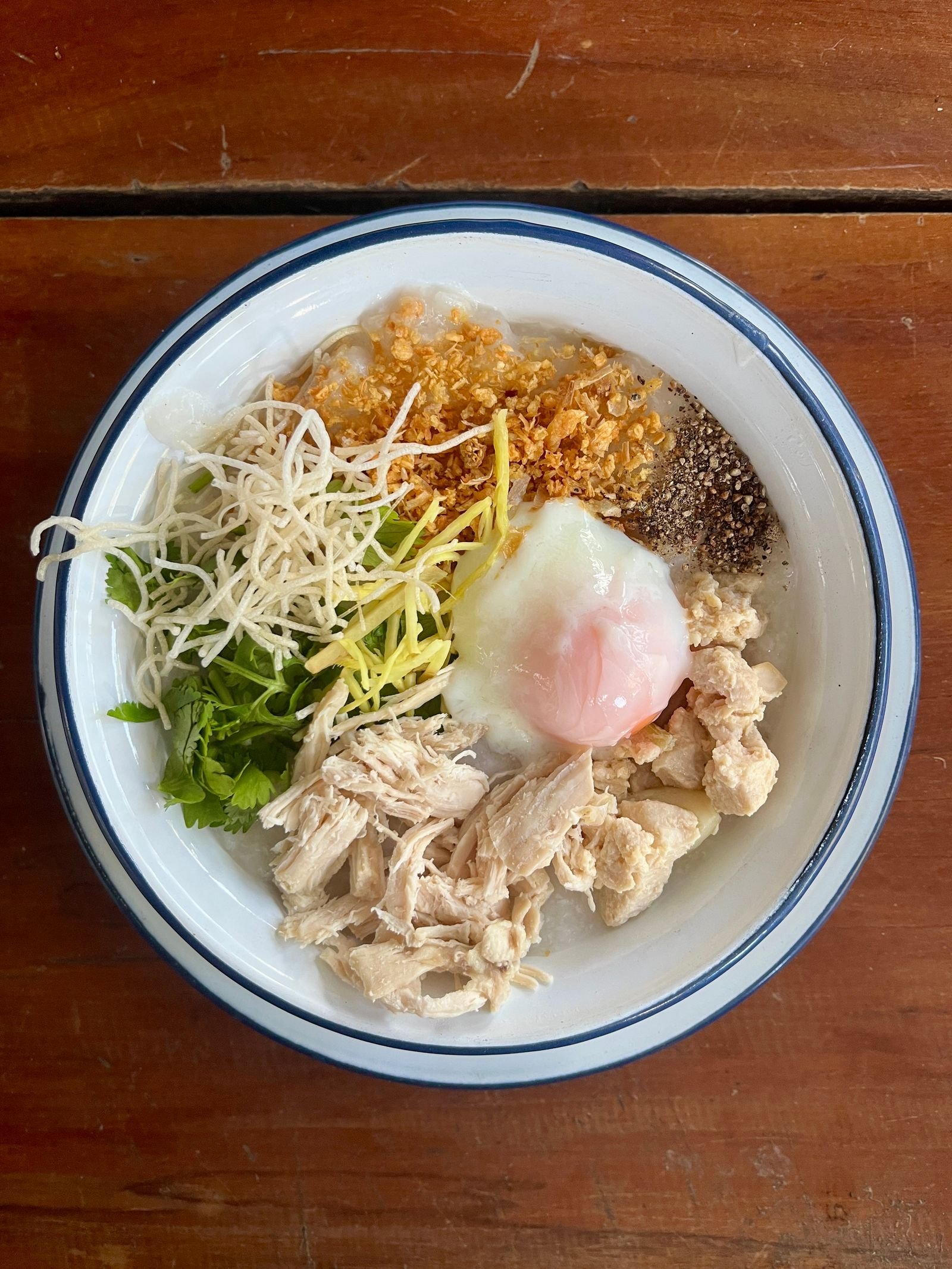
Jok is Thailand's answer to a cold morning: jasmine rice simmered until it turns into a smooth, silky porridge, then ladled over seasoned pork with ginger, spring onion and a soft egg. It is gentle, savoury and deeply comforting, the kind of breakfast that warms you from the inside out. The pork balls cook gently in the porridge itself, so every spoonful tastes of stock, pork and warm ginger.
The story behind Jok
Jok is the first thing many people in Thailand eat in the morning. Before the sun is properly up, street vendors are already ladling it from big steaming pots at the side of the road, and office workers, school children and market traders queue up with their bowls. It is rice porridge, Thai style: jasmine rice cooked in stock until the grains fall apart into something smooth and spoonable, then topped with pork, ginger and an egg.
The dish arrived with Chinese immigrants, who brought congee with them to Thailand generations ago. Thai cooks made it their own. They swapped in fragrant jasmine rice, seasoned it with fish sauce instead of salt alone, and added the toppings that define it now: julienned ginger for warmth, spring onion for freshness, white pepper for a gentle kick, and a soft egg that melts into the porridge as you stir. It is a clear example of how Thai cooking takes an idea from elsewhere and makes it taste unmistakably Thai. There is no rush with jok: it asks you to sit down, take your time, and let the warmth do its work. What makes jok special is its texture. A good bowl is neither soup nor solid food. It pours slowly off the spoon, coats your mouth, and carries the flavour of the stock and pork in every mouthful. The toppings matter as much as the base: the ginger cuts through the richness, the fried garlic adds crunch, and the egg turns the porridge golden and silky. Nothing about it shouts. It is quiet, warm food, and that is exactly why people love it.
Cook jok on a slow morning, when someone in the house is under the weather, or when you want a breakfast that actually fills you up without weighing you down. It is also the food Thai families turn to when a stomach is unsettled, because it is easy to digest and kind to eat. Make a full pot on a weekend, keep the toppings separate, and you have breakfast sorted for a couple of days. One bowl, eaten slowly with a spoon, is one of the simplest pleasures in Thai cooking.
- Prep time
- 15 mins
- Cook time
- 45 mins
- Total time
- 60 mins
- Servings
- 4 servings
- Calories
- 380
Ingredients
- 1 cup jasmine rice, rinsed
- 8 cups water or light chicken stock
- 300 g minced pork
- 1 tablespoon soy sauce
- 1 tablespoon fish sauce
- 1 teaspoon white pepper, plus more to serve
- 1 teaspoon sugar
- 2 cloves garlic, minced
- 1 tablespoon vegetable oil
- 4 eggs
- 3 cm fresh ginger, peeled and julienned
- 4 spring onions, finely sliced
- 1/4 cup fresh coriander leaves
- 2 tablespoons fried garlic, to serve
Instructions
- Rinse the jasmine rice in a bowl of cold water, swishing it with your hand until the water runs mostly clear. Drain it well. This step washes off the loose starch on the surface so the porridge turns silky instead of gluey.
- Put the water or stock in a large, heavy pot and bring it to a boil over high heat. Add the rinsed rice, stir once, then lower the heat until the liquid is at a gentle simmer with small bubbles breaking the surface.
- Cook the rice for 35 to 40 minutes, stirring every few minutes with a wooden spoon. Scrape the bottom of the pot each time so nothing sticks. The grains should slowly swell, split and lose their shape until the mixture looks like a thick, creamy porridge.
- While the rice cooks, mix the minced pork with the soy sauce, half the fish sauce, half a teaspoon of white pepper, the sugar and the minced garlic. Work it together with your hands until it holds together, then shape it into small balls about the size of a marble.
- Heat the vegetable oil in a frying pan over medium heat and brown the pork balls for 3 to 4 minutes, turning them so they colour on all sides. They do not need to cook through here, because they will finish in the porridge. Set them aside on a plate.
- When the porridge is smooth and thick, add the pork balls and their pan juices to the pot. Simmer for 8 to 10 minutes until the pork is cooked through and the porridge has taken on its flavour. If it gets too thick, stir in a splash of hot water.
- Season the porridge with the remaining fish sauce and taste it. It should be gently salty with a warm peppery background. Add more fish sauce a little at a time, since you cannot take it back once it is in.
- While the pork finishes, soft-boil the eggs: lower them into boiling water and cook for 6 minutes, then move them to cold water and peel carefully. The yolks should still be soft and golden in the middle.
- Ladle the hot porridge into deep bowls and set a peeled egg on top of each one. Scatter over the ginger, spring onions, coriander and fried garlic, then finish with a good pinch of white pepper. Serve at once, with extra fish sauce and white pepper on the table.
Pro tips
- Use jasmine rice if you can find it. Its natural fragrance is part of the dish, and other rice types give a flatter result. Day-old rice from the fridge is even better, since it has already dried out a little.
- Break the rice up a little with the back of your spoon as it cooks. Crushing some of the grains helps the porridge turn smooth faster. A flat wooden spoon reaches the corners of the pot better than a round one.
- Shape the pork balls small, about the size of a marble. They cook through quickly in the porridge and you get one in nearly every spoonful. If you cut them bigger they take longer to cook and can stay pink in the middle.
- Peel the soft eggs under cold running water. The shells come away cleanly and you will not tear the delicate whites. Crack them gently on the worktop first, then roll them under your palm to loosen the shell.
- Serve the ginger, spring onion and fried garlic in small bowls on the table. Everyone seasons their own bowl, and the toppings stay crisp. The fried garlic will go soft if it sits in the steam, so add it at the very last moment.
Variations & serving ideas
Swap the pork for minced chicken or turkey and the dish works just as well. For a seafood version, add small peeled shrimp in the last five minutes of cooking instead of pork balls; they turn pink quickly and stay sweet. A vegetarian jok is easy too: use vegetable stock, skip the meat, and top the porridge with mushrooms fried in soy sauce, a soft egg and plenty of herbs. For extra flavour, brown the mushrooms first in a hot pan with a little oil until their edges crisp, then stir them through the porridge. A soft-boiled egg with a jammy yolk also works if you find century eggs too strong; crack it over the hot porridge and stir it through. Century egg is the classic alternative topping, and it is worth trying if you can find one at an Asian grocery. Its dark, jelly-like white and strong, creamy yolk give the porridge a deep savoury note that regular eggs cannot match. Peel it, cut it into wedges and lay them on top of the hot porridge just before serving. A little extra white pepper on top never hurts either. If you are cooking for one, halve the rice and water but keep the same amount of pork and toppings, since the garnishes are what make each bowl satisfying. For a richer bowl, stir a spoonful of chilli oil or a little sesame oil through each serving, and add a splash of light soy sauce. If you like heat, fresh sliced chillies or a spoonful of chilli vinegar on the side lets people add their own. Pickled mustard greens, chopped fine, are another traditional topping that adds a sour crunch.
Jok is a breakfast food in Thailand, but it makes a fine light supper too. Serve it with a small plate of fried dough sticks for dipping, or with a cup of hot tea. It also travels well to the table as a shared pot: keep the porridge warm on the stove and let everyone ladle their own bowl and add their own toppings.
Getting it right
The key technique is patience with the rice. Jok needs a long, gentle simmer, not a hard boil. Keep the heat low enough that only small bubbles break the surface, and stir every few minutes so the rice does not settle and stick. The grains will swell, split and slowly dissolve into the liquid. Rushing this step with high heat gives you scorched rice on the bottom and a thin, watery porridge on top.
Heat control is simple but easy to get wrong. Start on high heat to bring the water to a boil, then drop it right down as soon as the rice goes in. If the pot is too hot, the starch foams up and boils over, and the porridge catches. A heavy pot helps a lot here, because it spreads the heat evenly and holds a steady simmer. Keep a kettle of hot water nearby so you can thin the porridge without cooling it down. A third mistake is using too little liquid at the start: the rice will absorb far more than you expect, so keep the kettle handy and top it up.
The most common mistake is seasoning too early. As the rice absorbs water and thickens, the flavour concentrates, so a porridge that tastes right at the start will be too salty by the end. Season at the very end, after the pork has gone in. The second mistake is skipping the stirring: jok needs attention, and ten minutes without a stir is enough for a scorched layer to form on the bottom that will flavour the whole pot.
Storing & reheating
Leftover jok keeps well in the fridge for two to three days, stored in a sealed container. It will thicken as it cools, so stir in a splash of water or stock when you reheat it. Keep the toppings separate in small containers so the ginger and spring onion stay fresh; add them to each bowl after reheating. The egg should be cooked fresh each time, not stored in the porridge.
Jok freezes well for up to a month. Cool it fully, then freeze it in single portions without the egg or fresh toppings. Thaw it in the fridge overnight and reheat it gently on the stove over low heat, stirring often and adding a splash of water as it loosens. Once it is hot all the way through, top it with fresh ginger, spring onion, fried garlic and a newly cooked egg.
Frequently asked questions
Can I make jok with leftover rice?
Yes, and it is one of the best ways to use it. Day-old jasmine rice breaks down faster than raw rice, so your cooking time drops by about 10 minutes. Just add it to the simmering stock and stir until the grains collapse into a smooth porridge.
What stock should I use for jok?
Use plain water with a stock cube, or a light chicken or pork stock. Stock gives a rounder flavour, but water works well too because the pork and seasonings carry the taste. Avoid strong beef stock, which can overpower the gentle rice.
Should the egg be soft or hard in jok?
A soft egg is traditional: the yolk stays runny and enriches the porridge as you stir it in. If you prefer a firmer egg, cook it for 8 minutes instead of 6. A century egg is another classic topping, with a much stronger flavour.
Can I cook jok in a regular pot instead of a rice cooker?
Yes, but stir more often and keep the heat low, because a thick-bottomed pan holds heat and the rice can catch on the base. Add a splash of water whenever the porridge starts to thicken too fast, and scrape the bottom with a wooden spoon each time you stir.
Why does my jok taste bland?
It will be bland if you skip the white pepper and fish sauce, which are the two seasonings that give jok its character. Taste and season at the end, not the start, because the porridge thickens as it cooks and the flavour concentrates.
Can I freeze leftover jok?
Yes, it freezes well for up to a month. Cool it fully, then freeze it in single portions without the egg or fresh toppings. Thaw it in the fridge overnight and reheat it gently with a splash of water, then add fresh ginger, spring onion and a newly cooked egg.