Gaeng Daeng Recipe
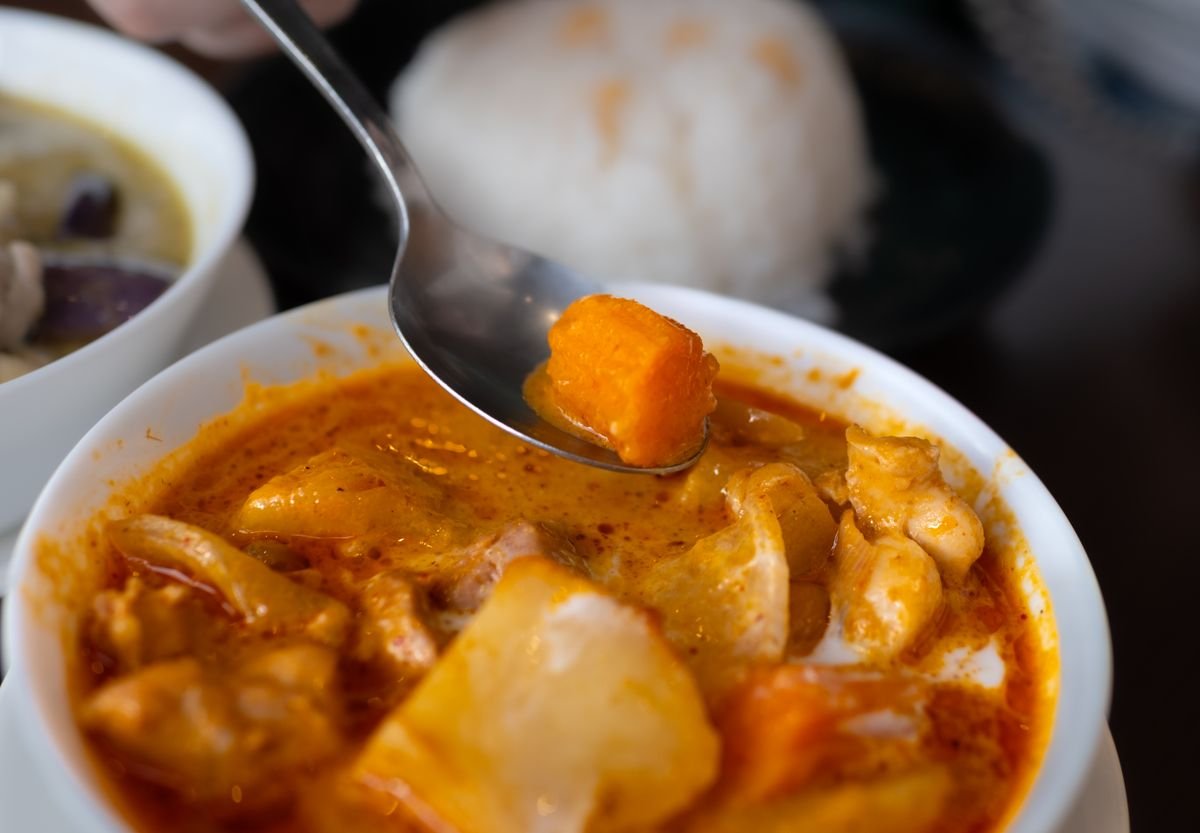
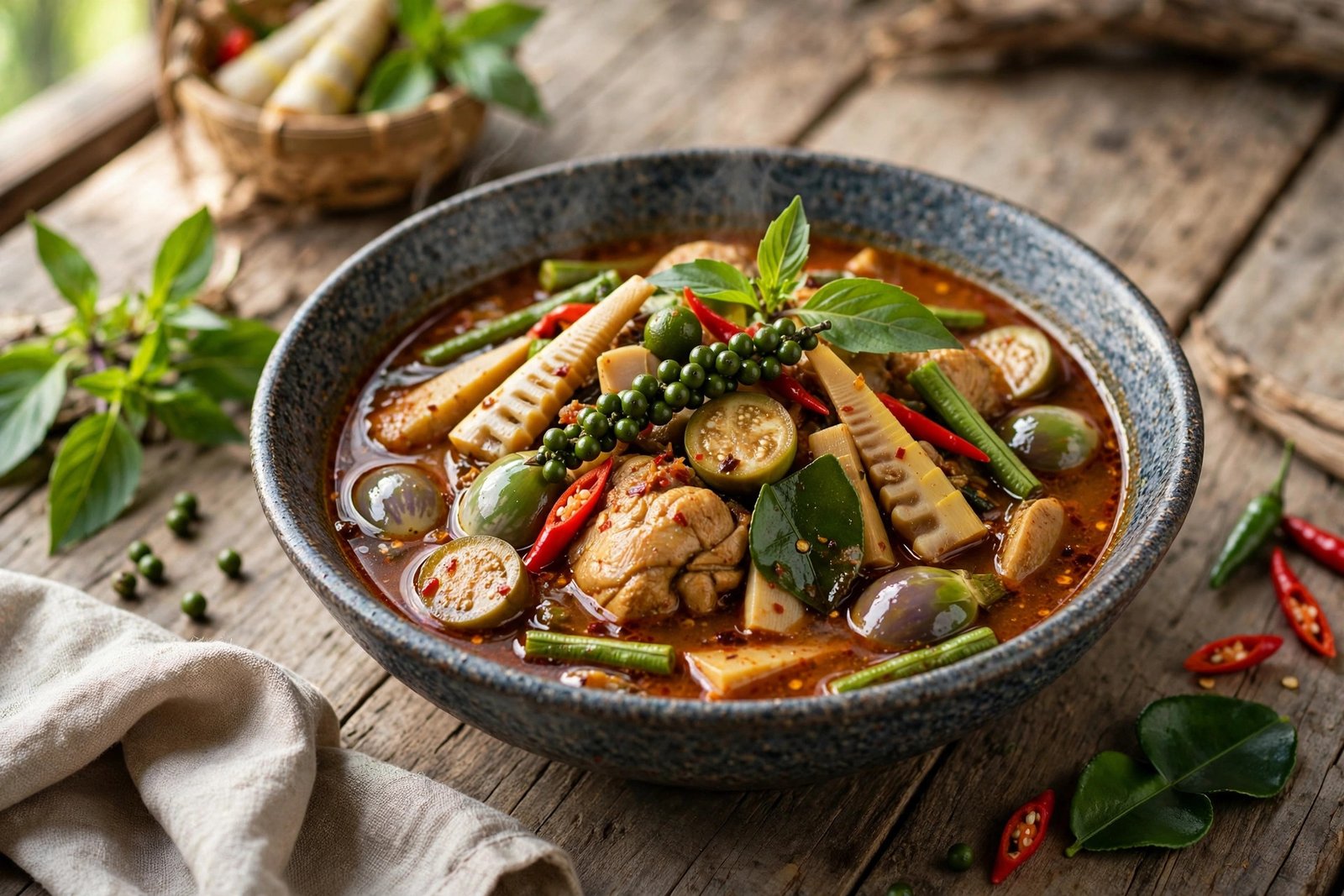
Gaeng Daeng is the Thai red curry that most people picture when they think of Thai food. Tender chicken, bamboo shoots and Thai basil swim in a rich, fragrant coconut sauce coloured red with dried chillies. It is creamy, spicy, a little sweet and deeply aromatic, and it comes together in under an hour. Serve it over jasmine rice with a cucumber salad on the side.
The story behind Gaeng Daeng
Gaeng daeng means red curry in Thai, and it has been cooked in Thailand for centuries, since chillies arrived from the Americas and joined the local pantry of coconut, galangal, lemongrass and shrimp paste. The curry paste, pounded by hand in a mortar, is the heart of the dish, and Thai cooks take pride in the balance of its flavours: hot, salty, sweet and sour, all at once. The curry paste, pounded by hand in a mortar, is the heart of the dish, and Thai cooks take pride in the balance of its flavours: hot, salty, sweet and sour, all at once.
In Thailand, curries are not made from a single recipe but from a set of principles. The paste is fried in coconut cream until the oil separates, the meat goes in, then the coconut milk, and the seasoning is adjusted at the end with fish sauce, palm sugar and lime. Each cook has their own balance, and the same curry tastes different in every home and restaurant. Gaeng daeng is one of the most popular, served everywhere from street stalls to royal kitchens. The paste is fried in coconut cream until the oil separates, the meat goes in, then the coconut milk, and the seasoning is adjusted at the end with fish sauce, palm sugar and lime.
What makes it special is the balance. The coconut milk gives richness, the chillies give heat, the palm sugar gives sweetness, and the fish sauce gives salt and depth. Thai basil adds a peppery, anise-like note at the end, and the bamboo shoots give a gentle crunch. No single flavour takes over, which is the whole point of Thai cooking. Thai basil adds a peppery, anise-like note at the end, and the bamboo shoots give a gentle crunch, while no single flavour takes over, which is the whole point of Thai cooking.
Cook it when you want a fast, fragrant dinner that feels like a treat. It suits a weeknight meal, a dinner with friends, or any evening when you want something warm and full of flavour. Serve it with jasmine rice and let the sauce do the talking. Serve it with jasmine rice and let the sauce do the talking, because a good red curry needs nothing more than rice and a spoon.
- Prep time
- 20 mins
- Cook time
- 25 mins
- Total time
- 45 mins
- Servings
- 4 servings
- Calories
- 480
Ingredients
- 500 g boneless chicken thighs, cut into bite-sized pieces
- 400 ml coconut milk (1 tin, unshaken)
- 3 tablespoons Thai red curry paste
- 150 g bamboo shoots, sliced and rinsed
- 1 red pepper, sliced into strips
- 1 tablespoon fish sauce
- 1 tablespoon palm sugar, grated
- 1 tablespoon vegetable oil
- 4 kaffir lime leaves, torn in half
- 1 handful Thai basil leaves
- 1 red chilli, sliced, to garnish
- Jasmine rice, to serve
Instructions
- Open the tin of coconut milk without shaking it and spoon the thick cream from the top into a wok or wide pan. Heat it over medium heat for 3 to 4 minutes, stirring, until it starts to bubble and a thin layer of oil appears on the surface. This is the sign the cream is ready for the paste.
- Add the red curry paste and fry it in the coconut cream for 2 to 3 minutes, stirring and pressing it with the spoon, until it smells deeply fragrant and the colour turns a rich, dark red. The paste should sizzle gently, not burn.
- Add the chicken pieces and stir them through the paste for 3 to 4 minutes, until they are coated on all sides and the outside turns pale. The chicken does not need to cook through yet, as it will finish in the sauce.
- Pour in the rest of the coconut milk and add the kaffir lime leaves. Bring the curry to a gentle simmer, with small bubbles breaking around the edges, and cook for 10 minutes until the chicken is cooked through and tender.
- Add the bamboo shoots and red pepper and cook for 5 minutes more, until the pepper is soft but still holds its shape and the bamboo is heated through. The vegetables should stay bright and slightly crisp, not soft and dull.
- Stir in the fish sauce and palm sugar, then taste. The curry should be salty, a little sweet and spicy, with the coconut rounding the edges. Add a little more fish sauce or sugar to balance it to your liking.
- Taste the curry and adjust the balance, adding a little more fish sauce for salt or palm sugar for sweetness until it tastes right to you. The curry should taste salty, a little sweet and spicy, with the coconut rounding the edges, and a squeeze of lime at the end brightens everything.
- Let the curry rest off the heat for two minutes, then stir in the Thai basil leaves so they wilt gently in the hot sauce. Serve at once over jasmine rice, garnished with sliced red chilli, while the basil is still bright green and fragrant.
- Turn off the heat and stir in the Thai basil leaves. They will wilt in seconds in the hot curry, releasing their peppery, anise-like scent. Serve at once over jasmine rice, garnished with sliced red chilli.
Pro tips
- Use the thick cream from the top of the coconut milk tin. Do not shake the tin before opening: the cream separates naturally, and frying the paste in that cream is what gives the curry its rich flavour and glossy finish. for a glossy finish.
- Fry the paste properly before adding the chicken. Two to three minutes in hot coconut cream wakes up the spices and deepens the colour. Raw paste added straight to the milk tastes flat and harsh. and tastes flat.
- Taste and balance at the end. Thai cooking is about balance, so adjust the fish sauce for salt, the palm sugar for sweetness, and the chilli for heat until the curry tastes right to you. until it tastes right.
- Do not boil the curry hard after the coconut milk goes in. A gentle simmer keeps the sauce smooth and creamy. Hard boiling can split the coconut milk and make the sauce grainy. and turns grainy.
- Add the basil at the very end, off the heat. Thai basil wilts in seconds, and cooking it longer turns it dark and dull. Stir it in just before serving so it stays bright and fragrant. and stays bright.
Variations & serving ideas
For a vegetarian version, swap the chicken for firm tofu and add extra vegetables such as aubergine, mushrooms and green beans. Fry the tofu first until golden, then add it with the coconut milk. The curry paste should be vegetarian, so check the label for shrimp paste. Fry the tofu first until golden, then add it with the coconut milk, and check the curry paste label for shrimp paste, because the paste should be vegetarian for this version.
Use prawns instead of chicken for a faster curry. They need only 3 to 4 minutes in the simmering sauce, so add them after the coconut milk and cook until they turn pink and curl. The bamboo and pepper go in at the same time. Use prawns instead of chicken for a faster curry, because they need only three to four minutes in the simmering sauce, so add them after the coconut milk and cook until they turn pink.
If you like it hotter, add a sliced fresh red chilli with the paste, or stir in an extra spoonful of curry paste. For a milder curry, use 2 tablespoons of paste instead of 3 and add an extra splash of coconut milk to soften the heat. If you like it hotter, add a sliced fresh red chilli with the paste, or stir in an extra spoonful of curry paste, while a milder curry needs only two tablespoons of paste.
Serve it with jasmine rice, which soaks up the sauce perfectly. A cucumber salad on the side adds cool freshness, and a cold beer or a glass of iced water suits the heat. Keep the meal simple and let the curry lead. Serve it with jasmine rice, which soaks up the sauce perfectly, and a cucumber salad on the side adds cool freshness, while a cold beer or iced water suits the heat. Keep the meal simple and let the curry lead. A little extra coconut milk on the side lets everyone thin their own bowl, and the curry tastes even better the next day after the flavours have settled overnight in the fridge.
Getting it right
The key technique is frying the curry paste in coconut cream. The thick cream from the top of the tin is mostly fat, and it fries the paste rather than boiling it, which wakes up the spices and deepens the flavour. Watch for the oil separating on the surface: that is the sign the paste is ready and the curry will taste rich, not raw. Watch for the oil separating on the surface, because that is the sign the paste is ready and the curry will taste rich, not raw.
Heat and timing matter throughout. The paste needs medium heat for 2 to 3 minutes, the chicken needs a gentle simmer for 10 minutes, and the vegetables need only 5 minutes at the end. Rushing the paste gives a harsh flavour, while overcooking the vegetables makes them soft and dull. Keep the heat steady and the simmer gentle. Rushing the paste gives a harsh flavour, while overcooking the vegetables makes them soft and dull, so keep the heat steady and the simmer gentle.
The common mistake is adding the paste to cold coconut milk. The paste needs hot fat to fry in, so always start with the thick cream from the top of the tin, heated until it bubbles. If your coconut milk does not separate, add a tablespoon of oil to the pan first and fry the paste in that instead. If your coconut milk does not separate, add a tablespoon of oil to the pan first and fry the paste in that instead, because the paste needs hot fat to fry in.
Storing & reheating
Leftovers keep in a sealed container in the fridge for up to 3 days. The flavour deepens overnight as the spices settle, and the curry reheats well. Warm it gently on the stove over low heat, stirring often, and add a splash of coconut milk if the sauce has thickened too much. Warm it gently on the stove over low heat, stirring often, and add a splash of coconut milk if the sauce has thickened too much.
You can freeze the curry for up to 2 months, though the coconut milk may separate slightly on thawing. Thaw overnight in the fridge and reheat slowly, stirring well. Add fresh basil only when serving, as it does not survive freezing. Cook the rice fresh each time. Thaw overnight in the fridge and reheat slowly, stirring well, and add fresh basil only when serving, as it does not survive freezing.
Frequently asked questions
What is gaeng daeng?
Gaeng daeng is Thai red curry, named for the red colour of its curry paste, which is made from dried red chillies. It is usually made with chicken, bamboo shoots and Thai basil in coconut milk. It is usually made with chicken and bamboo shoots.
Can I use shop-bought red curry paste?
Yes, good-quality shop-bought paste works well and saves a lot of time. Look for a Thai brand with a short ingredient list. Use 3 tablespoons for a medium heat, or less if you prefer it milder. Use three tablespoons for a medium heat curry.
Is Thai red curry very spicy?
It has a medium heat from the dried chillies in the paste, balanced by coconut milk and palm sugar. The heat is warm and full rather than sharp. Reduce the paste to 2 tablespoons for a milder curry. Reduce the paste to two tablespoons for mild.
Can I make it without coconut milk?
Coconut milk is essential to the flavour and texture of this curry. A light version can be made with half coconut milk and half stock, but the curry will be thinner and less rich. Do not skip it entirely. A light version uses half stock and half milk.
What is Thai basil?
Thai basil is a variety of basil with a peppery, anise-like flavour, different from Italian basil. It is added at the end of cooking and wilts in seconds. Find it in Asian grocery shops. Find it in Asian grocery shops near you.
Can I use chicken breast instead of thighs?
Yes, though thighs stay juicier in a simmered curry. If you use breast, cut it into even pieces and cook for no more than 8 minutes, as it dries out quickly if overcooked. It dries out quickly if overcooked, so watch it.