Salbutes Recipe
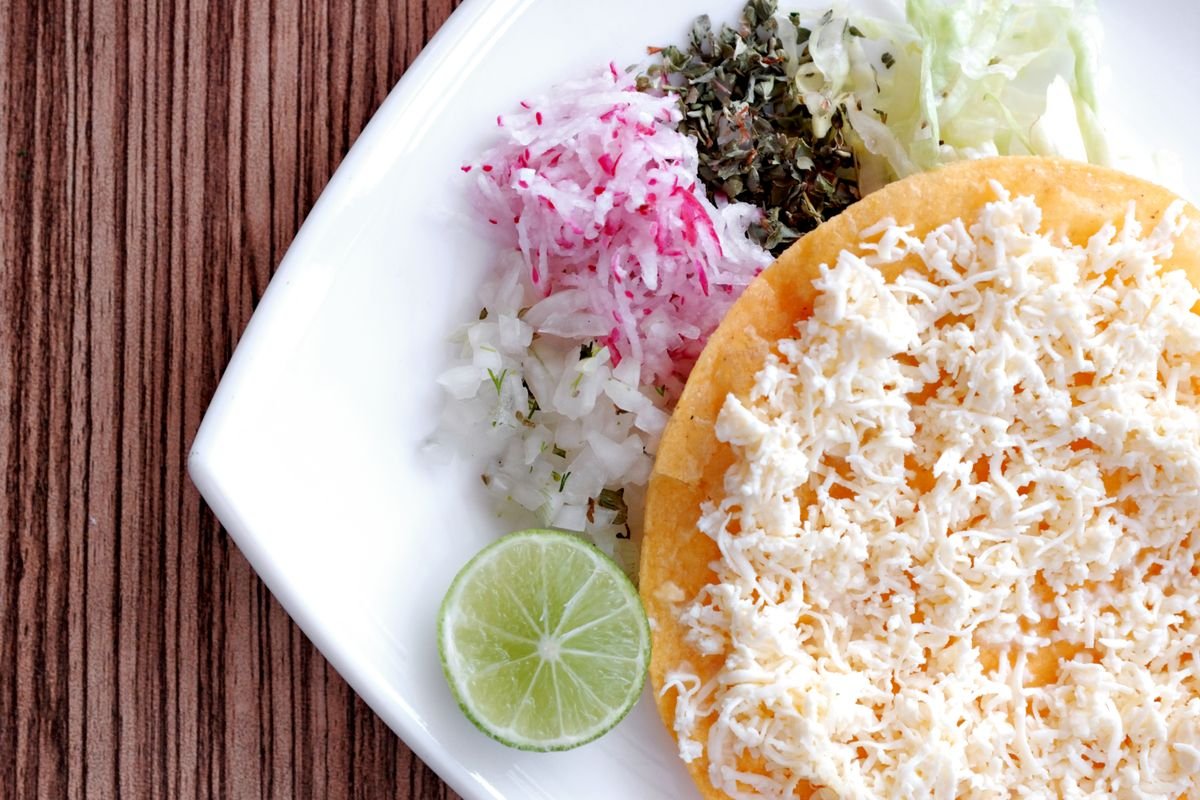
Salbutes are Yucatán's puffy fried tortillas, golden and soft in the middle with crisp edges, topped with shredded turkey, tomato, cabbage, pickled red onion and avocado. They are lighter than they look, and the contrast between the warm, pillowy base and the cool, crunchy toppings is what makes them so good. Make them for a weeknight dinner and watch them disappear before the salsa runs out.
The story behind Salbutes
Salbutes come from the Yucatán Peninsula, and their name reaches back to the Maya language, from words meaning light filling, which suits a dish that is airy and soft rather than heavy. They are one of the region's great antojitos, sold in the evening from market stalls and small restaurants, where they sit on the menu next to their cousins, the panuchos. The two are often ordered together so people can compare them side by side.
A salbute starts as a small round of fresh masa, the corn dough that is the base of so much Mexican cooking. It is pressed flat, slipped into hot oil, and it puffs up like a little balloon, crisp at the edges and soft in the middle. Then it is topped with shredded turkey or chicken, cabbage, tomato, pickled red onion, avocado and jalapeño, with habanero salsa on the side for those who want it. The base is the star, warm and pillowy, and the toppings are there to make it sing.
What makes salbutes special is the texture. The fried masa is light in a way that surprises people who expect something heavy, with a crisp rim that gives way to a soft, almost fluffy centre. The cool cabbage and tomato sit on top like a little salad, the pickled onion adds a sharp tang, and the avocado smooths everything out. It is a small plate of contrasts, hot and cold, crisp and soft, rich and fresh, all in a few bites. Eat one slowly and you notice the order of things: the crisp edge first, then the soft centre, then the cool crunch of the cabbage and the sharp bite of the onion, with the avocado smoothing it all out at the end.
Salbutes fit a family dinner in the US, because the dough takes minutes to mix and the toppings are mostly chopping. Set the bowls out on the table and let everyone top their own, and the meal turns into a small event. They are a good weeknight dinner when you want something different from tacos, and they are generous party food too, since a batch of masa makes plenty and the frying goes fast.
- Prep time
- 25 mins
- Cook time
- 30 mins
- Total time
- 55 mins
- Servings
- 4 servings
- Calories
- 420
Ingredients
- 2 cups masa harina
- 1 1/4 cups warm water
- 1/2 teaspoon salt
- 2 cups shredded cooked turkey or chicken
- 1 cup shredded cabbage
- 2 medium tomatoes, diced
- 1/2 red onion, thinly sliced and pickled in lime juice
- 1 ripe avocado, sliced
- 1/4 cup pickled jalapeños, sliced
- 1/4 cup crumbled queso fresco
- 1 lime, cut into wedges
- Vegetable oil, for frying
- Habanero salsa, for serving
Instructions
- Stir the masa harina and salt together in a large bowl, then pour in the warm water a little at a time, mixing with your hands. The dough should come together into a soft ball that feels like smooth play dough, moist but not sticky, and it should not crack when you press it.
- Knead the dough for 2 minutes until it feels smooth and even, then cover the bowl with a damp towel and let it rest for 10 minutes. The rest lets the masa drink in the water, which is what makes the salbutes puff instead of cracking in the oil.
- Pinch off pieces of dough about the size of a golf ball and roll them smooth between your palms. Press each one flat between two sheets of plastic in a tortilla press, or roll it with a rolling pin, until it is about 4 inches across and a little thicker than a normal tortilla.
- Heat about 1 inch of vegetable oil in a large skillet over medium-high heat until it reaches about 375°F. A small piece of dough dropped in should sizzle hard and rise to the surface at once. If it sinks and sits there, the oil is too cool.
- Slide one salbute into the oil at a time, and press it gently with a spatula or slotted spoon. The dough should start to puff within seconds, ballooning up as the steam builds inside, and the edges will turn golden while the centre stays soft and pillowy.
- Fry for 60 to 90 seconds per side, turning once, until the salbute is golden all over with darker freckles. You will hear a lively sizzle that quiets as the crust sets, and the salbute will feel light and crisp at the edges when you lift it out. The salbute will feel almost weightless when it is done, and the surface should be an even gold with no pale, soft spots.
- Lift each salbute out with tongs and drain it on paper towels, then sprinkle lightly with salt while it is still hot. Work in small batches so the oil stays hot, and let it climb back to temperature between rounds.
- Top each warm salbute with shredded turkey, then cabbage, tomato, pickled red onion and avocado. Finish with jalapeños, a scattering of queso fresco and a squeeze of lime, and serve immediately with habanero salsa on the side.
Pro tips
- Rest the dough for 10 minutes after kneading. The masa needs time to absorb the water, and rested dough presses smoothly without cracking at the edges.
- Keep the oil near 375°F and fry one or two salbutes at a time. A crowded pan cools the oil fast, and cool oil makes flat, greasy salbutes instead of puffy ones.
- Press the salbute gently with a spatula as it fries. The pressure helps the steam build inside the dough, which is what makes it balloon up.
- Top the salbutes the moment they leave the oil. The base is at its best warm and puffy, and the cool toppings against the hot masa are half the pleasure.
- Pickle the onion ahead of time. Fifteen minutes in lime juice and salt is enough to turn it pink and mild, and it keeps in the fridge for a week.
Variations & serving ideas
The classic Yucatan salbute uses shredded turkey, often cooked with sour orange and achiote, but the base welcomes many toppings. Try cochinita pibil for a rich, slow-cooked pork version, or shredded chicken simmered with tomato and garlic for a simpler weeknight option. A meat-free version with roasted sweet potato, sautéed mushrooms and extra avocado is just as satisfying, and a fried egg on top turns it into a hearty breakfast.
The toppings can shift with the season and the contents of your fridge. Swap the cabbage for shredded lettuce or thinly sliced radish, add a spoonful of guacamole instead of sliced avocado, or drizzle a little crema over the top for a cool, tangy finish. A few slices of pickled jalapeño give heat, while a spoonful of pico de gallo adds freshness. If you like a smoky note, a little chipotle in the shredded meat works well.
If you need a swap, masa harina is sold in most US supermarkets in the Mexican food aisle, and it is the only flour that gives a real salbute. Corn tortillas can stand in for the base in a pinch, though they fry crisp instead of puffing. For a dairy-free table, skip the queso fresco and add more avocado, and for a gluten-free table the dish is naturally safe, since masa is just corn.
Serve salbutes as a main course with Mexican rice and black beans, or as part of a Yucatan spread with panuchos and tacos so everyone can taste the difference between the three. They are good finger food for a party, served on a big platter with the toppings in small bowls, and they sit well next to a cold beer, a lime agua fresca, or a glass of horchata. Any leftover dough can be pressed into tortillas for the next day. A simple cucumber and lime salad on the side keeps the meal fresh, and a bowl of fruit with chilli and lime makes a bright finish.
Getting it right
The dough is where a salbute is won or lost, and the feel of it tells you everything. It should be soft and smooth, like play dough, and when you press a ball flat it should not crack around the edges. If it cracks, add water a tablespoon at a time and knead it in. If it sticks to your hands, dust them with a little masa harina and keep going. A ten-minute rest after kneading lets the corn flour drink in the water, and skipping it is the most common reason the dough misbehaves.
The oil needs to be hot, near 375°F, and this is not a place to guess. Too cool and the salbute soaks up oil and lies flat, heavy and greasy. Hot enough and the steam inside the dough builds fast, puffing the tortilla up within seconds. A thermometer is the easy answer, and the dough test works too: a pinch of dough should sizzle hard and float up at once.
The most common mistake is pressing the dough too thin. A salbute should be thicker than a tortilla, about the width of two coins stacked, so there is enough dough inside to puff. Too thin and it fries into a cracker, too thick and the middle stays doughy. If your salbutes are not puffing, check the oil first, then the thickness, and press gently with a spatula as they fry to encourage the steam to lift the top.
Storing & reheating
Salbutes are best eaten the moment they are fried, while the base is puffy and the toppings are cool. If you have leftover bases, keep them in the fridge for up to 2 days in a sealed container, and warm them in a 400°F oven for 4 to 5 minutes to bring back some of the crispness.
Do not store assembled salbutes, because the toppings will soften the base and the avocado will brown. The masa dough itself keeps well: wrap it tightly and refrigerate for up to 2 days, then let it come to room temperature for 15 minutes and knead it briefly before shaping. The pickled onion keeps for a week and only improves with time.
Frequently asked questions
What is the difference between salbutes and panuchos?
A salbute is a small round of fresh masa dough that puffs as it fries, with the toppings on top. A panucho is a corn tortilla stuffed with refried black beans and then fried. Both come from Yucatán, both wear the same toppings, and both are sold side by side in the same evening stalls.
Can I make salbutes with corn tortillas?
Yes, but the result is different. A thin corn tortilla fried in oil will crisp up like a tostada and still taste good with the same toppings, but it will not puff the way fresh masa does. If you can find fresh masa at a Mexican grocery, it is worth the trip.
Can I make salbutes ahead of time?
No, they are best fried fresh and eaten right away. The masa dough can be made ahead and kept in the fridge for a day, wrapped tightly, and the toppings can be prepared the day before. Fry the salbutes just before you sit down to eat.
Why didn't my salbutes puff up?
The dough was probably too dry, or the oil was not hot enough. Masa needs enough water to be soft and pliable, and the oil needs to be near 375°F so the steam inside the dough puffs it up fast. Press the tortilla gently with a spatula as it fries to help it balloon.
What meat goes on salbutes?
Shredded turkey is the classic topping, often cooked in a sour orange and achiote sauce, but chicken, cochinita pibil or slow-cooked pork all work. For a meat-free version, use roasted vegetables, mushrooms and extra avocado with a crumbled cheese.
Can I cook salbutes in a pan with less oil?
Yes, use a little less oil in a good nonstick pan and cook them like thick pancakes, flipping once, until golden on both sides. They will be softer and flatter than the fried version, but the flavour of the masa still comes through with the same toppings.