Molletes Recipe
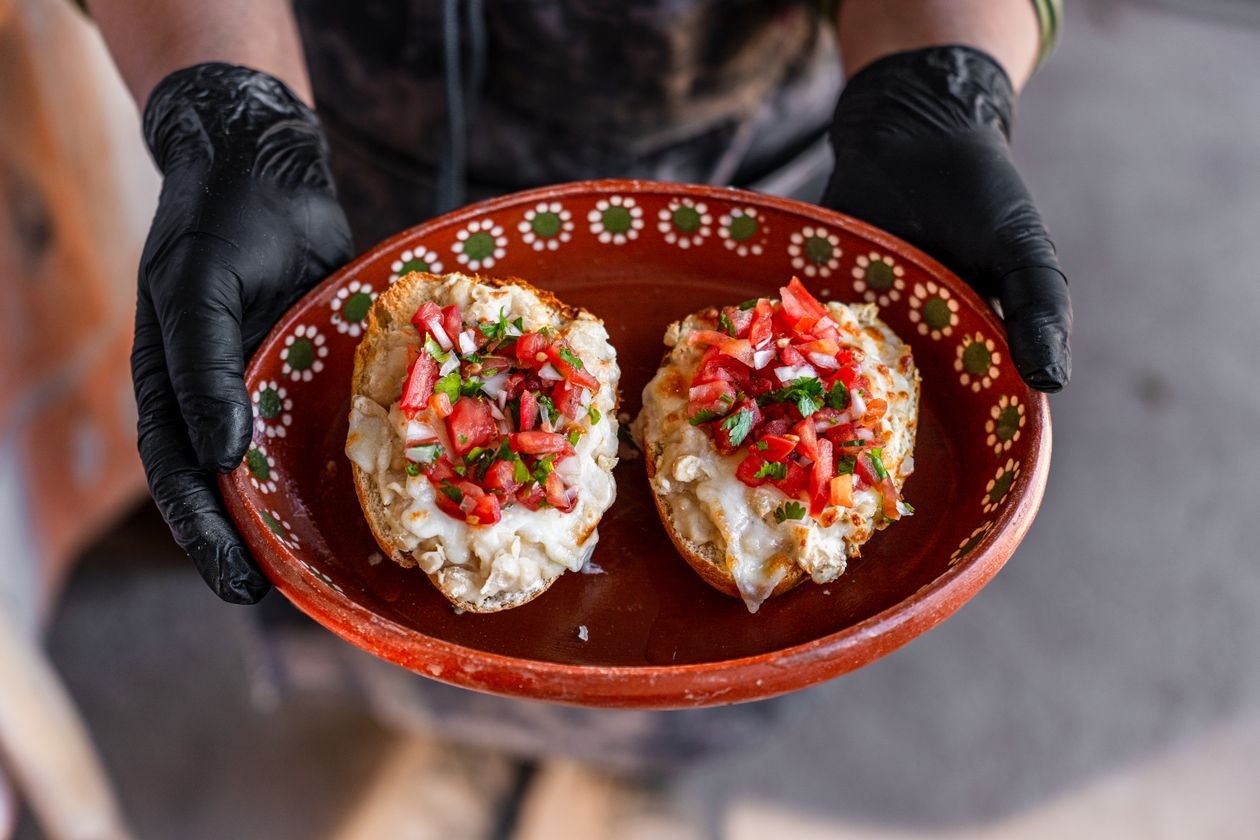
Molletes are Mexico's simplest comfort food: a crusty roll split open, spread with refried beans, covered in melted cheese and finished with fresh pico de gallo. The bread goes crisp at the edges, the beans stay creamy, and the cheese bubbles and browns under the grill. It takes fifteen minutes, costs very little, and tastes like a warm morning in Mexico City.
The story behind Molletes
Molletes come from Mexico, where they are a classic breakfast and a favourite late-night snack. The dish grew out of the same tradition as the torta, using the bolillo roll that Mexican bakers make every morning. A bolillo is crusty outside and soft inside, and it was made to be split, toasted and loaded. The word mollete itself is an old Spanish term for a soft roll, and the Mexican version turned it into an open sandwich.
In Mexico, molletes are everyday food. Families eat them for breakfast with coffee, students grab them from street stalls between classes, and workers buy them late at night from carts near the markets. They are cheap, fast and filling, which is why they appear everywhere from home kitchens to roadside stands. A mollete is also a way to use leftover beans and stale rolls, turning yesterday's bread into something warm and welcome.
What makes molletes special is how little they need to be good. The roll provides crunch and warmth, the beans bring a creamy, savoury base, and the cheese melts into a golden layer that ties everything together. Pico de gallo on top adds freshness and a little heat, cutting through the richness. It is a dish of contrasts, crisp and soft, rich and fresh, hot and cool, all in a single bite.
Cook molletes when you want something quick, warm and satisfying without a big shop or a long cook. They suit a weekday breakfast, a light lunch, a snack for hungry teenagers or a late-night bite after a long day. They are also a good way to use up leftover refried beans, and they scale easily, because you can fill a whole tray of rolls and grill them all at once.
- Prep time
- 15 mins
- Cook time
- 10 mins
- Total time
- 25 mins
- Servings
- 4 servings
- Calories
- 420
Ingredients
- 4 bolillo or crusty white rolls, split in half
- 2 tablespoons butter or oil, for toasting
- 300 g refried beans, warmed
- 200 g Oaxaca or mozzarella cheese, grated
- 2 tomatoes, finely diced
- 1 small white onion, finely diced
- 1 fresh jalapeño or serrano chilli, finely diced
- Juice of 1 lime
- A small handful of fresh coriander, chopped
- Salt to taste
- Salsa of your choice, to serve (optional)
Instructions
- Heat the oven grill to high and place a rack about 15 cm below it. Warm the refried beans in a small pan over low heat with a splash of water, stirring until they are smooth and spreadable, not stiff or dry.
- Mix the pico de gallo in a bowl: tomatoes, onion, chilli, lime juice, coriander and a pinch of salt. Stir it gently and taste it, then set it aside so the flavours can meet while you prepare the rolls. The onion should be cut small enough to disappear into the tomato, and the chilli should be minced fine so its heat spreads evenly through the salsa.
- Split the rolls and brush the cut sides lightly with butter or oil. Place them cut-side up on a baking tray and grill for 2 to 3 minutes, until the surface is lightly golden and crisp at the edges. Watch them closely, because they go from golden to burnt quickly under a hot grill. The edges should start to turn a light gold and the surface should feel dry and firm when you touch it with a fingertip.
- Spread a generous layer of warm refried beans over each toasted half, right to the edges. The beans should be thick enough to cover the bread completely, so the cheese melts onto a creamy base rather than bare toast. If the beans are too thick, stir in a spoonful of warm water first, because a stiff bean layer cracks and pulls away from the toast as it grills.
- Pile the grated cheese evenly over the beans, pressing it down lightly so it stays put. A good handful per half is about right, enough to melt into a full golden layer without sliding off the sides. Leave a small border of beans showing around the edge, so you can see the layers and the cheese has something to grip as it melts.
- Return the tray to the grill for 3 to 4 minutes, until the cheese is fully melted, bubbling and lightly browned in spots. You should hear a gentle sizzle and see the cheese turn golden at the edges.
- Lift the molletes onto plates and spoon pico de gallo over the top of each one.
- Serve at once while the cheese is still warm and stretchy, with extra salsa and lime wedges on the side if you like. A spoonful of pico de gallo per half is plenty, and a little extra lime squeezed over the top brightens the whole plate.
Pro tips
- Warm the beans properly before you spread them. Cold, stiff beans tear the toast and never melt into the bread, while warm beans spread smoothly and evenly. If the beans are cold from the fridge, warm them slowly and stir often, because scorched beans taste bitter and no amount of cheese will hide it.
- Grill the rolls before you add the beans. A toasted base stays crisp under the beans and cheese, while an untoasted roll goes soft and soggy within minutes. Two to three minutes under a hot grill is usually enough, and the roll should smell toasty and feel crisp when you tap it with a knife.
- Use a cheese that melts well. Oaxaca is traditional, but mozzarella or Monterey Jack give the same stretchy, golden finish, while hard cheeses stay grainy.
- Make the pico de gallo fresh. Dice the tomato and onion small, squeeze the lime over it just before serving, and keep it chunky so it sits on top rather than sliding off. Salt the pico de gallo lightly and taste it before it goes on, because the beans and cheese are already salty and the salsa should be fresh and bright.
- Watch the grill closely. Cheese goes from melted and golden to burnt in under a minute, so stay by the oven and pull the tray out as soon as the spots turn brown. The cheese can go from golden to black in seconds, so keep the oven light on and pull the tray out the moment the brown spots appear.
Variations & serving ideas
Molletes are easy to change, and every region of Mexico has its own version. Some cooks add a spoonful of salsa roja or a fried egg on top for a heartier breakfast, and others stir chorizo into the beans for a richer, smokier base. In Veracruz, molletes sometimes come with a layer of shredded chicken and a spoonful of salsa verde, which turns a simple snack into a proper lunch. A version with black beans instead of pinto beans is common, and it gives a slightly earthier flavour that pairs well with a crumbly cheese like queso fresco. Sweet versions exist too, with butter and jam instead of beans, though the savoury version is the classic.
Substitutions keep the dish flexible. Any crusty white roll works if you cannot find bolillo, including a French roll or a thick slice of sourdough. Canned refried beans are fine, and you can use any melting cheese you have, from mozzarella to a mild cheddar. If you have no fresh chilli, a spoonful of your favourite salsa gives the same heat and freshness, and a little pickled onion makes a good topping too.
Serve molletes as they are, hot from the grill, with coffee for breakfast or a cold drink for lunch. They also work as a snack or a starter, cut in half and served on a platter with extra pico de gallo and salsa on the side. For a fuller meal, add a fried egg or a side of scrambled eggs, and a piece of fruit to finish.
Pair them with a cup of café de olla, a glass of horchata or a simple orange juice, depending on the time of day. A cold Mexican lager also works well if you are eating molletes as an evening snack, and sparkling water with lime is a fine lighter choice. For a weekend brunch, set out a tray of molletes with bowls of pico de gallo, salsa and sliced avocado, and let everyone top their own. The dish is at its best when shared, eaten hot, with the cheese still stretching as you lift each half to your mouth.
Getting it right
The key technique in molletes is the two-stage grill, because each stage does a different job. The first grill toasts the bare roll, drying the crumb and giving it a crisp surface that can hold the beans without going soft. The second grill melts the cheese, and it needs a hot, close heat so the cheese bubbles and browns quickly before the bread underneath has time to dry out. If you skip the first toast, the beans soak into soft bread; if the second grill is too slow, the cheese melts but never browns. The distance from the grill element matters too, so keep the tray about a hand's width below it, close enough for strong heat but far enough that the cheese has time to melt before it burns.
Heat and timing control are simple but worth watching. The grill should be on high, with the tray about 15 cm below the element, so the heat is strong but not so close that the cheese burns in seconds. Three to four minutes is usually enough for the cheese to melt fully and brown in spots, and you should hear a gentle sizzle as the edges crisp. Every grill is different, so stand by the oven and trust your eyes rather than the clock.
The common mistakes are all easy to avoid. A soggy mollete usually means the roll was not toasted first, or the beans were cold and wet, so toast the bread and warm the beans until they are smooth and spreadable. Cheese that slides off means it was piled too high or the beans were too thin, so spread the beans to the edges and press the cheese down lightly. Pico de gallo that makes the cheese watery means it was added before grilling, so always spoon it on after the molletes come out of the oven, when the cheese has set slightly.
Storing & reheating
Molletes are best eaten fresh from the grill, while the cheese is still warm and stretchy. If you have leftovers, keep the components separate: the toasted rolls in a bag at room temperature for a day, the beans in a sealed container in the fridge for up to 4 days, and the pico de gallo in the fridge for up to 2 days. Assemble fresh molletes when you are ready to eat.
To reheat, spread beans and cheese on a toasted roll and grill for 3 minutes until the cheese bubbles again. Do not reheat an assembled mollete in the microwave, because the bread goes soft and the cheese turns rubbery. Leftover beans freeze well for up to 3 months, so a batch of beans can give you several quick mollete breakfasts.
Frequently asked questions
What bread should I use for molletes?
A bolillo roll is traditional, with a crusty outside and a soft crumb that toasts well. A French roll or a thick slice of crusty sourdough also works. Avoid soft sandwich bread, which goes soggy under the beans and cheese and cannot hold up to grilling.
Can I use canned refried beans?
Yes, canned refried beans work well and save a lot of time. Warm them in a pan with a splash of water and stir until smooth and spreadable. Taste them and add a little salt or cumin if they seem bland, because the beans carry much of the flavour. Stir in a pinch of cumin or a spoonful of salsa while they warm, which wakes up the flavour and makes canned beans taste much closer to homemade.
What cheese melts best on molletes?
Oaxaca cheese is traditional and melts into long, stretchy strands. Mozzarella is the closest substitute, and Monterey Jack or a mild cheddar also melt well. Avoid hard cheeses like Parmesan, which do not melt smoothly and stay grainy on top.
Can I make molletes ahead of time?
You can prepare the components ahead: keep the beans in the fridge for up to 4 days and the pico de gallo for up to 2 days. Assemble and grill the molletes just before eating, because they are best hot from the grill while the cheese is still melted and stretchy. Keep the rolls in a bag so they stay soft, and toast them fresh when you build the molletes, because a roll toasted hours ahead goes stale and hard.
What is pico de gallo?
Pico de gallo is a fresh Mexican salsa made from diced tomato, onion, chilli, lime juice and coriander. It is mixed raw, never cooked, and it adds freshness, crunch and heat to the rich beans and cheese. Make it just before serving so the vegetables stay crisp.
Are molletes a breakfast food?
Yes, molletes are a classic Mexican breakfast, often eaten with coffee, but they are also a popular snack and a late-night food. They are quick, cheap and filling, so they work at any time of day, from a weekday breakfast to a midnight bite.