Flan de Coco Recipe
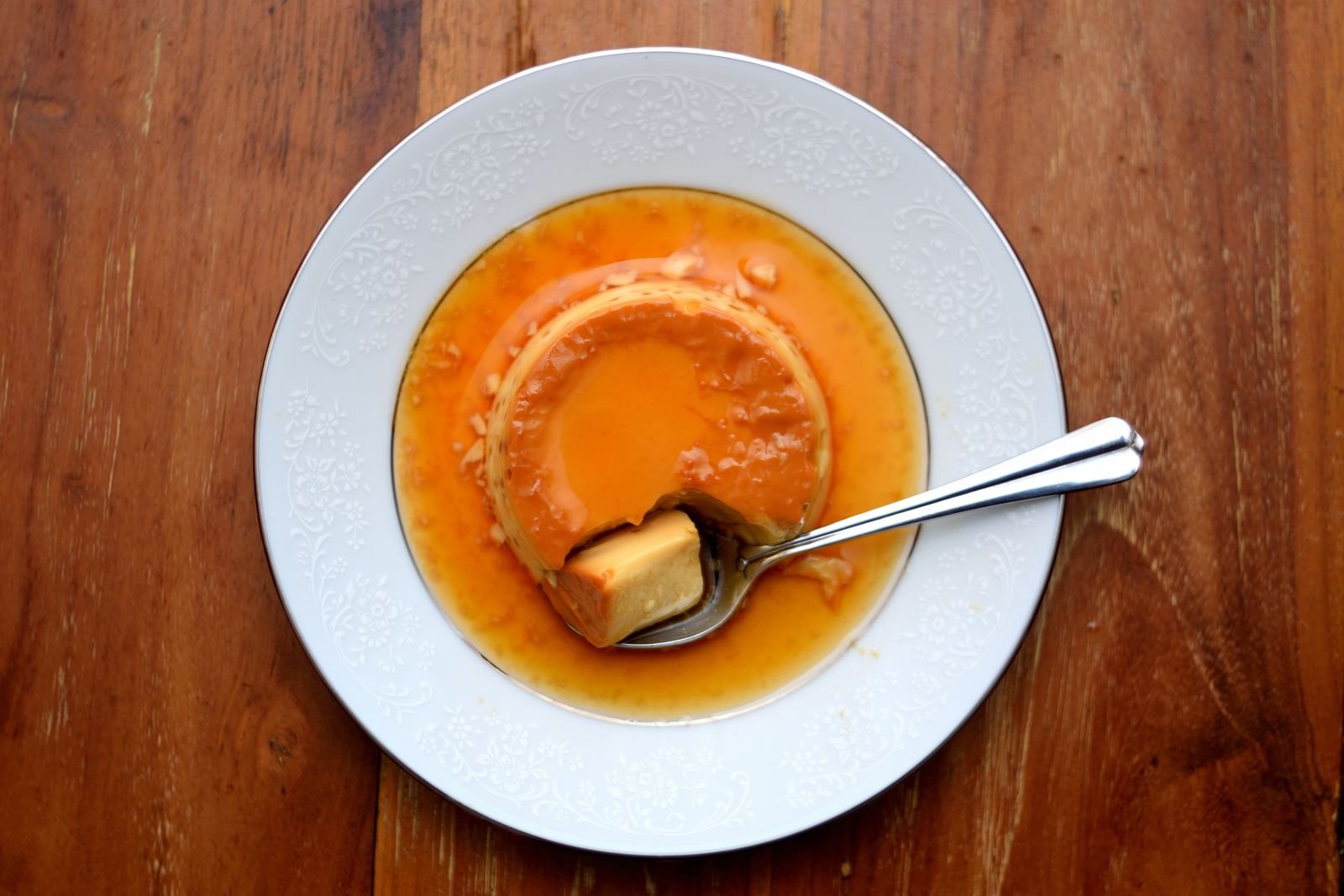
Silky coconut flan with a golden caramel top and a soft, creamy centre that melts on the tongue. The coconut milk gives it a gentle sweetness, and the caramel adds a warm, slightly bitter edge. Make it the night before, chill it well, and turn it out just before serving. Serve it cold with the golden caramel sauce spooned over each slice, and a little toasted coconut on top.
The story behind Flan de Coco
Flan came to Mexico with the Spanish, who had learned the custard from the Romans and the Moors before them. The Spanish version used eggs, milk and sugar, and the caramel top was the trick that made it special. In Mexico, cooks began adding coconut milk, which grows along the tropical coasts of Veracruz, Guerrero and the Yucatan. The coconut gave the custard a softer set and a flavour that felt like home, and flan de coco became a dessert of its own. The dish spread from the coast inland, and now you will find it on menus from Mexico City to Merida.
In Mexican homes, flan is the dessert you make for a birthday, a Sunday lunch or a family gathering. It needs little more than eggs, milk and sugar, yet it feels like a celebration when it comes out of the mould with the caramel running down the sides. The cook makes it the night before, the family waits while it chills, and someone always asks to lick the spoon. It is the kind of pudding that turns an ordinary meal into an occasion.
What makes flan de coco special is the contrast between the cool, silky custard and the warm, dark caramel. The coconut milk makes the texture softer than a plain milk flan, and the lime zest lifts the sweetness so it never feels heavy. When you cut a slice, it should hold its shape on the plate but melt the moment it reaches your mouth. That gentle wobble, and the golden sauce pooling around the base, is the whole point of the dish. The lime zest is a small detail, but it keeps the sweetness in check and stops the custard from feeling heavy.
Make flan de coco when you want a dessert that does the work the day before. It is ideal for a dinner party, because you can unmould it in a minute and it looks impressive with almost no effort. It also suits a hot day, served cold from the fridge with a spoonful of toasted coconut on top. Give it a full night to chill and it will reward you with a clean slice and a deep caramel flavour.
- Prep time
- 20 mins
- Cook time
- 60 mins
- Total time
- 80 mins
- Servings
- 4 servings
- Calories
- 380
Ingredients
- 200 g granulated sugar, for the caramel
- 60 ml water
- 400 ml full-fat coconut milk
- 397 g sweetened condensed milk
- 4 large eggs
- 1 teaspoon vanilla extract
- 1 pinch of salt
- 60 g desiccated coconut, toasted
- 1 lime, zested
- Boiling water, for the water bath
- Fresh mint leaves, to serve
- Extra desiccated coconut, to serve
Instructions
- Put the sugar and water in a small, heavy saucepan over medium heat. Stir once to wet the sugar, then leave it alone. Do not stir again, because stirring makes the sugar crystallise. Watch it turn from clear to pale gold, then deep amber, which takes about eight to ten minutes. The smell turns warm and nutty as it darkens.
- Take the caramel off the heat the moment it reaches the colour of strong tea. Working quickly, pour it into a round 20 cm cake tin or flan mould and tilt the tin so the caramel coats the base evenly. The caramel sets hard within a minute, so do not hesitate. Set the tin aside and let the caramel cool while you make the custard.
- Heat the oven to 160 C and put the kettle on to boil. Whisk the eggs in a large bowl just until the yolks and whites blend together. Do not whisk hard or beat in air, because bubbles in the custard turn into holes in the finished flan. Add the condensed milk, coconut milk, vanilla, lime zest and salt, and stir gently until the mixture is smooth and even.
- Strain the custard through a fine sieve into a jug. This catches any strands of egg white and bits of zest, and it is the step that gives you a perfectly smooth flan. Pour the strained custard slowly into the caramel-lined tin, letting it slide down the side so you do not splash the caramel or stir up bubbles.
- Set the tin inside a larger roasting tin and slide the rack halfway out. Pour boiling water into the roasting tin until it comes halfway up the flan tin. Slide the rack back in carefully and bake for 50 to 55 minutes. The flan is ready when the edges look set and the centre still wobbles gently.
- Take the flan tin out of the water bath with oven gloves and set it on a wire rack. Let it cool to room temperature for about an hour, then cover it and put it in the fridge for at least four hours, or overnight if you can. The flan firms up as it chills, and the caramel slowly melts into a golden sauce around the edges.
- To serve, run a thin knife around the inside edge of the tin. Set the base of the tin in a bowl of warm water for 30 seconds, which loosens the caramel. Put a serving plate with a rim on top of the tin, hold them together firmly, and flip them over in one smooth motion. Lift the tin away slowly and let the caramel sauce run down over the flan.
- Sprinkle the toasted coconut over the top and add a few mint leaves if you have them. Cut the flan with a sharp, thin knife, wiping the blade between slices so each piece comes out clean. Serve it cold, with the caramel sauce spooned over each slice, and enjoy it while the coconut flavour is at its freshest.
Pro tips
- Watch the caramel the whole time, because it goes from gold to burnt in under a minute. If the sugar starts to crystallise on the sides of the pan, brush it down with a wet pastry brush.
- Whisk the eggs gently and strain the custard, so the finished flan is perfectly smooth. Let the strained custard rest for a minute, so any last bubbles rise and pop before you pour it in.
- Use boiling water for the bath, so the oven temperature does not drop when you slide the tin in. Pour the water in slowly with a jug, and keep it below the rim of the flan tin.
- Chill the flan overnight if you can, because the flavour deepens and the caramel turns into a proper sauce. Cover the tin loosely with cling film while it chills, so the top does not pick up fridge smells.
- Warm the base of the tin for 30 seconds before you unmould it, so the caramel lets go cleanly. If the flan still will not move, warm the base for another 15 seconds and try again.
Variations & serving ideas
Change the flavour and the flan changes with it. Add a teaspoon of rum or a pinch of cinnamon to the custard for a warmer, deeper taste. A little orange zest works well instead of lime, and a spoonful of cocoa powder stirred into the custard makes a chocolate coconut version. For a lighter flan, use half coconut milk and half whole milk, which keeps the coconut flavour but sets a little firmer. A pinch of nutmeg gives it a warm, spiced note that suits the coconut, and a little vanilla bean paste makes the flavour richer still.
Serve the flan in individual ramekins if you want a neater presentation. Divide the caramel and the custard between six small moulds, bake them for 30 to 35 minutes in the same water bath, and unmould each one onto its own plate. Small flans chill faster, so they are ready in about three hours. They also make portion control easy at a dinner party, and they look smart with a mint leaf on top. Keep the ramekins in the same water bath and check them a little early, because small flans set faster.
Top the flan with whatever you have to hand. Toasted coconut is the classic finish, but a few slices of mango or pineapple add a fresh, tropical note that suits the coconut well. A spoonful of whipped cream softens the caramel, and a dusting of cocoa adds a bitter edge. Keep the topping simple, because the flan itself is the star and too much decoration hides the golden caramel. A drizzle of dulce de leche over the top makes it richer still, though the caramel alone is usually enough.
Pair flan de coco with a cup of strong coffee, which cuts through the sweetness and brings out the caramel. A small glass of rum or a sweet dessert wine also works well after a rich meal. For a lighter finish, serve it with fresh berries or a few slices of lime, which add a sharp note that balances the creamy custard. It is a dessert that ends a meal quietly, without fuss. For a summer party, serve small slices with iced coffee, which is cold, strong and made for warm evenings.
Getting it right
The caramel is the part that worries most cooks, and it is also the part that matters most. Sugar goes from pale gold to dark amber in less than a minute, so stay by the pan and watch it the whole time. Take it off the heat when it is the colour of strong tea and smells warm and nutty. If it goes too dark, it turns bitter, and if you stop too early, it tastes flat and sweet. Pour it into the tin at once, because it sets hard within seconds.
Bake the flan gently and it will set like silk. A hot oven makes the eggs puff up and then sink, leaving holes and a rubbery edge. The water bath is what keeps the heat even, so the custard warms slowly from all sides. Pour the boiling water in carefully, keeping it halfway up the tin, and pull the flan out when the centre still wobbles a little. It will finish setting as it cools, and a flan that looks fully firm in the oven is already overcooked.
The most common mistake is rushing the chill. A flan that has only had an hour in the fridge will slump when you turn it out, and the caramel will still be hard instead of a flowing sauce. Give it at least four hours, and overnight is better. A second mistake is whisking the eggs too hard, which beats in air and leaves bubbles in the finished custard. Stir gently, strain the mixture, and let it rest for a minute before you pour it into the tin.
Storing & reheating
Keep the flan in its mould, covered, in the fridge for up to four days. The caramel keeps melting slowly into a sauce as it sits, which is why the flan often tastes better on the second day. Once you have unmoulded it, keep it covered on its serving plate and eat it within two days, so the top does not dry out. A splash of the caramel sauce on each slice keeps the top moist.
Do not freeze flan, because the custard turns grainy and weeps liquid when it thaws. If you have leftover slices, store them in a sealed container in the fridge and serve them cold, straight from the fridge. There is no need to reheat flan, and warming it would melt the set custard and spoil the texture.
Frequently asked questions
Can I make flan de coco the day before?
Yes, and you should. Flan needs at least four hours in the fridge to set fully, and it tastes even better the next day. Make it the evening before you plan to serve it, and keep it covered in its mould until you are ready to unmould it.
Why does my caramel taste too sweet and not rich enough?
The caramel needs to reach a deep amber colour before you pour it into the mould. If it stays pale gold, it will taste sweet but flat. Let it cook until it smells warm and nutty and turns the colour of strong tea, then take it off the heat at once.
Do I really need a water bath for flan?
A water bath, called a bain-marie, keeps the heat gentle and even around the mould. Without it, the edges of the flan cook too fast and turn rubbery while the centre stays loose. The hot water should come halfway up the sides of the mould.
Can I use light coconut milk instead of full-fat?
Yes. Full-fat coconut milk gives the flan its rich texture and clear coconut flavour. Light coconut milk makes a thinner, weaker set that can taste watery. Shake the tin well before you open it, so the cream and liquid mix properly.
How do I get the flan out of the mould without breaking it?
Run a thin knife around the edge of the mould, then set the base in a bowl of warm water for 30 seconds. This loosens the caramel. Put a plate on top, flip the whole thing over in one quick motion, and lift the mould away slowly.
Can I make flan de coco without condensed milk?
Yes. Use the same amount of evaporated milk and coconut milk, and add a pinch of cinnamon or a little lime zest for flavour. The texture will be slightly lighter, but the caramel and the gentle baking still give you a proper flan.