Yubuchobap Recipe
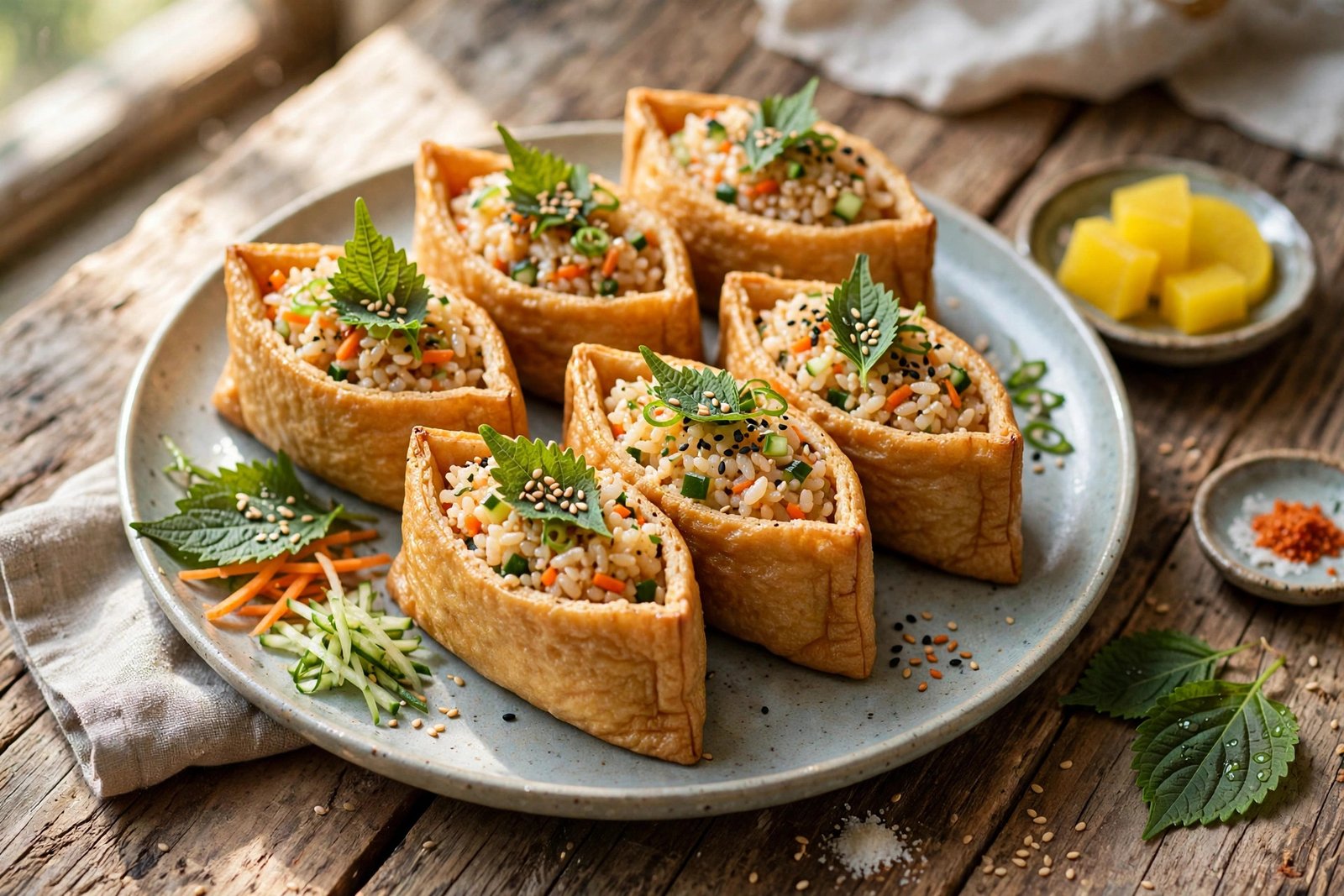
Yubuchobap are sweet, savoury tofu pockets stuffed with colourful fried rice — a beloved Korean picnic and lunchbox food. They are fun to make, easy to eat with your hands, and endlessly customisable with whatever vegetables you have.
Advertisement
- Prep time
- 20 mins
- Cook time
- 15 mins
- Total time
- 35 mins
- Servings
- 4 servings
- Calories
- 420
Advertisement
Ingredients
- 8 seasoned fried tofu pockets (yubu)
- 300 g cooked short-grain rice
- 1 carrot, finely diced
- 2 spring onions, chopped
- 50 g pickled burdock (optional)
- 2 eggs, beaten
- 1 tablespoon soy sauce
- 1 tablespoon sesame oil
- 1 teaspoon sugar
- 1 teaspoon sesame seeds
- 1 tablespoon vegetable oil
Instructions
- Gently squeeze the tofu pockets to remove excess liquid, keeping the seasoning liquid.
- Scramble the eggs in a little oil, then chop them into small pieces.
- Mix the rice with the carrot, spring onions, pickled burdock, egg, soy sauce, sesame oil, sugar and sesame seeds.
Advertisement
- Taste the rice and adjust the seasoning; it should be nicely savoury with a hint of sweetness.
- Open each tofu pocket carefully and stuff it generously with the rice mixture.
- Press the filling in gently and fold the opening closed.
- Serve at room temperature, packed for picnics or lunchboxes.
Advertisement
Pro tips
- Do not overfill the pockets or they will split when you pick them up.
- Use warm rice so it absorbs the seasoning well.
- A splash of the pocket's own seasoning liquid in the rice adds flavour.
- They keep for a day in the fridge; bring them to room temperature before eating.
Advertisement
Frequently asked questions
What is yubuchobap?
Yubuchobap is a Korean dish of fried tofu pockets stuffed with seasoned rice, popular for picnics and lunchboxes.
Where do I buy yubu pockets?
Seasoned tofu pockets are sold in Korean grocery shops, often in the refrigerated section or as a kit with seasoning.
Can I add meat to the rice?
Yes, diced ham, cooked chicken or tuna all work well in the filling.
Are yubuchobap served hot or cold?
They are usually served at room temperature, which makes them perfect for packed lunches.
Advertisement