Tteokbokki Recipe
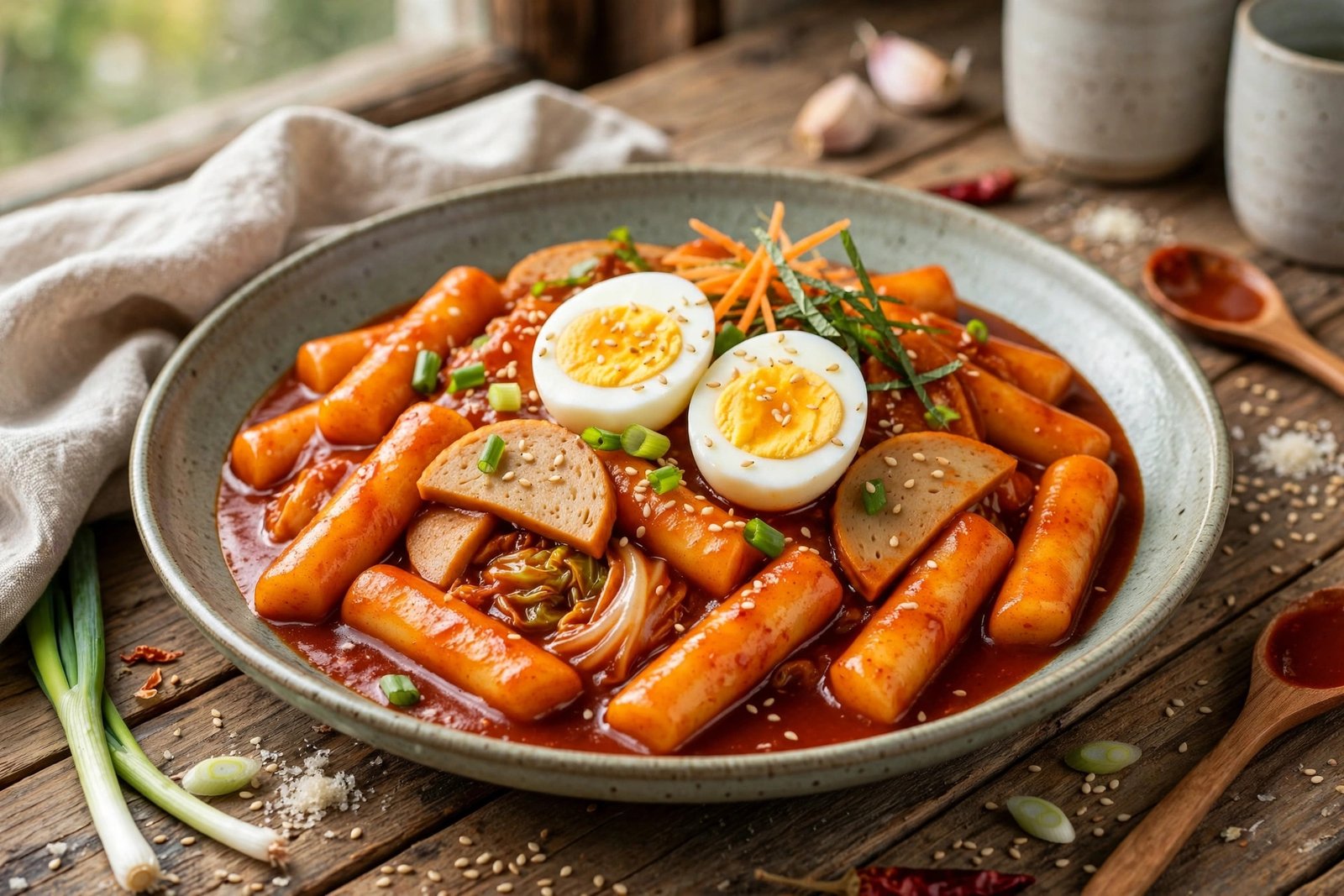
Tteokbokki is Korea's most loved street food — chewy rice cakes simmered in a glossy, spicy-sweet gochujang sauce until every bite glistens. Springy fish cakes, boiled eggs, and melting cheese mellow the heat into pure comfort. One pan, big flavor, and a sauce you'll want to spoon up to the last drop.
- Prep time
- 15 mins
- Cook time
- 20 mins
- Total time
- 35 mins
- Servings
- 4 servings
- Calories
- 390
Ingredients
- 500 g fresh Korean rice cakes (tteok), rinsed
- 200 g fish cakes, cut into strips
- 3 cups water or anchovy stock
- 3 tablespoons gochujang (Korean chili paste)
- 1 tablespoon gochugaru (Korean chili flakes)
- 2 tablespoons sugar
- 1 tablespoon soy sauce
- 2 cloves garlic, minced
- 4 spring onions, cut into 5 cm pieces
- 1 small onion, sliced
- 2 hard-boiled eggs, halved
- 1/2 cup shredded mozzarella (optional)
- 1 tablespoon toasted sesame seeds
Instructions
- If your rice cakes are firm from the fridge, soak them in warm water for 10 minutes, then drain — this stops them from cracking in the sauce.
- Whisk the gochujang, gochugaru, sugar, soy sauce, and garlic into the water or stock in a large skillet or shallow pot until the paste dissolves.
- Bring the sauce to a boil over medium-high heat, then stir in the rice cakes, fish cakes, and sliced onion. Keep the cakes moving with a spoon so they don't stick to the bottom.
- Reduce the heat to medium and simmer for 12-15 minutes, stirring often, until the rice cakes are soft and chewy and the sauce has thickened to a glossy coating.
- Stir in the spring onions and hard-boiled egg halves, warming them through for 1-2 minutes.
- For a creamier version, scatter the mozzarella over the top, cover for 2 minutes until melted, then finish with sesame seeds and serve straight from the pan.
Pro tips
- Control the heat by adjusting gochugaru — start with 1 tablespoon for mild, go up to 3 for serious spice.
- Anchovy stock adds deep savory flavor, but plain water works fine when the gochujang is good quality.
- Stir the sauce every couple of minutes; the rice starch makes it thicken fast and catch on the pan.
- Leftovers keep 2 days in the fridge — splash in a little water when reheating to loosen the sauce.
Frequently asked questions
What are tteokbokki rice cakes made of?
They are made from steamed glutinous rice flour pounded into chewy cylinders. Find fresh or frozen ones at Korean grocery stores or online; frozen cakes need soaking before cooking.
Is tteokbokki supposed to be very spicy?
Classic street-style tteokbokki has a bold kick, but you can make it milder by reducing the gochugaru and adding an extra spoon of sugar, or creamier with cheese on top.
Can I make tteokbokki without fish cakes?
Yes — swap them for extra rice cakes, boiled eggs, ramen noodles, or vegetables like cabbage and carrots. The dish is very forgiving.
Why did my tteokbokki sauce turn out too thick?
Rice cakes release starch as they cook, so the sauce thickens quickly. Just stir in 60-120 ml of water until it reaches a pourable, glossy consistency.