Sigeumchi Namul Recipe
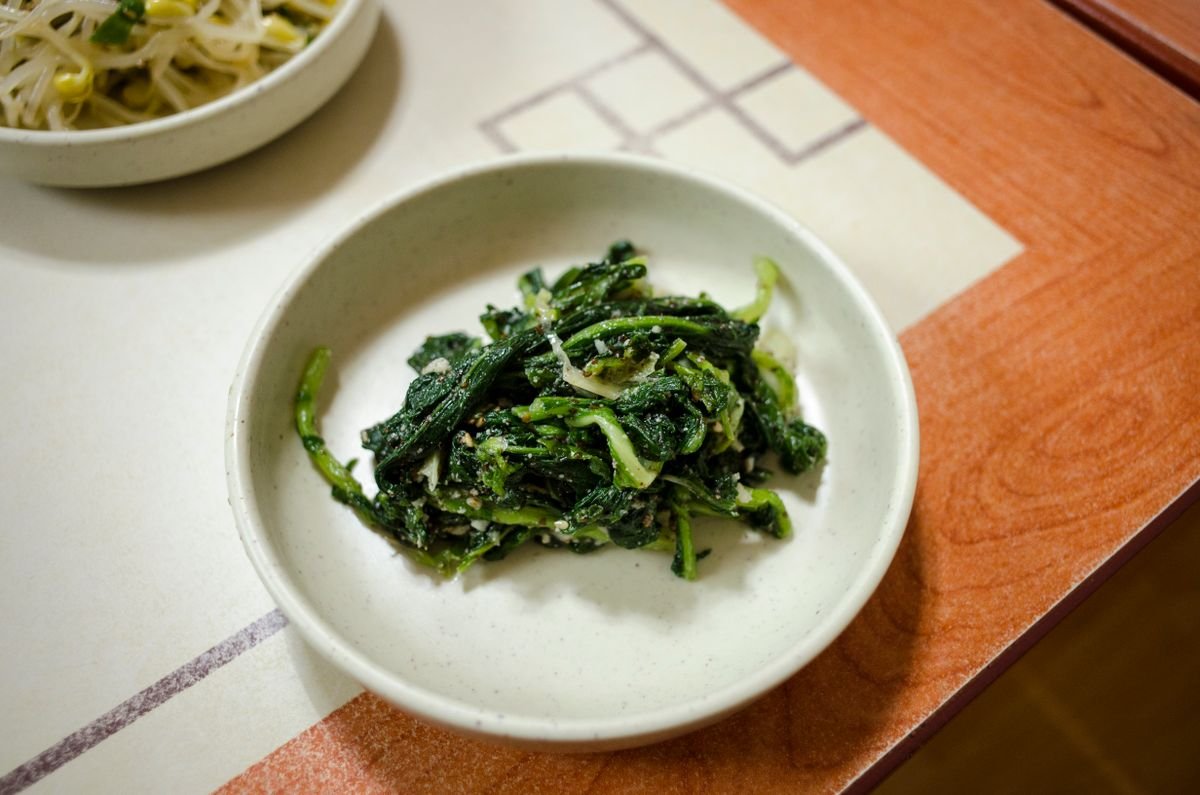
Sigeumchi Namul is tender spinach seasoned with garlic, soy and sesame, a gentle Korean side dish that belongs on every table. It takes ten minutes, uses one pot and one bowl, and tastes clean, green and calm beside rich or spicy food. Learn it once and make it for the rest of your life. It uses one pot and one bowl, and it keeps well in the fridge for days.
The story behind Sigeumchi Namul
Sigeumchi namul is one of the most common banchan in Korea, and its name tells you exactly what it is: sigeumchi means spinach, and namul means seasoned vegetables. Koreans have been eating namul for centuries, gathering wild greens in spring and seasoning them simply with garlic, soy sauce and sesame oil. Spinach became the most popular version because it is widely available, cooks in seconds, and takes seasoning beautifully.
In a Korean meal, namul dishes sit in small bowls alongside kimchi, bean sprouts and other banchan, shared by everyone at the table. They are the quiet, gentle part of the meal, balancing the salt and heat of the main dishes with something fresh and green. Sigeumchi namul also appears in bibimbap, where a spoonful of it joins the rice, vegetables, egg and meat in the bowl, adding colour and a soft, savoury note.
What makes this version special is its restraint. Nothing here is trying to impress you. The spinach is blanched just long enough to wilt, then squeezed dry and seasoned with a light hand, so the flavour of the spinach itself still comes through. The garlic adds warmth, the sesame oil adds a nutty richness, and the soy sauce gives a gentle salty depth. It tastes clean, green and calm, which is exactly what a good banchan should taste like.
Cook it when you need a quick side dish, when the main course is rich or spicy, or when you want something green on the table without much effort. It takes ten minutes from start to finish, uses one pot and one bowl, and it keeps well in the fridge. It is the kind of dish you learn once and make for the rest of your life. Korean cooks gather wild greens in spring and treat them the same way, so this recipe is a template you can use for almost any leafy green you find. The seasoning stays the same while the vegetable changes with the season, which is why namul never gets boring. In Korean temples, namul dishes are made without garlic or strong seasoning, which shows how the same technique adapts to very different tastes.
- Prep time
- 5 mins
- Cook time
- 5 mins
- Total time
- 10 mins
- Servings
- 4 servings
- Calories
- 70
Ingredients
- 300 g fresh spinach, roots trimmed
- 2 garlic cloves, finely chopped
- 1 tablespoon soy sauce
- 1 tablespoon sesame oil
- 1 teaspoon toasted sesame seeds
- 1/2 teaspoon sugar
- 1 spring onion, finely chopped
- 1/2 teaspoon salt
- 1 litre water
- 1 teaspoon rice vinegar
Instructions
- Bring the water to a rolling boil in a large pot and add the salt. Wash the spinach thoroughly in two changes of cold water, since spinach holds grit in its leaves, and shake off the excess water but leave the leaves a little damp. The water clinging to the leaves helps them wilt evenly.
- Drop the spinach into the boiling water and push it down with tongs. Blanch for just 30 seconds, until the leaves have wilted and turned a deep, bright green. The spinach should look soft and glossy, not dark and limp. Any longer and it loses its colour and its fresh flavour.
- Lift the spinach out with tongs or a slotted spoon and plunge it straight into a bowl of cold water. This stops the cooking instantly and keeps the colour bright. Leave it for a minute, then lift it out and squeeze it gently in handfuls to remove as much water as possible.
- Place the squeezed spinach on a board and chop it roughly into 5 cm lengths, so it is easy to pick up with chopsticks and to mix with the seasoning. The pieces should be loose and separate, not a tight ball, so the dressing can reach every strand.
- Put the spinach in a bowl and add the garlic, soy sauce, sesame oil, sugar, spring onion and rice vinegar. Toss everything together with your hands or chopsticks, lifting and turning the spinach so the seasoning coats it evenly. The leaves should look glossy and smell nutty and garlicky.
- Taste a little and adjust the seasoning. Add a few more drops of soy sauce if it needs salt, a pinch more sugar if the vinegar is sharp, or a little more sesame oil if it tastes flat. The finished dish should taste gentle and balanced, with the spinach flavour still in front.
- Scatter the toasted sesame seeds over the top and give the spinach one last light toss. The seeds add a little crunch and a nutty aroma, and they look pretty against the dark green leaves. Serve the namul at room temperature or lightly chilled.
- Spoon the sigeumchi namul into a small bowl and serve it as part of a Korean meal, or use it as a topping for bibimbap. It is ready to eat the moment it is seasoned, and it tastes even better after 10 minutes in the fridge, once the garlic and sesame have settled into the leaves. Let the bowl sit at room temperature for ten minutes before serving, so the sesame oil warms up and its aroma opens out. Swirl the leaves with tongs so every part touches the boiling water, since leaves sitting on top of the pile wilt more slowly.
Pro tips
- Blanch the spinach for only 30 seconds, because even a few seconds too long turns it dark, limp and flavourless. Have the cold water bowl ready before the spinach goes in, so there is no delay.
- Squeeze the spinach well after blanching, since wet spinach dilutes the seasoning and leaves a watery puddle in the bowl. Work in small handfuls, since a big ball traps water in the middle.
- Wash the spinach in two changes of water, because grit hides in the leaves and a single rinse never gets it all out. Lift the leaves out of the water instead of pouring them off, so the grit stays behind.
- Season with a light hand, since the spinach should still taste like spinach, not like a bowl of soy sauce.
- Use your hands to mix the seasoning in, because chopsticks alone cannot separate the strands evenly and some leaves stay unseasoned. Wear thin kitchen gloves when you mix, since the garlic and sesame oil cling to your hands and the smell lingers. Count out loud if it helps, since thirty seconds passes faster than you think when the pot is boiling.
Variations & serving ideas
You can use the same method for other leafy greens, such as chard, beet greens or mustard leaves, though tougher greens need a longer blanch of about a minute. Bean sprouts make a similar namul with a crunchier texture, and the seasoning stays the same. Some cooks add a spoonful of doenjang, Korean fermented soybean paste, for a deeper, earthier flavour.
Swap the soy sauce for a little fish sauce if you want a slightly different salty depth, or leave the sugar out if you prefer the spinach unsweetened. A pinch of gochugaru adds a gentle warmth, and a few drops of perilla oil instead of sesame oil gives a more herbal note. The recipe is forgiving, so adjust it to the way you like your vegetables.
Serve sigeumchi namul as one of several banchan with rice, soup and a main dish, or pile it into a bibimbap bowl with other vegetables, a fried egg and gochujang. It is also good tucked into a wrap or served alongside grilled fish, where its gentle flavour balances the richness of the main course.
It pairs well with iced barley tea, a cold lager, or a glass of makgeolli if you are eating a full Korean meal. The mild, green flavour of the spinach suits drinks that are light and clean, so avoid anything too sweet or heavy that would overwhelm it. A simple glass of cold water is honestly fine too. A spoonful of toasted sesame seeds crushed in a mortar releases more aroma than whole seeds, so crush half of them and leave the rest whole for texture. For a festive table, arrange the namul in a small mound and top it with a few pine nuts, which add a buttery richness. Young spinach leaves can be served raw in this style, simply massaged with the seasoning, though the blanched version keeps longer in the fridge. A spoonful of crushed walnuts stirred through the namul adds a rich, earthy crunch that suits the gentle spinach. For a heartier side, toss the seasoned spinach with a little cooked rice and a fried egg, which turns it into a simple, satisfying lunch.
Getting it right
The key technique is the quick blanch and the cold shock. Boiling water wilts spinach in seconds, and plunging it into cold water straight afterwards stops the cooking before the leaves go soft and dark. This is what keeps the colour bright green and the flavour fresh. If you skip the cold water, the spinach keeps cooking in its own heat and turns dull and mushy by the time you season it.
Heat control is simple but unforgiving: the water must be at a full, rolling boil when the spinach goes in, so it wilts fast instead of sitting in warm water and turning soggy. Thirty seconds is the target, and it is worth counting. Thick stems need a few seconds more than thin leaves, so push the stems in first and the leaves a moment later if your spinach has sturdy stalks.
The most common mistake is overcooking, which leaves the spinach dark, slimy and tasteless. Another is under-squeezing, which waters down the seasoning and leaves a puddle in the bowl. Squeeze firmly but gently, a handful at a time, until no more water drips out. If the namul tastes flat, it usually needs a little more sesame oil or a pinch more salt, not more garlic. Use a spider strainer or tongs to lift the spinach out of the pot, since pouring it through a colander traps the leaves and squeezes them unevenly. If your spinach has thick stems, blanch the stems for 15 seconds before adding the leaves, so everything finishes at the same time.
Storing & reheating
Store sigeumchi namul in a sealed container in the fridge for up to 4 days. The flavour actually improves after a few hours, as the garlic and sesame settle into the leaves. Give it a gentle toss before serving, and drain any liquid that has collected at the bottom of the container. Do not leave it at room temperature for more than 2 hours.
Freezing is not recommended, because the spinach turns soft and watery when thawed and the fresh green flavour is lost. The dish is so quick to make that it is better to prepare a fresh batch whenever you want it. Leftover namul works well stirred into fried rice or tucked into a bibimbap bowl the next day, where the softer texture does not matter.
Frequently asked questions
What is sigeumchi namul?
Sigeumchi namul is a Korean side dish of blanched spinach seasoned with garlic, soy sauce, sesame oil and sesame seeds. It is one of the banchan, the small shared dishes served with rice and a main course at a Korean meal.
How long should I blanch spinach for namul?
Just 30 seconds in a pot of fully boiling salted water, until the leaves wilt and turn bright green. Any longer and the spinach loses its colour and fresh flavour. Plunge it into cold water immediately to stop the cooking.
Why is my sigeumchi namul watery?
The spinach was not squeezed dry enough after blanching. Squeeze it firmly in handfuls until no more water drips out, then chop and season it. Wet spinach dilutes the soy sauce and sesame oil and leaves a puddle in the bowl.
Can I use frozen spinach for sigeumchi namul?
Yes, though fresh spinach gives a better texture. Thaw the frozen spinach completely, squeeze it very dry, and chop it before seasoning. You will need a little less soy sauce, since frozen spinach holds more water even after squeezing. Chop it finely after squeezing, so it mixes evenly with the seasoning.
Is sigeumchi namul vegan?
Yes, as written it is fully vegan, since it contains only spinach, garlic, soy sauce, sesame oil and seasonings. It is also naturally gluten-free if you use a tamari soy sauce, though standard soy sauce contains wheat. The sesame oil, garlic and spring onion are all plant-based, so nothing else needs changing.
What do I serve with sigeumchi namul?
Serve it as one of several banchan with rice, soup and a main dish, or use it as a topping for bibimbap. It is especially good next to rich or spicy food, where its gentle green flavour gives the palate a rest.