Makguksu Recipe
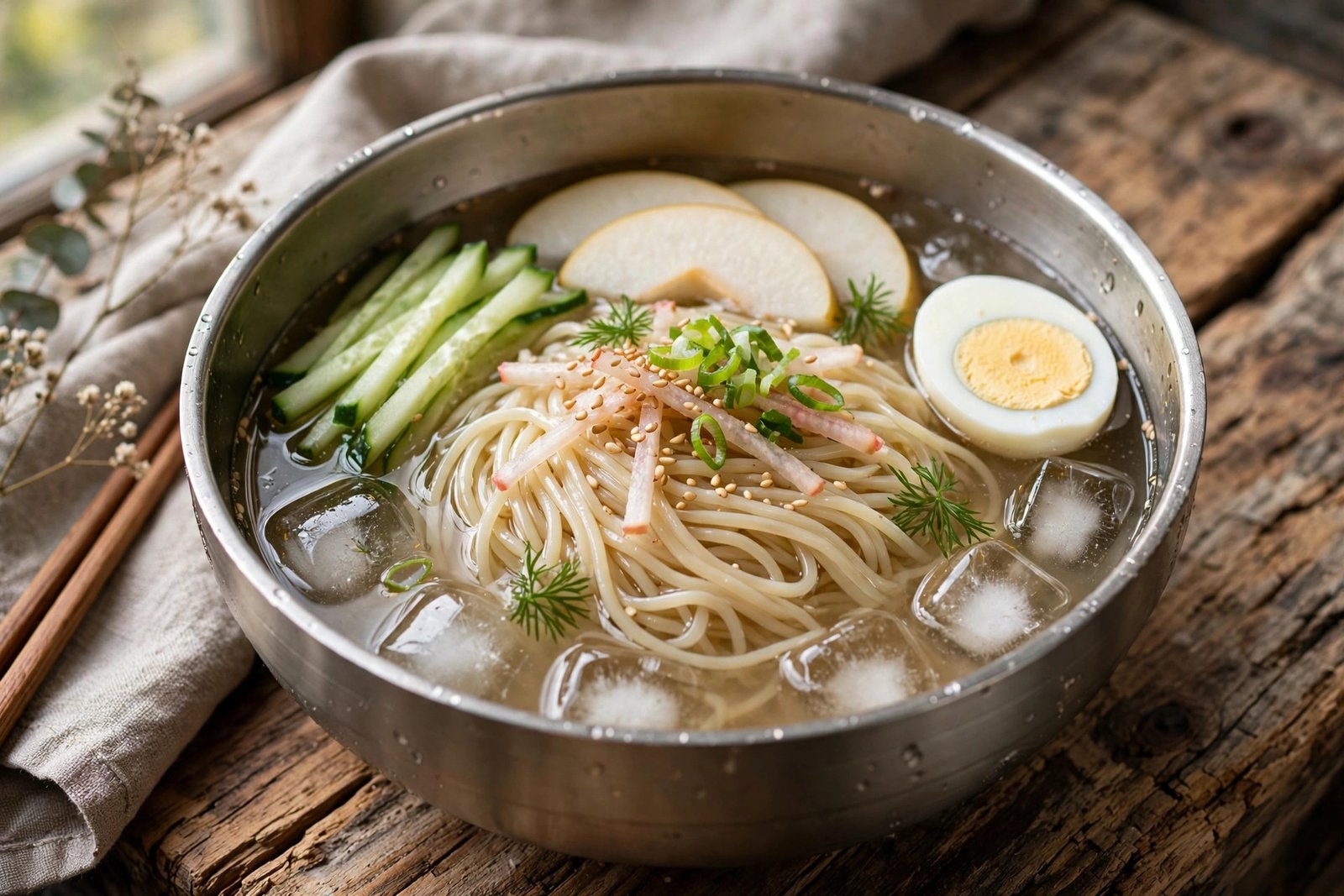
Cool buckwheat noodles in a tangy, icy broth, topped with kimchi, cucumber and a dab of mustard that clears your head in the best way. Makguksu is Korea's summer noodle soup — light, sharp, deeply refreshing — and it tastes like a mountain stream on a hot day. One bowl and you understand why Chuncheon is famous for it. It is light, sharp and deeply refreshing — a bowl that cools you down from the inside out.
The story behind Makguksu
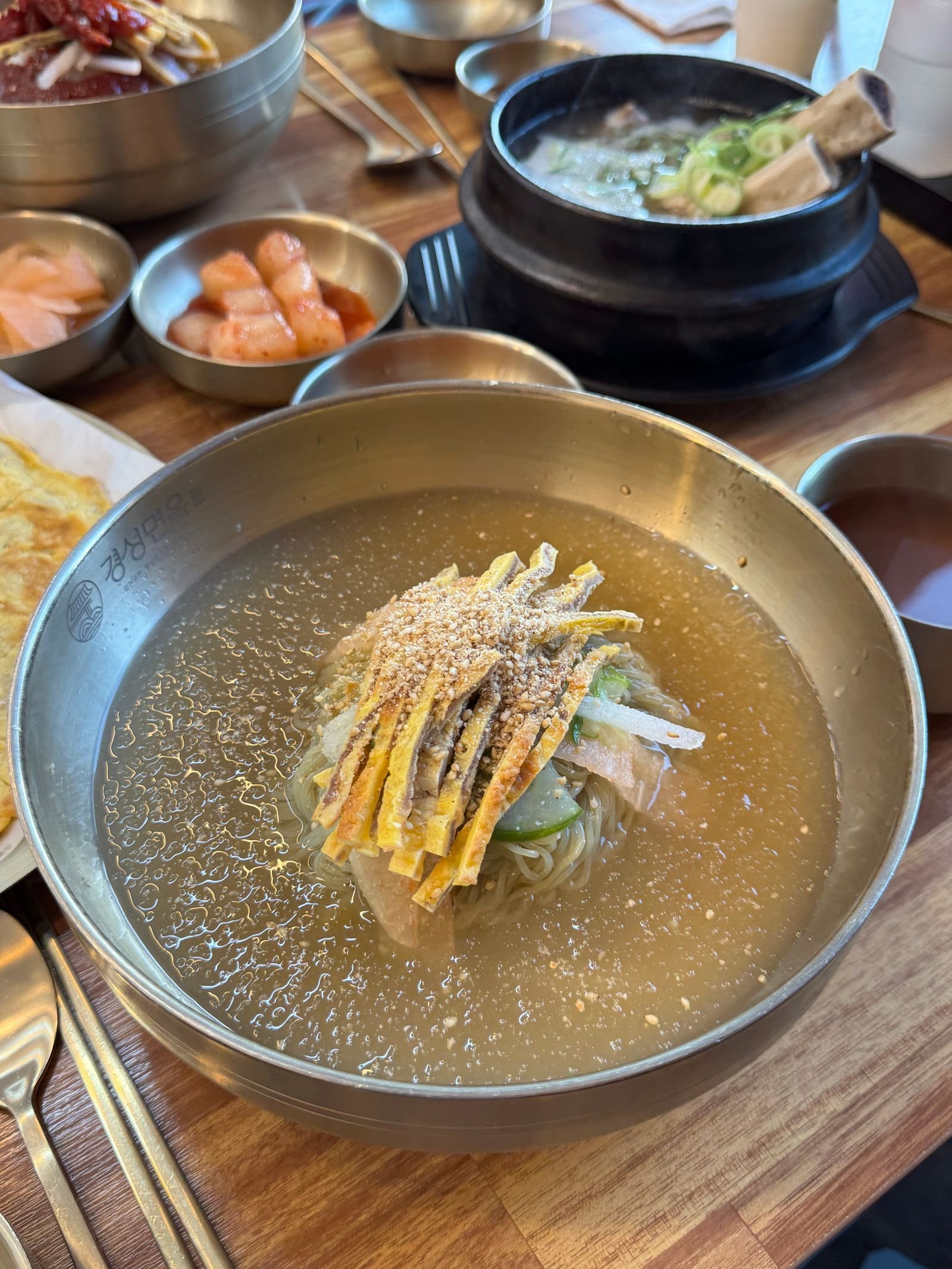
Makguksu comes from Chuncheon, the capital of Gangwon Province, where buckwheat has grown in the cool mountain soil for generations. The name means buckwheat noodles, and the dish is the city's pride — so much so that Chuncheon holds a makguksu festival every year, and the noodle shops along its river streets have been serving it the same way for decades. It is a dish born of place: cold climate, buckwheat fields, and summers that demand something icy.
The broth is what sets makguksu apart from other cold noodle dishes. Traditionally it is made from dongchimi, the clear, tangy brine of water kimchi, thinned with a light beef or anchovy stock and chilled until it is almost icy. Some shops use a kimchi brine base, others a clean beef broth — every shop has its own version, and locals argue fiercely about which is best. The result is always the same: a broth that is sour, salty, cold and clean, with just enough body to coat the noodles.
What makes makguksu special is the way it cools you from the inside out. The noodles are chewy and cold, the broth is sharp with vinegar and kimchi tang, and the mustard on top gives a brief, bright heat that clears the sinuses and wakes you up. It is not a heavy meal — it is a reset, the kind of food you crave after a hot day outdoors or a long, rich dinner the night before.
This is a summer bowl through and through. The broth needs a few hours to chill properly, so it rewards a little planning, but the actual cooking takes minutes. Serve it for a weeknight dinner in Australia on a hot evening, or as a light lunch on a weekend when the sun is out — it is fast, it is cold, and it is exactly what a warm day calls for. Once you have eaten it on a truly hot day, you will understand why Chuncheon built a festival around it: few dishes cool you down so completely, or leave you feeling so refreshed afterwards.
- Prep time
- 25 mins
- Cook time
- 30 mins
- Total time
- 55 mins
- Servings
- 4 servings
- Calories
- 430
Ingredients
- 300 g dried buckwheat noodles (makguksu or soba noodles)
- 1 litre cold dongchimi brine or light beef stock, chilled
- 500 ml water, for thinning the broth
- 3 tbsp rice vinegar
- 1 tbsp soy sauce
- 1 tsp caster sugar
- 1 tsp fine salt, or to taste
- 1 cup kimchi, chopped, plus 3 tbsp kimchi juice
- 1 Lebanese cucumber, julienned
- 2 spring onions, finely sliced
- 4 eggs, soft-boiled (6 minutes)
- 1 tbsp toasted sesame seeds
- 2 tsp Korean mustard or Dijon mustard, to serve
- 1 tbsp sesame oil, for the noodles
Instructions
- Chill the broth first. Whisk the cold dongchimi brine or beef stock with the water, rice vinegar, soy sauce, sugar and salt in a large jug, then taste it. It should be sharply tangy, salty and clean, a little stronger than you think it needs. Put the jug in the fridge for at least 2 hours, or the freezer for 30 minutes, until it is icy cold.
- Cook the eggs while the broth chills. Bring a small pot of water to a boil, lower the eggs in gently, and cook for 6 minutes for a soft, jammy yolk. Lift them into cold water, peel once cool, and halve them. A soft egg is the classic topping here, and the yolk melts into the cold broth in the most satisfying way.
- Boil the noodles in plenty of water. Bring a large pot of water to a hard, rolling boil, add the buckwheat noodles, and stir once so they do not clump. Cook for 4 to 5 minutes, tasting at 4 minutes — the noodles should be chewy and springy, with a firm bite. Pull them the moment they reach that point, because buckwheat goes soft fast.
- Rinse the noodles until they are icy cold. Tip them into a colander and rinse under cold running water, tossing with your hands until the noodles feel cool and slippery and the water runs clear. Shake the colander hard to get the water off, then toss the noodles with the sesame oil so they do not stick together while you plate.
- Taste and adjust the broth again. Take the jug out of the fridge and taste the broth cold — cold dulls flavour, so it may need a little more vinegar, salt or sugar than it did at room temperature.
- Divide the noodles between four deep bowls. Lift the noodles with tongs into loose, high nests, leaving room around the edges for the broth. The noodles should fill about two-thirds of the bowl
- Ladle the broth over the noodles. Pour the icy broth over each nest until the noodles are just covered, The broth should come up to just below the top of the noodles, so the toppings sit above the surface and stay visible.
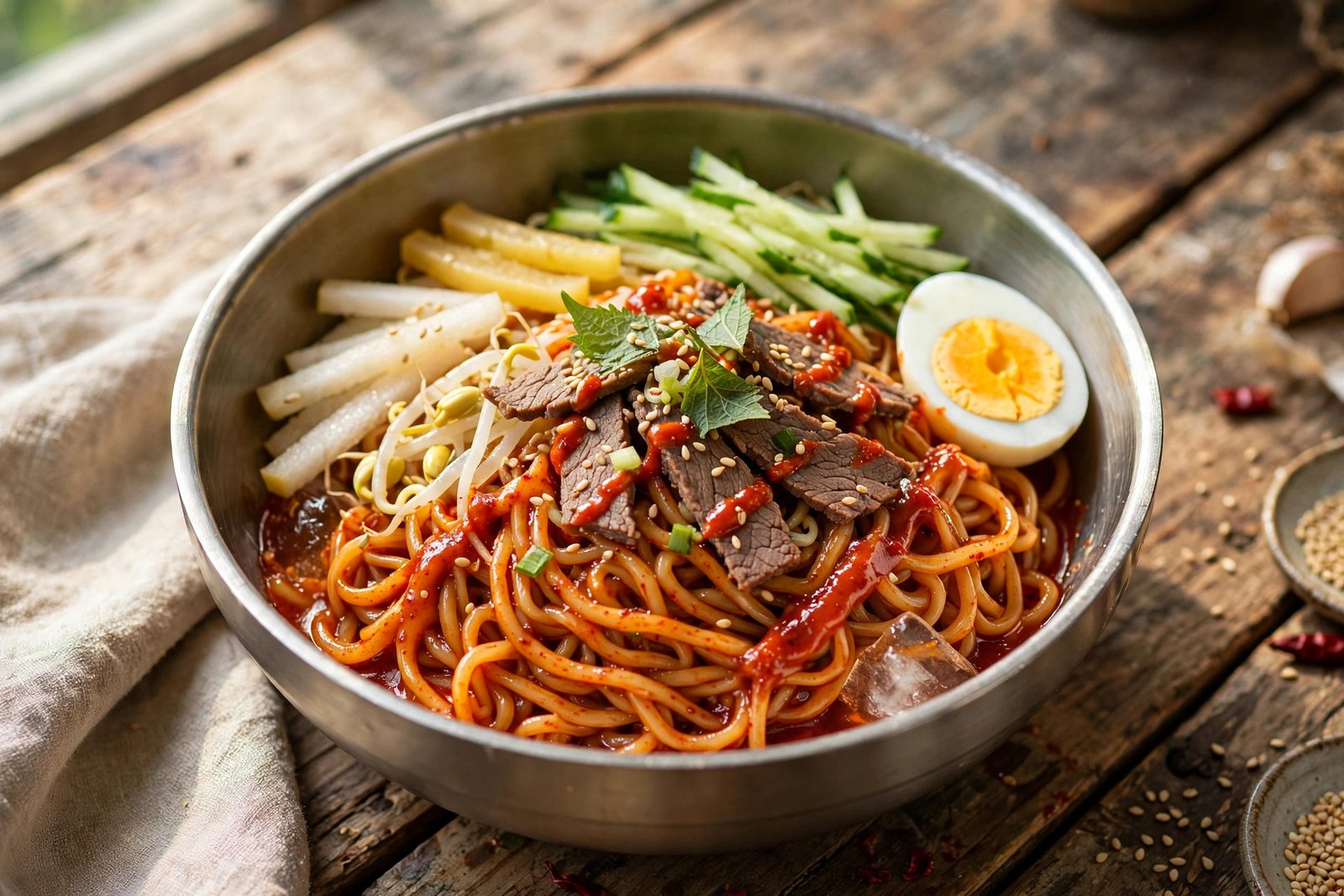
- Add the toppings and serve immediately. Arrange the kimchi, cucumber and halved eggs on top of each bowl, scatter the spring onion and sesame seeds over everything, and put a small dab of mustard on the side. Serve right away, while the broth is still icy and the noodles are cold — the first spoonful should taste like a cold shock, in the best way.
Pro tips
- Chill the broth properly. Lukewarm broth makes a flat, dull bowl — the broth needs to be icy cold, so give it at least two hours in the fridge or a fast chill in the freezer.
- Do not overcook the noodles. Buckwheat goes from chewy to soft in about a minute, so start tasting at 4 minutes and drain the moment the bite turns tender-firm. A timer is your friend here — buckwheat moves fast, and a minute too long is all it takes to lose the chew.
- Rinse until the water runs clear. Starchy noodles cloud the broth and make it taste thick and muddy — a thorough cold rinse keeps the broth bright and the noodles springy.
- Season the broth cold, not warm. Cold dulls salt and sourness, so taste the broth at serving temperature and adjust with vinegar, salt or sugar until it tastes sharp. A pinch of sugar can rescue a broth that tastes too sharp, and a splash of vinegar can rescue one that tastes flat.
- Serve in deep, chilled bowls. Pop the bowls in the fridge or freezer for ten minutes before serving — a cold bowl keeps the broth icy to the last spoonful.
Variations & serving ideas
Makguksu is a simple idea with room to play. The classic Chuncheon broth is dongchimi brine, but a good shortcut is light beef stock mixed with kimchi juice and rice vinegar — it gives you the same tangy, savoury base without a jar of water kimchi. Some shops use a clear chicken stock instead, which is milder and lets the mustard shine. Taste as you go and find the balance your table likes.
The toppings are flexible too. Sliced pear adds a sweet crunch that works beautifully against the sour broth, and shredded carrot or radish bring colour and bite. For a heartier bowl, add sliced cold chicken, a few prawns, or thin strips of beef. A spoonful of gochujang stirred into the broth turns it into a spicier, pink-tinged version that some Chuncheon shops serve as their house style.
If you cannot find dongchimi, make a quick version: thinly sliced radish and cucumber in salted water with a little vinegar and sugar, left for a day in the fridge, gives you a light, tangy brine that does the job. Or skip the brine entirely and build the broth from beef stock, kimchi juice and vinegar — it is not the traditional route, but it tastes wonderful and it is honest cooking.
Serve makguksu as a light main on a hot day, with little else. A plate of kimchi, a few pieces of fried mandu, or a simple cucumber salad is all you need alongside. Iced barley tea is the classic drink, and a cold beer works well too. Keep the portions generous — the bowl looks light, but a full serving of noodles in broth is properly satisfying. A few ice cubes in the broth just before serving keep it properly cold on a very hot day, and they melt slowly enough not to water the bowl down — a trick the noodle shops use in high summer. For a prettier bowl, arrange the toppings in neat piles rather than scattering them, so each colour shows against the pale noodles and the dark broth. A little extra mustard on the side lets each person set their own heat.
Getting it right
The key technique is temperature control from start to finish. The broth must be icy cold, the noodles must be rinsed cold, and the bowls should be chilled — every part of the dish works against the heat of a summer day. If any one part is lukewarm, the whole bowl feels flat. Plan the chill: make the broth in the morning, or at least two hours before dinner, and keep it in the coldest part of the fridge.
The noodle cook is the second skill, and it is a narrow window. Buckwheat noodles need a big pot, a hard rolling boil, and a watchful eye — start tasting at four minutes and drain the second the centre turns tender-firm. Then rinse hard under cold water, tossing the noodles with your hands until they feel cool and slippery. The rinse stops the cooking, washes off the starch that would cloud the broth, and tightens the noodles so they stay chewy.
The most common mistake is a broth that is too timid. Because cold dulls flavour, a broth that tastes right at room temperature will taste flat when it is icy. Season it cold, and season it boldly: it should taste a little too sharp on its own, because the noodles will soften it. The second mistake is skimping on the broth — a bowl with a shallow puddle of liquid is not makguksu. The noodles should swim, not sit in a puddle. One more detail: keep the kimchi juice. A spoonful stirred into the broth just before serving adds a live, tangy note that plain vinegar cannot match, and it is the shortcut every busy Chuncheon cook uses.
Storing & reheating
Makguksu is best eaten the day it is made, but the parts keep separately. The broth keeps in a sealed jug in the fridge for up to three days and actually tastes better on day two, once the flavours have settled. The rinsed noodles keep for a day in a sealed container, tossed with a little sesame oil. Keep the kimchi, cucumber and eggs apart until serving.
To serve leftovers, pour the cold broth over the cold noodles and add fresh toppings — a fresh egg and fresh cucumber make a day-old batch taste close to new. Do not reheat the noodles or the broth; heat destroys the texture and the whole point of the dish. This bowl does not freeze, so make only what you plan to eat within a couple of days.
Frequently asked questions
What is dongchimi, and where do I buy it?
Dongchimi is a clear water kimchi made from radish, and its brine is the traditional makguksu broth. Korean grocers sell it in jars. If you cannot find it, use light beef stock mixed with kimchi juice and rice vinegar. Keep the broth icy cold and the noodles springy, and the bowl will be a success.
Can I make makguksu without dongchimi?
Yes. A good shortcut is light beef or chicken stock with kimchi juice, rice vinegar, soy sauce and sugar, chilled until icy. It is not the traditional route, but it gives the same tangy, refreshing result. Keep the broth icy cold and the noodles springy, and the bowl will be a success.
How spicy is makguksu?
It is not spicy by itself — the heat comes from the dab of mustard on top, which gives a brief, bright warmth. If you want more heat, stir a spoonful of gochujang into the broth before serving. Keep the broth icy cold and the noodles springy, and the bowl will be a success.
Is makguksu gluten-free?
It can be. Use 100% buckwheat noodles and gluten-free tamari instead of soy sauce, and check your kimchi and mustard labels. Many buckwheat noodle brands blend in wheat, so read the packet carefully. Keep the broth icy cold and the noodles springy, and the bowl will be a success.
Can I make the broth ahead of time?
Yes, and you should. The broth keeps in a sealed jug in the fridge for up to three days, and the flavour settles and improves. Make it in the morning so it is icy cold by dinner time. Keep the broth icy cold and the noodles springy, and the bowl will be a success.
What is the difference between makguksu and bibim makguksu?
Both use the same buckwheat noodles from Chuncheon. Makguksu serves them in a cold, tangy broth, while bibim makguksu tosses them in a spicy gochujang sauce with no broth. One is a soup, the other is a mixed noodle bowl. Keep the broth icy cold and the noodles springy, and the bowl will be a success.