Kkakdugi Recipe
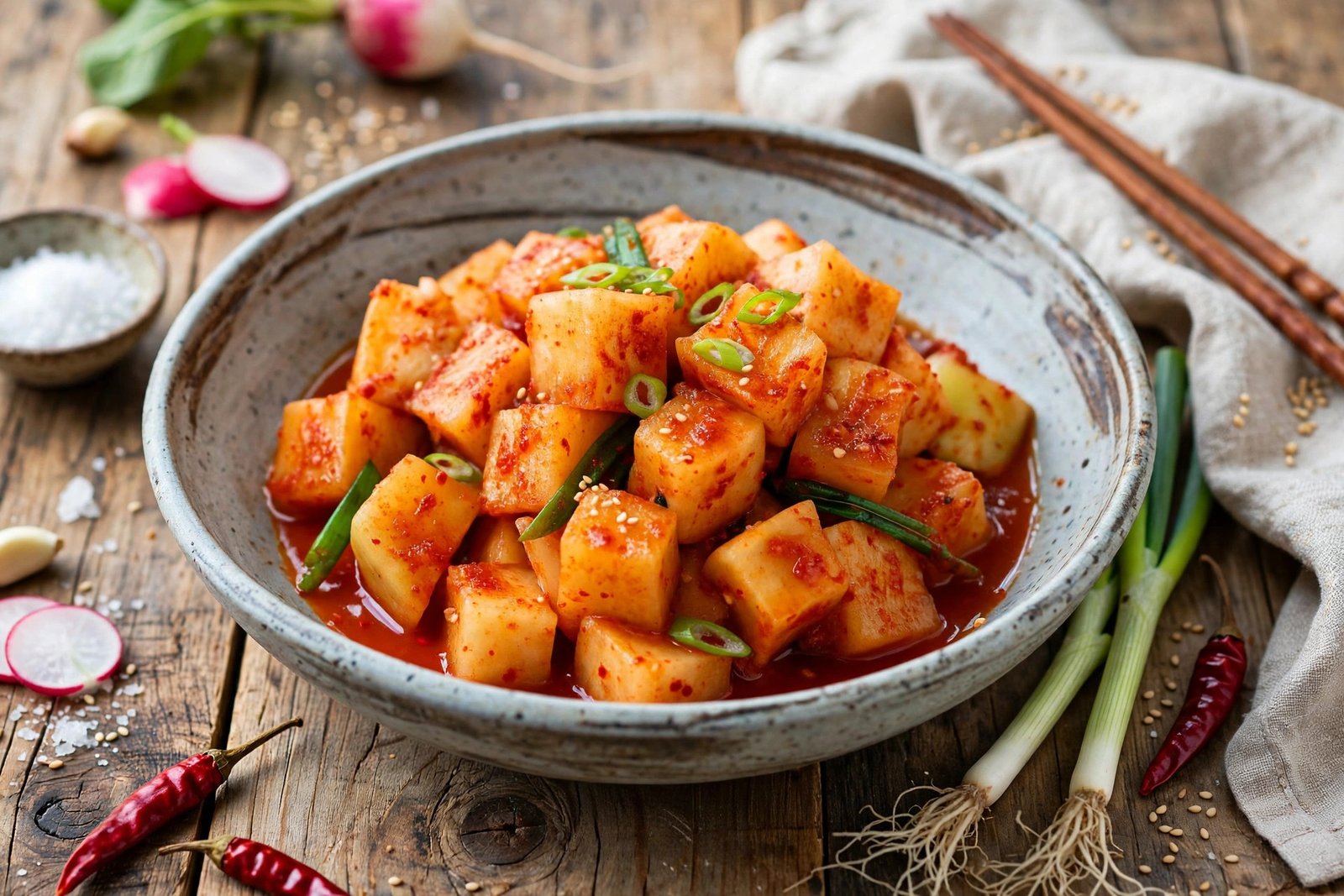
Kkakdugi is kimchi's crunchy cousin: cubes of Korean radish brined and tossed in a fiery gochugaru paste, then left to ferment into something tangy, spicy and deeply addictive. It is the classic partner for seolleongtang and any rich Korean stew.
- Prep time
- 20 mins
- Cook time
- 10 mins
- Total time
- 30 mins
- Servings
- 4 servings
- Calories
- 90
Ingredients
- 1kg Korean radish (mu), peeled and cut into 2cm cubes
- 2 tablespoons coarse sea salt
- 1 tablespoon sugar
- 4 spring onions, cut into 2cm pieces
- 3 garlic cloves, minced
- 1 tablespoon grated fresh ginger
- 3 tablespoons gochugaru (Korean chilli flakes)
- 1 tablespoon fish sauce
- 1 teaspoon shrimp paste (saeujeot), optional
Instructions
- Toss the radish cubes with the salt and sugar and leave for 1 hour, turning once, until they release liquid.
- Drain the radish, reserving 2 tablespoons of the brine.
- Mix the spring onions, garlic, ginger, gochugaru, fish sauce and shrimp paste (if using) into a paste.
- Toss the radish with the paste until every cube is evenly coated.
- Pack into a clean jar, pressing down so the cubes sit in their own liquid, and leave at room temperature for 1-2 days to ferment.
- Refrigerate and eat within 3 weeks. It is ready once it tastes pleasantly tangy.
Pro tips
- Use Korean radish (mu) if you can — daikon works, but mu stays crunchier.
- Do not rinse the radish after brining; the salt balance is part of the ferment.
- Leave a little headroom in the jar — the ferment produces gas as it works.
- Taste after a day; in warm weather it ferments faster.
Frequently asked questions
How long does kkakdugi take to ferment?
At room temperature (around 20-22°C) it usually takes 1-2 days to turn pleasantly tangy. In a cool kitchen it may need 3 days. Once it tastes right, move it to the fridge.
Can I make kkakdugi without fish sauce?
Yes — use soy sauce instead and add a little extra salt. The flavour will be slightly less deep, but it will still be delicious and fully vegan.
Why is my kkakdugi soft?
Softness usually means it fermented too long at room temperature, or the radish was over-salted and left too long before seasoning. Keep the brine short and refrigerate promptly once tangy.
What do I eat kkakdugi with?
It is the classic side for seolleongtang (ox bone soup) and pairs with almost any Korean meal — rice, stews, grilled meat and noodle soups all benefit from its crunch and heat.