Japchae
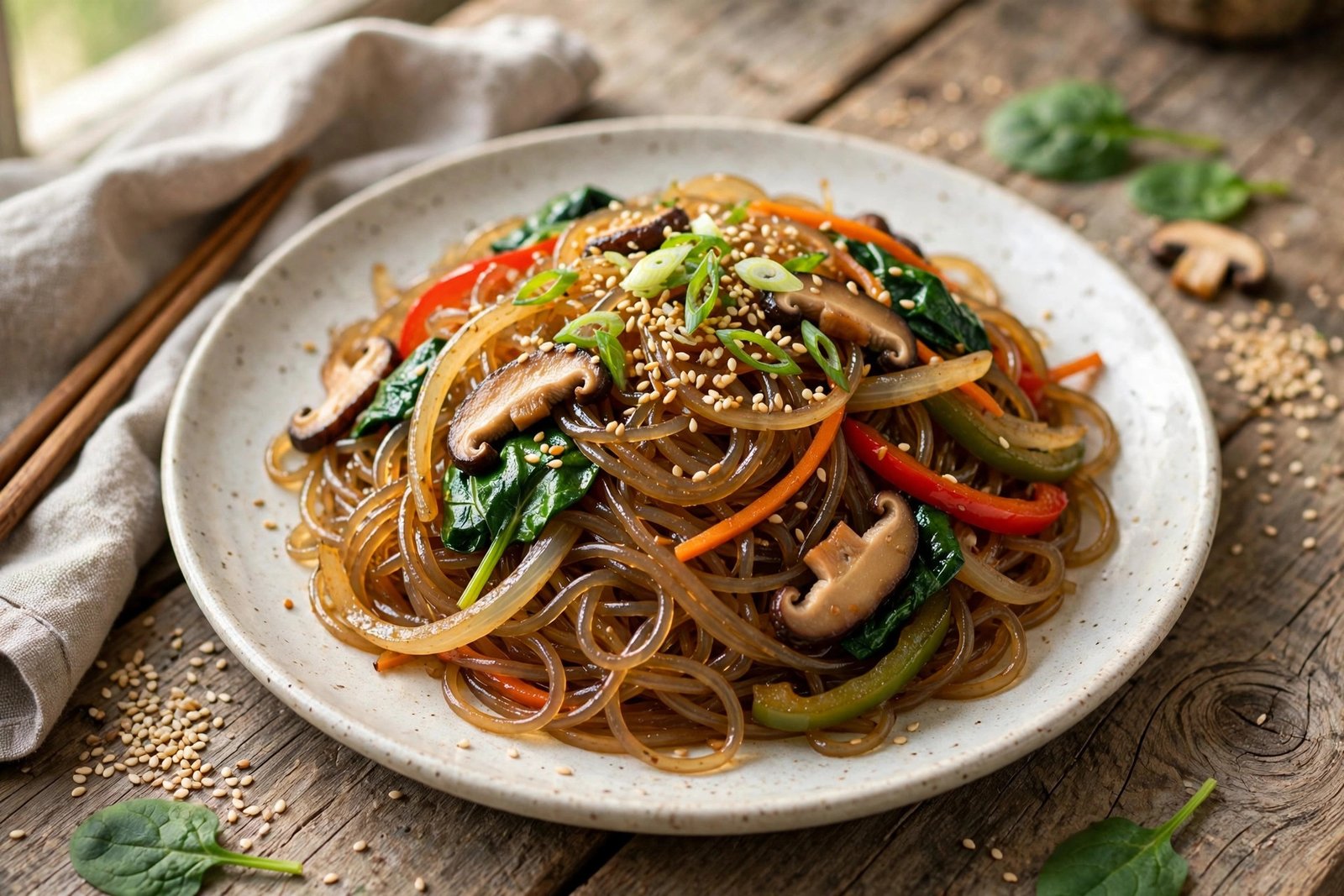
Japchae is Korea's elegant celebration noodle dish — translucent sweet potato glass noodles tossed with silky beef, spinach, carrots, and shiitake mushrooms in a glossy sesame-soy glaze. Each noodle is springy and savory, kissed with toasted sesame. Beautiful enough for a holiday table, easy enough for a weeknight.
- Prep time
- 25 mins
- Cook time
- 20 mins
- Total time
- 45 mins
- Servings
- 4 servings
- Calories
- 360
Ingredients
- 250 g sweet potato glass noodles (dangmyeon)
- 200 g beef sirloin, cut into thin strips
- 75 ml soy sauce, divided
- 1 tablespoon sugar, divided
- 2 tablespoons sesame oil, divided, plus a drizzle for the noodles
- 200 g fresh spinach
- 2 carrots, julienned
- 1 onion, thinly sliced
- 100 g shiitake mushrooms, sliced
- 1 red bell pepper, thinly sliced
- 3 spring onions, cut into 5 cm pieces
- 2 cloves garlic, minced
- 1 tablespoon toasted sesame seeds
Instructions
- Toss the beef strips with 1 tablespoon of the soy sauce, 1 teaspoon of the sugar, and a drizzle of the sesame oil; set aside to marinate while you prep the vegetables.
- Cook the glass noodles in a large pot of boiling water for 6-7 minutes until tender but still springy. Drain, rinse briefly under cold water, and toss with a drizzle of sesame oil so they don't clump.
- Blanch the spinach in the same pot for 30 seconds, then plunge into cold water, squeeze dry, and toss with a pinch of salt and a drop of sesame oil.
- Heat a large skillet over medium-high heat with a little neutral oil. Sear the beef strips for 2-3 minutes until browned, then remove to a plate.
- In the same skillet, stir-fry the carrots, onion, mushrooms, bell pepper, and spring onions in batches for 3-4 minutes each, until just tender but still colorful.
- Return everything to the skillet with the noodles. Pour in the remaining soy sauce and sugar, the rest of the sesame oil, and the garlic, then toss over medium heat for 2-3 minutes until the noodles absorb the glaze.
- Scatter over the sesame seeds, taste and adjust the salt or sweetness, and serve warm or at room temperature.
Pro tips
- Cut the cooked noodles with kitchen scissors into shorter lengths — it makes them far easier to toss and eat.
- Cook the vegetables in small batches so each one keeps its color and bite instead of steaming.
- Japchae is best served at room temperature, which makes it a perfect make-ahead dish for parties.
- For a vegetarian version, swap the beef for extra shiitakes or firm tofu marinated the same way.
Frequently asked questions
What kind of noodles are used in japchae?
Japchae uses dangmyeon — glass noodles made from sweet potato starch. They are naturally gluten-free and turn translucent with a chewy, springy texture when cooked.
Can I make japchae ahead of time?
Yes, japchae keeps beautifully. Refrigerate it up to 2 days; let it come to room temperature before serving, and the noodles stay pleasantly chewy.
Why are my japchae noodles clumping together?
Glass noodles clump if they sit after draining. Rinse them in cold water and toss immediately with a little sesame oil before adding them to the pan.
Can I use other vegetables in japchae?
Definitely — zucchini, cabbage, wood ear mushrooms, and bean sprouts all work. Keep the colors bright and varied, which is part of the dish's charm.