Unadon Recipe
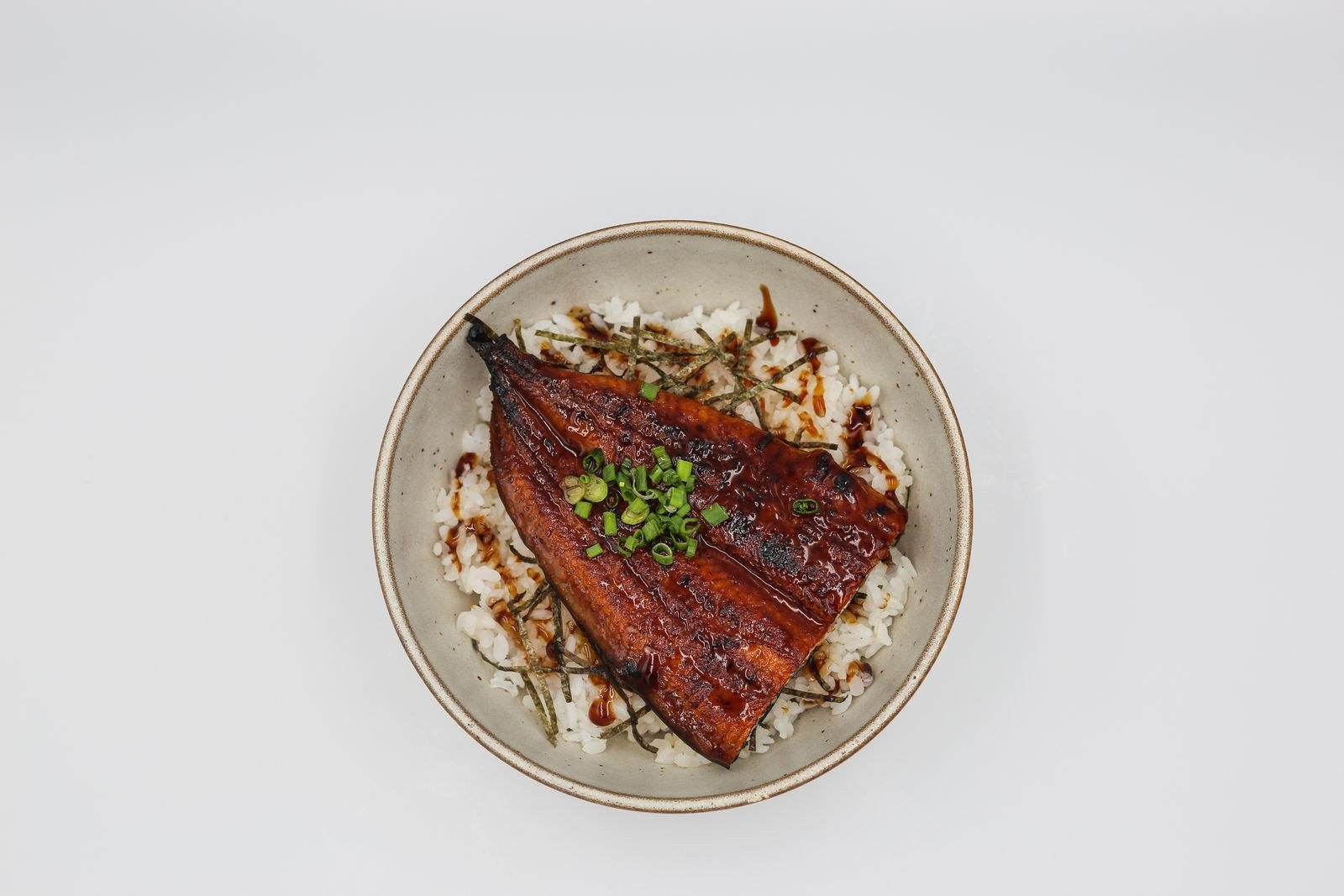
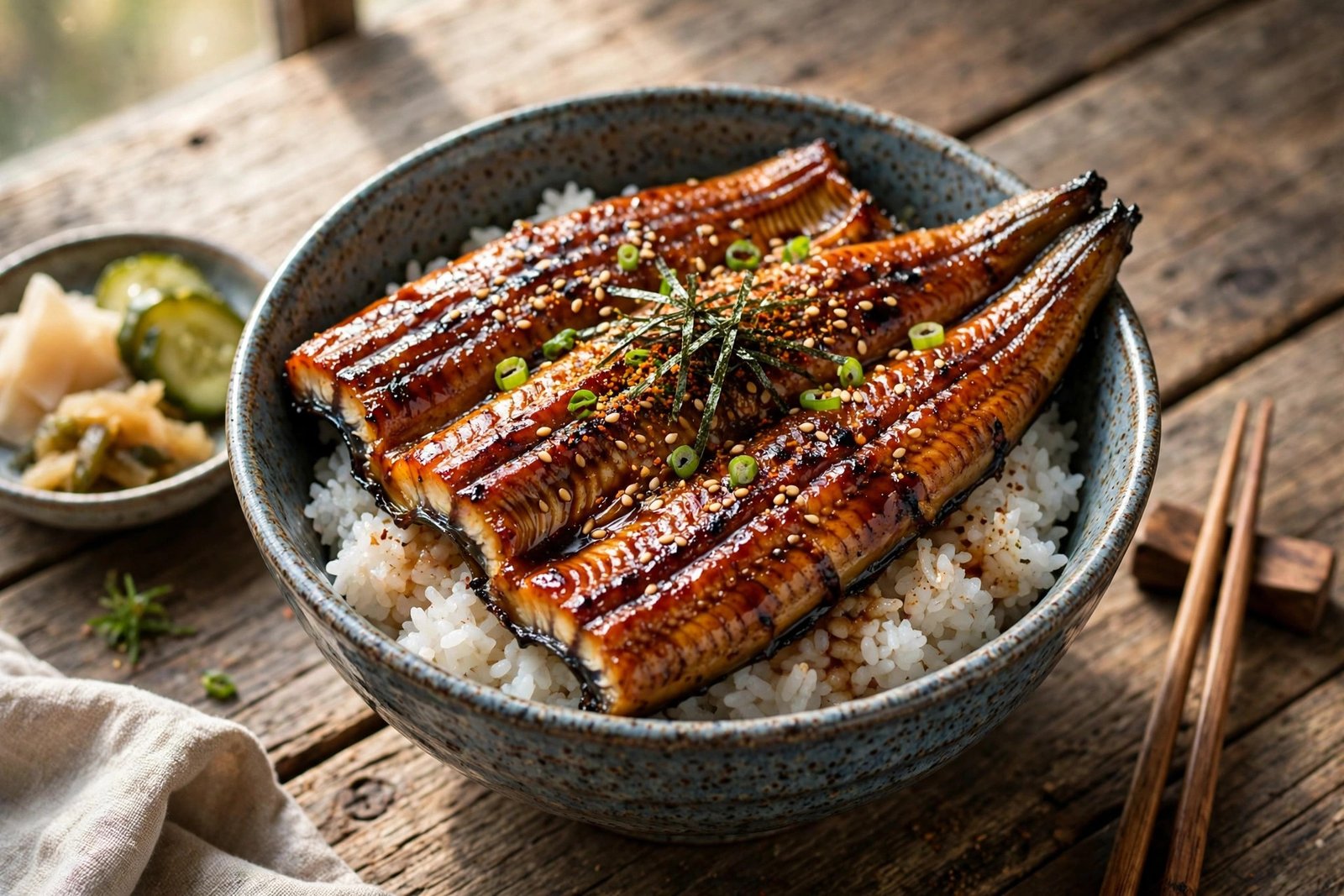
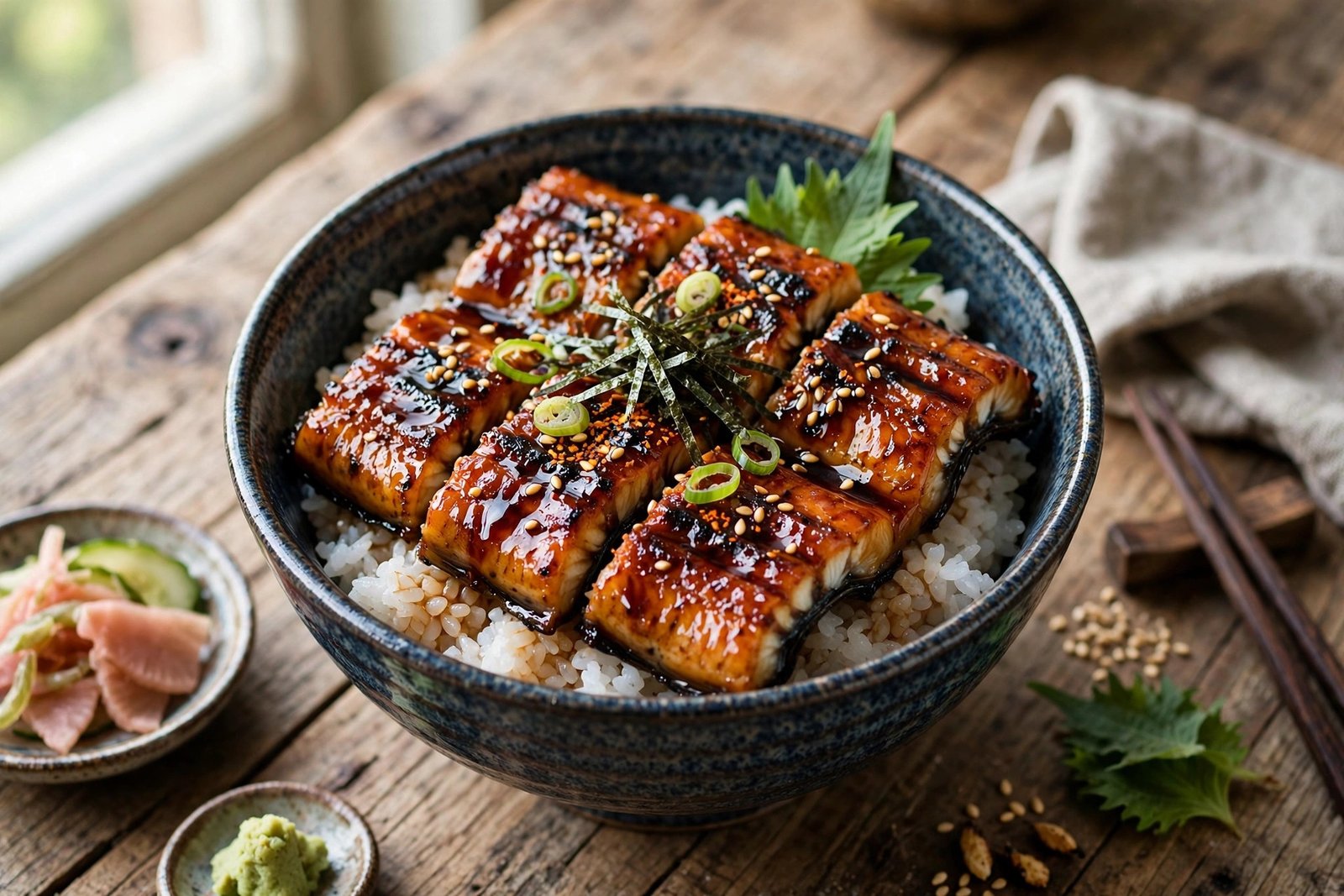
Unadon is one of Japan's great comfort dishes: glossy grilled eel, brushed with a sweet-savoury tare sauce, laid over a bowl of steaming rice. The eel is rich and tender, the sauce is dark and sticky, and the rice underneath soaks up every drop. It is a small luxury, and it tastes like one. It is a small luxury, and it tastes like one, with glossy eel, sticky sauce and steaming rice in every bite.
The story behind Unadon
Unagi, freshwater eel, has been eaten in Japan for well over a thousand years, and it has long been prized as a food that restores strength. The tradition of eating eel on the Day of the Ox in midsummer, Doyo no Ushi no Hi, dates back to the Edo period, when an eel seller is said to have advertised the fish as a cure for summer fatigue. The custom stuck, and eel shops still sell out on that day. The tradition of eating eel on the Day of the Ox in midsummer dates back to the Edo period, when an eel seller advertised the fish as a cure for summer fatigue.
Unadon as a bowl dish took shape in the nineteenth century, when eel restaurants in Edo, now Tokyo, began serving grilled eel over rice in a lacquered box or bowl. The eel is grilled over charcoal, dipped in a tare sauce of soy, mirin and sake, and grilled again until the skin crisps and the flesh turns tender. The sauce, reused and topped up for years in the best shops, is the soul of the dish. The eel is grilled over charcoal, dipped in a tare sauce of soy, mirin and sake, and grilled again until the skin crisps and the flesh turns tender.
What makes it special is the balance of rich and sweet. Eel is a fatty fish, soft and almost buttery, and the tare sauce adds a dark, caramel sweetness with a salty edge. The plain rice underneath is not an afterthought: it catches the sauce, cools the richness, and turns the dish into a complete meal. A little sansho pepper at the end adds a gentle tingle. A little sansho pepper at the end adds a gentle tingle that cuts through the richness and wakes up the flavour of the sauce.
Cook it when you want a treat. It suits a quiet evening, a celebration, or a hot summer day when you want something restorative. Pre-grilled eel from a Japanese grocery makes it a weeknight dish; serve it in deep bowls, with pickles and miso soup on the side. Pre-grilled eel from a Japanese grocery makes it a weeknight dish, so serve it in deep bowls with pickles and miso soup on the side.
- Prep time
- 15 mins
- Cook time
- 20 mins
- Total time
- 35 mins
- Servings
- 4 servings
- Calories
- 620
Ingredients
- 2 large fillets pre-grilled unagi (about 300 g), vacuum-packed
- 400 g Japanese short-grain rice, rinsed
- 500 ml water, for cooking the rice
- 80 ml soy sauce
- 80 ml mirin
- 60 ml sake
- 2 tablespoons sugar
- 1 teaspoon sansho pepper, to serve
- 2 spring onions, finely sliced, to serve
- Pickled ginger, to serve
- 1 tablespoon vegetable oil
Instructions
- Rinse the rice in a bowl under cold water, swirling it with your hand and draining, until the water runs mostly clear. This takes 3 to 4 rinses. Drain well, then put the rice and the water in a saucepan with a tight lid.
- Bring the rice to a boil over medium-high heat, then turn the heat to the lowest setting and cook, covered, for 15 minutes. Do not lift the lid. Turn off the heat and leave it to steam, still covered, for 10 minutes more. The rice should be glossy and tender.
- While the rice cooks, make the tare sauce. Put the soy sauce, mirin, sake and sugar in a small saucepan and bring to a gentle simmer over medium heat. Cook for 5 minutes, stirring now and then, until the sauce thickens slightly and coats the back of a spoon.
- Take the unagi fillets out of their packaging and pat them dry. Brush both sides generously with the tare sauce, then heat a wide frying pan over medium-high heat with the oil.
- Lay the eel fillets skin-side down in the hot pan and cook for 2 minutes, until the skin crisps and sizzles. Brush the tops with more tare sauce, flip them carefully, and cook for 2 minutes more, brushing again as they cook.
- The eel is done when the flesh is hot through, the sauce is glossy and sticky, and the edges have started to caramelise. Take the pan off the heat and slice each fillet into 4 or 5 pieces.
- Divide the hot rice between 4 deep bowls. Drizzle a spoonful of tare sauce over each bowl so the rice underneath picks up the flavour. Lay the sliced eel on top in a neat row.
- While the rice steams, slice the spring onions and set out the bowls, pickled ginger and sansho pepper, so the eel can be served the moment it leaves the pan.
- While the eel cooks, divide the hot rice between the bowls and drizzle a spoonful of tare sauce over each one, so the rice underneath picks up the flavour before the eel goes on top, and set out the pickled ginger and sansho pepper so everything is ready to serve at once.
- Brush the eel once more with tare sauce, sprinkle over the spring onions and a pinch of sansho pepper, and serve at once with pickled ginger and a bowl of miso soup on the side.
Pro tips
- Use pre-grilled unagi from a Japanese grocery. Grilling raw eel at home is a specialist job, and the vacuum-packed fillets are made for this dish. Warm them gently and they taste excellent.
- Do not lift the lid while the rice steams. The trapped steam finishes the cooking, and lifting the lid lets it escape, leaving the top grains hard and the bottom grains wet.
- Brush the tare on generously. The sauce is what makes the dish, and the rice underneath needs its share too. A spoonful over the rice before the eel goes on makes a real difference.
- Heat the pan well before the eel goes in. A hot pan crisps the skin in 2 minutes, while a cool pan lets the eel sit and soften without any texture at all. A hot pan crisps the skin in 2 minutes, while a cool pan lets the eel sit and soften without any texture at all.
- Serve it in deep bowls, not flat plates. The bowl holds the heat, keeps the rice steaming, and lets the sauce pool at the bottom where the last spoonfuls pick it up. The bowl holds the heat, keeps the rice steaming, and lets the sauce pool at the bottom where the last spoonfuls pick it up.
Variations & serving ideas
For a richer bowl, add a soft-cooked egg on top of the rice before the eel. The yolk runs into the rice and adds a silky richness that suits the sweet sauce. Cook the egg for 6 minutes, then cool it in cold water and peel it. The yolk runs into the rice and adds a silky richness that suits the sweet sauce, so cook the egg for 6 minutes, then cool it in cold water and peel it. A sprinkle of toasted sesame seeds over the eel adds a nutty crunch that works well with the sticky sauce.
Swap the eel for grilled salmon or mackerel if unagi is hard to find. The same tare sauce works well on oily fish, and the bowl follows the same build. Salmon needs about 3 minutes per side in the pan, and it should still be slightly pink in the middle. The same tare sauce works well on oily fish, and the bowl follows the same build, with salmon needing about 3 minutes per side in the pan. If you cannot find unagi, use grilled salmon instead, brushed with the same tare sauce and served over rice.
Add a small handful of shredded nori or a spoonful of pickled cucumber for extra texture. The nori brings a toasty, salty note, while the cucumber adds a fresh crunch that cuts through the richness of the eel. The nori brings a toasty, salty note, while the cucumber adds a fresh crunch that cuts through the richness of the eel. Serve it in deep bowls with miso soup and pickles on the side, so the meal feels complete without much extra work.
Serve with miso soup and a simple cucumber salad dressed with rice vinegar. A cup of green tea suits the meal, and the whole spread takes little extra work. Keep the sides light so the eel stays the focus of the meal. A cup of green tea suits the meal, and the whole spread takes little extra work, so keep the sides light and let the eel stay the focus. A cup of green tea is the classic partner, as its clean, grassy flavour balances the rich, sweet eel.
Getting it right
The key technique is the tare sauce. Simmer it gently until it thickens just enough to coat a spoon, about 5 minutes. It should be glossy and pour slowly, not watery and not like syrup. If it gets too thick, add a splash of water. If it is too thin, simmer it for another minute. It should be glossy and pour slowly, not watery and not like syrup, so add a splash of water if it gets too thick. If the sauce gets too thick, add a splash of water, and if it is too thin, simmer it for another minute.
Heat and timing matter for the rice. Bring it to a boil, then drop to the lowest heat at once and leave it alone for 15 minutes, followed by 10 minutes of steaming off the heat. Rushing the rice with high heat burns the bottom and leaves the top raw. Patience is the whole technique here. Rushing the rice with high heat burns the bottom and leaves the top raw, so patience is the whole technique here. The eel only needs warming through and a little crisping, about 2 minutes per side, so watch it closely.
The common mistake is overcooking the eel. Pre-grilled unagi only needs warming through and a little crisping, about 2 minutes per side. Any longer and the flesh dries out and the sauce burns. Watch the edges: when they start to caramelise and darken, the eel is done. Watch the edges, and when they start to caramelise and darken, the eel is done and ready to come off the heat.
Storing & reheating
Unadon is best eaten fresh, as the eel dries out quickly and the rice firms up. If you have leftovers, store the eel and rice separately in sealed containers in the fridge for up to 1 day. Reheat the rice with a sprinkle of water in the microwave, and warm the eel gently in a pan. Reheat the rice with a sprinkle of water in the microwave, and warm the eel gently in a pan until it is hot through.
Do not freeze the finished bowl. The rice turns hard and the eel loses its texture when thawed. The tare sauce, however, keeps well: store it in a jar in the fridge for up to 2 weeks and use it on grilled fish, chicken or vegetables. The tare sauce keeps well in a jar in the fridge for up to 2 weeks.
Frequently asked questions
Where can I buy unagi?
Look in the frozen section of a Japanese or Asian grocery shop, where vacuum-packed grilled unagi is sold. It is usually near the frozen fish. Some larger supermarkets stock it too, and it is available online. It is usually near the frozen fish, and some larger supermarkets stock it too, while it is also available online from Japanese food suppliers.
What is tare sauce?
Tare is a sweet-savoury glaze made from soy sauce, mirin, sake and sugar. It is brushed onto grilled eel, chicken and fish. The version in this recipe is a quick one, but eel shops keep a master batch for years. Tare is a sweet-savoury glaze made from soy sauce, mirin, sake and sugar.
Is unadon expensive to make?
Unagi is the costly part, as good eel is not cheap. A pack of two fillets serves four when sliced over rice, which keeps the cost reasonable. Think of it as a treat dish rather than an everyday meal. A pack of two fillets serves four when sliced over rice.
Can I use a rice cooker?
Yes, and it makes the rice easier. Rinse the rice, add the same amount of water, and cook on the standard white rice setting. Let it rest for 10 minutes after the cooker switches off before you serve it. Rinse the rice and cook it on the standard white rice setting.
What is sansho pepper?
Sansho is a Japanese pepper with a citrusy, tingling flavour, similar to Sichuan pepper. It is the traditional seasoning for unadon. A small pinch is enough, and black pepper is not a good substitute. It is the traditional seasoning for unadon, and a small pinch is enough, while black pepper is not a good substitute for its citrusy tingle.
Can I make unadon without eel?
Yes. Grilled salmon, mackerel or aubergine all work with the same tare sauce and rice. The dish will not be unadon in the strict sense, but the bowl follows the same idea and tastes very good. Grilled salmon, mackerel or aubergine all work with the same tare sauce and rice, and the bowl follows the same idea.