Tsukemen Recipe
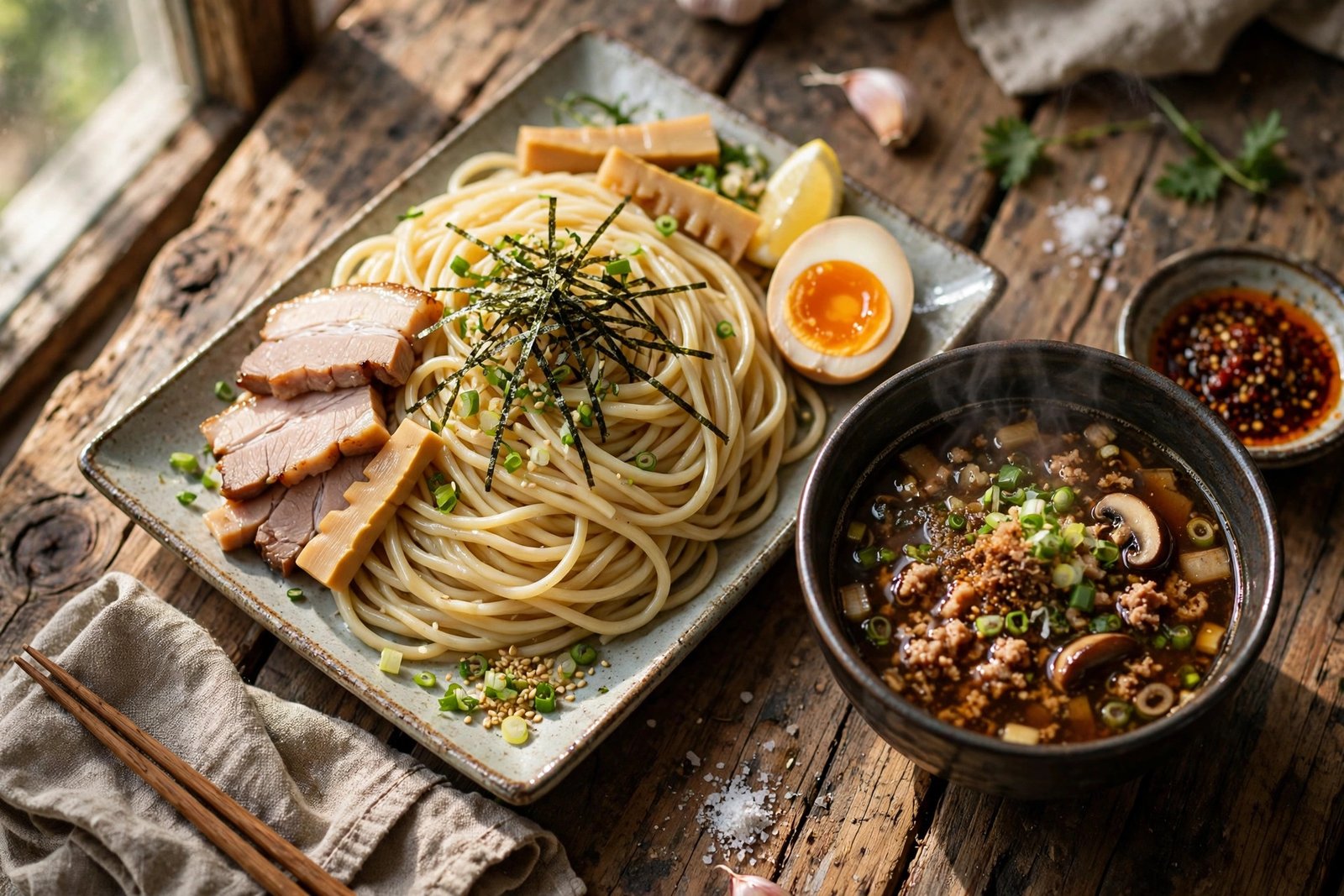
Tsukemen is ramen turned into a dipping ritual: thick, chewy noodles served cold beside a bowl of intensely rich broth. You dip, slurp and repeat, and the broth clings to every strand. It is bolder and more concentrated than regular ramen, and dangerously easy to finish.
- Prep time
- 25 mins
- Cook time
- 2 hours
- Total time
- 2 hours 25 mins
- Servings
- 4 servings
- Calories
- 620
Advertisement
Ingredients
- 4 portions thick fresh ramen noodles
- 800 g pork bones
- 1 onion, halved
- 1 head garlic, halved
- 1 piece ginger, 5 cm
- 3 tablespoons soy sauce
- 2 tablespoons mirin
- 1 tablespoon sake
- 2 teaspoons sugar
- 1 teaspoon dried bonito flakes
- 4 soft-boiled eggs, halved
- 200 g chashu pork, sliced
- 2 spring onions, sliced
- 1 sheet nori, cut into strips
Instructions
- Blanch the pork bones in boiling water for 10 minutes, then rinse clean.
- Return the bones to a clean pot with 2 litres of water, onion, garlic and ginger.
- Simmer gently for 2 hours, skimming often, until the broth is rich and slightly milky.
- Strain the broth and stir in the soy sauce, mirin, sake, sugar and bonito flakes.
- Cook the noodles, rinse them under cold water and drain well, then arrange in bowls.
- Serve the noodles beside small bowls of hot broth topped with chashu, egg, spring onion and nori.
Advertisement
Pro tips
- Skimming the broth keeps it clean-tasting despite its richness.
- Rinsing the noodles in cold water firms them up for dipping.
- Keep the dipping broth very hot and very concentrated.
- Add a splash of hot water to the leftover broth at the end and drink it as soup.
Frequently asked questions
How is tsukemen different from ramen?
The noodles and broth are served separately, and you dip the noodles into a much richer, thicker broth.
Can I use shop-bought stock?
A rich pork or chicken stock works as a shortcut; reduce it by a third to concentrate it.
What noodles work best?
Thick, straight ramen noodles hold the most broth.
Is tsukemen eaten hot or cold?
The noodles are served cool and the broth piping hot.