Tantanmen Recipe
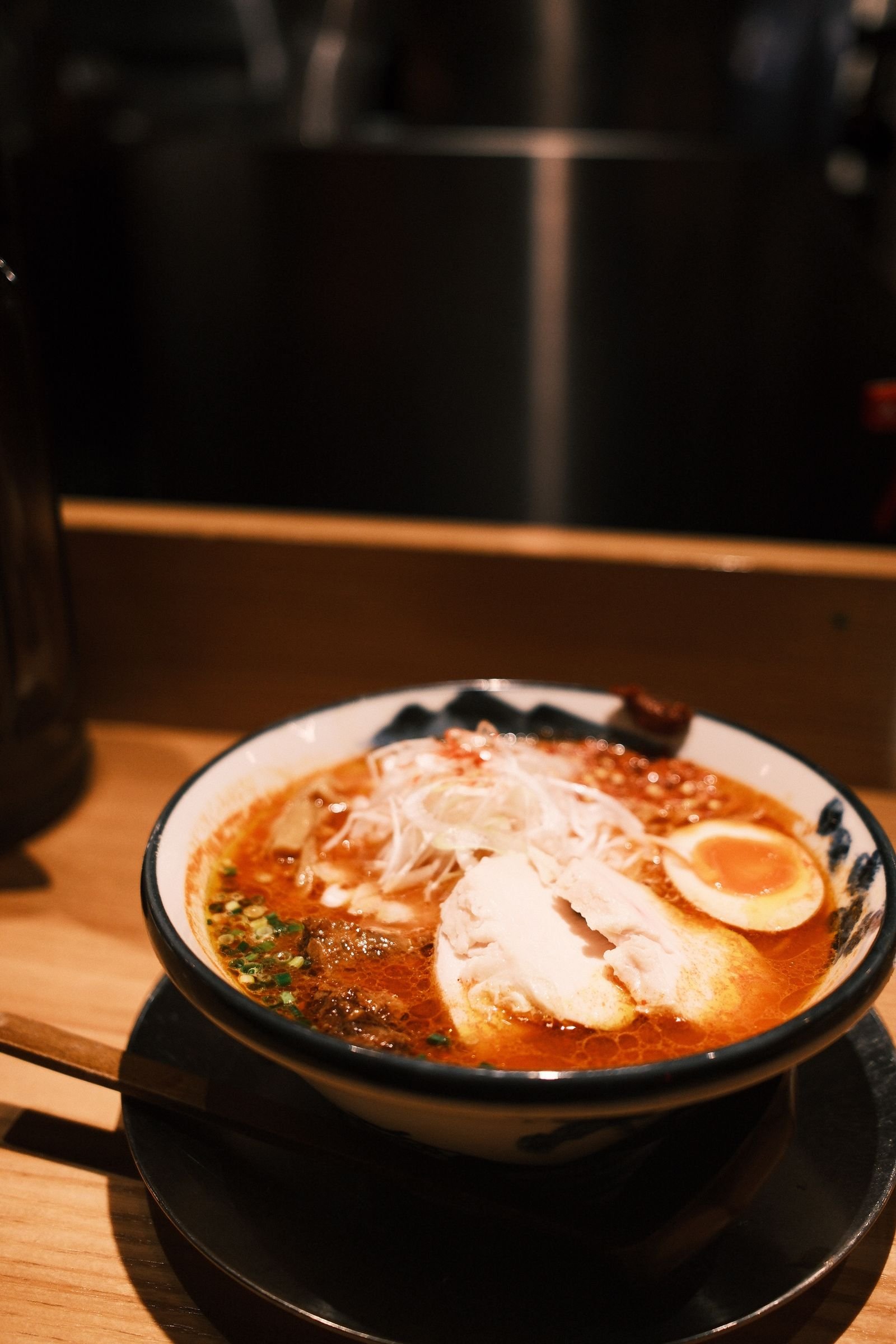
Tantanmen is Japan's answer to comfort in a bowl: springy ramen noodles in a creamy, brick-red broth of sesame and chilli, topped with savoury minced pork and green bok choy. It is spicy, nutty and deeply satisfying, with a heat that builds slowly. Make it on a cold evening when you want a bowl that warms you from the inside out.
The story behind Tantanmen
Tantanmen began life as dandan noodles, the Sichuan street food of noodles tossed with minced pork and chilli oil. When the dish travelled to Japan, cooks changed it into something new. They added a soupy broth, thinned the heat with sesame paste, and turned a dry noodle snack into a full bowl of ramen. The Japanese version is creamier, soupier and a little less fiery than its Chinese ancestor, though it keeps the same soul: noodles, pork and chilli.
In Japan, tantanmen is ramen-shop food. Small shops serve it alongside shoyu and miso ramen, and each shop has its own balance of sesame, chilli and soy. Some make the broth thick and almost white with sesame; others push the chilli oil until the surface glows red. The best shops are judged on balance: the sesame should be rich but not heavy, the heat should warm without burning, and the broth should be savoury enough to drink on its own. Regulars learn which shop matches their taste, and the debate over the best bowl runs as warm as the broth itself. It is a working lunch, a late dinner and a cold-weather favourite all at once.
What makes tantanmen special is the broth. Sesame paste gives it a nutty, creamy body, soy sauce adds savoury depth, and chilli oil brings a slow, warming heat. The minced pork, cooked with garlic and ginger, adds a rich, meaty note, while the bok choy stays crisp and green against all that richness. Every spoonful should carry a little of everything: noodle, broth, pork and green. The spring onions on top add a fresh, sharp note, and the toasted sesame oil at the end gives a warm, nutty aroma that rises with the steam.
Cook this when you want a proper ramen night at home without spending a day on stock. The broth comes together in minutes from pantry ingredients, the pork cooks in ten, and the noodles take four. It is fast food in the best sense: quick to make, but layered and satisfying. Set the table with chilli oil and extra sesame on the side, and let everyone tune their own bowl. A small dish of pickled vegetables on the table adds a sharp contrast, and a cold drink nearby is welcome once the chilli heat starts to build.
- Prep time
- 25 mins
- Cook time
- 30 mins
- Total time
- 55 mins
- Servings
- 4 servings
- Calories
- 640
Ingredients
- 4 portions fresh or dried ramen noodles
- 250 g minced pork
- 3 garlic cloves, minced
- 1 tbsp grated fresh ginger
- 2 tbsp soy sauce and 1 tbsp sake or dry sherry
- 1 tsp sugar
- 60 g tahini or Chinese sesame paste and 1 tbsp miso paste
- 2 tbsp chilli oil, plus more to serve
- 1 litre chicken stock
- 200 ml unsweetened soy milk
- 2 bok choy, leaves separated
- 4 spring onions, finely sliced
- 1 tsp toasted sesame oil
- Salt, to taste
Instructions
- Heat a tablespoon of oil in a large pan over medium-high heat. Add the minced pork and break it up with a spoon. Cook for 5 minutes, stirring often, until the meat browns and the fat renders out. The pan should smell rich and meaty, with the pork turning golden at the edges.
- Add the garlic and ginger and cook for 1 minute until fragrant. Stir in 1 tablespoon of the soy sauce, the sake and the sugar. Cook for 2 minutes more, until the pork is well browned and sticky. Set the pork aside and keep it warm.
- In the same pan, whisk the tahini, chilli oil and miso together over medium heat for 1 minute. The paste will loosen and turn glossy. Pour in the chicken stock a little at a time, whisking constantly so the sesame paste blends smoothly into the broth without lumps.
- Add the soy milk and the remaining soy sauce, then bring the broth to a gentle simmer. Do not let it boil hard, or the soy milk can split. Taste and adjust the salt; the broth should be creamy, nutty and savoury, with a gentle heat at the back of the throat.
- Bring a large pot of water to a rolling boil and cook the ramen noodles according to the packet, usually 3 to 4 minutes for fresh noodles. Fresh noodles cook fast, so watch them closely. Drain well and divide between four deep bowls.
- While the noodles cook, blanch the bok choy in the noodle water for 1 minute until the leaves turn bright green and the stems soften slightly. Lift them out with tongs and set them aside. They should still have a little bite.
- Ladle the hot broth over the noodles in each bowl. The broth should come up to just below the rim, with the noodles peeking through the creamy surface. Swirl the noodles gently with chopsticks so the broth reaches every strand.
- Spoon the seasoned pork over the centre of each bowl and arrange the bok choy around it. The green leaves against the red broth look beautiful, and the pork sitting on top stays hot and fragrant.
- Drizzle each bowl with a little toasted sesame oil and a spoonful of chilli oil. Scatter the spring onions over the top and serve straight away, while the broth is steaming and the noodles are still springy. Eat with chopsticks and a spoon, and finish the broth.
Pro tips
- Use tahini if you cannot find Chinese sesame paste; it works well, though it is a little less toasty. Toast the tahini briefly in a dry pan first for a deeper, nuttier flavour.
- Do not boil the broth hard once the soy milk is in. A gentle simmer keeps it creamy and smooth, while a hard boil can split the milk and leave the broth grainy and thin. Stir well.
- Season the pork well. It is the saltiest, most savoury part of the bowl, and it seasons the noodles as you eat. Taste a piece before you serve; it should be bold enough to stand up to the creamy broth. Taste a piece before you serve it.
- Cook the noodles separately from the broth. Noodles cooked in the broth absorb too much liquid and turn the soup starchy and thick, while separately cooked noodles stay springy and clean.
- Have everything ready before the noodles go in. Ramen waits for no one, and the bowls should be built within a minute of draining so the noodles stay hot and springy. Work fast.
Variations & serving ideas
Swap the pork for minced chicken or turkey for a lighter bowl, or use crumbled firm tofu for a vegetarian version. Cook the tofu the same way, with garlic, ginger and soy, until it turns golden at the edges. For a vegan bowl, use vegetable stock and oat milk instead of soy milk, and check that your miso and noodles are egg-free.
You can change the heat easily. Add more chilli oil for a fierier bowl, or use a mild chilli oil and extra tahini for a creamier, gentler version. A spoonful of peanut butter stirred into the broth adds a different, rounder nuttiness, and a little black vinegar at the table gives a tangy lift. A soft-boiled egg, halved and laid on top, adds richness and makes the bowl feel more complete. Keep the sesame as the base flavour and treat the rest as seasoning. Keep the sesame as the base flavour and treat the rest as seasoning.
Serve tantanmen as a main course on its own; it needs nothing else. A small side of pickled cucumber or a simple seaweed salad adds a cool, sharp contrast if you want one. Gyoza make a good companion for a bigger meal, and cold beer or iced green tea is the classic drink alongside a spicy bowl. A small bowl of steamed rice on the side is also common, for spooning the last of the broth over once the noodles are gone.
Pair it with a cold lager, which cuts through the richness and cools the chilli heat between spoonfuls. Iced green tea does the same job without alcohol and suits the sesame flavours well. If you like wine, a lightly chilled white with a little sweetness, such as an off-dry Riesling, handles the spice nicely. A spoonful of chilli crisp on top adds crunch and extra heat, and a drizzle of black vinegar at the table gives a tangy lift that cuts through the sesame. A soft-boiled egg, halved and laid on top, adds richness and makes the bowl feel more complete. A cold lager is the classic drink with a spicy bowl.
Getting it right
The broth is the heart of the dish, and the key is blending the sesame paste smoothly. Whisk the tahini, chilli oil and miso together first, then add the stock a little at a time, whisking constantly. Adding all the liquid at once leaves lumps that never quite dissolve, while a slow addition gives a silky, even broth. The soy milk goes in last and only needs to warm through. Stir it in gently and let the broth come just to a simmer, then take it off the heat. The broth should look creamy and even, with a thin red slick of chilli oil on the surface.
Control the heat in two places: the pork and the broth. The pork wants high heat so it browns and turns sticky, while the broth wants a gentle simmer so the sesame stays creamy and the soy milk stays smooth. If the broth starts to boil, lift the pan off the heat for a few seconds. A split broth can be rescued by whisking in a spoonful of cold soy milk off the heat.
The most common mistake is overcooking the noodles. Fresh ramen needs only three or four minutes, and it keeps cooking in the hot broth, so pull it a little early. The second common slip is under-seasoning the broth, which leaves the bowl tasting flat and milky. Taste the broth before you ladle it and adjust the soy and salt until it tastes bold on its own. A broth that tastes right by the spoonful will taste perfect once the noodles are in. Taste the broth before you ladle it and adjust the soy and salt until it tastes bold on its own.
Storing & reheating
Tantanmen is best eaten fresh, straight from the bowl, but the parts keep separately in the fridge for up to 2 days. Store the broth, pork and noodles in separate containers, since noodles left in broth turn soft and swell. Reheat the broth gently until steaming, warm the pork in a pan, and cook fresh noodles for the best result.
The broth and pork freeze well for up to 2 months in sealed containers. Thaw overnight in the fridge, then reheat the broth gently without boiling and warm the pork in a pan. Cook fresh noodles and bok choy on the day you serve it, and the bowl will taste almost as good as the first time. Label the containers with the date.
Frequently asked questions
What is the difference between tantanmen and dan dan noodles?
Tantanmen is the Japanese version of Chinese dan dan noodles. The Chinese original is a drier dish with noodles tossed in chilli oil and pork, while tantanmen adds a creamy sesame broth and serves the noodles in soup, making it a proper bowl of ramen.
Can I make tantanmen vegetarian?
Yes. Swap the pork for crumbled firm tofu cooked with garlic, ginger and soy, and use vegetable stock instead of chicken stock. Use oat milk or soy milk and check that your noodles are egg-free for a fully vegan bowl.
Is tantanmen very spicy?
It has a gentle, warming heat rather than a fierce burn. The chilli oil gives warmth at the back of the throat, while the sesame paste softens it. You can make it milder with less chilli oil or hotter with an extra spoonful at the table.
Can I use peanut butter instead of sesame paste?
Yes, smooth peanut butter works as a substitute and gives a rounder, sweeter nuttiness. It changes the flavour a little, so use a little less than the sesame paste and taste as you go. Tahini is the closer match if you can find it.
What noodles should I use for tantanmen?
Fresh ramen noodles are best, with their springy bite and quick cooking time. Look for them in the chilled section of an Asian grocery, where they are sold in bundles. Dried ramen noodles work well too, and instant ramen without the seasoning packet will do.
Can I make the broth ahead of time?
Yes. The broth keeps in the fridge for up to 2 days and freezes well for 2 months. Reheat it gently without boiling, and cook the noodles and bok choy fresh when you serve. The pork also keeps well and reheats in a pan.