Shrimp Tempura Recipe
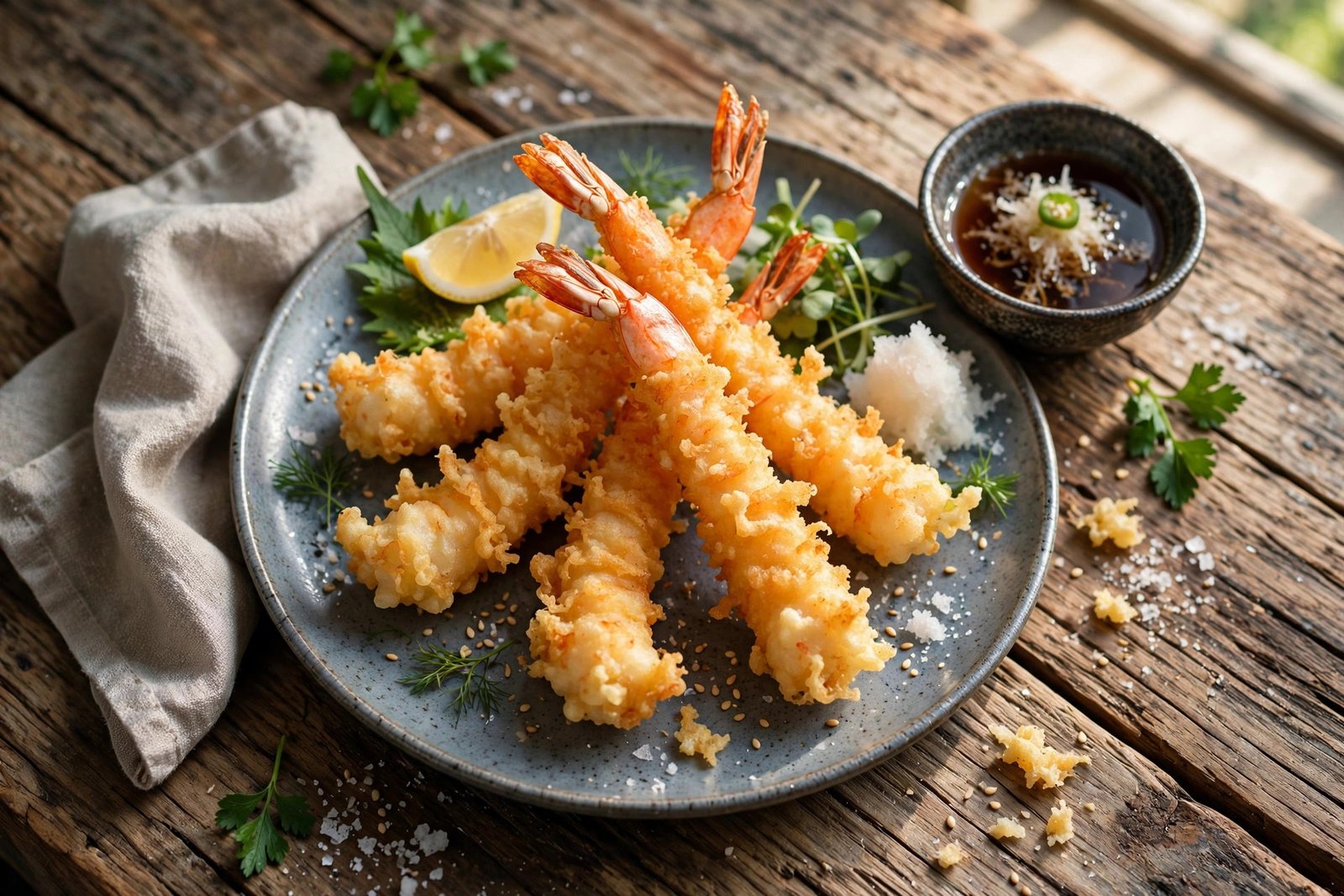
Shrimp tempura is one of Japan's most loved dishes — sweet prawns wrapped in a whisper-light, lacy batter that shatters at the first bite. The secret is a cold, barely mixed batter and properly hot oil, both easy to master in a home kitchen. Served with a savoury tentsuyu dipping sauce and grated daikon, it is delicate, crisp, and endlessly moreish.
The story behind Shrimp Tempura
Tempura arrived in Japan in the 16th century with Portuguese traders and missionaries, who fried fish and vegetables in batter during Lent — the Latin phrase quatuor tempora, the Ember Days, is where the name likely comes from. Japanese cooks took the technique and made it their own, refining it over centuries into something lighter and more precise than the original.
The Japanese version is all about restraint. The batter is barely mixed, the oil is hot, and the frying is fast — the goal is a coating so thin and lacy that you can almost see through it. In Tokyo, the great tempura counters fry each piece to order in front of the customer, serving it seconds after it leaves the oil. It is as much a craft as a recipe.
What makes tempura special is the contrast: a shattering crust and a sweet, just-cooked prawn inside. The batter does not hide the shrimp the way a thick coating does — it frames it. The tentsuyu dipping sauce adds a savoury, slightly sweet note, and the grated daikon and ginger cut through the richness so you can keep eating piece after piece.
Cook it when you want something that feels a little special without a lot of work. It suits a quiet dinner for two, a starter before a Japanese meal, or a weekend lunch with rice and miso soup. It is also a good dish to cook with friends in the kitchen — the frying is quick, the results are dramatic, and everyone gathers round the moment the first batch comes out.
Tempura also shows how much of Japanese cooking is about doing one simple thing well. There is no long list of spices and no complicated sauce — just cold batter, hot oil and good shrimp. The skill is in the details: the temperature of the water, the few seconds of mixing, the size of the batch. Get those right and the result is unmistakable. It is a dish that rewards attention, and it teaches a cook more about frying than a dozen heavier recipes.
- Prep time
- 25 mins
- Cook time
- 20 mins
- Total time
- 45 mins
- Servings
- 4 servings
- Calories
- 520
Ingredients
- 16 large shrimp, peeled and deveined, tails left on
- 100 g cake flour or all-purpose flour, plus extra for dusting
- 30 g cornstarch
- 1 large egg, cold
- 200 ml ice-cold sparkling water
- 1 liter neutral oil (such as rice bran or canola), for frying
- 120 ml dashi stock
- 40 ml soy sauce
- 40 ml mirin
- 2 cm daikon radish, grated
- 1 tablespoon grated fresh ginger
Instructions
- Straighten each shrimp by making 3 to 4 shallow cuts along its belly and gently pressing it flat, then pat dry. This stops them from curling in the hot oil. Take your time here — a straight shrimp fries evenly and looks far better on the plate.
- Make the tentsuyu dipping sauce first: simmer the dashi, soy sauce, and mirin together for 3 minutes, then let it cool. Divide among small dipping bowls and top each with a spoonful of grated daikon and ginger. Getting the sauce done early means the frying can run without interruption.
- Heat the oil in a deep pot or wok to 175°C (350°F). Test with a drop of batter — it should sink halfway and then rise, sizzling gently. If it sinks to the bottom and stays there, the oil is too cool; if it browns at once, it is too hot.
- Whisk the cold egg and ice-cold sparkling water in a bowl, then add the flour and cornstarch. Stir roughly with chopsticks for a few seconds only — lumps are essential for a lacy crust. Keep the batter bowl over ice if your kitchen is warm, and do not be tempted to smooth it out.
- Dust each shrimp lightly in flour, shake off the excess, and dip into the batter to coat thinly. The dusting gives the batter something to grip. A thin, uneven coat is what you want — thick batter fries heavy and chewy.
- Fry 3 to 4 shrimp at a time for 2 to 3 minutes until pale golden and crisp, turning once. Do not overcrowd the pot or the oil temperature will drop. Listen for the sizzle — it should stay lively the whole time. If it goes quiet, the oil has cooled and the shrimp will turn greasy.
- Lift out with a slotted spoon, drain on a wire rack (not paper towels, which trap steam), and let the oil return to 175°C before the next batch. Skim any stray batter bits from the oil between batches so they do not burn and spoil the flavour.
- Before the last batch, check the oil temperature again with the thermometer. After several batches it can drift, and a quick check keeps the final pieces as crisp as the first. If the oil has dropped, wait a minute for it to climb back to 175°C.
- Serve immediately with the tentsuyu sauce, lemon wedges if you like, and steamed rice. Tempura waits for nobody — the crust is at its best in the first minute out of the oil, so get it to the table while it is still shattering.
Pro tips
- Ice-cold batter is the number one rule — cold liquid slows gluten formation and keeps the crust light. Keep it on a bowl of ice, and use sparkling water straight from the fridge. Use the egg straight from the fridge — a warm egg warms the batter.
- Use an oil thermometer; too cool and the tempura turns greasy, too hot and it browns before the shrimp cooks through. The batter-drop test is a decent backup, but a thermometer never guesses.
- Mix the batter at the last minute and use it up within 20 minutes for the crispest results. Once flour meets water, the clock starts — an old batter makes a heavy crust.
- Skim stray batter bits from the oil between batches so they don't burn and taint the flavor. A small strainer or slotted spoon does the job in seconds.
- Leftover batter fries into crunchy tenkasu (tempura bits) — perfect sprinkled over udon or rice. Just drizzle spoonfuls of batter into the hot oil and scoop them out when golden.
Variations & serving ideas
The same batter works on almost anything. Sweet potato, aubergine, green beans, mushrooms and courgette all fry beautifully — vegetables need just 1 to 2 minutes. White fish fillets, squid rings and scallops are good too. A mixed tempura platter, with shrimp and vegetables together, is how it is often served in Japan.
Try kakiage, the mixed fritter version: chop shrimp and vegetables small, bind them loosely with the same batter, and drop spoonfuls into the oil. They fry into rough, golden nests that are wonderful over rice with tentsuyu poured on top. It is a good way to use up odds and ends of vegetables.
Change the sauce and the dish shifts. A simple salt-and-lemon finish is how many tempura counters serve the first piece, letting the flavour of the shrimp speak. Ponzu, the citrus-soy sauce, is a lighter alternative to tentsuyu. A spoonful of grated daikon with soy sauce on the side works too.
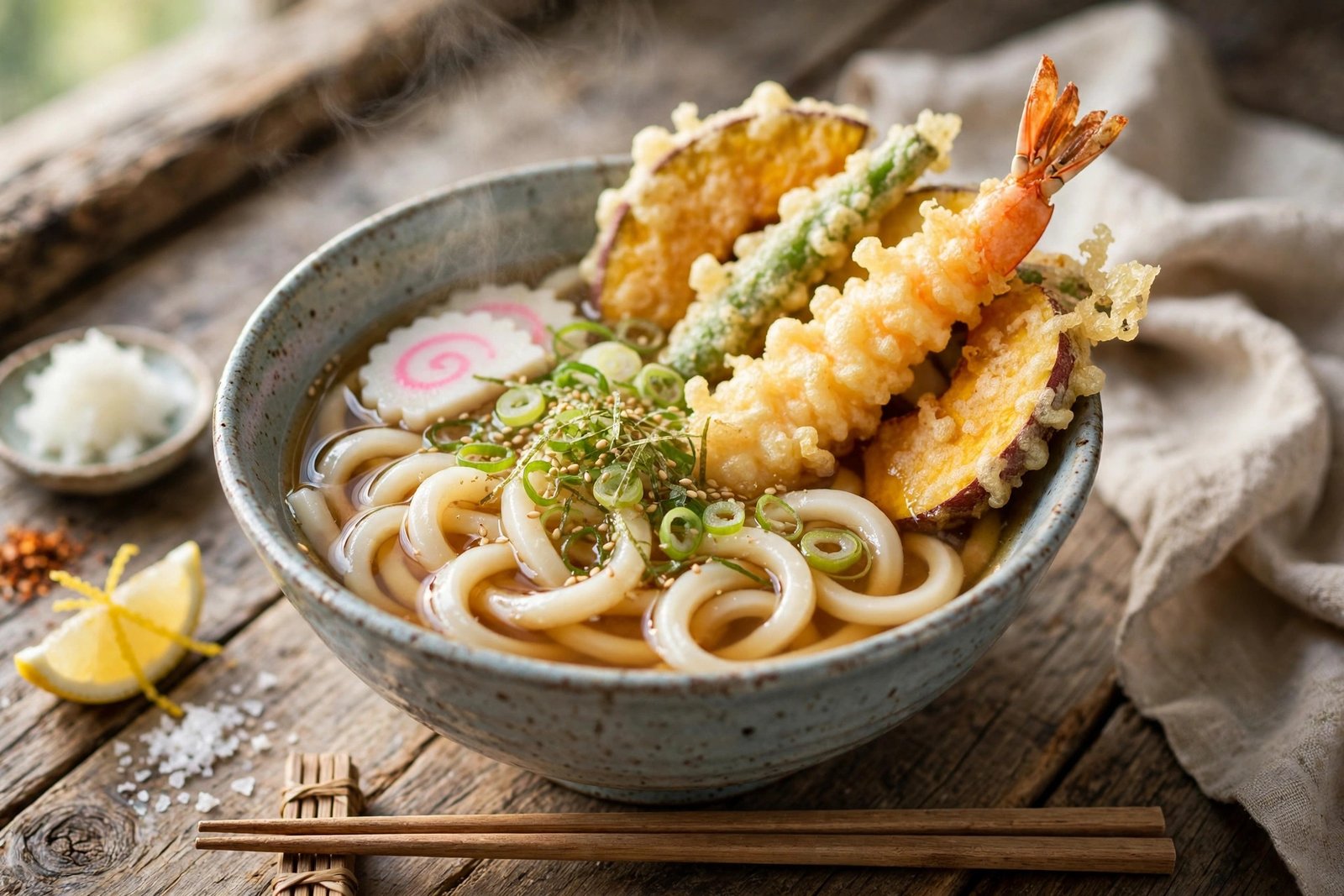
Serve tempura over rice as tendon — a bowl of steamed rice topped with tempura and a drizzle of tentsuyu — or alongside udon and soba noodles. It also makes a fine topping for a salad of shredded cabbage and cucumber. Eat it fresh, straight from the oil, while the crust is still shattering.
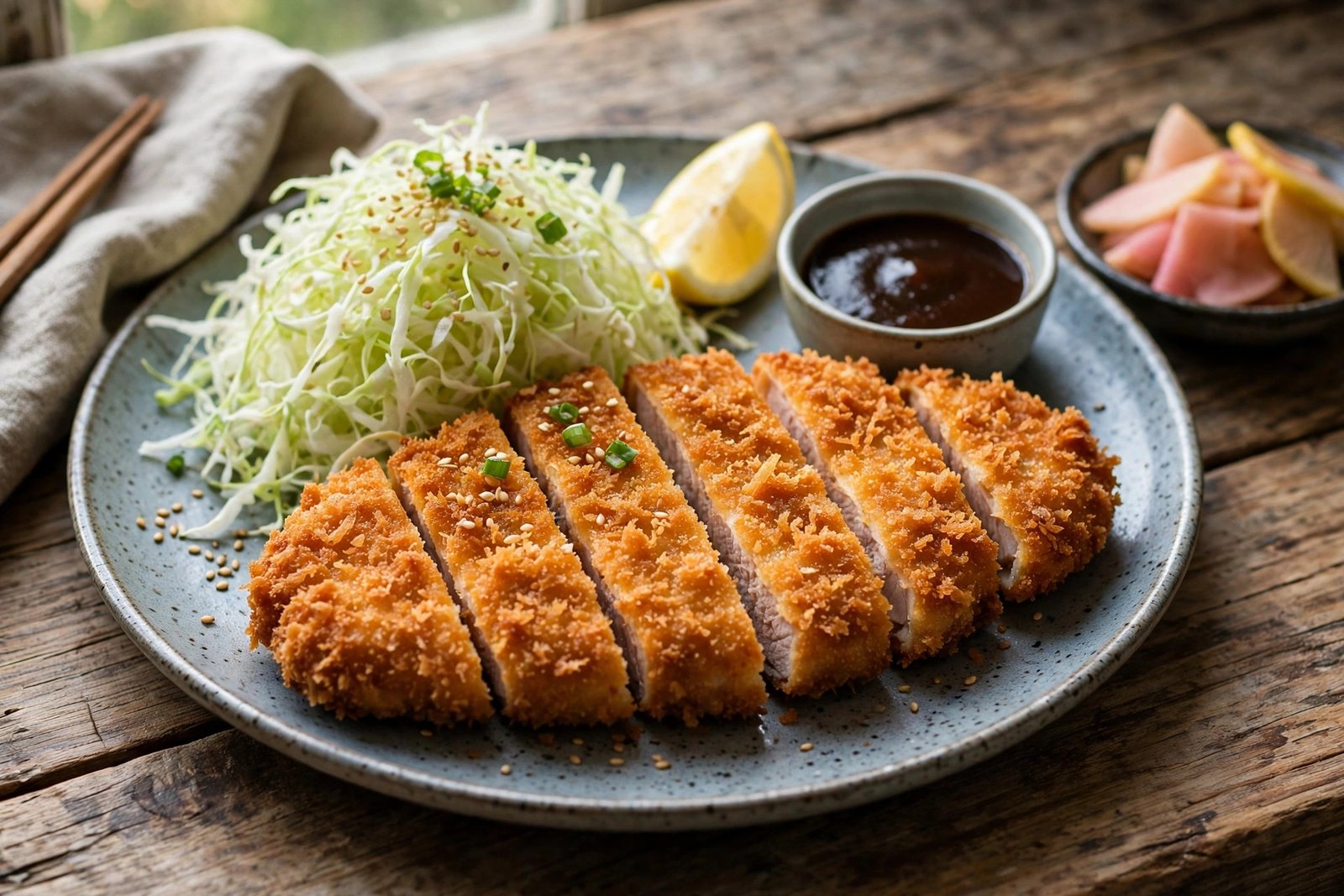
For a lighter meal, serve tempura with a big bowl of shredded cabbage and a wedge of lemon instead of rice. The cold, crunchy cabbage is the classic side in Japanese tempura shops, and it cleans the palate between pieces. A small bowl of miso soup on the side rounds the meal out without adding weight.
Getting it right
Cold is the first rule. Ice-cold water, a cold egg, and a bowl sitting over ice slow down gluten formation in the flour, and gluten is what makes batter heavy and chewy. The second rule is barely mixing — stir with chopsticks for a few seconds and stop while there are still lumps. A smooth batter makes a smooth, tough crust; a lumpy batter fries into the lacy, uneven coating that shatters.
Oil temperature is the second half. At 175°C the batter sets at once and puffs into a light shell. Too cool and it drinks oil and turns greasy; too hot and it browns before the shrimp cooks through. Fry three or four pieces at a time, and let the oil come back up to temperature between batches. A thermometer removes the guesswork.
The most common mistake is overmixing the batter or letting it warm up while you work. Mix it at the last minute and use it within 20 minutes. The other mistake is draining on paper towels, which trap steam and soften the crust — a wire rack lets air circulate and keeps it crisp. Skim stray batter bits between batches so they do not burn and spoil the oil.
The batter bowl itself matters too. A metal bowl set over a larger bowl of ice keeps the batter cold while you work, which is the single easiest way to keep the crust light. If your kitchen is warm, make the batter in two smaller batches instead of one big one, mixing the second only when the first is used up.
Storing & reheating
Tempura is best eaten the moment it leaves the oil, and it never quite recovers its first crispness. If you must keep it, cool it completely on a wire rack, then store it in a single layer in a sealed container in the fridge for up to a day. Stacking the pieces crushes the coating.
Re-crisp leftovers in a 200°C oven or air fryer for 5 minutes until hot and crunchy again. Never use the microwave — it turns the coating soft and chewy in seconds. The tentsuyu sauce keeps in the fridge for up to a week; warm it gently before serving.
Frequently asked questions
Why is my tempura soggy instead of crispy?
Usually the oil was too cool or the pan was overcrowded, which drops the temperature and lets the shrimp absorb oil. Keep the oil at 170–180°C and fry in small batches. Drain on a wire rack, not paper towels, and check that the batter was ice-cold when you mixed it.
Can I use regular flour for tempura?
Yes — all-purpose flour works fine, and cake flour is even better because of its lower protein. Avoid bread flour, which makes the batter heavy and chewy. Whichever flour you use, keep the batter cold and barely mixed for the lightest crust.
What oil is best for tempura?
A neutral oil with a high smoke point, such as rice bran, canola, or vegetable oil. Traditional Japanese shops add a little sesame oil for aroma, but neutral oil alone is perfectly fine. Use fresh oil and skim the batter bits between batches. Sesame oil adds aroma but burns at a lower temperature, so if you use it, keep it to a tablespoon mixed into a litre of neutral oil.
How do I store leftover shrimp tempura?
Tempura is best eaten fresh, but you can re-crisp leftovers in a 200°C oven or air fryer for 5 minutes. Avoid the microwave, which makes the coating soggy. Cool the pieces on a wire rack first and store them in a single layer in the fridge for up to a day.
Can I make tempura batter ahead of time?
No — the batter must be mixed at the last minute. Once the flour meets the water, the gluten starts to develop and the batter loses its lightness. Have everything ready first — shrimp straightened, oil hot, sauce made — then mix the batter and use it within 20 minutes.
Why do the shrimp curl up when frying?
Shrimp curl because the muscle on the belly side tightens in the heat. Make 3 to 4 shallow cuts along the belly and press each shrimp flat before frying — that releases the tension and keeps them straight. Patting them dry first also helps the batter stick. If a shrimp still curls a little, it is still fine to eat — the cuts just make it neater and help the batter coat evenly.