Sanma no Shioyaki Recipe
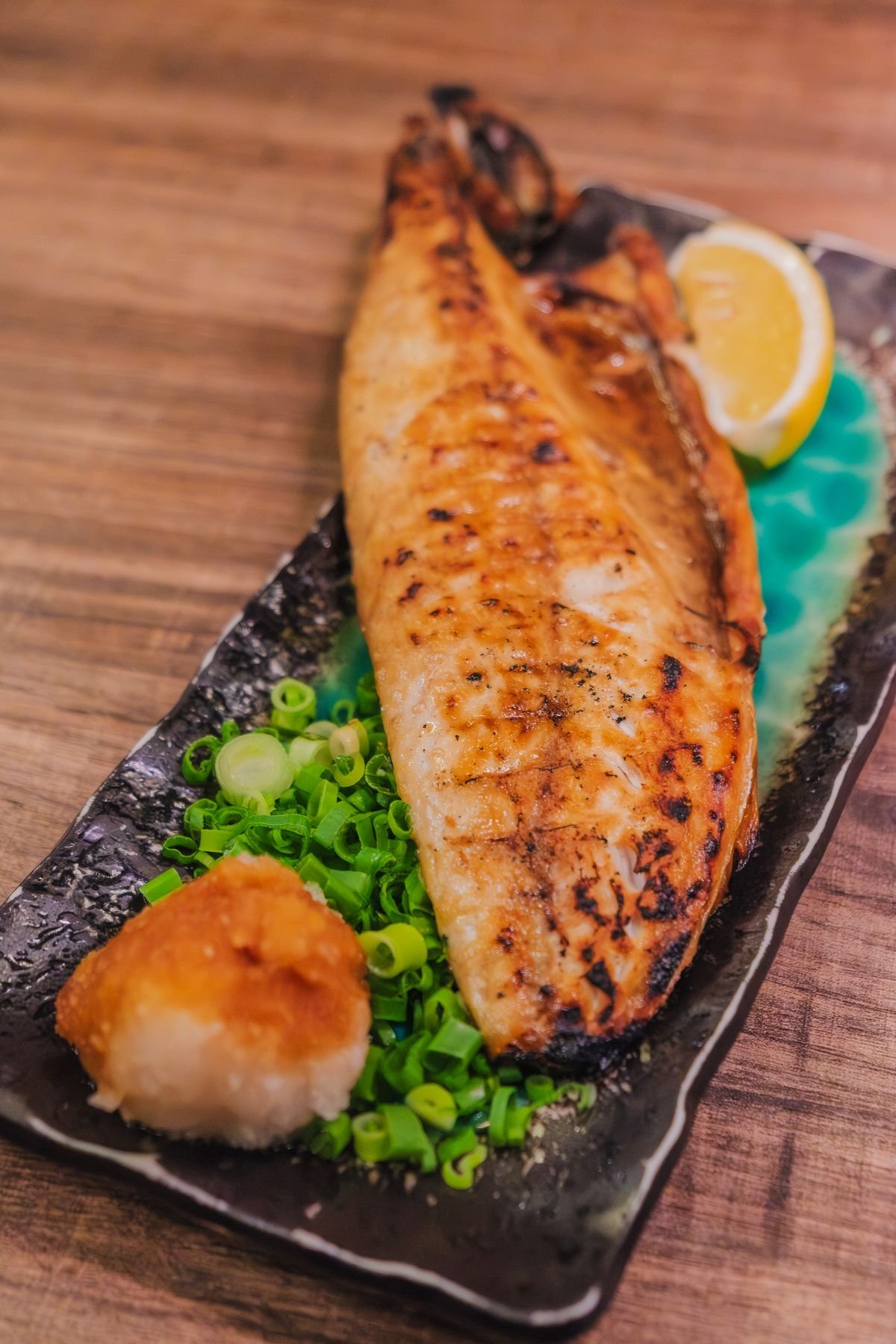
Sanma no Shioyaki is Japan's taste of autumn: a whole Pacific saury, salted and grilled until the skin turns crisp and golden, then served with grated daikon and soy sauce. The flesh is rich and oily, the skin is salty and crackling, and the daikon cuts through the richness. It is simple, seasonal and deeply satisfying.
The story behind Sanma no Shioyaki
Sanma means autumn knife fish, named for the season when it is fattest and for its long, narrow body, like a blade. Each autumn, the saury swim south past the coast of Japan, and fishermen catch them in huge numbers. For centuries, the arrival of the sanma has marked the start of autumn in Japan, and the fish appears on dinner tables all over the country. The fish is caught at night, drawn to the surface by bright lights on the boats, a method called sanma fishing that has been used for generations.
The dish is as old as the catch itself. Coastal families salted the fish and grilled it over charcoal, eating it with grated daikon, soy sauce and a bowl of rice. There was no recipe to write down: salt the fish, grill it whole, and serve it hot. The dish became a symbol of the season, and poems and songs have been written about the first sanma of autumn. In autumn, the fish is so common in Japan that it is sold cheaply in every supermarket, and families eat it several times a week.
What makes it special is the fish itself. Sanma is oily, like mackerel, and the fat keeps the flesh moist under the grill while the skin turns crisp. The salt draws out moisture from the skin, so it crackles when you bite it, and the flesh inside stays soft and rich. Grated daikon with a splash of soy sauce gives a sharp, fresh contrast that stops the richness from becoming heavy. The liver of the sanma is bitter, and some people eat it with the flesh, since the bitterness is thought to balance the rich, oily flavour.
Cook it in autumn, when the saury are fat and cheap and at their best. It suits a simple dinner of rice, miso soup and pickles, eaten at the table with chopsticks. Serve it whole, head and all, as the Japanese do, and eat it with rice and a squeeze of lemon. The dish is often eaten with a bowl of rice and a glass of sake, and it is one of the meals that Japanese people miss most when they live abroad.
- Prep time
- 10 mins
- Cook time
- 15 mins
- Total time
- 25 mins
- Servings
- 4 servings
- Calories
- 320
Ingredients
- 4 whole Pacific saury (sanma), gutted and cleaned
- 2 teaspoons sea salt
- 1 tablespoon vegetable oil, for the grill
- 200 g daikon radish, peeled
- 3 tablespoons soy sauce
- 1 lemon, cut into wedges
- 1 spring onion, finely sliced (optional)
- Cooked rice, to serve
- Miso soup, to serve
Instructions
- Rinse the saury under cold water and pat them dry with paper towel, inside and out. The fish must be dry, or the salt will not stick and the skin will steam instead of crisping. Check that the cavity is clean and free of any remaining innards. Look for fish with clear eyes and shiny skin, since dull eyes and faded skin are signs that the fish is no longer fresh.
- Sprinkle the salt evenly over both sides of each fish, using about half a teaspoon per fish. Rub it gently into the skin with your fingers, then leave the fish on a plate for 10 minutes. The salt draws moisture out of the skin, which is what makes it crisp on the grill. Use fine sea salt rather than table salt, since it sticks to the skin better and gives a cleaner, less harsh flavour.
- While the fish rests, peel the daikon and grate it finely on a box grater or a Japanese oroshigane. Put the grated daikon in a small bowl and squeeze it lightly to remove the excess water. You need about 3 tablespoons of grated daikon per serving. Grate the daikon just before serving, since grated daikon loses water quickly and tastes best when it is freshly made.
- Heat the grill to high, or light a charcoal grill until the coals are white-hot. Brush the grill rack lightly with oil so the skin does not stick. Lay the fish on the rack with a little space between them, so the heat reaches all sides. Brush the rack with oil using a folded piece of paper towel held in tongs, so your fingers stay away from the hot grill.
- Grill the fish for 6 to 7 minutes on the first side, without moving it. The skin will start to blister and turn golden, and the flesh will firm up. You should hear a steady sizzle and smell the rich, oily smoke of the fish.
- Turn the fish carefully with tongs or two spatulas, taking care not to tear the skin. Grill for 6 to 7 minutes more, until the skin on the second side is crisp and golden and the flesh flakes easily when you press it with a chopstick near the tail.
- Check the flesh near the tail with a chopstick: it should flake easily and the juices should run clear.
- Lift the fish onto a serving plate and let it rest for 2 minutes. Serve at once, with a mound of grated daikon on the side, a small dish of soy sauce, and lemon wedges. Pour a little soy sauce over the daikon and eat the fish with the daikon, a squeeze of lemon and a bowl of rice.
Pro tips
- Salt the fish and leave it for 10 minutes before grilling. The salt draws water out of the skin, and dry skin crisps on the grill while wet skin steams. Skipping this step gives you soft, pale skin instead of a golden crackle. If the fish is very large, score the skin lightly in two places, which helps the heat reach the flesh and stops the skin from curling.
- Keep the fish dry. Pat it well with paper towel before you salt it, and do not rinse it again after salting. Any water on the surface turns to steam on the grill and stops the skin from crisping. Keep a spray bottle of water near the grill, in case the fat drips and flares up, which can scorch the skin.
- Do not move the fish while it grills. It needs 6 to 7 minutes undisturbed on each side for the skin to set and crisp. Moving it early tears the skin and leaves the fish stuck to the rack. Serve the fish on a warm plate, so it stays hot while you eat, though the skin is best eaten in the first few minutes.
- Oil the grill rack before the fish goes on. A light brush of oil stops the skin from sticking, and it also helps the skin brown evenly. If the fish sticks, wait a minute longer before you try to turn it.
- Serve it at once, while the skin is still crisp. Grilled fish softens as it cools, and the crackling skin is the best part of the dish. Have the rice, soup and daikon ready before the fish comes off the grill.
Variations & serving ideas
For a different fish, use mackerel, sardines or horse mackerel, all of which grill well with salt. Mackerel is oilier and takes a minute longer per side, while sardines are smaller and need only 4 minutes per side. The method and the daikon are the same. A little grated ginger mixed into the daikon adds warmth, and it is a common addition in homes where ginger is always in the fridge.
Add a little grated ginger to the daikon for a warmer, sharper flavour. Ginger suits oily fish and adds a fresh bite that cuts through the richness. A pinch of shichimi togarashi, the Japanese seven-spice blend, scattered over the fish also works well. For a richer flavour, brush the fish with a little soy sauce in the last minute of grilling, which caramelises on the skin and adds sweetness.
If you cannot grill outside, use the grill in your oven, set to high, with the fish on a rack over a tray. It takes the same time, though the flavour is a little less smoky. A hot cast-iron pan also works: cook the fish for 6 minutes per side over medium-high heat. Sardines are a good substitute when sanma is out of season, though they are smaller and need only 4 minutes per side on the grill.
Serve it as part of a traditional Japanese meal, with steamed rice, miso soup and a small dish of pickles. A squeeze of sudachi, a small Japanese citrus, is the classic partner if you can find it, though lemon works well. A cup of green tea or a cold beer suits it too. If you have a charcoal grill, use it: the smoke adds a flavour that a gas grill cannot match, and it is the traditional way to cook the fish.
Getting it right
The key technique is salting the fish and letting it rest. Ten minutes of salt draws moisture from the skin, and dry skin is what crisps on the grill. The salt also seasons the flesh right through, so the fish needs nothing more than the daikon and soy sauce at the table. Too little salt and the skin stays soft; too much and the fish tastes harsh. The fish should be grilled skin-side down first, since the skin needs the most heat to crisp, and it sets the shape of the fish.
Heat and timing control the grill. The heat should be high, so the skin crisps fast and the flesh stays moist inside. Six to 7 minutes per side is right for a fish of this size. If the heat is too low, the fish dries out before the skin colours. If it is too high, the skin burns before the flesh cooks through. The grill should be hot before the fish goes on, so the skin sears at once and does not stick to the rack.
The common mistake is turning the fish too soon. The skin needs time to set on the grill, and it will release from the rack on its own when it is ready. If it sticks, it is not ready yet. Wait a minute longer, then try again with tongs. Forcing it tears the skin and spoils the look of the dish. The fish is done when the flesh near the tail flakes easily with a chopstick and the juices run clear, not pink.
Storing & reheating
Grilled sanma is best eaten fresh, straight off the grill. Leftovers keep in a sealed container in the fridge for up to 1 day, but the skin softens and the flesh firms up. Reheat gently under the grill for 3 minutes, or in a hot pan, until the skin crisps again. Leftover grilled fish can be flaked into rice the next day, with a little soy sauce, to make a simple and tasty lunch.
Do not freeze the grilled fish, as the flesh turns dry and the skin loses its crispness when thawed. If you want to plan ahead, buy the fish fresh on the day you cook it, and salt it only 10 minutes before grilling. The daikon can be grated a few hours ahead and kept covered in the fridge. The grated daikon can be kept covered in the fridge for a few hours, though it loses water over time and should be drained before serving.
Frequently asked questions
What is sanma?
Sanma is Pacific saury, a long, narrow fish that swims past Japan each autumn. Its name means autumn knife fish, for the season and its blade-like shape. It is oily and rich, like mackerel, and it grills beautifully. The fish is cheapest and fattest in autumn, when the migration passes Japan.
Do I eat the whole fish, head and all?
The fish is served whole, but you do not eat the head. Eat the flesh from the body, working around the backbone, and leave the head, bones and tail on the plate. The bitter innards are removed before grilling, so the flesh you eat is clean and rich.
Can I use a different fish?
Yes. Mackerel, sardines and horse mackerel all work with the same method. Mackerel needs a minute longer per side, while sardines need only 4 minutes per side. The salting and the daikon stay the same. Mackerel is oilier and richer, while sardines are smaller and milder, though all three grill well with salt and daikon.
Why grate daikon to serve with it?
Grated daikon with soy sauce is the classic partner for grilled oily fish. Its sharp, fresh flavour cuts through the richness of the fish and cleans the palate between bites. It also adds moisture to the dry skin, and a squeeze of lemon over the top works the same way.
Can I cook sanma in the oven?
Yes. Use the oven grill on high, with the fish on a rack over a tray, for the same time. The flavour is a little less smoky than charcoal, but the skin still crisps well. A hot cast-iron pan also works.
Is sanma a seasonal fish?
Yes, it is an autumn fish. The saury are fattest and cheapest in autumn, when they swim south past Japan. Out of season they are harder to find and less rich, so autumn is the best time to cook this dish.