Pork Kakuni Recipe
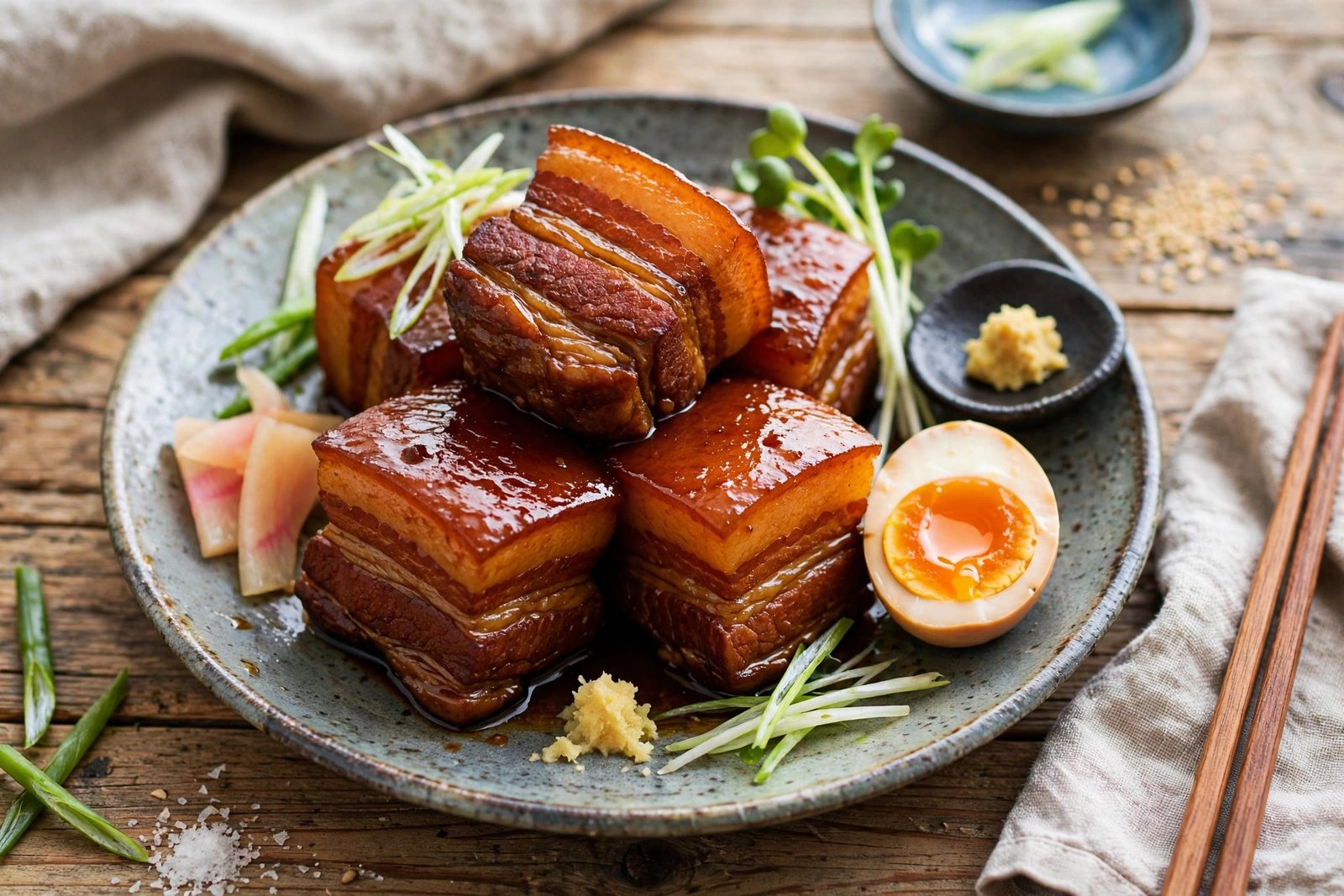
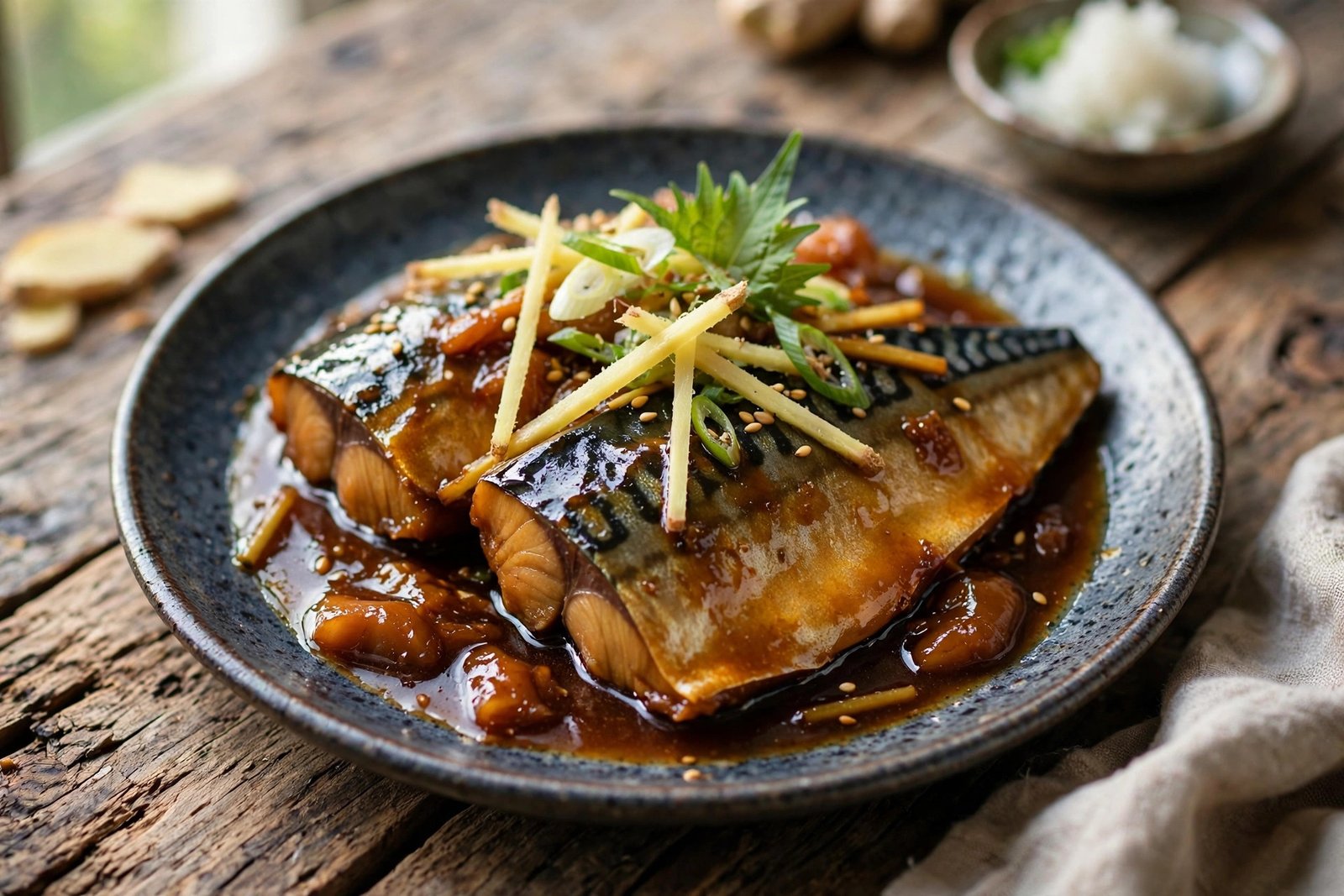
Melt-in-your-mouth pork belly slow-simmered in a sweet soy-dashi broth until it glistens — Pork Kakuni is Japanese comfort food at its most luxurious. It takes patience, not skill, and the result is unforgettable.
Advertisement
- Prep time
- 15 mins
- Cook time
- 2 hr
- Total time
- 2 hr 15 mins
- Servings
- 4 servings
- Calories
- 720
Advertisement
Ingredients
- 1.5 lb (700 g) pork belly, skin on, cut into 4 large cubes
- 2 cups dashi stock
- 1/2 cup soy sauce
- 1/2 cup mirin
- 1/2 cup sake
- 3 tablespoons sugar
- 1 (2-inch) piece fresh ginger, sliced
- 2 green onions, cut into 3-inch pieces
- 1 soft-boiled egg per serving, to serve
- Steamed rice and Japanese mustard, to serve
Instructions
- Place the pork belly cubes in a pot, cover with cold water, and bring to a boil. Simmer for 5 minutes, then drain and rinse the pork — this removes impurities and keeps the broth clear.
- Return the pork to a clean pot with the dashi, soy sauce, mirin, sake, sugar, ginger, and green onions.
- Bring to a gentle boil, then reduce to the lowest heat. Cover with a lid slightly ajar and simmer for 1 hour 30 minutes, turning the pork once halfway through.
Advertisement
- Remove the lid and increase the heat to medium. Simmer for 20 to 25 minutes more until the sauce reduces to a glossy, syrupy glaze that coats the pork.
- Lift the pork out carefully — it should be spoon-tender. Let it rest for 5 minutes.
- Serve each piece over steamed rice with a halved soft-boiled egg, spooning the glossy sauce over everything. A dab of Japanese mustard cuts the richness beautifully.
Advertisement
Pro tips
- Blanching the pork first is essential — it keeps the braising liquid clean and the flavor pure.
- Keep the simmer gentle; a hard boil toughens the meat and clouds the sauce.
- The final reduction is where the magic happens — wait for the sauce to turn glossy and coat a spoon.
- Kakuni tastes even better the next day; refrigerate overnight and reheat gently.
Advertisement
Frequently asked questions
How long does pork kakuni take?
About 2 hours total, but most of it is hands-off simmering. The long, slow cook is what makes the pork belly melt in your mouth.
Can I make kakuni without dashi?
Yes — use water with a pinch of instant dashi powder, or plain water with a little extra soy sauce. The flavor will be slightly less deep.
Should I remove the pork skin?
Keep it on — the skin turns silky and gelatinous during the long braise and is considered the best part.
What do I serve with kakuni?
Steamed rice, a soft-boiled egg, and a little Japanese mustard are classic. Pickled vegetables balance the richness.
Advertisement