Oden Recipe
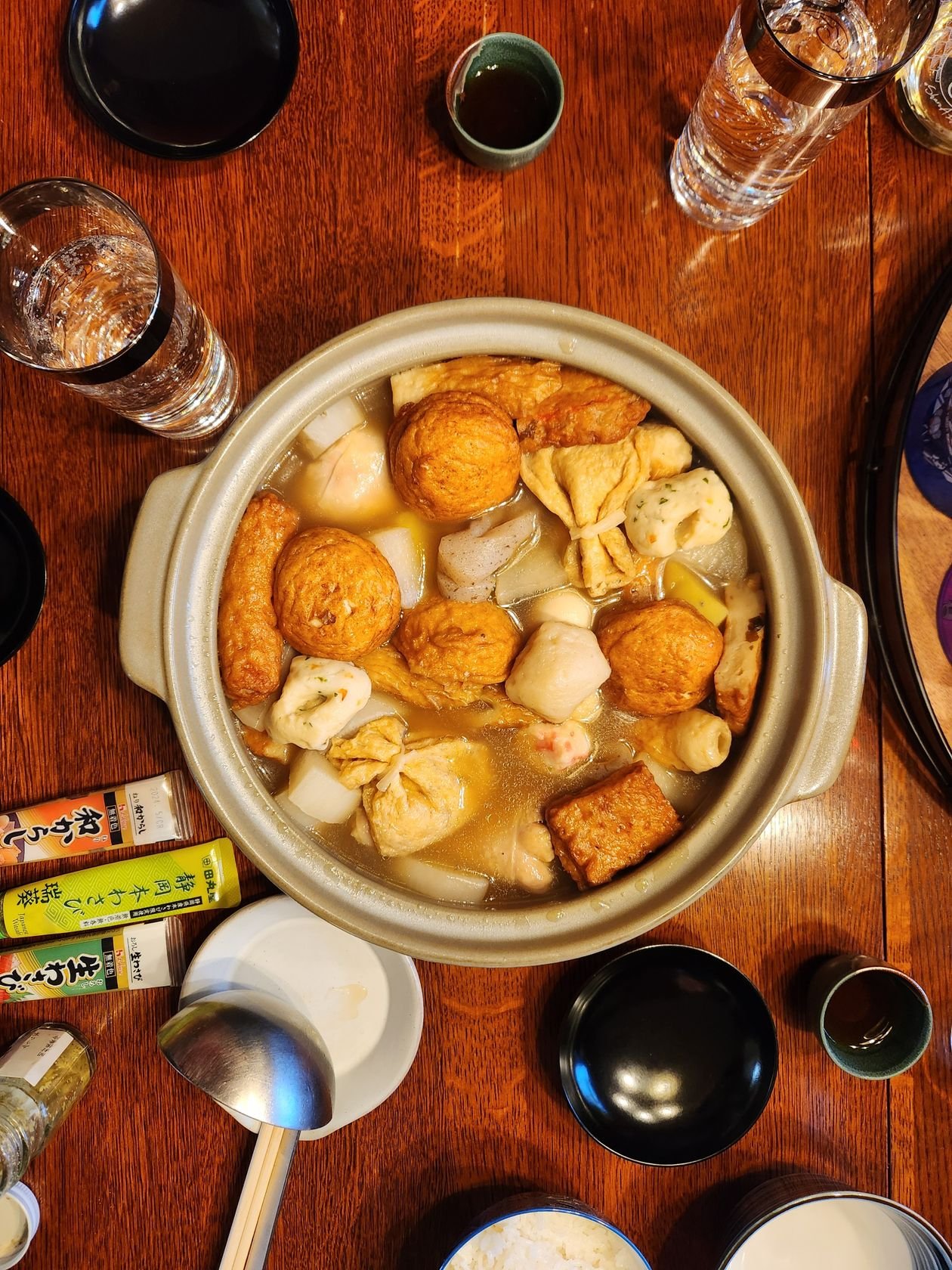
Oden is Japan's beloved winter hot pot: daikon radish, boiled eggs, fish cakes and konnyaku simmered gently in a light, savoury dashi broth. The ingredients soak up the broth slowly, turning tender and deeply flavoured, and the pot sits on the table all evening, ready whenever you are hungry. It is comfort food at its most patient and forgiving.
The story behind Oden
Oden has been part of Japanese cooking since the Edo period, when street vendors sold skewered tofu and vegetables simmered in a miso broth. The name comes from dengaku, the grilled tofu dish it grew out of, shortened over time to oden. As the dish spread across Japan, each region made it their own, and the light soy-flavoured dashi broth of Tokyo became the version most people know today. The dish also moved from the street into the home, where a pot could simmer all afternoon and feed a family through the evening without anyone having to stand at the stove.
In Japan, oden is winter food, sold at convenience stores, street stalls and small restaurants called oden-ya. On a cold evening, a steaming bowl of oden with a dab of karashi mustard is one of the simplest pleasures of the season. Families also make it at home, where a big pot simmers on the stove for hours and everyone picks out their favourite pieces with chopsticks. The pot is often started in the afternoon and eaten in the evening, because the long simmer is what gives oden its flavour.
What makes oden special is the broth and the way each ingredient absorbs it. Daikon turns soft and sweet, soaking up dashi until it is flavoured all the way through. Boiled eggs take on a gentle soy colour and a savoury depth, fish cakes stay springy and absorb the broth around their edges, and konnyaku adds a chewy contrast. Nothing in the pot shouts. The whole dish is quiet, warm and deeply satisfying, and the mustard on the side gives a sharp lift that wakes up the palate.
Cook oden when the weather turns cold and you want a pot that looks after itself. It suits a slow weekend afternoon, a dinner with friends who like to pick and choose, or a weeknight when you can start the pot early and eat whenever you are ready. It is also a good dish for using up vegetables and pantry staples, because almost anything that simmers well can join the pot.
- Prep time
- 30 mins
- Cook time
- 1 hr 30 mins
- Total time
- 2 hrs
- Servings
- 4 servings
- Calories
- 380
Ingredients
- 1.5 litres water
- 2 sachets (about 10 g) instant dashi powder, or 1.5 litres homemade dashi
- 4 tablespoons soy sauce
- 2 tablespoons mirin
- 1 tablespoon sake (optional)
- 1 teaspoon sugar
- 600 g daikon radish, peeled and cut into 3 cm rounds
- 4 large eggs
- 200 g konnyaku, cut into triangles
- 8 fish cakes (such as chikuwa and satsuma-age), halved
- 200 g firm tofu, cut into large cubes
- 4 small potatoes, peeled (optional)
- Karashi mustard, to serve
- Chopped spring onions, to serve
Instructions
- Make the broth by bringing the water to a boil in a large wide pot, then stirring in the dashi powder until it dissolves. Add the soy sauce, mirin, sake and sugar, stir, and taste. The broth should be light and savoury, with a gentle sweetness underneath, not as salty as a soup. The broth should taste light and clean, with the soy sauce giving savouriness and the mirin adding a gentle sweetness in the background.
- Prepare the daikon by cutting a shallow cross into one flat side of each round, which helps the broth soak in. Boil the daikon in plain water for 10 minutes, then drain it. This step removes the sharp bite of raw radish and gives you a sweet, tender result. The cross opens the flesh so the broth can soak right into the centre, which is what makes a good daikon taste flavoured all the way through.
- Boil the eggs for 9 minutes in a separate pan, then cool them in cold water and peel them carefully. The eggs should be firm all the way through, because they will simmer in the broth for a long time and a soft yolk would fall apart.
- Blanch the konnyaku and fish cakes in boiling water for 2 minutes, then drain them. This step removes any sharp smell from the konnyaku and softens the surface of the fish cakes, so they absorb the broth more easily.
- Add the daikon, eggs, konnyaku and potatoes to the broth, and bring the pot to a gentle simmer over medium heat. Do not let it boil hard, or the broth turns cloudy and the tofu breaks apart. The surface should show small, lazy bubbles.
- Simmer for 45 minutes, then add the fish cakes and tofu, and simmer for a further 30 minutes. The daikon should be soft enough to cut with a chopstick, and the eggs should have taken on a light soy colour. Lift a piece of daikon with chopsticks and press it gently: it should give way easily, and the centre should taste of the broth, not of raw radish.
- Taste the broth and adjust it with a little more soy sauce or a pinch of sugar if it needs it. The flavour should be clean and savoury, with the sweetness of the daikon coming through and the dashi giving a deep background note.
- Serve the oden in deep bowls with plenty of broth, choosing a mix of pieces for each person. Put karashi mustard and chopped spring onions on the table, so everyone can add as much sharpness and freshness as they like.
Pro tips
- Simmer, never boil hard. A gentle heat keeps the broth clear and the tofu whole, while a rolling boil clouds the broth and breaks the delicate pieces apart. You can tell the heat is right when you see small bubbles rising slowly around the edges of the pot, not a rolling boil across the whole surface.
- Blanch the daikon first. Ten minutes in plain water removes the sharp bite and lets the radish absorb the dashi broth properly during the long simmer. It also sweetens the radish slightly, so the finished daikon tastes mellow and rich instead of sharp and peppery.
- Add the delicate items last. Fish cakes and tofu need only 30 minutes, so adding them early makes them fall apart and turns the broth cloudy. Tofu is the most fragile piece in the pot, so handle it with a wide spoon and add it gently, not dropped from a height.
- Taste the broth before you serve it. Dashi powders vary in strength, so a little extra soy sauce or sugar at the end is often needed to get the balance right. A pinch more sugar softens a broth that tastes too salty, while a splash of soy sauce deepens one that tastes too thin.
- Make it a day ahead if you can. Oden kept overnight in its broth tastes noticeably better, because the daikon and eggs absorb more flavour as they cool and rest. The eggs colour a little deeper overnight, the daikon softens further, and the broth itself becomes rounder and more savoury.
Variations & serving ideas
Oden is one of the most flexible dishes in Japanese cooking, and every region has its own version. In Osaka, the broth is lighter and the pot often includes octopus and beef tendon, while in Nagoya the broth is dark with hatcho miso and the flavour is much stronger. A version with chicken wings or pork belly adds richness, and a spicy version with a spoonful of chilli paste warms you twice over. You can also add cabbage rolls, mochi-filled pouches of fried tofu, or any root vegetable you have. In Shizuoka, oden is served with a dark broth and a dusting of dried fish powder on top, while in Aomori the pot sometimes includes scallops and a ginger-flavoured broth.
Substitutions are easy. If you cannot find fish cakes, use extra tofu, boiled eggs and vegetables, and the dish is still a proper oden. Konnyaku can be replaced with extra daikon or potatoes, and instant dashi powder is a fine substitute for homemade dashi when you are short on time. For a vegetarian pot, use kombu dashi and leave out the fish cakes, adding mushrooms and more tofu instead.
Serve oden in deep bowls with plenty of broth, and put karashi mustard and spring onions on the table for everyone to add. It pairs well with a bowl of rice, a cold beer or a cup of warm sake on a winter evening. For a fuller meal, start with a simple salad and finish with fruit, because oden itself is light and filling in equal measure.
For a gathering, set the pot in the middle of the table on a portable burner and let everyone fish out their favourite pieces. Keep a ladle and small bowls nearby, and remind guests that the broth is part of the meal, worth drinking to the last spoonful. It works well for a casual dinner party, because the pot stays hot and guests can eat at their own pace. Keep extra broth ready, because the pot will need topping up as the evening goes on, and the broth itself is worth drinking to the last spoonful.
Getting it right
The key technique in oden is the long, gentle simmer, because the flavour comes from time rather than heat. The broth should never boil hard. Small, lazy bubbles at the surface are enough to cook the daikon through and let it absorb the dashi. A hard boil clouds the broth, toughens the fish cakes and breaks the tofu into pieces, while a gentle simmer keeps everything intact and the broth clear and clean.
Heat and timing control are about order as much as temperature. The daikon and eggs go in first, because they need the longest time to absorb flavour. Konnyaku and potatoes join them, and the delicate fish cakes and tofu go in last, with only 30 minutes to cook. Adding everything at once is the most common mistake, and it gives you a pot where some pieces are perfect and others have fallen apart. Stagger the additions and every piece reaches the table in its best state.
The common mistakes are easy to fix. If the broth tastes flat, it usually needs more soy sauce or a pinch of sugar, so adjust in small steps and taste after each one. If the daikon is still firm in the middle, it needed a longer simmer, so give it another 15 minutes and check it with a chopstick. If the broth is cloudy, the pot boiled too hard, so lower the heat and let it settle. If the eggs cracked, they were added to boiling broth, so add them gently to a simmer and keep the heat low. Patience is the whole secret of this dish.
Storing & reheating
Oden keeps very well in the fridge for up to 4 days, stored in its broth in a sealed container. The flavour actually improves overnight, because the daikon and eggs keep absorbing the dashi as they cool. Reheat it gently in a pot over low heat, bringing it to a bare simmer, and never boil it hard, or the tofu will break apart.
For longer storage, freeze the broth and the hardier pieces, such as daikon and konnyaku, for up to one month, but leave out the tofu and fish cakes, which turn rubbery when frozen. Thaw overnight in the fridge, reheat gently, and add fresh tofu and fish cakes for the last 30 minutes. A pot of oden can be topped up with fresh broth and new ingredients for several days, which is how many Japanese families eat it all winter.
Frequently asked questions
Can I make oden without fish cakes?
Yes, oden works well without them. Use extra daikon, eggs, tofu and vegetables, and the broth will still give the dish its flavour. Mushrooms, potatoes and cabbage rolls all make good substitutes, and a vegetarian pot with kombu dashi is a proper oden in its own right. The broth does most of the work, so a pot of daikon, eggs, tofu and vegetables is still a proper oden.
Why should I blanch the daikon first?
Boiling the daikon in plain water for 10 minutes removes its sharp, peppery bite and opens up the flesh so it absorbs the dashi broth properly. Skipping this step leaves the radish harsh in the middle, even after a long simmer in the broth.
Can I make oden in advance?
Yes, and you should. Oden tastes better the next day because the daikon and eggs absorb more broth as they cool. Make it a day ahead, keep it in the fridge in its broth, and reheat it gently over low heat until it is just simmering.
What is karashi mustard?
Karashi is a hot Japanese mustard made from ground mustard seeds, with a sharp, clean heat that clears the nose a little like wasabi. A small dab on the side of the bowl is enough, and it lifts the mild flavour of the broth and the daikon.
How long does oden keep?
Oden keeps for up to 4 days in the fridge, stored in its broth in a sealed container. Reheat it gently and never boil it hard. The broth and hardier pieces freeze for up to one month, but leave out the tofu and fish cakes, which turn rubbery when frozen.
What should I serve with oden?
A bowl of rice, a cold beer or a cup of warm sake all pair well with oden on a winter evening. The pot itself is a complete meal, but a simple salad beforehand and some fruit afterwards make it into a full dinner. Keep karashi mustard and spring onions on the table.