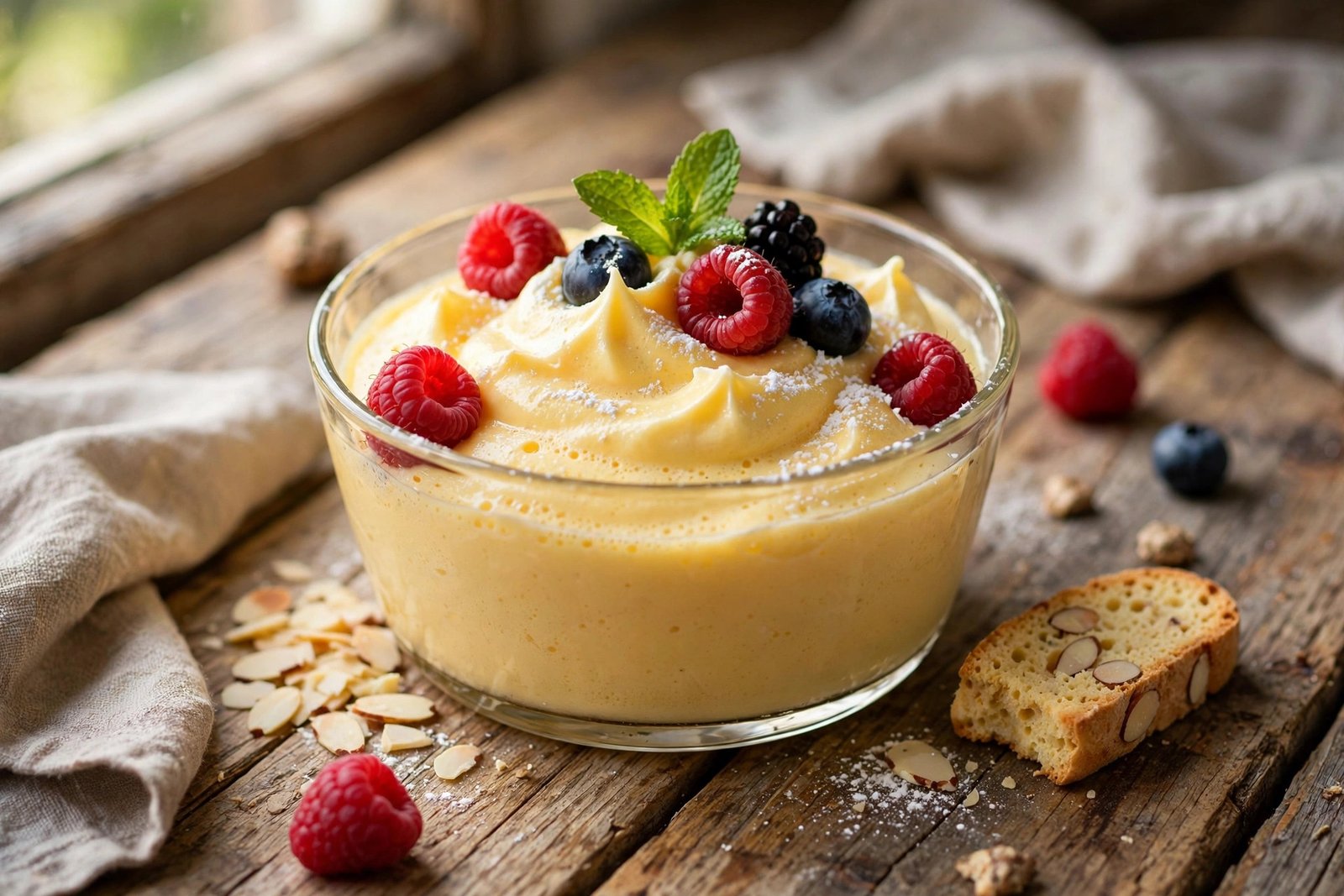
Torta della Nonna Recipe
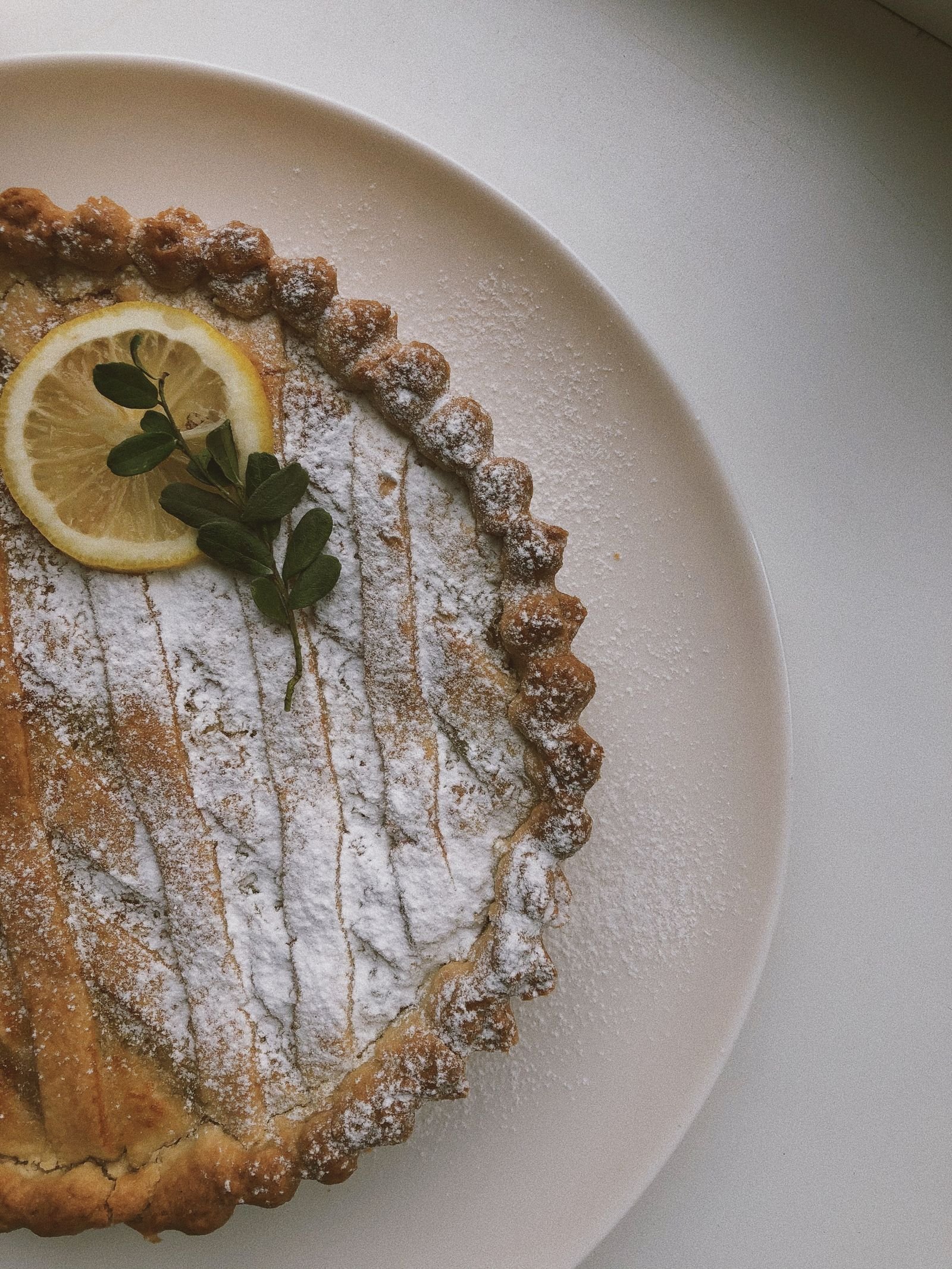
Torta della nonna is a golden shortcrust tart filled with silky lemon pastry cream and scattered with toasted pine nuts. Each slice cuts cleanly, the buttery crust giving way to cool, fragrant cream. It tastes like a Tuscan bakery at the end of a long lunch, and it is far easier to make than it looks.
The story behind Torta della Nonna
Torta della nonna means grandmother's cake, and the name tells you most of what you need to know. This is a tart from Tuscany, built from two simple things: a buttery shortcrust pastry called pasta frolla, and a lemon-scented pastry cream called crema pasticcera. A scatter of pine nuts goes on top, the whole thing is dusted with icing sugar, and the result is a cake that tastes of home baking rather than a patisserie window.
Nobody agrees on exactly where the tart was invented, and that argument is part of its charm. Some say it comes from Florence, others from the countryside around Arezzo, and every family claims their own version is the right one. What the versions share is the structure: a crisp shell, a cool creamy middle, and pine nuts that toast in the oven. The lemon zest in the cream keeps it fresh and light, so the tart never feels heavy even though it is rich.
What makes this tart special is the contrast in each bite. The pastry is short and crumbly, the kind that melts on your tongue. The cream is smooth and cool, with a clear lemon perfume. Then the pine nuts add a small crunch and a warm, resinous note that nothing else in the tart provides. It is a dessert built from ordinary pantry ingredients, but the balance of those three textures is what turns it into something worth remembering.
Cook it when you want a dessert that feels generous without being fussy. It suits a Sunday lunch, a birthday table, or a quiet evening when you fancy baking something proper. Make it the day before if you like; it slices better after a night in the fridge. Serve it at room temperature with coffee, and let people come back for a second slice on their own.
- Prep time
- 30 mins
- Cook time
- 50 mins
- Total time
- 1 hr 20 mins
- Servings
- 4 servings
- Calories
- 520
Ingredients
- 300 g plain flour, plus extra for dusting
- 150 g cold unsalted butter, cut into small cubes
- 120 g caster sugar
- 2 large egg yolks, plus 1 whole egg for the pastry
- 1 teaspoon finely grated lemon zest
- 1 pinch of fine sea salt
- 500 ml whole milk
- 4 large egg yolks, for the pastry cream
- 100 g caster sugar, for the pastry cream
- 40 g cornflour
- 1 strip of lemon peel, about 5 cm long
- 1 teaspoon vanilla extract
- 60 g pine nuts
- Icing sugar, for dusting
Instructions
- Start with the pastry cream so it has time to cool. Warm the milk in a medium pan with the strip of lemon peel until it just begins to steam, then take it off the heat and lift the peel out. Whisk the yolks, sugar and cornflour in a bowl until pale and smooth, then pour in the warm milk in a thin stream, whisking all the time so the eggs do not scramble.
- Pour the mixture back into the pan and cook over medium heat, whisking without stopping. It will look thin for a minute, then thicken all at once into a glossy cream that holds the trail of the whisk. Let it bubble gently for one full minute, then scrape it into a clean bowl, stir in the vanilla, and press cling film right onto the surface so no skin forms. Leave it to cool completely.
- Make the pastry while the cream cools. Rub the cold butter into the flour with your fingertips until the mix looks like coarse breadcrumbs, then stir in the sugar, lemon zest and salt. Add the two yolks and the whole egg, and bring the dough together with your hands. It should feel soft and a little sticky, not dry. Flatten it into two discs, wrap them, and chill for at least 30 minutes.
- Heat the oven to 180 C (160 C fan) and butter a 24 cm tart tin with a removable base. Roll the larger disc on a floured surface until it is about 4 mm thick, then lift it into the tin and press it gently into the corners. Trim the edge with a knife, prick the base all over with a fork, and chill the lined tin for 15 minutes so the pastry holds its shape in the oven.
- Spoon the cooled pastry cream into the shell and spread it level with the back of a spoon, leaving a small gap at the top edge. Roll out the second disc the same way and lay it over the cream. Press the edges together firmly with your fingers, trim any overhang, and crimp the rim with a fork. The lid should sit flat and sealed, or the cream will bubble out in the oven.
- Scatter the pine nuts over the top in an even layer and press them in lightly so they stick. Slide the tart into the middle of the oven and bake for 45 to 50 minutes. You want a deep golden crust and pine nuts that smell toasted and nutty. If the nuts colour too fast, lay a loose sheet of foil over the top for the last ten minutes.
- Take the tart out and let it stand in the tin for 15 minutes, then lift it onto a wire rack and cool completely. The cream needs this time to set, so do not slice it while it is warm or the filling will run. Dust generously with icing sugar just before serving, and cut with a sharp knife wiped clean between slices.
- Serve at room temperature, on its own or with a small cup of espresso. A spoonful of lightly whipped cream is welcome but not needed. If you have any left, cover it and keep it in the fridge, and bring slices back to room temperature before eating so the cream tastes soft and fragrant again.
Pro tips
- Chill the pastry well before rolling. Cold dough is much easier to lift into the tin without tearing, and it shrinks less in the oven.
- Press cling film directly onto the surface of the hot pastry cream. This stops a skin forming, which would leave lumps in your filling.
- Toast the pine nuts in a dry pan for a minute before scattering them if you want a deeper flavour, but watch them closely because they burn fast.
- Use a tart tin with a removable base. It makes lifting the finished tart out clean and simple, with no risk of breaking the crust.
- Dust with icing sugar only just before serving. If you do it hours ahead, the sugar melts into the crust and the tart loses its snowy finish.
Variations & serving ideas
The classic version uses lemon zest in the cream, but vanilla alone is also common in Tuscan kitchens, and some cooks add a spoonful of rum or Vin Santo to the milk for warmth. A few families fold ricotta into the cream, which gives a lighter, slightly grainy filling that pairs well with the pine nuts. You can also make small individual tarts in muffin tins, baking them for about 25 minutes instead of 45.
If pine nuts are too expensive, sliced almonds or chopped hazelnuts work in their place, though the flavour changes a little. Almonds give a cleaner, sweeter crunch, while hazelnuts add a deeper roasted note. Keep the same quantity and scatter them the same way. For a nut-free version, leave the topping off and add a thin lattice of pastry strips on top instead, brushed with a little beaten egg.
Serve the tart at room temperature, cut into generous wedges. It needs nothing more than a cup of espresso or a glass of Vin Santo, but a spoonful of unsweetened whipped cream or a few fresh berries on the side is welcome in summer. If you are serving it after a heavy meal, smaller slices are kind, because the tart is rich even when it tastes light.
This tart travels well to a dinner party or a family gathering, since it holds its shape once chilled and needs no last-minute work beyond the icing sugar. It also pairs well with other Tuscan desserts on a shared table: a plate of cantucci for dipping, or a bowl of fresh figs when they are in season. Keep the flavours simple and let the tart speak for itself.
Getting it right
The pastry cream is the heart of this tart, and it rewards patience. Whisk the yolks, sugar and cornflour until they are fully smooth before any milk goes in, because lumps made now will stay in the finished cream. Pour the warm milk in slowly, whisking all the time, and never let the cream boil hard once it is back on the heat. A gentle bubble for one minute is enough to cook out the cornflour taste and set the cream properly.
Heat control matters at every stage. The pastry goes into a fully hot oven so the base sets quickly and stays crisp, and the cream must be completely cool before it meets the shell, or the heat will soften the pastry from inside. When the tart is baking, watch the pine nuts rather than the clock: they turn from pale to golden to burnt in a short space of time, and a loose sheet of foil is your friend if they colour too fast.
The most common mistake is slicing the tart while it is still warm. The cream looks set when it comes out of the oven, but it is still soft inside and will run across the plate. Give it at least two hours at room temperature, or chill it, and the slices will hold their shape. The other mistake is rolling the pastry too thin, which leads to cracks and leaks, so keep the base around 4 mm and patch any tears with a scrap of dough before filling.
Storing & reheating
Keep the finished tart in the fridge in a covered container, or wrapped well in cling film, and eat it within three days. The pastry softens slightly after the first day, which most people find pleasant, though the pine nuts lose some of their crunch. Let slices sit out for twenty minutes before serving so the cream warms up and the lemon flavour comes forward.
You can freeze the baked tart for up to a month, wrapped tightly in two layers of cling film and a layer of foil. Thaw it overnight in the fridge, then bring it to room temperature before serving. Do not freeze the tart with icing sugar on top, because it melts into the crust; dust it fresh after thawing instead.
Frequently asked questions
Can I make torta della nonna a day ahead?
Yes, you can make both the pastry and the cream a day ahead. Wrap the pastry discs in cling film and keep the cream in a bowl with cling film pressed right onto its surface, then assemble and bake the next day. The tart actually slices more neatly after a night in the fridge.
Can I use almonds instead of pine nuts?
Pine nuts are traditional and give the tart its look and its gentle resinous crunch, but sliced almonds work well if pine nuts are hard to find or too dear. Scatter them the same way, over the top before baking, and watch them closely because almonds brown a little faster.
Why did my tart base go soggy?
The usual reason is cream that was too warm when it went into the shell, or pastry rolled too thin. Let the cream cool completely, chill the lined tin before filling, and keep the base around 4 mm thick. A hot oven also helps the base set before the filling can soak through.
Can I use custard powder instead of pastry cream?
Custard powder is a shortcut some cooks use, but it will not taste the same. Real pastry cream made with egg yolks, milk, sugar and cornflour takes about ten minutes and gives the tart its proper lemon scent and soft set. If you are short on time, make the cream the night before.
How long does torta della nonna keep?
Keep the tart in the fridge in a covered container and eat it within three days. The pastry softens a little by the second day, which many people enjoy, but the pine nuts lose their crunch. Bring slices to room temperature for twenty minutes before serving.
Can I make this tart gluten free?
Yes, if you use a gluten-free flour blend made for pastry, with a little xanthan gum already in it. The dough will be more fragile, so roll it between two sheets of baking paper and chill it well before lifting it into the tin. The cream itself is naturally gluten free.