Authentic Spaghetti Carbonara Recipe
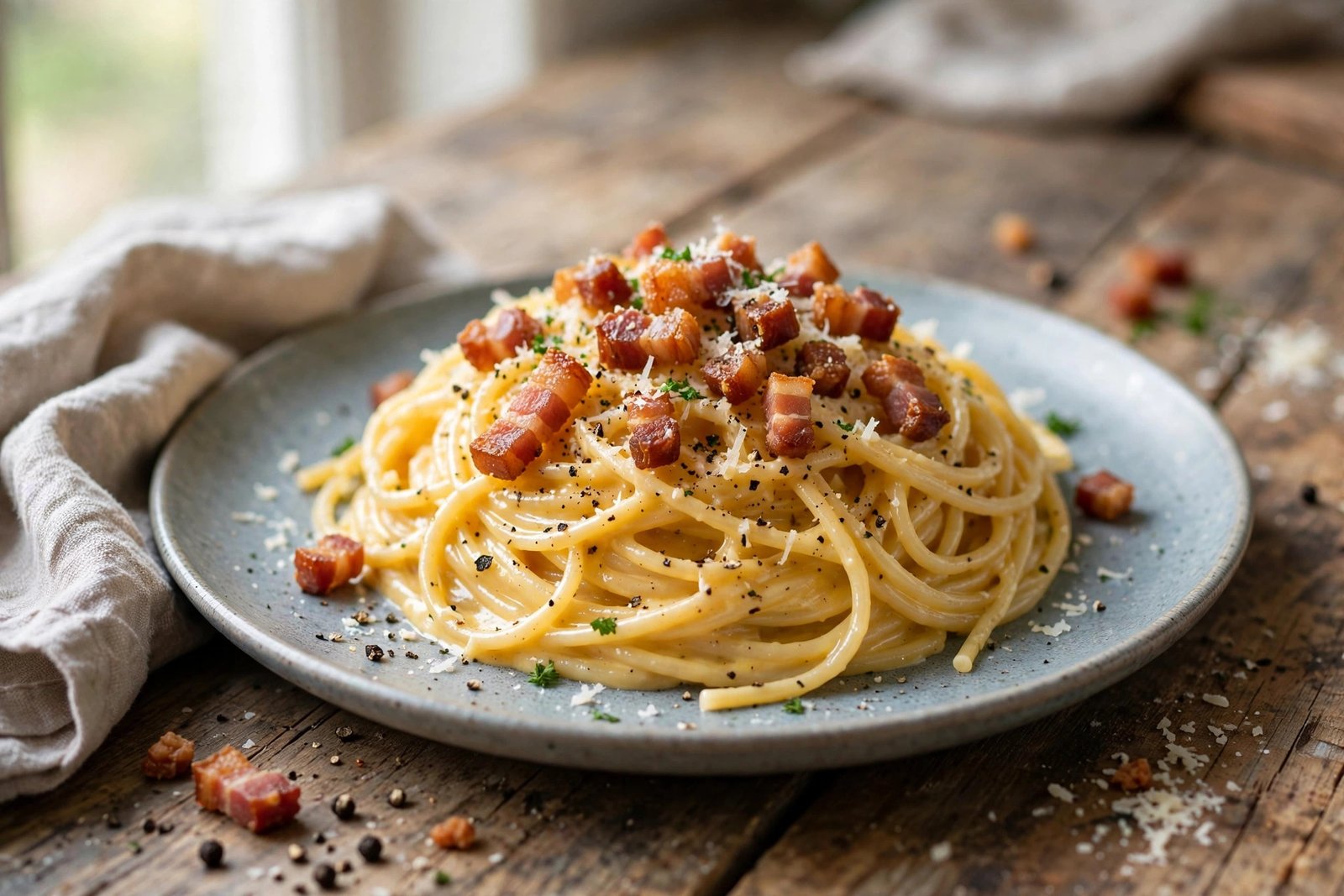
Real carbonara has no cream — just eggs, Pecorino Romano, guanciale and black pepper, turned into a silky sauce by starchy pasta water and the heat of the spaghetti itself. It takes about twenty minutes, uses one pan and one pot, and tastes like Rome on a plate: salty, peppery and deeply savoury. Get the timing right and every strand comes out glossy and coated.
The story behind Spaghetti Carbonara
Carbonara comes from Rome, and Romans are famously protective of it. The true version has four ingredients — eggs, Pecorino Romano, guanciale and black pepper — plus pasta and its cooking water. No cream, no garlic in the strict version, no peas, no mushrooms. The sauce is not a sauce you pour; it is an emulsion built in the pan, and that is the whole craft of the dish. It is a dish built on heat and timing rather than ingredients, which is why two cooks can follow the same list and get two very different plates.
The history is argued over, as Roman food history usually is. Some say it came from the charcoal workers — carbonari — who cooked eggs and cured pork over open fires. Others say it appeared after the war, when American soldiers brought bacon and eggs to Rome. Either way, the dish as it is cooked today took shape in the middle of the last century, and it has barely changed since. The name itself gives a clue: carbonara is tied to carbone, the Italian word for charcoal, and to the workers who cooked over open fires.
What makes carbonara special is how little it asks of you and how much it gives back. Twenty minutes, a handful of ingredients, and a technique that takes one careful try to learn. The pleasure is in the details: the crisp edges of the guanciale, the sharp salt of the pecorino, the black pepper that warms the back of your throat, and the sauce that clings to every strand instead of pooling at the bottom of the bowl. The first time you make it, the sauce may not be perfect. The second time, you will know exactly when to toss and when to stop.
Cook it on a weeknight when you want something fast and satisfying, or for friends who think they know pasta. Serve it immediately — carbonara waits for no one, and the sauce sets as it cools. A simple green salad and a glass of red wine are all it needs beside it. And if someone asks for cream, smile and hand them the pepper mill. Keep the salad simple and the wine cold, and let the pasta do the talking.
- Prep time
- 10 mins
- Cook time
- 15 mins
- Total time
- 25 mins
- Servings
- 4 servings
- Calories
- 750
Ingredients
- 1 lb (450g) spaghetti
- 8 oz (225g) pancetta or guanciale, cut into small cubes
- 4 large eggs, at room temperature
- 1 cup (about 100g) Pecorino Romano, finely grated
- 1/2 cup (about 50g) Parmesan, finely grated
- 2 teaspoons freshly cracked black pepper, plus more to serve
- 1 clove garlic, lightly crushed (optional)
- Salt, for the pasta water
- 2 tablespoons olive oil
Instructions
- Take the eggs out of the fridge early so they reach room temperature. Cold eggs hit hot pasta and seize; room-temperature eggs blend into a smooth, even sauce. While they warm up, grate both cheeses finely and set them aside.
- Whisk the eggs with the pecorino, parmesan and black pepper in a bowl until they form a thick, smooth paste. It should look like a pale, speckled cream. Set it aside at room temperature while you cook the pasta.
- Bring a large pot of water to a boil and salt it generously — it should taste like the sea. Add the spaghetti and cook until just shy of al dente, about a minute less than the packet says. Before draining, scoop out a mug and a half of the starchy pasta water and keep it close.
- While the pasta cooks, heat the olive oil in a large skillet over medium heat. Add the pancetta or guanciale, and the garlic if you are using it, and cook for 6 to 8 minutes. Stir now and then. You want the cubes golden and crisp at the edges, with their fat rendered into the pan. The garlic should be pale gold, not brown.
- Take the skillet off the heat once the pancetta is crisp. Let it sit for a minute so it cools slightly — this is the step that keeps the eggs from scrambling. Fish out the garlic clove if you used one.
- Drain the pasta and add it straight to the skillet with the pancetta. Toss it well so every strand is coated in the rendered fat. Let it sit for a full minute. The pasta should be hot but no longer steaming hard; if it is still hissing, wait a little longer.
- Pour in the egg and cheese mixture, tossing quickly and constantly with tongs. Work fast — the sauce forms in seconds. Splash in a little warm pasta water at a time, tossing all the while, until the sauce turns glossy and clings to every strand. Add water a spoonful at a time; you can always add more, but you cannot take it back.
- Taste a strand. The sauce should be creamy and peppery, the pasta coated, not swimming. If it looks dry, add another splash of pasta water and toss again. If it looks wet, keep tossing — the heat of the pasta will tighten it.
- Plate immediately, while the sauce is still loose and shining. Shower each serving with extra Pecorino and a good crack of black pepper, and serve right away. Carbonara cools fast, and the sauce firms as it sits, so do not wait for anyone.
Pro tips
- Room-temperature eggs blend into a smoother sauce than cold ones, so take them out of the fridge early. Cold eggs can also cool the pasta too fast, and the sauce will not come together.
- Always take the pan off the heat before adding the eggs. Residual heat cooks the sauce gently without scrambling it. If the pan is still on the burner, even on low, you risk sweet scrambled eggs.
- That starchy pasta water is liquid gold — it is what makes the sauce glossy instead of greasy, so never skip reserving it. A mug and a half is plenty, but scoop extra if you are nervous.
- Grate the cheese finely so it melts evenly into the sauce rather than clumping. Coarse shreds stay stringy and leave lumps in a sauce that should be silk.
- Use tongs, not a spoon, to toss. Tongs lift and turn the pasta so the sauce coats every strand, while a spoon tends to push it around the bottom of the pan.
Variations & serving ideas
Guanciale is the Roman classic — cured pork cheek, rich and deeply savoury. Pancetta is the closest easy-to-find substitute and works beautifully, a little leaner and milder. Thick-cut bacon works in a pinch, though the flavor is smokier and sweeter than the traditional version. Whichever you use, cook it until crisp and let the rendered fat do the work. Render the fat slowly over medium heat and the cubes will crisp without burning; rush it and they turn tough before they turn golden.
Pecorino Romano is the cheese that belongs here: salty, sharp and a little sheepy. A mix with parmesan, as in this recipe, softens the salt and adds nuttiness. All parmesan is milder and less traditional, but it still makes a good plate of pasta. Never use pre-grated cheese — the anti-caking powder stops it melting smoothly and the sauce turns grainy. Buy a wedge and grate it yourself. It takes two minutes and the difference in the sauce is obvious.
Some cooks add a whole egg plus extra yolks for a richer sauce, and that works well if you like it extra silky. Others add a little white wine to the pan with the pancetta, or a clove of garlic for a gentler flavor. These are small changes that stay in the spirit of the dish. Cream, peas, mushrooms and chicken are a different dish entirely — good food, but not carbonara. A little lemon zest is a modern touch some cooks like, though purists will tell you to leave it out.
Serve carbonara simply. A crisp green salad with a sharp dressing cuts the richness, and crusty bread is useful for the last of the sauce. Red wine is the classic pairing, but a cold sparkling water with lemon is just as good. This is not a dish that needs a crowd of sides — it is the main event, and it likes the spotlight. If you are cooking for one, halve everything and use a small skillet; the method and the timing stay exactly the same.
Getting it right
The technique that matters most is the emulsion — eggs, cheese and pasta water turned into a sauce by tossing, not by heat. The pan must be off the burner, the pasta hot but not steaming, and the tossing constant. The egg mixture goes in, the pasta water follows a splash at a time, and the starch in the water binds everything into a glossy coating. If you stop tossing, the eggs settle and cook. Keep moving.
Timing is the whole game. The pasta water should be ready before the pasta is drained, the pancetta should be crisp and off the heat before the eggs go anywhere near the pan, and the egg mixture should be whisked and waiting. Carbonara comes together in about two minutes at the end, and there is no pause in the middle to grate cheese or find the tongs. Set everything out first, like a cook in a small Roman kitchen.
The common failures all come from heat. Scrambled eggs mean the pan was too hot — let the pasta cool a full minute after tossing with the pancetta, and work off the heat. A dry, clumpy sauce means not enough pasta water; add it a splash at a time until the sauce loosens. A greasy sauce means the cheese was too coarse or the eggs were cold. Each fix is small, and once you have made it twice, the timing becomes second nature.
Storing & reheating
Carbonara is best eaten fresh, within minutes of cooking. The sauce is an emulsion, and it does not hold well — it firms and dries as it cools. If you must keep leftovers, cool them quickly and refrigerate in a sealed container for up to a day. Reheat very gently in a skillet over low heat with a splash of water, stirring constantly, and accept that it will not be quite as silky as fresh.
Do not freeze carbonara. The egg sauce separates and turns grainy when thawed, and no amount of stirring brings it back. The microwave is also a poor choice — it heats in hot spots and scrambles the sauce. If you want to cook ahead, prepare the pancetta and grate the cheese in advance, then cook the pasta and finish the dish fresh when you are ready to eat.
Frequently asked questions
Can I use bacon instead of pancetta or guanciale?
Yes, thick-cut bacon works in a pinch, though the flavor is smokier than the traditional version. Guanciale is the Roman classic, pancetta is the closest easy-to-find substitute, and bacon is a fine third option. Cut it small and cook it crisp.
Why did my carbonara eggs scramble?
The pan was too hot when the eggs went in. Let the pasta cool for a full minute after tossing with the pancetta, work off the heat, and add the egg mixture gradually while tossing constantly. A splash of pasta water also helps keep things moving.
Is there really no cream in authentic carbonara?
Correct — traditional Roman carbonara uses only eggs, Pecorino Romano, guanciale, and black pepper. The creaminess comes from the emulsion of egg, cheese, and starchy pasta water. Once you taste a well-made one, you will not miss the cream.
Can I reheat leftover carbonara?
Carbonara is best eaten fresh, but leftovers can be gently reheated in a skillet over low heat with a splash of water, stirring constantly. Avoid the microwave, which will scramble the sauce. Expect a slightly thicker result than fresh.
Can I use whole eggs or just yolks?
This recipe uses four whole eggs, which gives a balanced sauce. Using two whole eggs plus two extra yolks makes a richer, silkier result. All yolks is very rich and can feel heavy. Start with the whole-egg version and adjust to your taste next time.
What pasta shape works best?
Spaghetti is the classic, and its long strands carry the sauce well. Rigatoni and tonnarelli are also traditional in Rome. Avoid very thin pasta like angel hair — it overcooks before the sauce forms. Whatever shape you choose, cook it just shy of al dente.