Risotto ai Frutti di Mare Recipe
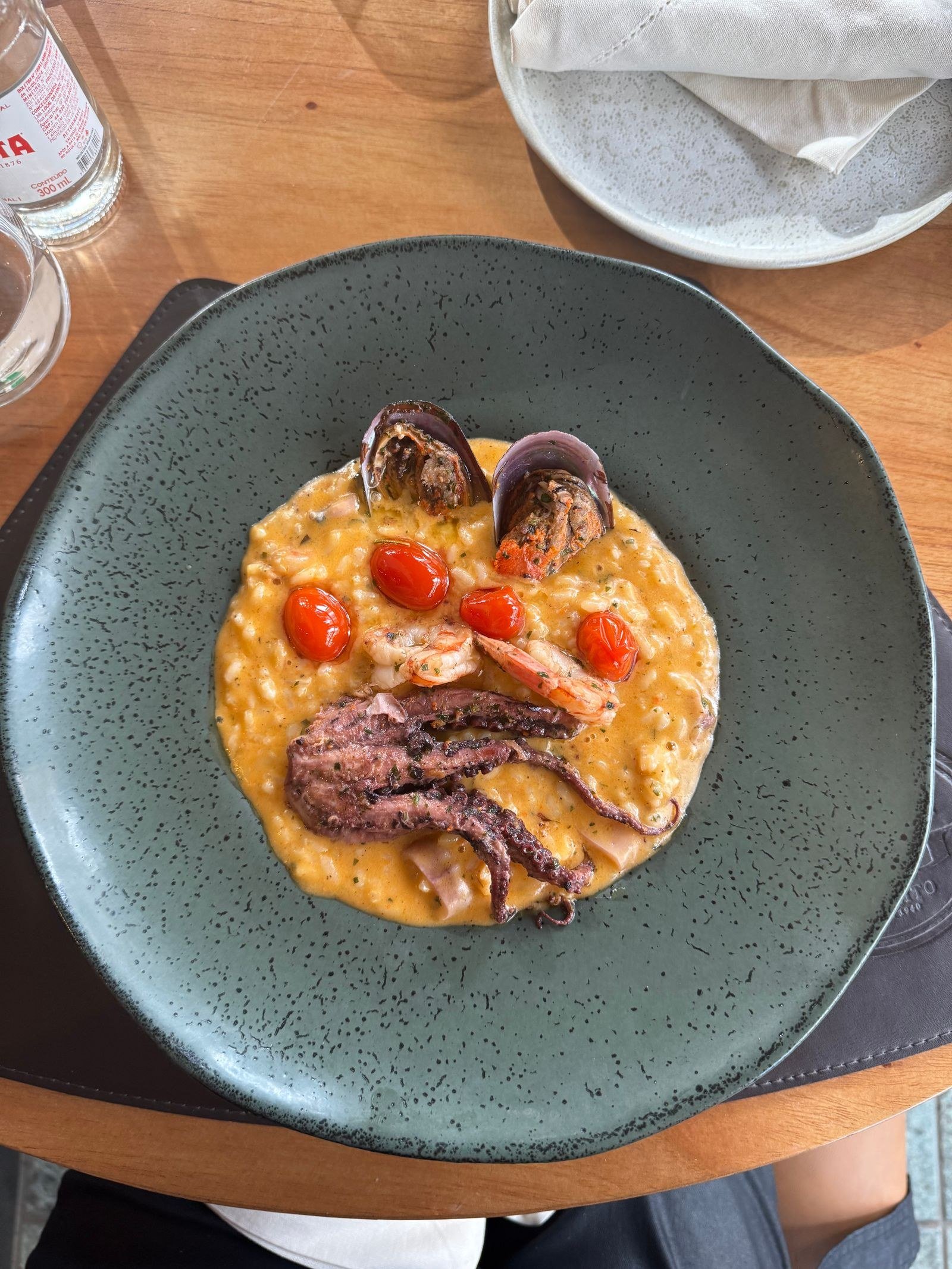
Risotto ai Frutti di Mare is the dish that turns a bag of shellfish into a celebration. Carnaroli rice cooks slowly in fish stock and white wine, soaking up the flavour of mussels, clams, prawns and squid until every grain is creamy and full of the sea. It takes patience, but the result is worth every stir. It takes patience, but the result tastes of the sea in every spoonful.
The story behind Risotto ai Frutti di Mare
Risotto is a child of northern Italy, born in the rice fields of the Po Valley, where Lombardy and Piedmont have grown rice since the fifteenth century. The technique of cooking rice by adding hot stock a little at a time, stirring constantly, developed in Milan and spread through the north. Seafood versions came later, from the coastal cities where fishermen brought the catch straight to the kitchen. Rice reached the Po Valley through trade with the east, and the flat, marshy land with its slow rivers turned out to be ideal for growing it in flooded fields.
Venice has a strong claim on this dish. The lagoon gave the city mussels, clams and small fish in abundance, and Venetian cooks learned to build risotto around them, using the liquor from the shellfish as part of the stock. The result is a risotto that tastes of the sea in every spoonful, without any single ingredient taking over. It became a fixture of seaside trattorias along the Adriatic and Ligurian coasts. The lagoon gave the city mussels, clams and small fish in abundance, and the fishermen sold their catch at the Rialto market before the morning was out.
What makes it special is the way the rice and the seafood work together. The starch released by Carnaroli rice creates a creamy texture with no cream at all, and the shellfish liquor adds a salty, briny depth that plain stock cannot match. The prawns stay sweet, the squid stays tender, and the parsley and lemon at the end lift everything so the dish tastes fresh rather than heavy. It suits a weekend evening, a summer lunch by the water, or any occasion that deserves a main course with a little ceremony and a glass of white wine.
Cook it when you want a slow, rewarding dinner, ideally with good seafood and someone to share it with. It suits a weekend evening, a summer lunch by the water, or any occasion that deserves a main course with a little ceremony. Serve it the moment it leaves the pan, in wide warm bowls, with white wine and crusty bread.
- Prep time
- 20 mins
- Cook time
- 35 mins
- Total time
- 55 mins
- Servings
- 4 servings
- Calories
- 580
Ingredients
- 320 g Carnaroli rice
- 500 g mussels, cleaned and debearded
- 300 g clams, purged in salted water
- 300 g large prawns, peeled and deveined
- 200 g squid, cleaned and sliced into rings
- 1.2 litres hot fish stock
- 150 ml dry white wine
- 1 small onion, finely chopped
- 2 garlic cloves, thinly sliced
- 400 g cherry tomatoes, halved
- 3 tablespoons olive oil
- 2 tablespoons chopped flat-leaf parsley
- 1 lemon, cut into wedges, to serve
- Salt and black pepper, to taste
Instructions
- Scrub the mussels and clams under cold water and discard any that stay open when tapped. Put them in a wide pot with 100 ml of the wine, cover with a lid, and cook over high heat for 3 to 4 minutes, shaking the pot once, until they open. Lift out the shellfish, strain the liquor through a fine sieve, and set both aside.
- Heat the fish stock in a saucepan and keep it at a gentle simmer throughout. Warm stock is essential: cold stock shocks the rice and slows the cooking. Stir the strained shellfish liquor into the stock for extra flavour.
- Warm the olive oil in a wide, heavy pan over medium heat and cook the onion for 5 minutes, stirring often, until it turns soft and pale gold. Add the garlic and cook for 1 minute more, until it smells sweet. Do not let either colour too much.
- Add the rice and stir for 2 minutes until the grains turn translucent at the edges and make a faint clicking sound against the pan. This toasting step, the tostatura, helps the grains hold their shape and absorb the stock evenly.
- Pour in the remaining white wine and let it bubble away for 1 minute, stirring, until the sharp smell of alcohol fades. Add the cherry tomatoes and a ladle of hot stock, then stir gently and let it simmer.
- Add the stock one ladle at a time, stirring often and waiting until each addition is mostly absorbed before adding the next. Keep the heat at a steady medium simmer. After about 15 minutes the rice should be creamy and the grains still firm at the centre.
- Add the squid rings and cook for 2 minutes, then add the prawns and cook for 2 to 3 minutes more, until the prawns turn pink and curl and the squid is just opaque. Fold in the mussels and clams, with their cooking liquor, and stir gently to warm them through.
- Taste the rice. It should be creamy and flowing, with a slight bite at the centre, what Italians call al dente. Add a final splash of stock if it feels stiff, and season carefully with salt and pepper, remembering the shellfish liquor is salty.
- While the rice cooks, pick through the mussels and clams once more and discard any that have opened, then set the bowls in a warm oven so they are ready for serving.
- Take the pan off the heat and stir in the parsley. Let the risotto rest for 1 minute, then serve at once in warm bowls, with lemon wedges and a drizzle of good olive oil. Eat it while it is loose and glossy, as it thickens quickly.
Pro tips
- Keep the stock hot at all times. Adding cold stock drops the temperature and makes the rice cook unevenly, which leads to a gluey outside and a hard centre.
- Use Carnaroli rice if you can find it. It holds its shape better than Arborio and releases starch slowly, giving a creamier risotto with a firm bite. Arborio works, but it needs a little less stock. It holds its shape better than Arborio and releases starch slowly, giving a creamier risotto with a firm bite.
- Do not rinse the rice. The surface starch is what makes the risotto creamy, and washing it away leaves you with a thin, watery result that no amount of stirring can fix.
- Discard any mussels or clams that do not open during cooking. They may be dead, and they are not safe to eat. The same rule applies to any shellfish that stays open when tapped before cooking. The same rule applies to any shellfish that stays open when tapped before cooking, so check each one as you clean them.
- Serve the risotto the moment it is ready. Risotto waits for no one: it thickens as it stands, and the seafood overcooks in the residual heat. Have your bowls warm and your guests seated before the last ladle goes in.
Variations & serving ideas
For a simpler version, use only prawns and squid and skip the shellfish. The risotto will still be rich and creamy, and you can add a spoonful of fish sauce or a little extra stock to keep the sea flavour. Frozen seafood works in a pinch, but thaw it fully and pat it dry first. A small pinch is enough, and you should add it to the stock early so the colour and flavour spread evenly through the rice. A handful of peas stirred in with the seafood adds sweetness and colour to the bowl.
Add a pinch of saffron to the stock for a golden colour and a warm, floral note. This is a classic touch in northern Italian risottos and it pairs well with the seafood. A small pinch is enough; too much will overpower the delicate shellfish flavour. Or leave the tomatoes out entirely and finish with lemon zest and extra parsley for a cleaner, more delicate dish that lets the shellfish lead. If you cannot find Carnaroli rice, Arborio is the closest substitute, though it cooks faster.
Swap the cherry tomatoes for a spoonful of tomato paste stirred in with the onion, for a deeper, less sweet result. Or leave the tomatoes out entirely and finish with lemon zest and extra parsley for a cleaner, more delicate dish. A splash of cream at the end is not traditional, but some cooks add it for extra richness. A simple green salad with lemon dressing makes a good starter, and the risotto itself needs nothing more than a wedge of lemon and a final drizzle of olive oil. Serve it in wide, warm bowls with a final drizzle of olive oil on top.
Serve with a crisp white wine and crusty bread to mop up the sauce. A simple green salad with lemon dressing makes a good starter, and the risotto itself needs nothing more than a wedge of lemon and a final drizzle of olive oil. Keep the meal simple and let the seafood lead. A glass of dry white wine, ideally the same one you cooked with, is the classic partner.
Getting it right
The key technique is the slow addition of stock. One ladle at a time, stirred in and mostly absorbed before the next, lets the rice release starch gradually. That steady rhythm is what creates the creamy texture. Flooding the pan with stock all at once just boils the rice, and you end up with a soupy, uneven result. Stir in a slow figure of eight, which keeps the rice moving without breaking the grains, and scrape the edges of the pan so nothing sticks and burns. Stir in a slow figure of eight, which keeps the rice moving without breaking the grains or letting them stick.
Heat and timing control the texture. Keep the pan at a steady medium simmer, with gentle bubbles around the edges. Too hot and the stock vanishes before the rice can absorb it; too cool and the grains sit and swell without releasing starch. Taste from 15 minutes onward, and start adding the seafood only when the rice is nearly done, so nothing overcooks. A risotto that is slightly loose, or all'onda, is correct, and it should flow slowly across the plate rather than sitting in a stiff mound.
The common mistake is cooking the seafood too long. Prawns need 2 to 3 minutes, squid 2 minutes, and the shellfish only need warming through at the end. If the rice needs more time, take the seafood out and add it back at the end. A risotto that is slightly loose, or all'onda, is correct; it should flow slowly across the plate, not sit in a stiff mound.
Storing & reheating
Risotto is at its best eaten fresh, but leftovers keep in a sealed container in the fridge for 1 day. The rice will firm up and the seafood will not improve, so reheat gently in a pan with a splash of stock, stirring until it loosens. Eat it the same day if you can. Stir the leftovers gently as they warm, since the rice is delicate.
Do not freeze this risotto. The rice turns mushy and the seafood goes rubbery when thawed, and no amount of stock will bring back the texture. If you want to plan ahead, prepare the stock and clean the seafood in advance, then cook the risotto fresh when you are ready to eat. The fresh texture is the whole point of the dish, so eat it the same day if you can and do not reheat it more than once.
Frequently asked questions
Can I use frozen seafood?
Yes, though fresh tastes better. Thaw frozen seafood fully in the fridge overnight, then pat it dry before cooking. Add it at the same stage as fresh, and watch the timing, as frozen prawns can release extra water. Thaw frozen seafood fully in the fridge overnight, then pat it dry before cooking so it sears rather than steams.
What rice should I use for risotto?
Carnaroli is the best choice, as it holds its shape and releases starch slowly for a creamy result. Arborio is a good second choice. Never use long-grain rice, as it will not release enough starch. Carnaroli is the best choice, as it holds its shape and releases starch slowly for a creamy result.
Can I make risotto without wine?
Yes. Replace the wine with the same amount of hot stock plus a squeeze of lemon juice. The wine adds acidity and depth, but the risotto will still work well without it. Replace the wine with the same amount of hot stock plus a squeeze of lemon juice for acidity.
How do I know when risotto is done?
Taste it. The grains should be creamy on the outside with a slight firm bite at the centre. The risotto should flow slowly when you shake the pan, not sit in a stiff mound. The grains should be creamy outside with a slight firm bite at the centre.
Can I reheat leftover risotto?
You can, but it is never as good as fresh. Reheat it gently in a pan with a splash of hot stock, stirring until it loosens. Eat it within a day, and do not reheat it more than once. Reheat it gently with a splash of hot stock, and eat it within a day.
What wine should I serve with it?
A dry, crisp white wine works best, such as Pinot Grigio or Vermentino. Use the same wine you cooked with, and serve it well chilled alongside the risotto. Use the same wine you cooked with, and serve it well chilled in small glasses alongside the risotto.