Basil Pesto Pasta Recipe
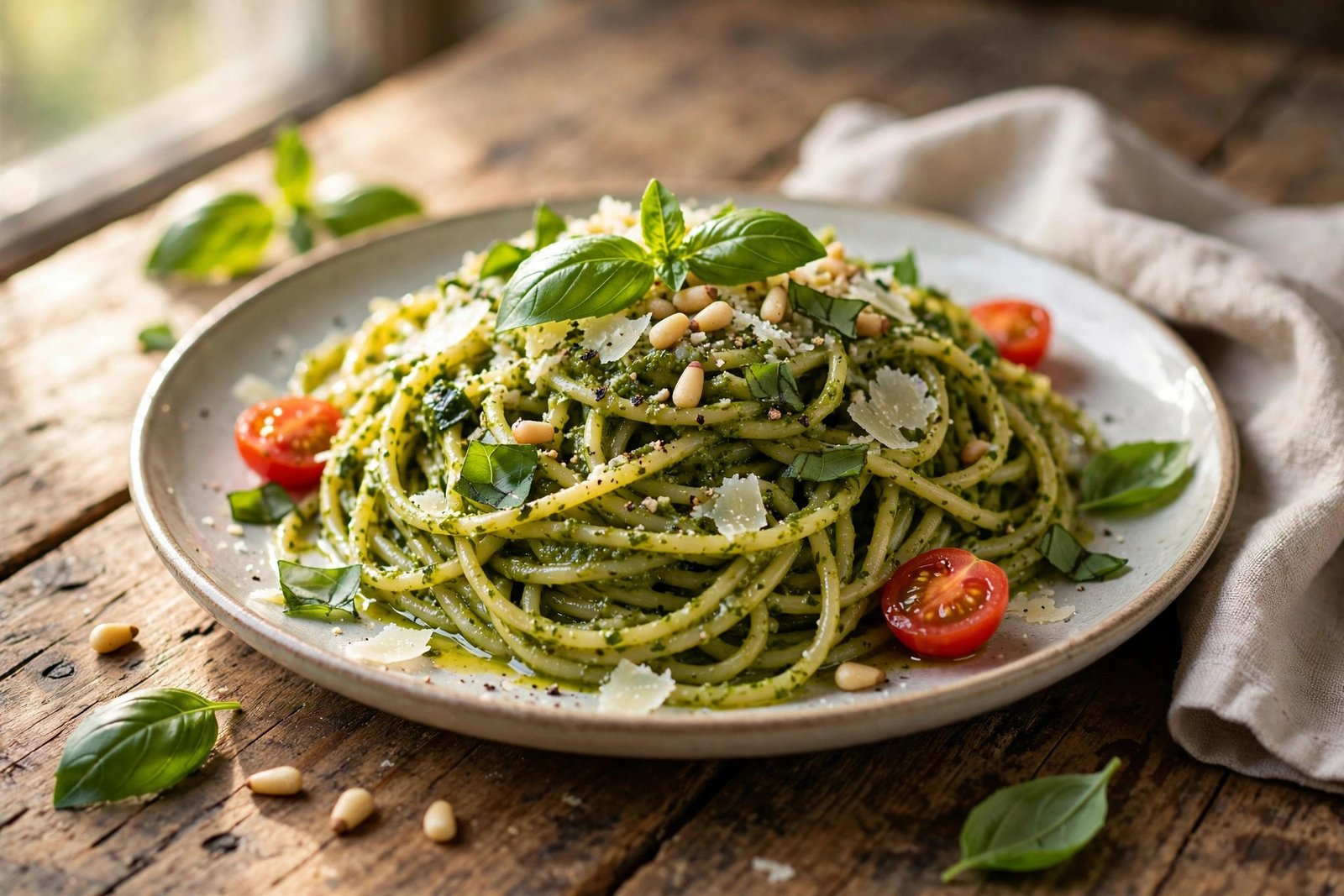
Basil pesto pasta is pure freshness in a bowl — fragrant basil, buttery pine nuts, and salty Parmesan blended with good olive oil, then tossed with hot pasta. It is ready in 20 minutes and tastes like summer in Italy. Perfect for quick weeknight dinners or a sunny weekend lunch.
- Prep time
- 10 mins
- Cook time
- 10 mins
- Total time
- 20 mins
- Servings
- 4 servings
- Calories
- 540
Ingredients
- 400 g spaghetti or linguine
- 60 g fresh basil leaves, packed
- 30 g pine nuts
- 2 cloves garlic
- 50 g Parmesan cheese, grated
- 120 ml extra-virgin olive oil
- 1/2 tsp salt
- 1/4 tsp black pepper
- 1 tbsp lemon juice
Instructions
- Bring a large pot of salted water to a boil and cook the pasta until al dente. Reserve 120 ml of pasta water, then drain.
- While the pasta cooks, toast the pine nuts in a dry skillet over medium heat for 2 to 3 minutes until lightly golden.
- Add the toasted pine nuts, garlic, and basil to a food processor. Pulse until coarsely chopped.
- With the processor running, slowly drizzle in the olive oil until the pesto is smooth but still textured.
- Add the Parmesan, salt, pepper, and lemon juice. Pulse once more to combine and taste for seasoning.
- Toss the hot pasta with the pesto, adding reserved pasta water a splash at a time until every strand is coated.
- Serve immediately with extra Parmesan and a few basil leaves on top.
Pro tips
- Use basil leaves only, not stems, for the brightest green color and flavor.
- A squeeze of lemon juice keeps the pesto vivid green.
- Loosen the pesto with warm pasta water, never plain water, for better clinging.
- Store leftover pesto in the fridge with a thin layer of oil on top for up to 5 days.
Frequently asked questions
Can I use walnuts instead of pine nuts?
Yes. Walnuts, almonds, or cashews all work well and cost less than pine nuts. Toast them first for the best flavor.
How do I stop pesto from turning brown?
Blanch the basil for 30 seconds and pat it dry before blending, and add a little lemon juice. Cover stored pesto with a thin film of oil.
Is pesto pasta served hot or cold?
It is best served warm, tossed with freshly cooked pasta. It also makes an excellent cold pasta salad the next day.
Can I freeze homemade pesto?
Yes. Freeze it in ice-cube trays without the cheese, then add fresh Parmesan after thawing. It keeps for up to 3 months.