Orecchiette con Cime di Rapa Recipe
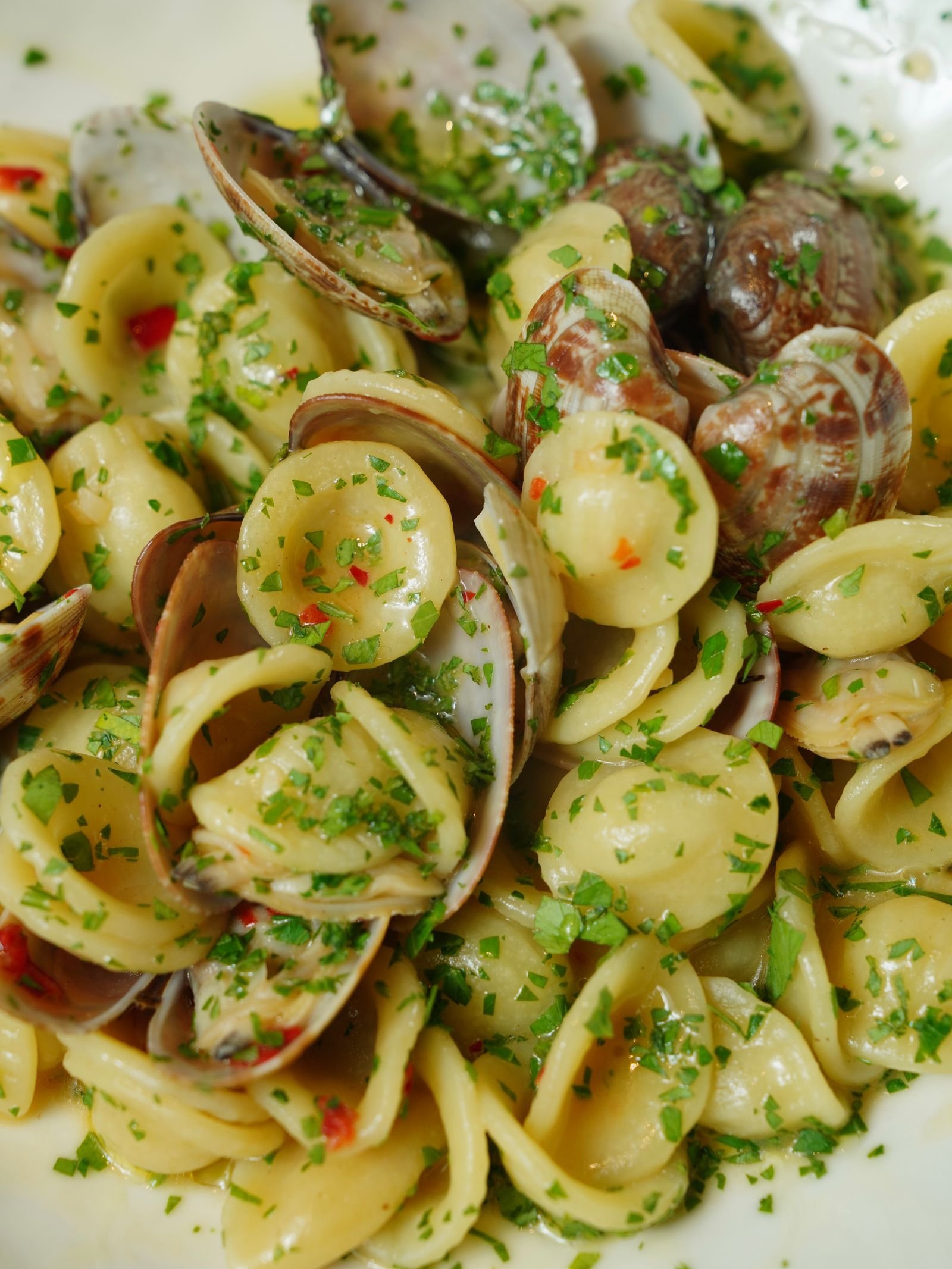
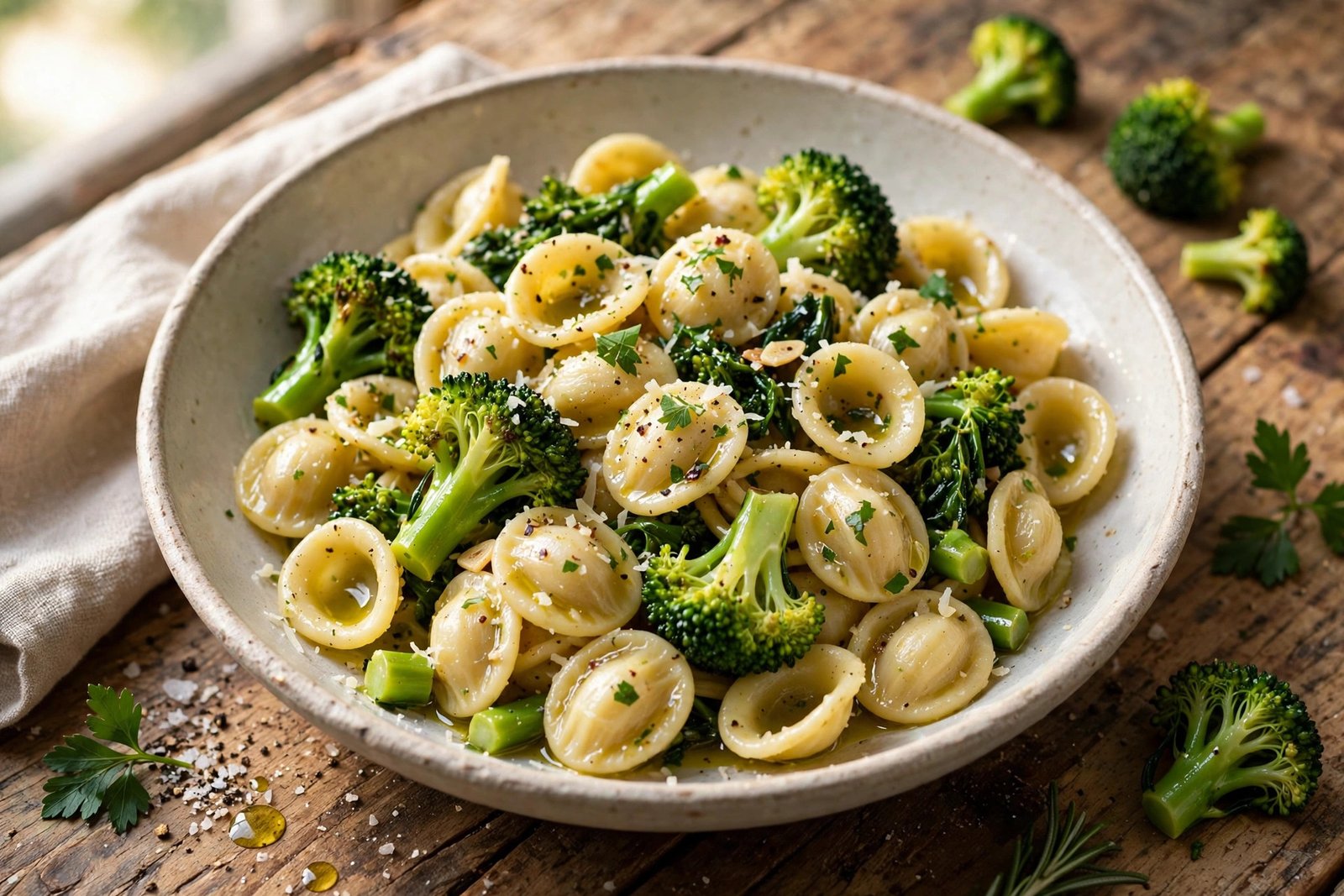
Orecchiette con Cime di Rapa is Puglia on a plate: small ear-shaped pasta tossed with bitter turnip greens, garlic, chilli and anchovy. The greens turn silky, the garlic turns golden, and every little pasta cup catches a bit of sauce. It is fast, frugal and full of flavour, the kind of dish that tastes like someone's kitchen in Bari. Serve it hot, with plenty of grated Pecorino on the table.
The story behind Orecchiette con Cime di Rapa
Orecchiette comes from Puglia, the heel of Italy's boot, where pasta has been shaped by hand for centuries. The name means little ears, and the shape is pressed with the thumb so each piece has a thin centre and a thicker rim. That cupped shape is no accident. The thin centre cooks quickly while the thicker rim stays firm, so each piece has a pleasing bite. The shape is pressed with the thumb against a wooden board, a movement that takes practice but soon becomes second nature. It holds sauce and small bits of greens in every bite, which is exactly what this dish needs.
Cime di rapa, the turnip tops, are one of Puglia's most loved vegetables. Farmers grew them through the winter, and families cooked them with pasta because both were cheap, filling and always at hand. The greens taste bitter and green, a flavour that Apulian cooks prize rather than hide. That bitterness is balanced in the pan by garlic, anchovy and good olive oil, and it is what makes the dish taste grown-up and distinctive rather than plain. Anchovy and garlic joined the pan to round out that bitterness with salt and warmth.
In Puglia this is an everyday dish, not a restaurant showpiece. It is the kind of meal a family eats on a Tuesday, made from what the garden and the pantry already hold. There is no ceremony to it, just a pot of water, a pan of oil and a bunch of greens. Women in Bari Vecchia still shape orecchiette on wooden boards outside their houses, and you can watch them work as you walk past. The dish is tied to the seasons too. Cime di rapa is best in the cool months, from late autumn into spring, when the leaves are tender and the flower buds have not yet opened.
What makes it special is how little it needs. Five or six ingredients, one pot of water, one pan, and about half an hour. The bitter greens, the salty anchovy, the heat of chilli and the bite of garlic all balance each other without any cream or cheese. Cook it on a weeknight when you want something honest and quick, or when you have greens in the fridge and no plan. It rewards good ingredients and a light hand. Buy the best olive oil you can, taste the greens before you season, and let the simple flavours speak for themselves. It rewards good ingredients and a light hand.
- Prep time
- 15 mins
- Cook time
- 25 mins
- Total time
- 40 mins
- Servings
- 4 servings
- Calories
- 520
Ingredients
- 400 g orecchiette pasta
- 500 g cime di rapa (turnip tops), trimmed
- 4 garlic cloves, thinly sliced
- 4 anchovy fillets
- 1 tsp dried chilli flakes
- 60 ml extra virgin olive oil
- 100 g stale bread, torn into crumbs
- 1 lemon, zested
- Salt, to taste
- Black pepper, to taste
- Pecorino Romano, to serve (optional)
Instructions
- Bring a large pot of well-salted water to a rolling boil. Trim the cime di rapa, discarding any tough yellowed leaves, and cut the stems into short pieces. Wash the greens well in cold water so no grit survives into the pan.
- Drop the cime di rapa into the boiling water and cook for 4 minutes until the stems soften. The water will turn green and smell fresh and grassy. Lift the greens out with a slotted spoon and set them aside, keeping the water boiling for the pasta.
- Add the orecchiette to the same water and cook until just shy of al dente, about 2 minutes less than the packet says. The pasta will finish in the pan, so you want it still firm in the centre. Scoop out a mug of the starchy pasta water before draining. Keep the water at a rolling boil so the pasta cooks evenly.
- Warm the olive oil in a large frying pan over medium heat. Add the garlic and chilli flakes and cook for 1 to 2 minutes until the garlic turns pale gold and smells sweet. Do not let it brown, or it will taste harsh.
- Add the anchovies and stir until they melt into the oil, about 1 minute. Tip in the cooked greens and toss them through the garlic oil for 2 minutes, breaking up any large leaves with your spoon. Season lightly, remembering the anchovies are already salty.
- Add the drained orecchiette to the pan with a splash of the reserved pasta water. Toss everything together over medium-high heat for 2 minutes, adding more pasta water a little at a time, until the pasta turns glossy and the sauce clings to every piece.
- Toast the breadcrumbs in a dry pan over medium heat for 3 to 4 minutes, shaking the pan often, until they turn golden and crisp and smell like fresh toast. This takes only a few minutes, so watch them closely.
- Take the pasta off the heat and stir in the lemon zest and a good crack of black pepper. Taste and adjust the salt. The dish should taste green and savoury, with warmth from the chilli and a bright lift from the lemon.
- Serve in warm bowls, scattered with the toasted breadcrumbs and a little grated Pecorino Romano if you like. Eat it straight away, while the pasta is hot and the crumbs are still crisp against the soft greens.
Pro tips
- Buy cime di rapa with firm green leaves and unopened buds. Yellowing leaves and thick woody stems will make the dish bitter and stringy, so trim generously and use the tender parts.
- Cook the greens in the pasta water. It seasons them and saves a pot, and the green-tinted water then gives the pasta a faint earthy flavour as it cooks. The starchy water also helps the sauce cling to the pasta cups.
- Keep the garlic pale gold, never brown. Browned garlic turns bitter and will fight with the greens instead of supporting them. If it colours too fast, lift the pan off the heat for a few seconds.
- Hold back a mug of pasta water before draining. That starchy water is what turns a dry toss into a glossy sauce that clings to the orecchiette cups. A mugful is usually enough for one pan.
- Add the breadcrumbs at the table, not in the pan. They stay crisp that way and give each bite a crunchy contrast against the soft pasta and greens. They add a lovely fresh crunch. Enjoy.
Variations & serving ideas
The classic version is vegetarian if you leave out the anchovy, and it still works well. Add a spoonful of capers or a few olives for the salty note the anchovy would have given. For a richer dish, stir in a knob of butter at the end or add a handful of toasted pine nuts. A few sundried tomatoes, chopped small, add sweetness that plays nicely against the bitter greens. A soft-boiled egg on top turns it into a fuller lunch. Sausage is a common addition in Puglia too; crumble a fresh pork sausage into the pan and brown it before adding the garlic.
If you cannot find cime di rapa, broccoli rabe is the same plant under another name and works identically. Tenderstem broccoli or cavolo nero also work, though the flavour will be milder and less bitter. Turnip greens from the market are a fair stand-in as well. Whatever green you use, cook it the same way and taste before you salt, since each one brings a different level of bitterness. Broccoli rabe needs the same four minutes in boiling water, while cavolo nero may need a minute longer to soften its thicker stems.
Serve this as a main course with nothing more than bread and a simple salad. It is a complete meal on its own, and heavy side dishes only get in the way. A glass of cold white wine or sparkling water with lemon suits it well, and the meal needs no dessert more elaborate than fresh fruit.
Pair it with a crisp white wine from Puglia, such as a Verdeca or a Falanghina, whose clean acidity matches the bitter greens. A dry rosato from the same region is another good choice, especially in summer when the dish is served at room temperature as a warm salad of sorts. If you are cooking the sausage version, a light red like a Primitivo rosato works nicely. Keep the pairing simple and fresh, because this is a simple, fresh dish and it does not want to be dressed up. A little extra lemon at the table brightens every bowl.
Getting it right
Shaping the sauce is really about the pasta water. Orecchiette has a rough surface and a cupped shape that grabs sauce, but it only works if the sauce is loose enough to coat it. Add the pasta water a splash at a time and toss hard over the heat. You are looking for a glossy sheen on every piece, not a puddle at the bottom of the pan.
Watch the heat in the garlic pan. Medium heat gives the garlic time to turn sweet and golden; high heat rushes it to brown and bitter. The anchovies need only a minute to dissolve, and the greens need only two minutes to pick up the flavour of the oil. Everything in the pan moves fast, so have your ingredients ready before you start.
The usual mistake is overcooking the greens until they turn grey and lose their bite. They should stay bright green and tender, with the stems still offering a little resistance. Another common slip is under-salting the pasta water, which leaves the orecchiette bland inside. The water should taste like the sea, and the pasta should taste seasoned on its own before it ever meets the pan. If the finished dish still tastes flat, a squeeze of lemon and a pinch of flaky salt at the table will usually fix it. The water should taste like the sea, and the pasta should taste seasoned on its own before it ever meets the pan. Taste the pasta before you drain it.
Storing & reheating
Orecchiette con cime di rapa is best eaten fresh, straight from the pan, but leftovers keep in the fridge for up to 2 days in a sealed container. The breadcrumbs will soften, so keep any extra crumbs separate and scatter fresh ones when you reheat. Warm the pasta gently in a pan with a splash of water over medium heat until hot through.
This dish does not freeze well, because the greens turn soft and the pasta goes mushy on thawing. If you must freeze it, freeze the cooked greens and pasta separately without the breadcrumbs, and use within a month. Reheat in a pan with olive oil and a little water, and finish with fresh breadcrumbs and lemon zest to wake it back up.
Frequently asked questions
What is cime di rapa?
Cime di rapa are turnip tops, a leafy green with small flower buds, widely grown in Puglia. They taste pleasantly bitter and green, a bit like broccoli rabe, which is the same plant sold under another name in many countries.
Can I use broccoli instead of cime di rapa?
Yes, tenderstem broccoli or broccoli rabe both work well. Broccoli rabe is the closest match, since it is the same plant under another name. Cut the stems short, cook them the same way, and keep the chilli and lemon to balance the bitterness. Regular broccoli is milder, so add a little extra chilli.
Is this dish vegetarian?
It is vegetarian if you leave out the anchovy fillets, though anchovy is traditional. Use capers, olives or a pinch of miso paste for a salty depth instead. Skip the Pecorino too if you want it fully plant-based. Use capers or olives for saltiness, and a squeeze of lemon for brightness.
Do I need fresh orecchiette?
No, dried orecchiette works very well and is what most Italian home cooks use. Fresh orecchiette cooks faster and feels silkier, but dried holds its cupped shape better in the pan and is easier to find. Fresh orecchiette cooks faster and feels silkier, but dried holds its shape well.
Why is my dish bitter?
Cime di rapa is naturally bitter, and that bitterness is part of the dish. If it tastes too strong, you may have used old or over-mature greens. Balance it with more olive oil, a squeeze of lemon and a pinch of salt rather than adding sugar.
Can I add cheese to orecchiette con cime di rapa?
A little grated Pecorino Romano is common and adds a salty, sharp note. Use it lightly, though, because too much cheese can smother the fresh green flavour that makes this dish special. Use it lightly, though, since too much cheese can hide the fresh green flavour.