Cacio e Pepe Recipe
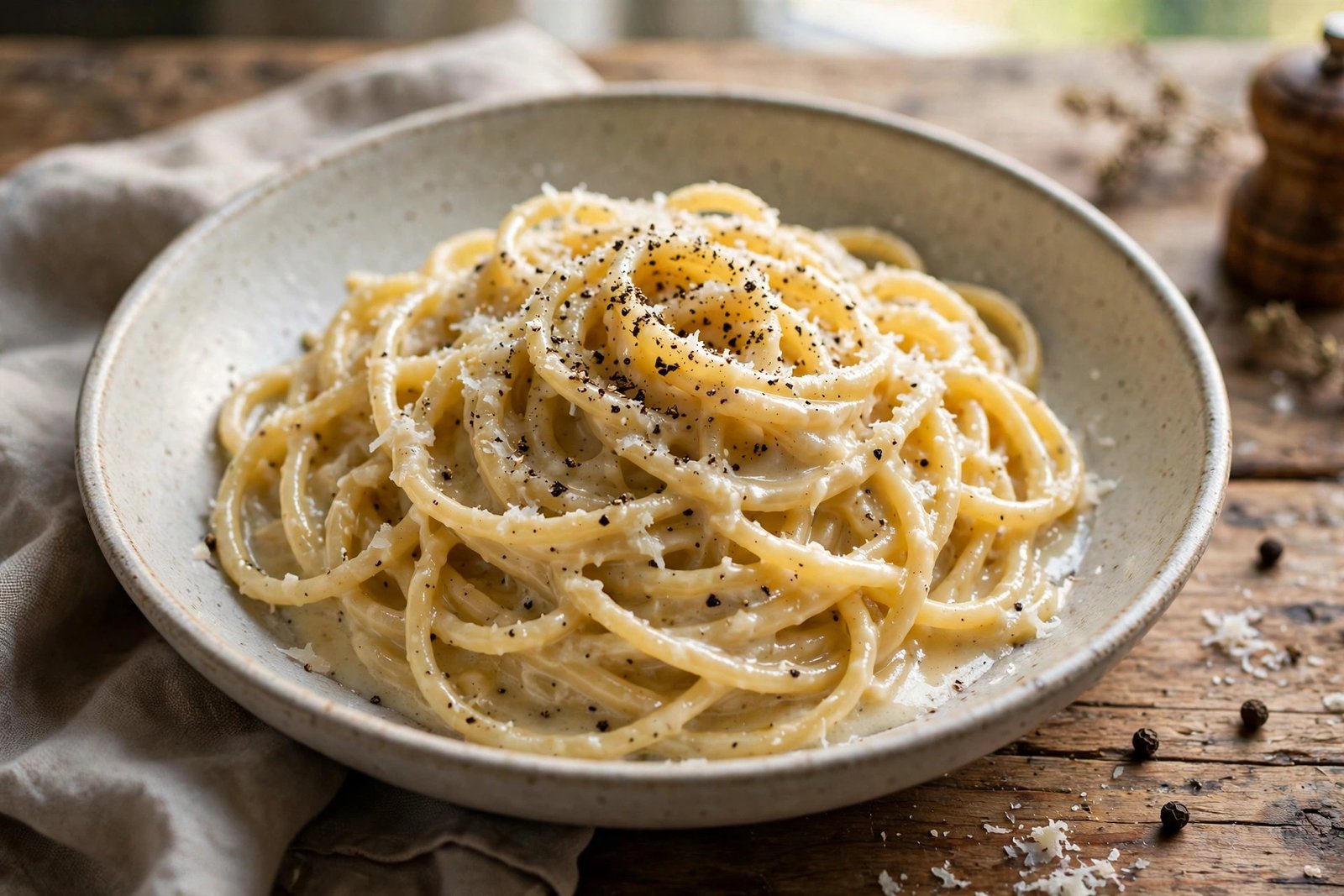
Just three humble ingredients — pasta, Pecorino Romano, and black pepper — transform into one of Rome's most luxurious dishes. The starchy pasta water emulsifies into a glossy, clinging sauce that coats every strand. Impressive, elegant, and on the table in 20 minutes.
Advertisement
- Prep time
- 5 mins
- Cook time
- 15 mins
- Total time
- 20 mins
- Servings
- 4 servings
- Calories
- 540
Ingredients
- 400 g tonnarelli, spaghetti, or bucatini
- 100 g Pecorino Romano, finely grated (plus extra to serve)
- 2 tbsp black peppercorns, coarsely cracked
- Salt, for the pasta water
- 2 tbsp unsalted butter (optional, for extra silkiness)
- 2 tbsp extra-virgin olive oil
- 1/4 tsp chili flakes (optional, for a hint of heat)
- Fresh basil leaves, to serve (optional)
Instructions
- Bring a large pot of lightly salted water to a rolling boil. Use less water than usual so the starch concentration stays high.
- Toast the cracked pepper in a large dry skillet over medium heat for 2 minutes until fragrant, then set aside.
- Cook the pasta 1 minute less than the package directions. Reserve 500 ml of the starchy pasta water before draining.
- Return the skillet with the toasted pepper to low heat, add a ladle of pasta water, and swirl to make a peppery base.
- Off the heat, add the drained pasta to the skillet with the butter. Sprinkle in the Pecorino gradually, tossing vigorously and adding splashes of pasta water until a glossy, creamy sauce coats the pasta.
- Serve immediately in warm bowls with extra Pecorino and a final crack of pepper on top.
Advertisement
Pro tips
- Grate the Pecorino as finely as possible — coarse shreds melt into clumps instead of a smooth sauce.
- Take the pan off the heat before adding the cheese; high heat makes Pecorino seize and turn grainy.
- If the sauce tightens as it sits, loosen it with a splash of hot pasta water.
- Tonnarelli is the classic Roman choice, but spaghetti and bucatini work beautifully.
Frequently asked questions
Why did my cacio e pepe turn clumpy?
The pan was too hot when the cheese went in, or the cheese was too coarse. Always add the Pecorino off the heat with finely grated cheese, tossing quickly with hot pasta water.
Can I use Parmesan instead of Pecorino Romano?
You can, but the flavor will be milder and less salty. Traditional Roman cacio e pepe uses only Pecorino Romano — use at least half Pecorino for authenticity.
Does cacio e pepe reheat well?
Not really — the emulsion breaks. It is best eaten immediately. If you must reheat, do it gently in a pan with a splash of water.