Agnolotti Recipe
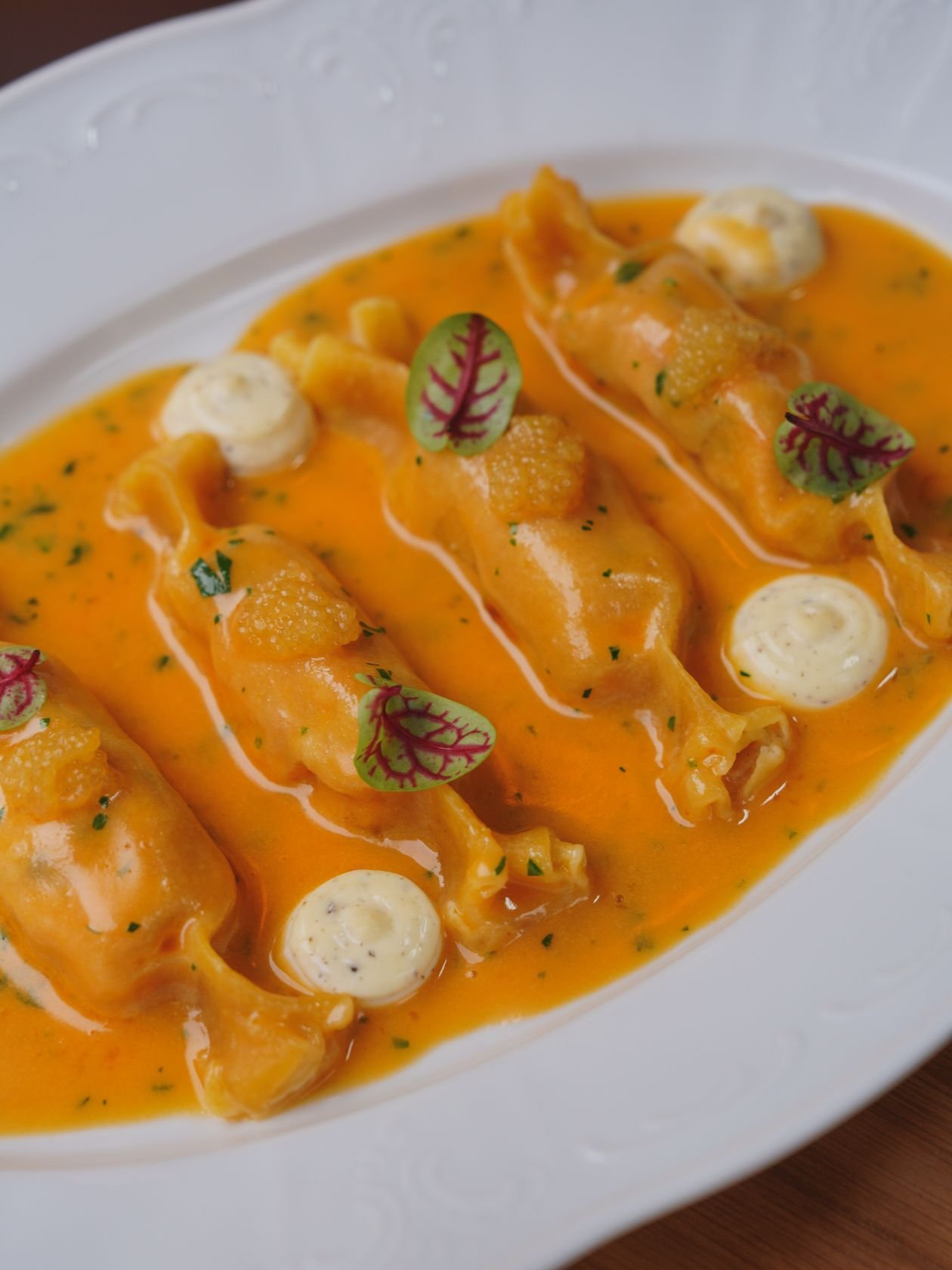
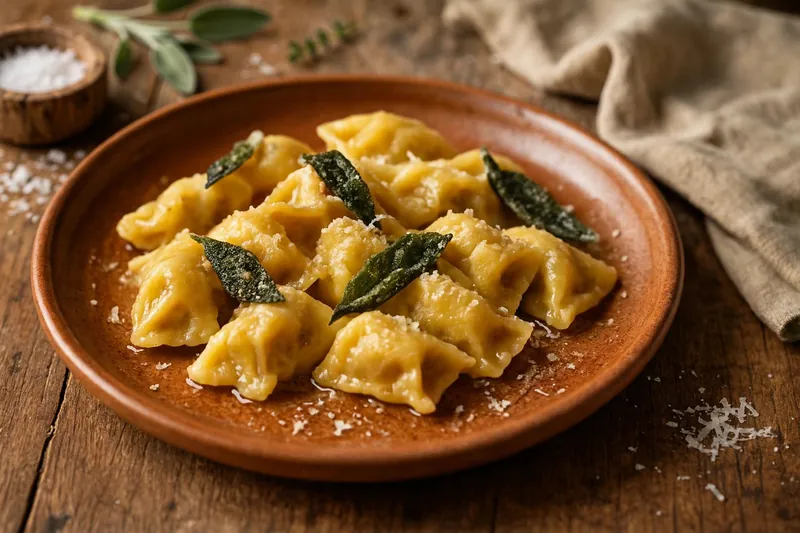
Agnolotti are little folded parcels of fresh egg pasta from Piedmont, filled with slow-cooked meat and served in brown butter with sage. Each piece is small, tender and rich, and the folding rhythm becomes relaxing once your hands learn it. This is a weekend project that turns simple pantry ingredients into a plate of pasta worth sitting down for.
The story behind Agnolotti
Agnolotti belong to Piedmont, the north-western Italian region famous for truffles, Barolo wine and butter-rich cooking. The name comes from the word agnolot, a small ring or parcel, and the pasta has been made in Piedmontese homes for centuries. Some food historians link it to the old practice of stretching leftover roast meat across several meals, a habit born of thrift that turned into one of Italy's most loved pastas. Traditionally it was a way to use leftover roast meat, minced fine with vegetables and herbs, then folded into fresh egg pasta and served on Sundays or feast days.
In Piedmont, agnolotti are tied to family cooking and celebration. Making them is slow, hands-on work, so families would gather around a table to roll, fill and fold together, often for a Sunday lunch or a holiday meal. The finished pasta is usually served in a simple sauce, brown butter with sage or a light meat ragù, because the filling carries the flavour and the sauce should never compete with it. In the wine town of Alba, truffle shavings sometimes crown the dish in autumn, when the white truffle season fills the markets and the whole region smells of earth and butter.
What makes agnolotti special is the contrast between the delicate pasta and the deep, savoury filling. The dough is thin enough to be tender but strong enough to hold its shape in boiling water, and the filling is smooth, rich and seasoned with nutmeg and Parmesan. Each piece is small, so you get a little burst of flavour in every bite, and the folded edge gives a pleasant chew that flat pasta never has.
Cook agnolotti when you have an unhurried afternoon and want a project that ends in a genuinely impressive meal. It suits a Sunday lunch, a birthday dinner or any evening when you want to slow down and cook with your hands. The pasta freezes well too, so one afternoon of folding can give you several quick weeknight suppers later on.
- Prep time
- 45 mins
- Cook time
- 30 mins
- Total time
- 1 hr 15 mins
- Servings
- 4 servings
- Calories
- 620
Ingredients
- 300 g plain flour (type 00 if you have it), plus extra for dusting
- 3 large eggs
- 250 g cooked roast beef or veal, finely minced
- 100 g cooked spinach, squeezed dry and chopped
- 50 g Parmesan, finely grated, plus extra to serve
- 1 egg yolk, for the filling
- A pinch of ground nutmeg
- Salt and black pepper to taste
- 60 g unsalted butter
- 8 fresh sage leaves
- 1 tablespoon olive oil
Instructions
- Make the dough by tipping the flour onto a clean work surface, making a well in the centre and cracking the eggs into it. Beat the eggs with a fork, drawing in the flour a little at a time, then knead for 8 to 10 minutes until the dough is smooth, firm and springs back when pressed.
- Wrap the dough tightly in cling film and rest it for 30 minutes at room temperature. This rest lets the gluten relax, so the pasta rolls thin without fighting you or springing back on the board.
- Mix the filling in a bowl: the minced meat, chopped spinach, Parmesan, egg yolk, nutmeg and a good pinch of salt and pepper. Work it with a spoon until it holds together in a soft paste, then taste a little and adjust the seasoning. It should taste bold, because the pasta will soften the flavour.
- Roll the rested dough through a pasta machine, or with a long rolling pin, until it is thin enough to see your hand through it, about 1 mm. Cut the sheets into strips about 10 cm wide and lay them on a lightly floured surface, keeping the rest covered so it does not dry out. Dust the work surface lightly, and keep a small bowl of water nearby for sealing the edges later.
- Place small teaspoons of filling along one strip, spacing them about 4 cm apart and keeping them 2 cm from the edge. Brush the dough around each mound lightly with water, then fold the strip over the filling and press firmly around each mound to push out air.
- Cut between the mounds with a knife or pastry wheel to make small rectangles, then press the edges again with your fingers or a fork. Set each finished agnolotto on a floured tray in a single layer, and do not stack them or they will stick together. A light dusting of semolina under the finished pieces stops them sticking to the tray while you work through the rest of the batch.
- Bring a large pot of salted water to a gentle boil, not a fierce rolling one, and lower the agnolotti in carefully. Cook for 3 to 4 minutes until they float and the pasta looks tender, then lift them out with a slotted spoon.
- While the pasta cooks, melt the butter in a wide pan over medium heat until it foams and turns a light golden brown, about 2 minutes, then add the sage leaves and let them crisp for 30 seconds. Toss the drained agnolotti gently in the butter, serve at once with extra Parmesan, and eat while the butter is still warm and fragrant.
Pro tips
- Roll the pasta as thin as you can without tearing it. Thick agnolotti turn doughy and heavy, while thin ones stay tender and let the filling shine. Hold the sheet up to the light: you should be able to see the shape of your hand through it, but not read a newspaper through it.
- Push all the air out around each mound of filling before you seal it. Trapped air makes the parcels puff up and burst in the boiling water. Run your fingertip firmly around each mound, pressing the two layers together and pushing the air out towards the cut edge before you slice.
- Keep the dough covered with a damp cloth while you work. Fresh pasta dries out fast, and dry edges will not seal properly. If the dough feels stiff after resting, knead it for a minute to warm it up, which makes it supple again and easier to roll.
- Season the filling boldly. The pasta itself is plain, so the filling needs to carry the flavour of the whole dish. Add a little extra nutmeg or a pinch of chilli if you like warmth, but always taste the raw filling before you start folding.
- Freeze the agnolotti on a tray before bagging them. They keep for a month and cook straight from frozen, needing only one extra minute in the water. Label the bag with the date, and cook them in small batches so the pot stays at a gentle boil and the parcels do not crowd each other.
Variations & serving ideas
Once you can fold agnolotti, the filling is yours to change. A classic Piedmontese alternative uses roast pork and cabbage, while a lighter version fills them with ricotta, spinach and lemon zest for a spring dinner. Mushroom lovers can use finely chopped sautéed mushrooms with thyme and Parmesan, and a seafood version with minced prawns and a little lemon works well for a special occasion. In winter, a filling of roast squash and amaretti crumbs, a Piedmontese favourite, gives a sweet-savoury balance that pairs beautifully with brown butter.
Substitutions keep the project accessible. If you have no roast meat left over, brown 250 g of minced beef or pork in a pan with onion and garlic, then cool it and use it the same way. Shop-bought fresh pasta sheets save time when you want the folding without the dough work, though the texture is slightly less tender than homemade. Plain flour works fine if you cannot find type 00, and a little semolina dusted on the tray stops sticking.
Serve agnolotti in brown butter and sage for the classic treatment, or in a light tomato sauce, or simply in a little of the cooking water with olive oil and Parmesan. The pasta also suits a clear beef broth, served as a soup with grated cheese on top. Keep the sauce light, because a heavy sauce hides the filling.
Pair the dish with a simple green salad and a glass of Barbera or another light red wine from Piedmont. A few shavings of Parmesan and a crack of black pepper over the top are all the garnish this pasta needs, because the folded parcels themselves are the decoration. For a fuller meal, start with an antipasto of cured meats and finish with something light, because agnolotti are rich and filling. A small portion makes a fine first course before a roast, and a larger portion is a complete meal on its own.
Getting it right
The key technique in agnolotti is rolling the dough thin and sealing the parcels well, because both decide whether the pasta holds together in the water. Roll the sheets gradually, passing them through the machine settings one step at a time rather than jumping straight to the thinnest setting, which tears the dough. When the sheet is thin enough to see your hand through it, stop. Thinner than that and it tears when you fold it. If you are rolling by hand, work from the centre outwards and rotate the sheet a quarter turn after every few strokes, which keeps the thickness even across the whole piece.
Heat and timing control matter most at the boiling stage. The water should be at a gentle boil, with big lazy bubbles, not a violent rolling boil that throws the parcels around and splits them. Drop them in a few at a time, stir once very gently with a wooden spoon, and lift them out as soon as they float and look tender, usually 3 to 4 minutes. Overcooking turns the edges soggy and the filling leaks.
The common mistakes are all fixable with a little care. If your agnolotti burst, air was trapped inside or the edges were not pressed firmly enough, so press around each mound with your fingertips before cutting. If the pasta feels tough, the dough was rolled too thick or kneaded too little, so give it a full 8 minutes of kneading and roll it one setting thinner next time. If the filling tastes bland, add more salt, nutmeg or Parmesan, because the plain pasta needs a bold filling to carry the dish.
Storing & reheating
Fresh agnolotti keep in the fridge for one day on a floured tray, loosely covered, but they are best cooked the same day you make them. The filling softens the pasta if they sit too long, and the edges can stick to each other overnight. If you must wait, dust them well with flour and keep them in a single layer.
For longer storage, freeze them raw on a tray until solid, then bag them for up to one month. Cook from frozen in gently boiling salted water, adding about one extra minute to the time. Do not thaw them first, because the filling softens and the parcels tear. Cooked agnolotti keep for one day in the fridge, reheated gently in butter over low heat.
Frequently asked questions
Can I make agnolotti without a pasta machine?
Yes, a long rolling pin and a little patience will do it. Roll the dough on a floured surface, turning it often, until it is about 1 mm thick and you can see your hand through it. It takes longer than a machine, but the result is just as good. A heavy rolling pin and a floured surface work fine, though it takes more arm work and a few extra minutes to reach the same thinness.
What meat works best for the filling?
Leftover roast beef, veal or pork is traditional, because slow roasting gives deep flavour. If you have no leftovers, brown minced beef or pork with onion and garlic, cool it, and use that instead. The filling should be finely minced and well seasoned.
Why do my agnolotti burst in the water?
Air trapped inside the parcels expands as it heats and splits the seal. Press firmly around each mound of filling to push the air out before cutting, and keep the water at a gentle boil rather than a fierce rolling one.
Can I freeze agnolotti?
Yes, freeze them raw on a tray until solid, then bag them for up to one month. Cook them straight from frozen in gently boiling water, adding about one extra minute. Do not thaw first, or the filling softens and the pasta tears.
What sauce goes with agnolotti?
Brown butter with sage is the classic choice and lets the filling shine. A light tomato sauce, a little olive oil with Parmesan, or a clear beef broth also work well. Avoid heavy cream sauces, which hide the flavour of the filling. Brown butter and sage is the traditional partner, and it takes only two minutes while the pasta boils, so the whole meal comes together at once.
How thin should the pasta be?
Thin enough to see your hand through the sheet, about 1 mm. Thicker pasta turns doughy and heavy, while pasta rolled too thin tears when folded. Roll gradually through the machine settings and stop as soon as the sheet is translucent.